IMPROVEMENT IN MUSICAL BOXES
Paillard's revolver music box: five cylinders on one shaft, decades before disc machines
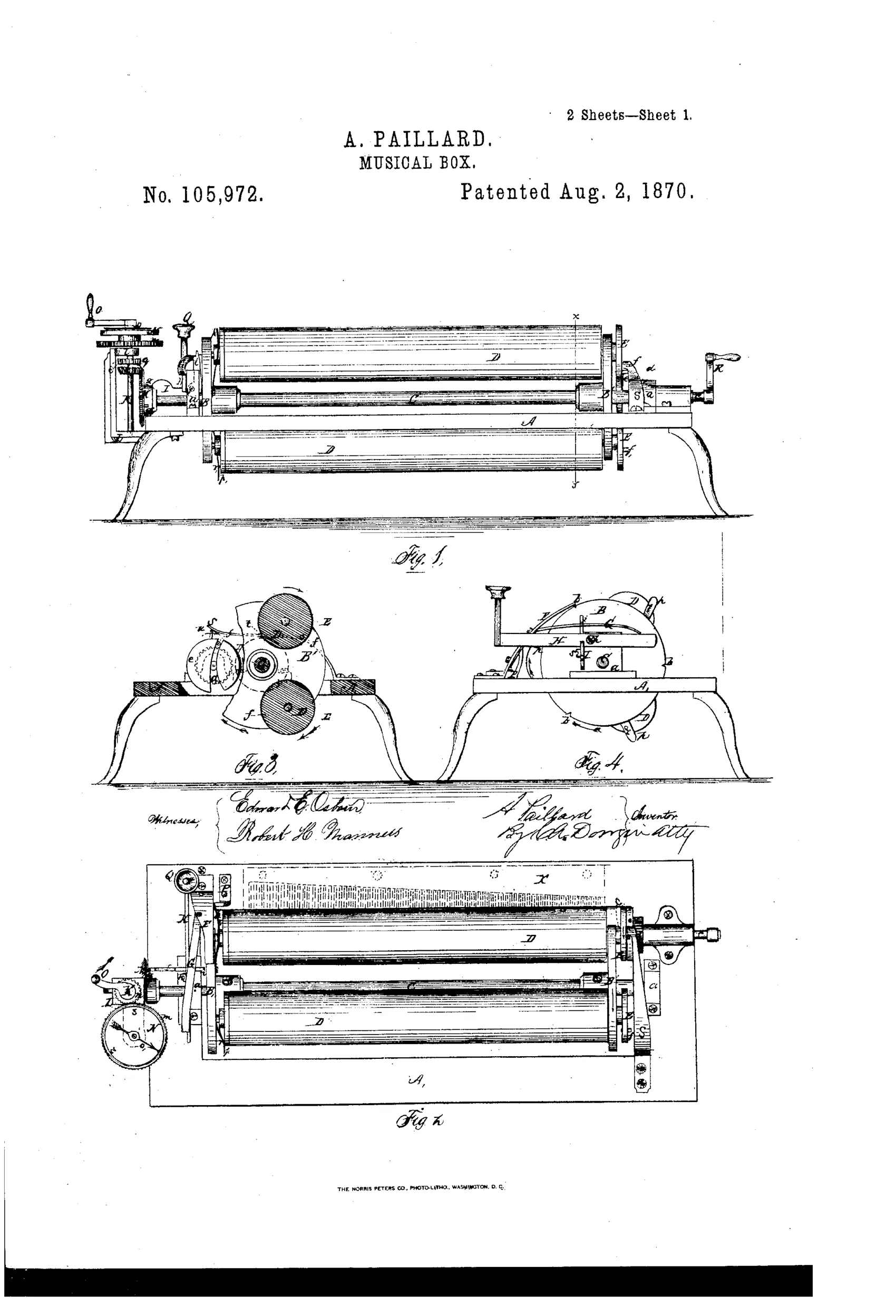
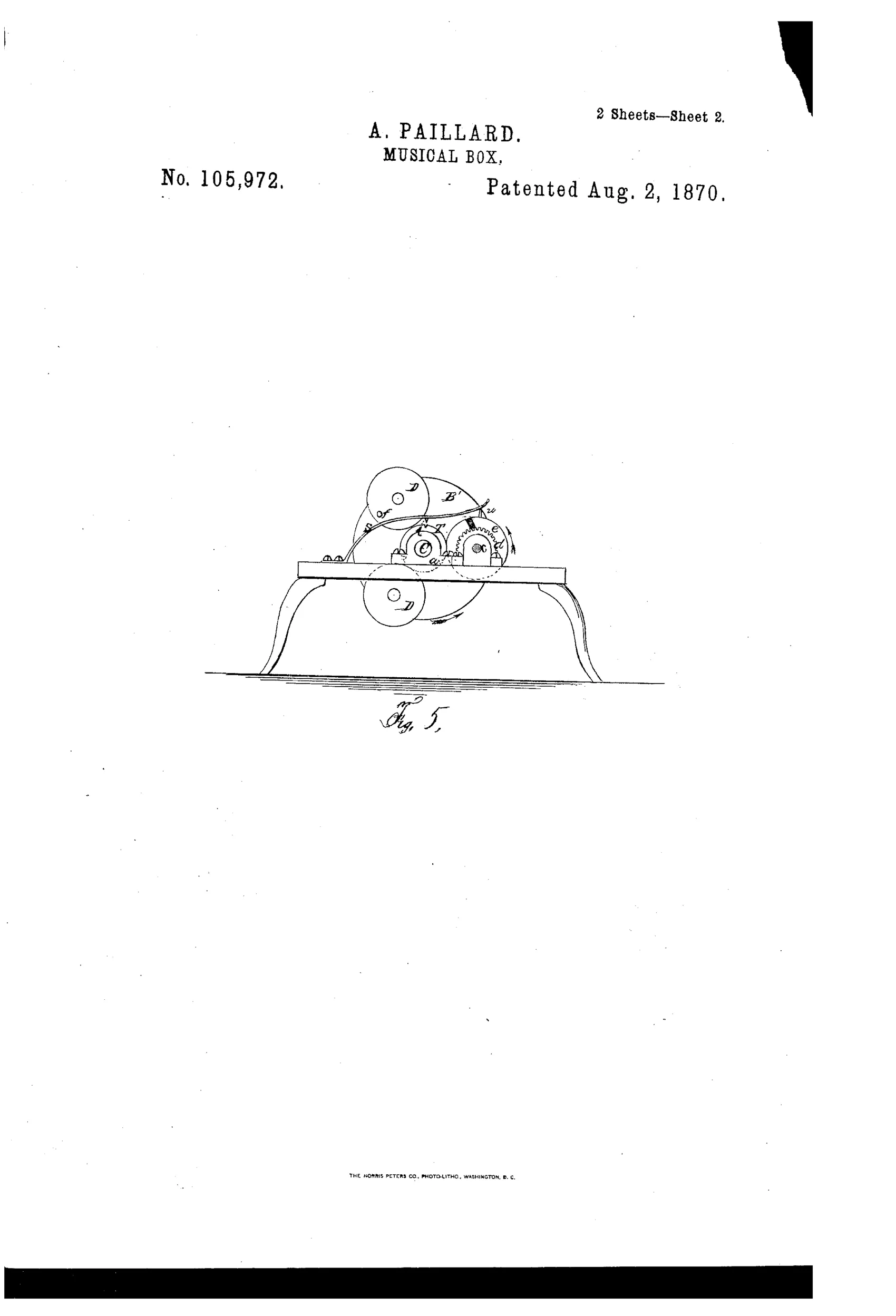
Multi-cylinder music box with tune-changing mechanism
♫ How it works
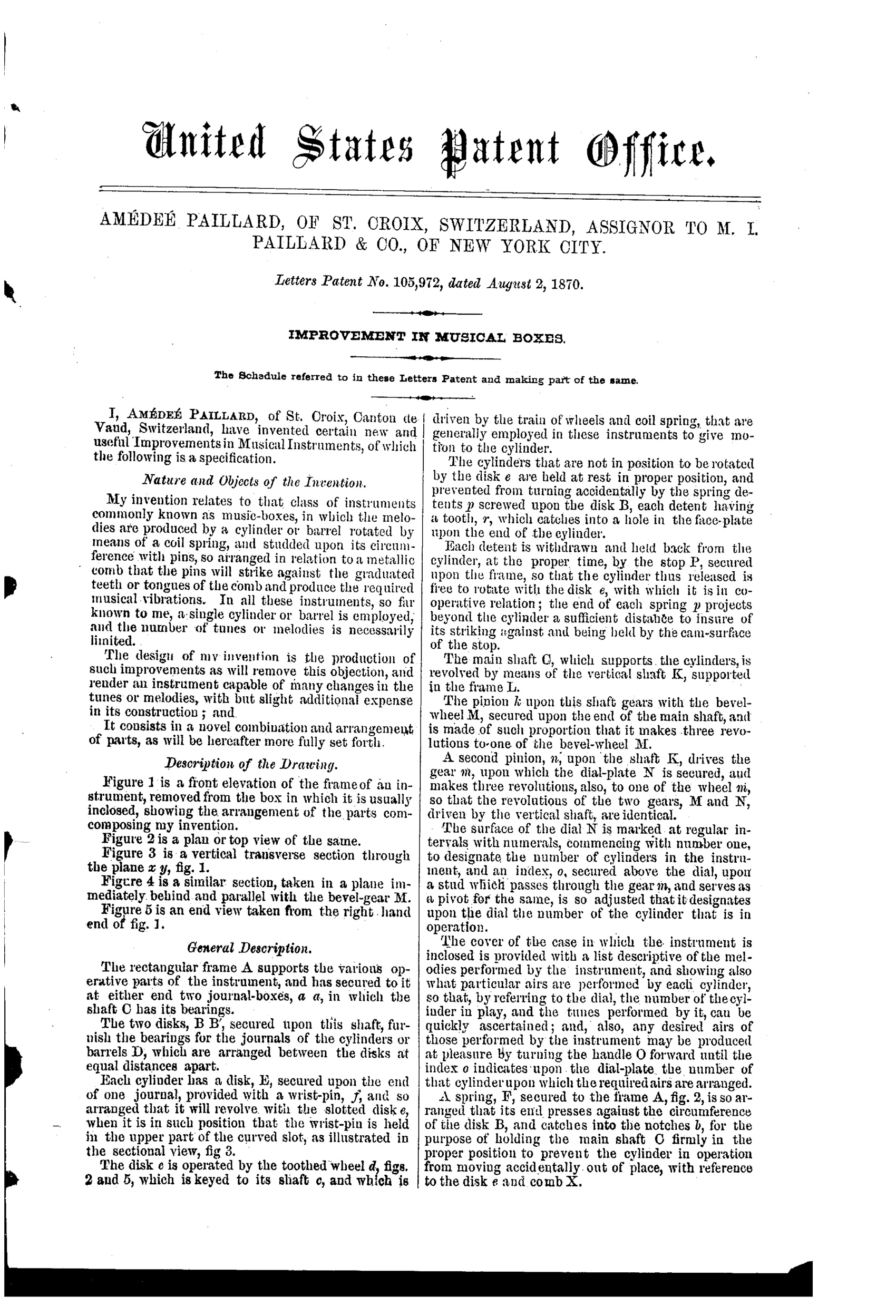
A rotating shaft C carries a series of cylinders D, each studded with pins that pluck the teeth of a metallic comb X to produce melodies. A slotted disk e and wrist-pin f allow each cylinder in turn to be engaged and rotated by the driving train, while spring detents p lock the idle cylinders in place until released by a cam-stop P. The main shaft is turned via a vertical shaft K, pinion k, and bevel-wheel M driven by the usual coil-spring train, and a dial-plate N geared to the same train indicates which numbered cylinder is currently in play. A weighted elbow-lever I, arm G, and pins g on the bevel-wheel trip a spring-catch F at the proper moment to allow the shaft to advance and select the next cylinder.
♫ What was claimed
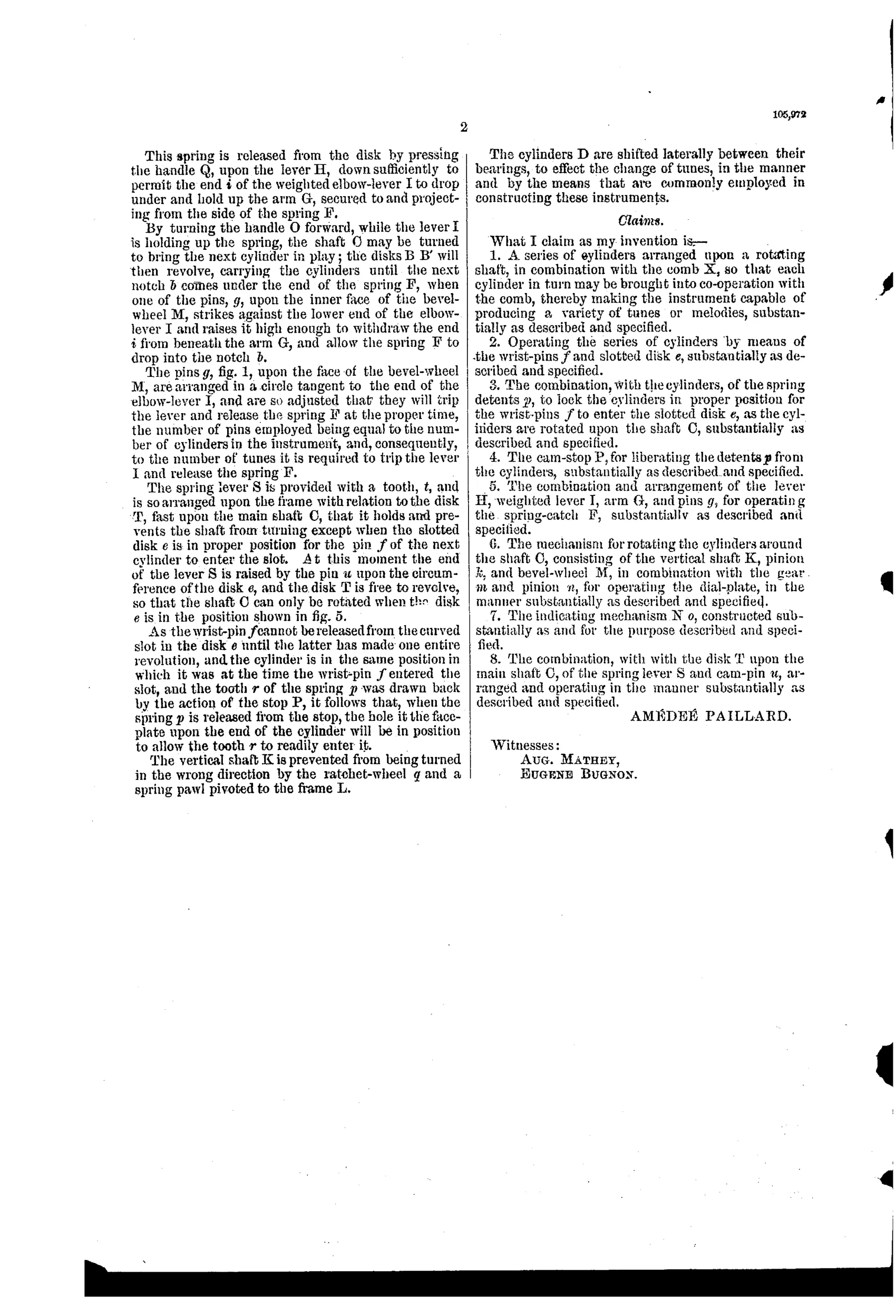
“1. A series of cylinders arranged upon a rotating shaft, in combination with the comb X, so that each cylinder in turn may be brought into co-operation with the comb, thereby making the instrument capable of producing a variety of tunes or melodies, substantially as described and specified.”
In plain English: The invention covers mounting multiple cylinders on one rotating shaft so each can be played against a single comb, letting one music box produce many different tunes.
♫ In the inventor’s words
“In all these instruments, so far known to me, a single cylinder or barrel is employed, and the number of tunes or melodies is necessarily limited.”— Amédeé Paillard, from the specification
Manufactured and sold
Paillard-built revolver-type multi-cylinder music boxes survive in collections and the literature, and this patent describes exactly that mechanism.
♫ Commentary
The complaint in the specification is the whole story: "a single cylinder or barrel is employed, and the number of tunes or melodies is necessarily limited." A pinned cylinder holds maybe six or eight airs, and once you've heard them a few hundred times, the box goes silent in the parlor. Paillard's answer is the mechanical equivalent of a revolver: several cylinders mounted between two end disks on a common shaft, indexed around so each in turn plays against a single comb.
Look at Fig. 1 and you can see how much machinery this demands. Every idle cylinder must be locked dead still by its spring detent, or its pins will foul the comb teeth as the drum rotates past. The slotted disk and wrist-pin have to engage only the active cylinder's drive, and the weighted elbow-lever must trip the advance at exactly the right moment. The numbered dial plate telling you which cylinder is up is a nice touch of showmanship — this was a luxury object, and it knew it.
This is the aristocratic solution to the tune-supply problem. The democratic solution — the interchangeable steel disc of Polyphon and Regina — arrived twenty years later and made variety cheap instead of magnificent. Paillard's route was a dead end commercially, but a glorious one: it works, it's just expensive by construction. St. Croix was the world capital of this trade, and the Paillards were its first family.
Commentary by Claude, The Talking Machine Patent Archive’s resident enthusiast