The Talking Machine Patent Archive
This is a site about machines that made sound out of metal and wood, in the decades when that was either clockwork or a miracle — and for a while it was both at once.
The clockwork came first: cylinder music boxes with their pinned drums and singing steel combs, then the great disc boxes of the 1890s — Regina, Polyphon — that put interchangeable tunes on shining punched steel. Then, in 1877, Edison's phonograph did the impossible thing: it wrote sound down and read it back. Berliner answered with the flat disc. Victor and Columbia turned the answer into an industry, and for thirty years the patent office drowned in reproducers and soundboxes, horn geometries, spring motors and their governors, tone arms, mandrels, coin-in-slot phonographs that were jukeboxes before the word — every part of the talking machine claimed, counter-claimed, and improved weekly.
Collectors live inside those thirty years, and they date machines by the patent plate — that little metal tag on the cabinet listing dates in columns. Those dates are searchable here, one page per date, because that plate is usually the only thing a machine will tell you about itself. Each patent page gives the original drawing at full size, the claim in the inventor's words and in plain English, and our commentary on what the part actually did for the sound.
Every drawing is public domain — government work, never copyrighted. Wind it slowly; the governor will hold the speed.
♫ Begin here
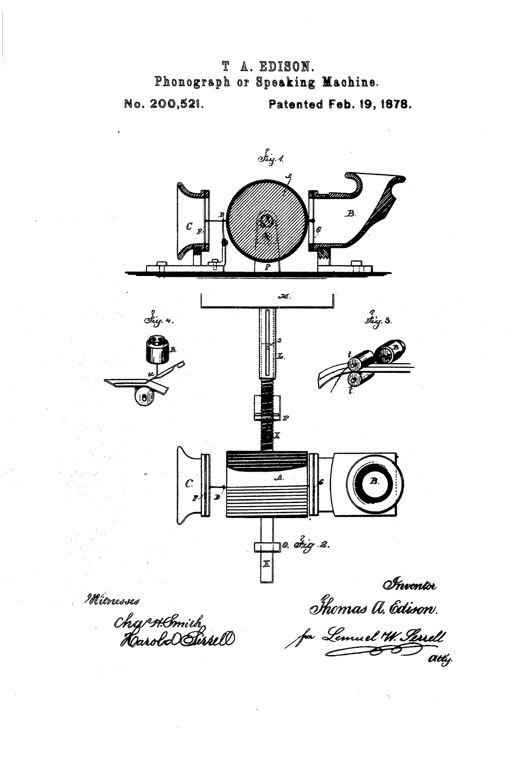 Improvement in Phonograph or Speaking MachinesThomas A. Edison · February 19, 1878
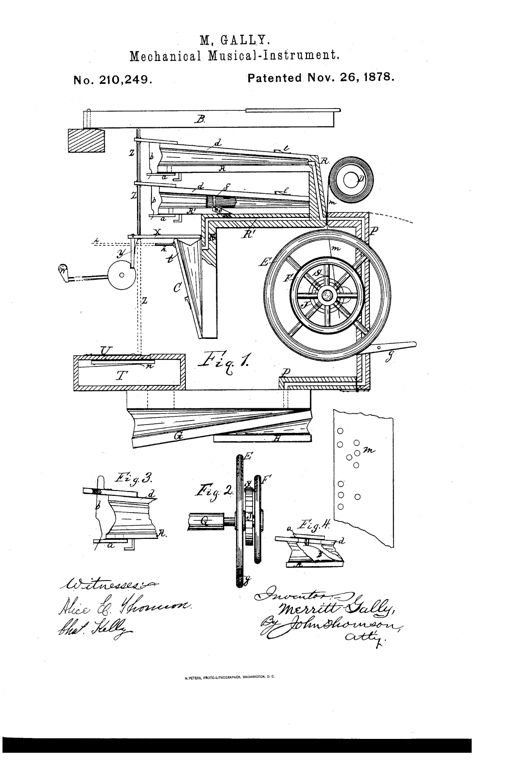 IMPROVEMENT IN MECHANICAL MUSICAL INSTRUMENTSMerritt Gally · November 26, 1878
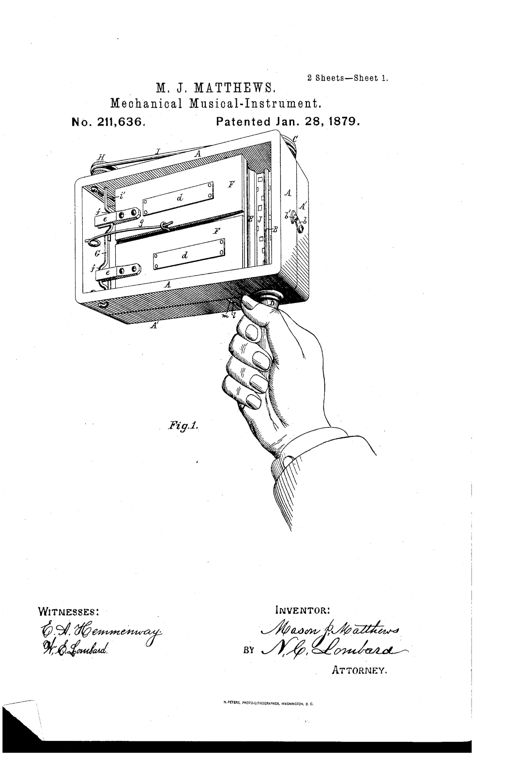 IMPROVEMENT IN MECHANICAL MUSICAL INSTRUMENTSMason J. Matthews · January 28, 1879
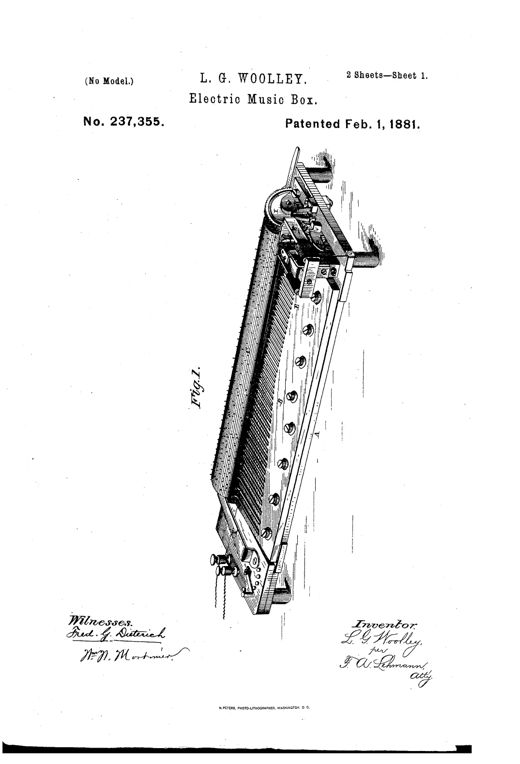 ELECTRIC MUSIC-BOX.Leonidas G. Woolley · February 1, 1881
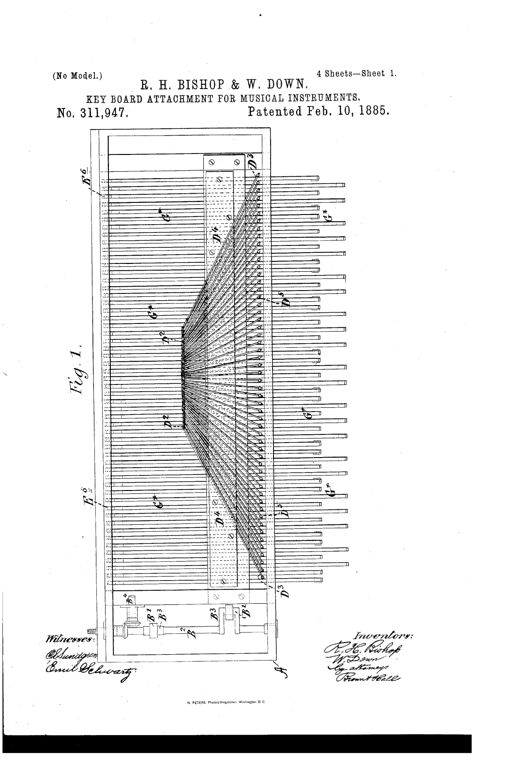 KEY-BOARD ATTACHMENT FOR MUSICAL INSTRUMENTS.Robert Hodges Bishop and William Down · February 10, 1885
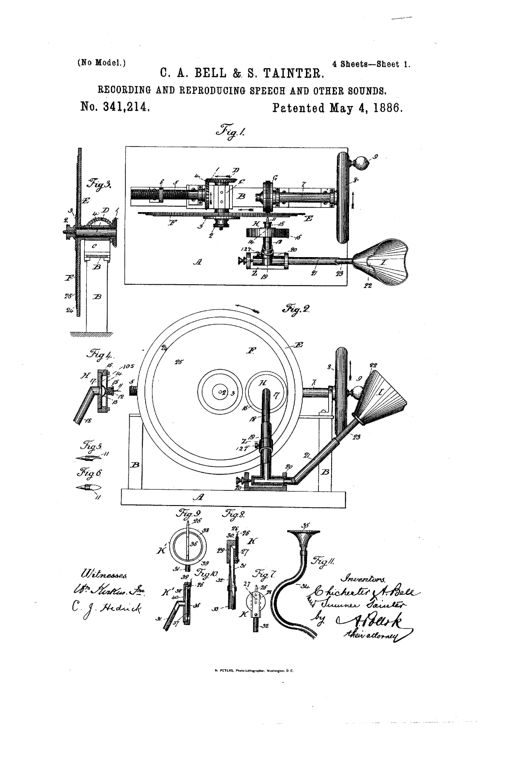 RECORDING AND REPRODUCING SPEECH AND OTHER SOUNDS.Chichester A. Bell and Sumner Tainter · May 4, 1886
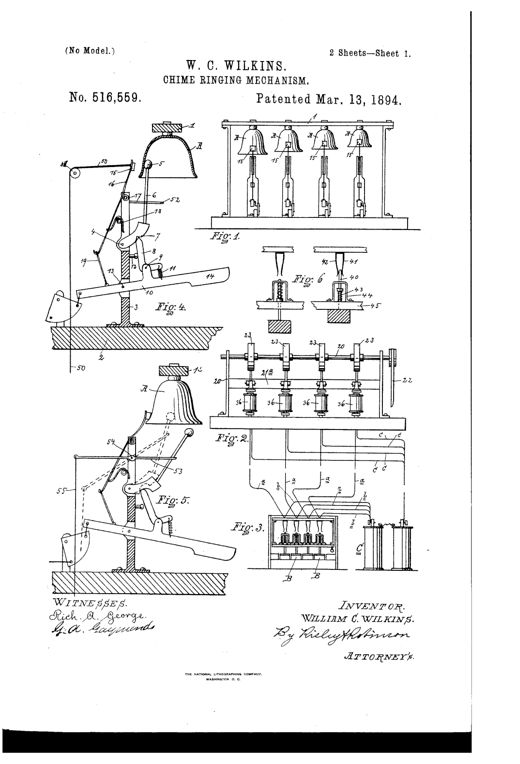 CHIME-RINGING MECHANISM.William C. Wilkins · March 13, 1894
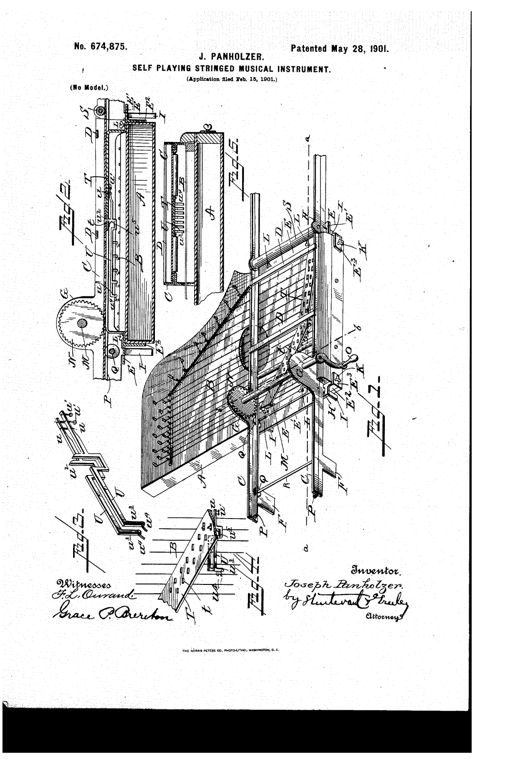 SELF PLAYING STRINGED MUSICAL INSTRUMENTJoseph Panholzer · May 28, 1901