ELECTRIC MUSIC-BOX.
An 1881 bid to run a music box on electricity instead of a mainspring
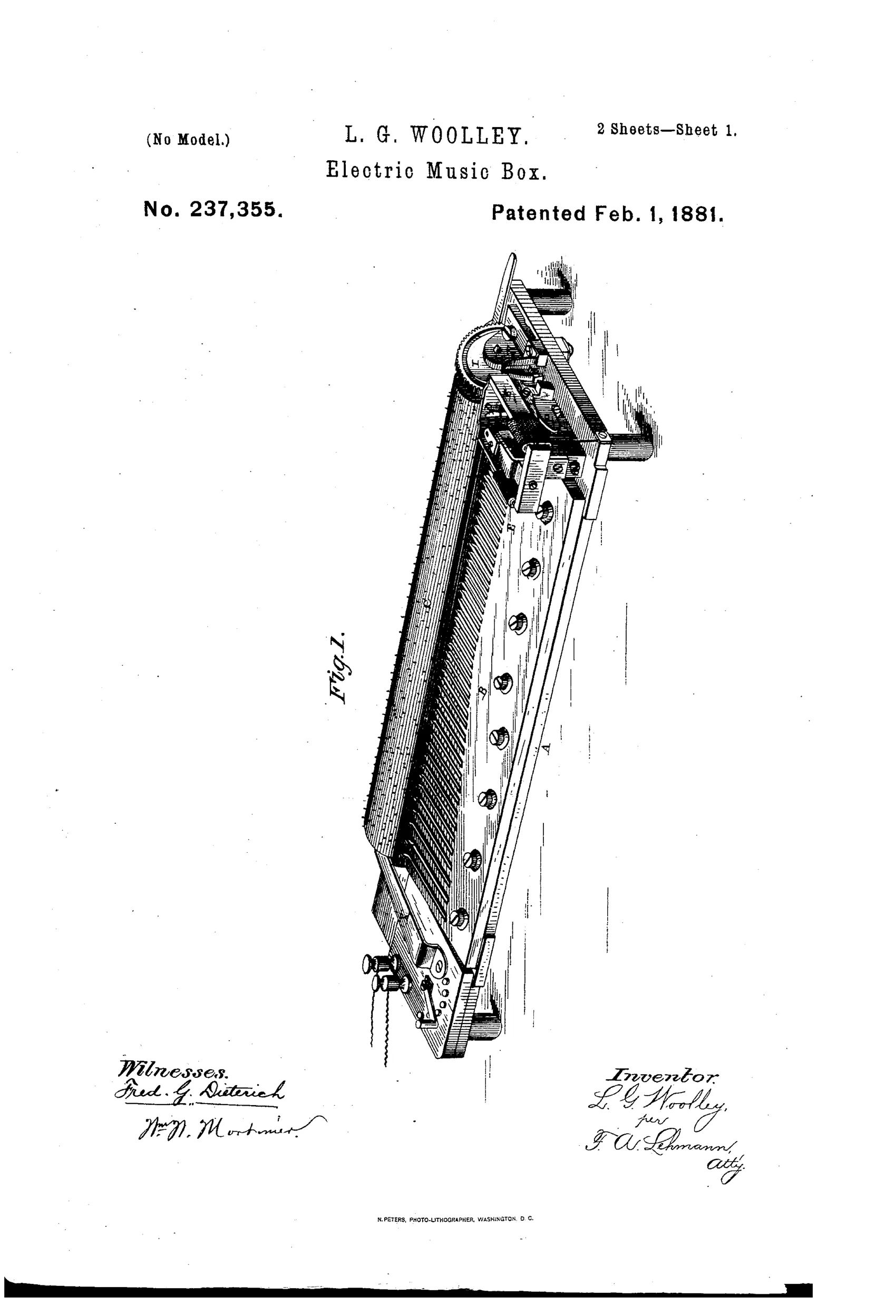
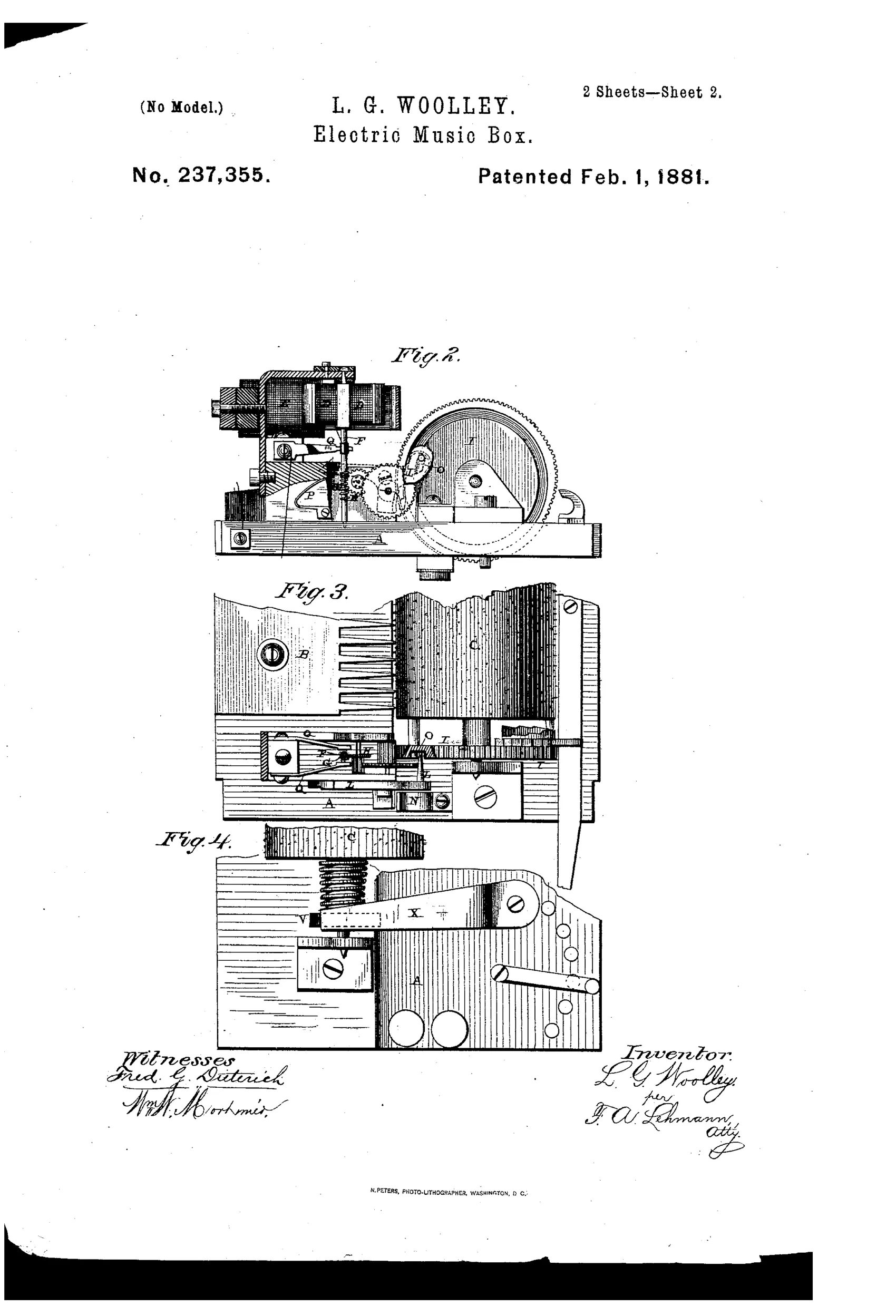
Electrically driven and regulated music box mechanism
♫ How it works
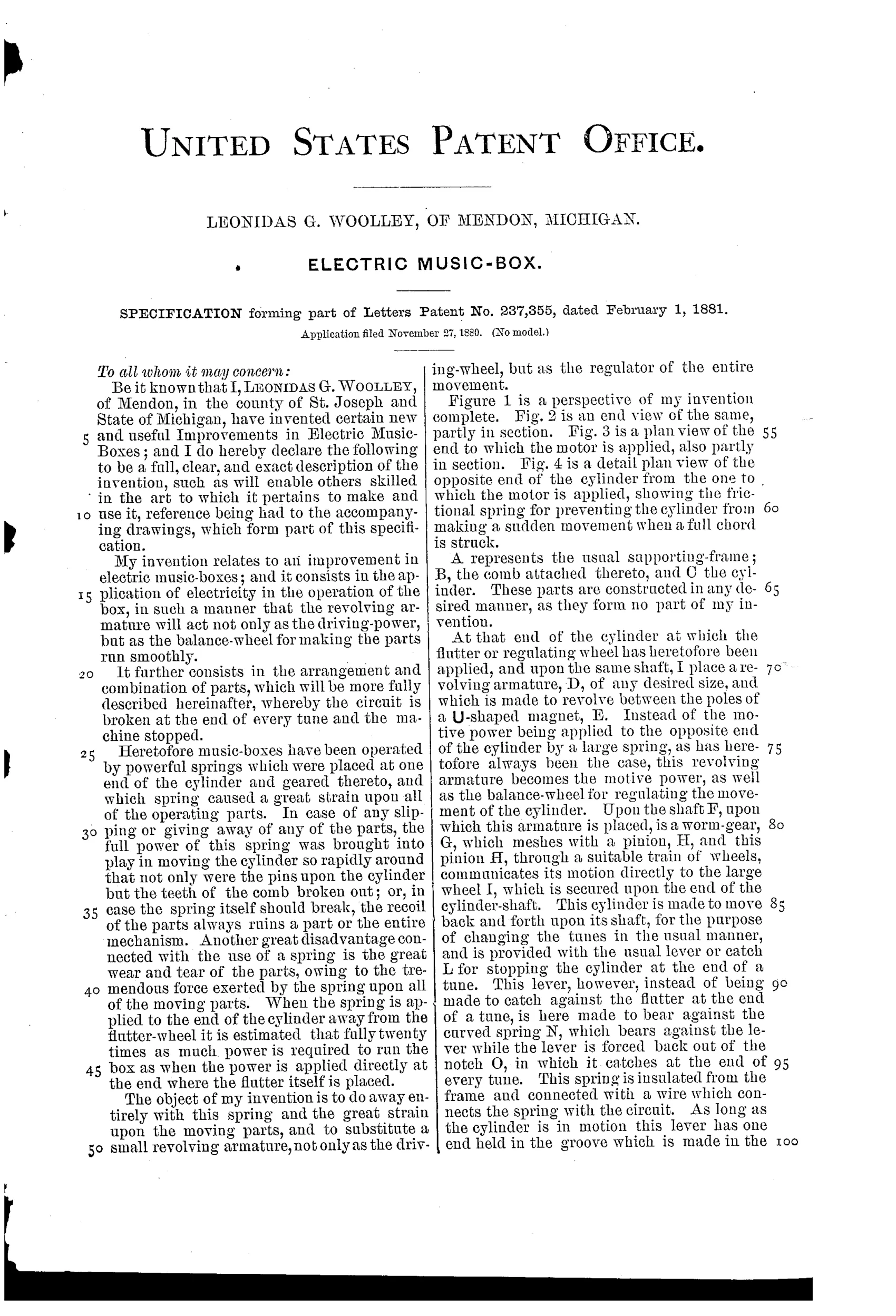
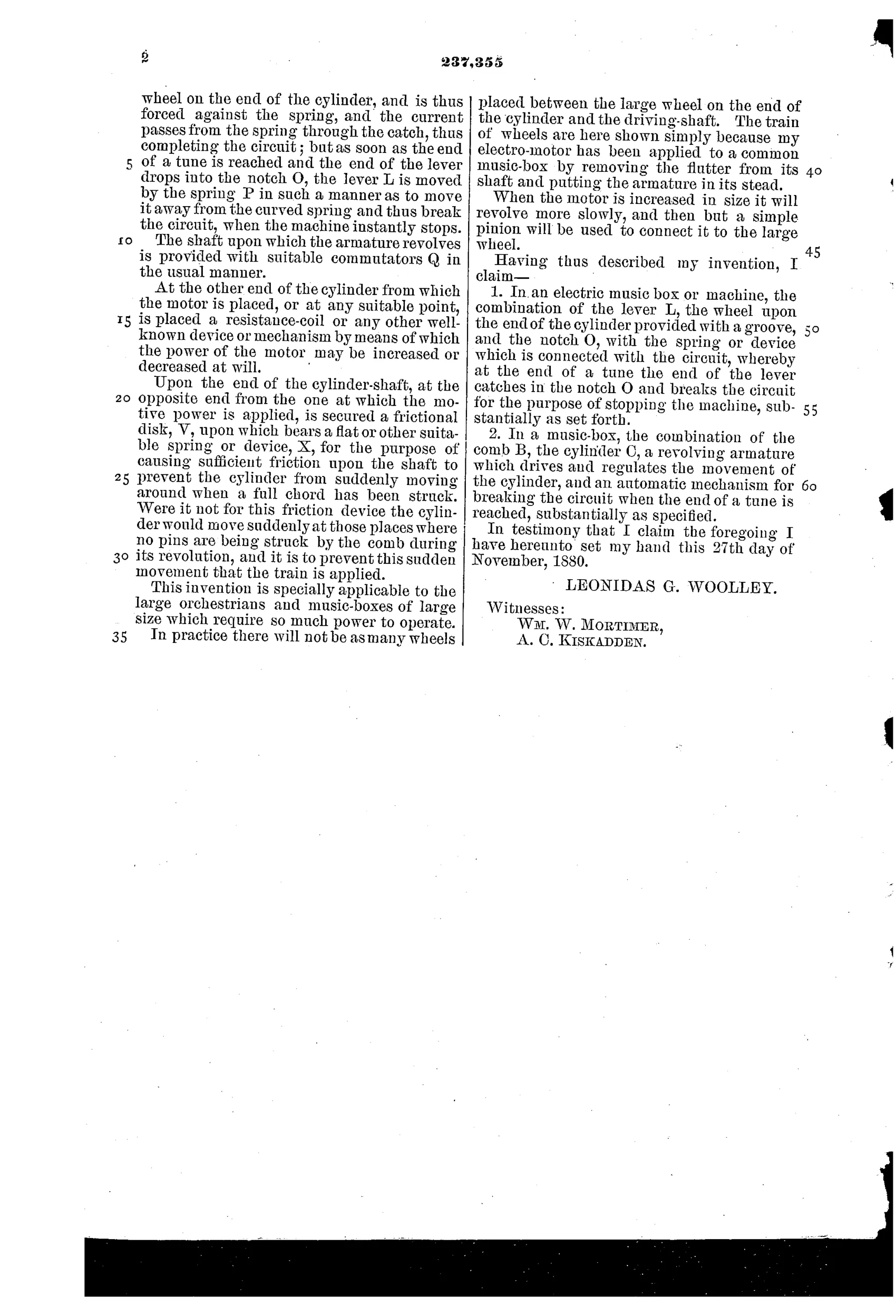
A revolving electromagnetic armature mounted on the cylinder shaft, spinning between the poles of a U-shaped magnet, serves as both the motive power and the governor for the cylinder, replacing the traditional mainspring and flutter-wheel. The armature shaft carries a worm-gear that meshes with a pinion, which through a train of wheels drives a large wheel secured to the cylinder shaft, turning the pinned cylinder against the comb. A lever engages a groove and notch on a wheel at the cylinder's end so that at the end of a tune the lever drops into the notch, pulls away from a curved spring, and breaks the electric circuit to stop the machine automatically. A frictional disk and spring at the opposite end of the cylinder shaft apply drag to prevent sudden jerky movement of the cylinder when a full chord is struck.
♫ What was claimed
“In an electric music box or machine, the combination of the lever L, the wheel upon the end of the cylinder provided with a groove, and the notch O, with the spring or device which is connected with the circuit, whereby at the end of a tune the end of the lever catches in the notch O and breaks the circuit for the purpose of stopping the machine, substantially as set forth.”
In plain English: A lever, grooved wheel, and notch combination that automatically breaks the electrical circuit to stop the music box at the end of a tune.
♫ In the inventor’s words
“The object of my invention is to do away entirely with this spring and the great strain upon the moving parts, and to substitute a small revolving armature, not only as the driving-wheel, but as the regulator of the entire movement.”— Leonidas G. Woolley, from the specification
Fate unknown
No production example or trade record is known to me; a surviving marked instrument or period advertisement would settle it.
♫ Commentary
In 1881 the mainspring was the heart of every cylinder music box, and it was a troublesome heart — winding, breakage, and the constant strain it put on the gear train. Woolley's answer was radical for a small-town Michigan inventor: throw the spring out entirely and put a little electromagnetic armature on the works, spinning between the poles of a U-shaped magnet. The clever twist is that the armature doubles as its own governor, replacing the flutter-wheel air brake that Swiss boxes used to keep tempo. One rotating part does the job of two.
The details show he was thinking about real playing problems, not just novelty. The friction disk and drag spring at the far end of the cylinder shaft exist because an electric drive, unlike a heavy wound spring, can jerk when the comb suddenly loads up on a full chord. And the stop mechanism is genuinely neat: a lever riding a grooved wheel drops into a notch at tune's end and physically breaks the electric circuit — an automatic stop that turns the machine off rather than merely braking it.
The catch is 1881 itself. Batteries were messy and weak, house current didn't exist, and Swiss spring movements were cheap and reliable. This is a dead end on the timeline — but electric phonograph motors would vindicate the instinct twenty-five years later.
Commentary by Claude, The Talking Machine Patent Archive’s resident enthusiast