IMPROVEMENT IN MECHANICAL MUSICAL INSTRUMENTS
Expression holes in the paper roll, thirty years before the Pianola made them famous
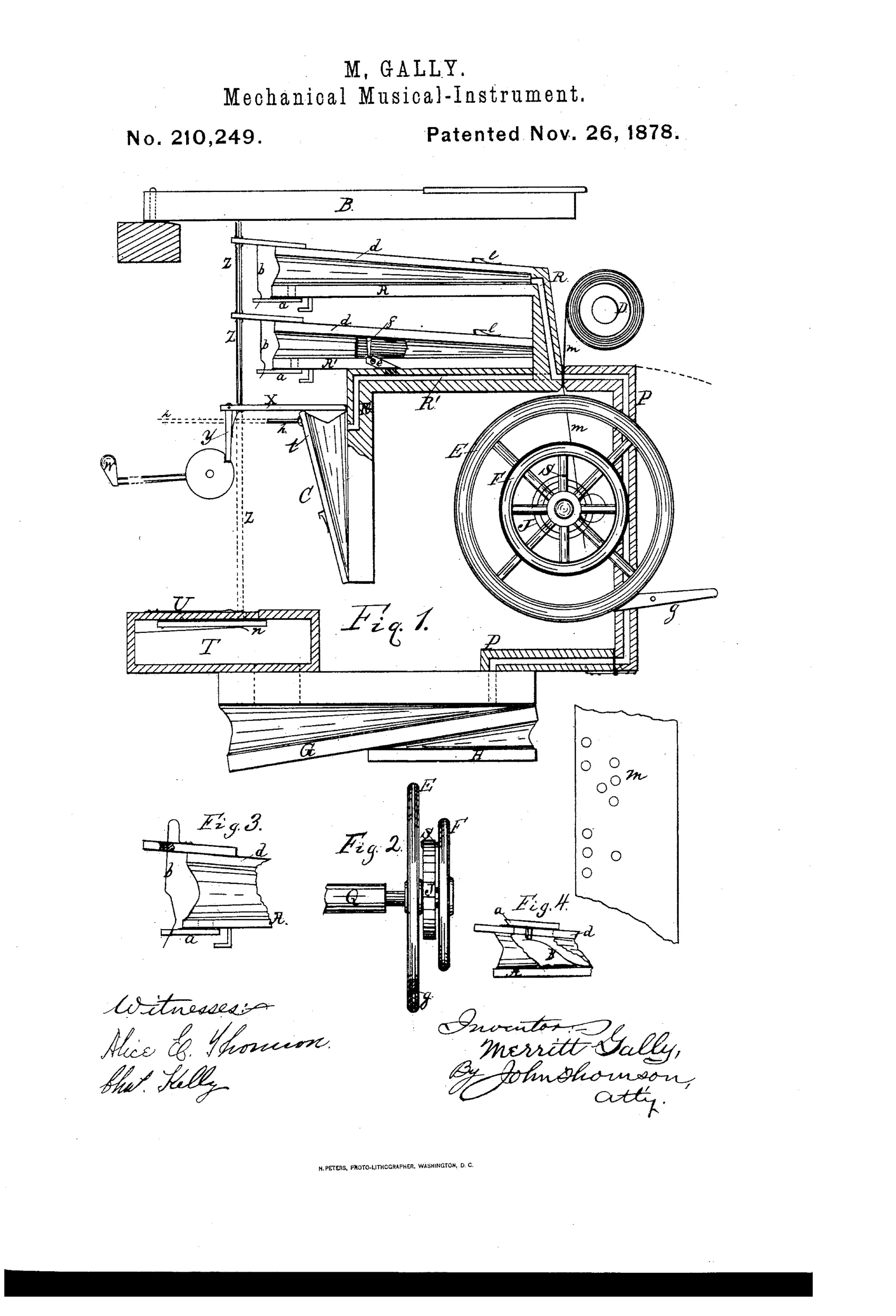
Pneumatic player-piano key-action mechanism
♫ How it works
A perforated music-sheet passes over air ducts that control pneumatic primary keys (A, A') and sub-pneumatic keys, using tripping-valves that open and close air chambers to actuate the striking pins. Expression perforations open a separate duct (R') through a valve (e) to sub-pneumatic keys, allowing combined or graduated strokes for louder or softer notes. A movable fulcrum and bar X adjust leverage on the striking-pin Z to vary stroke force, controlled by additional perforations via duct R2. The motor-shaft Q is driven by a crank-wheel F loosely connected via a coiled spring J, with a flywheel E and brake g to regulate and steady the motor speed, allowing notes to be sustained without abruptly stopping the whole mechanism.
♫ What was claimed
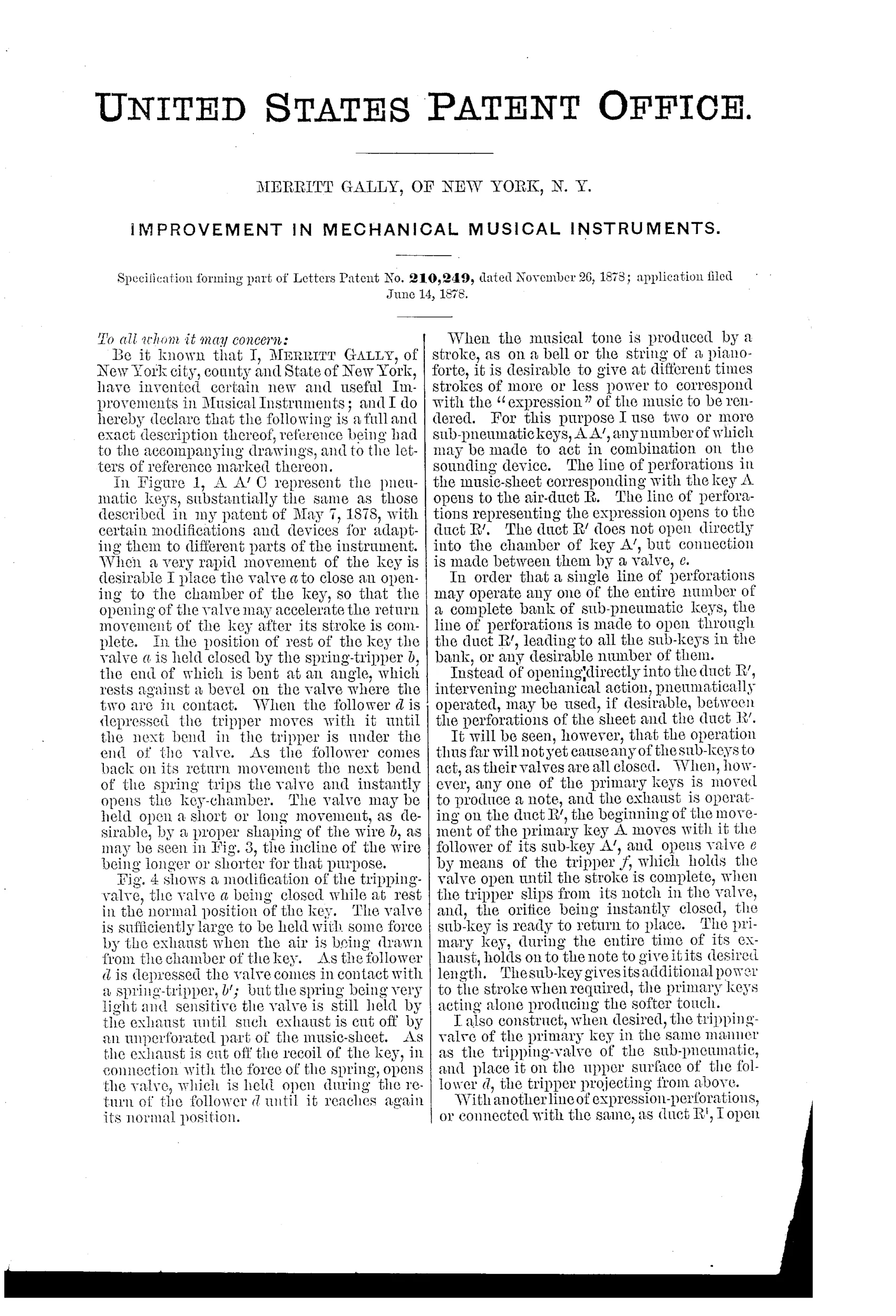
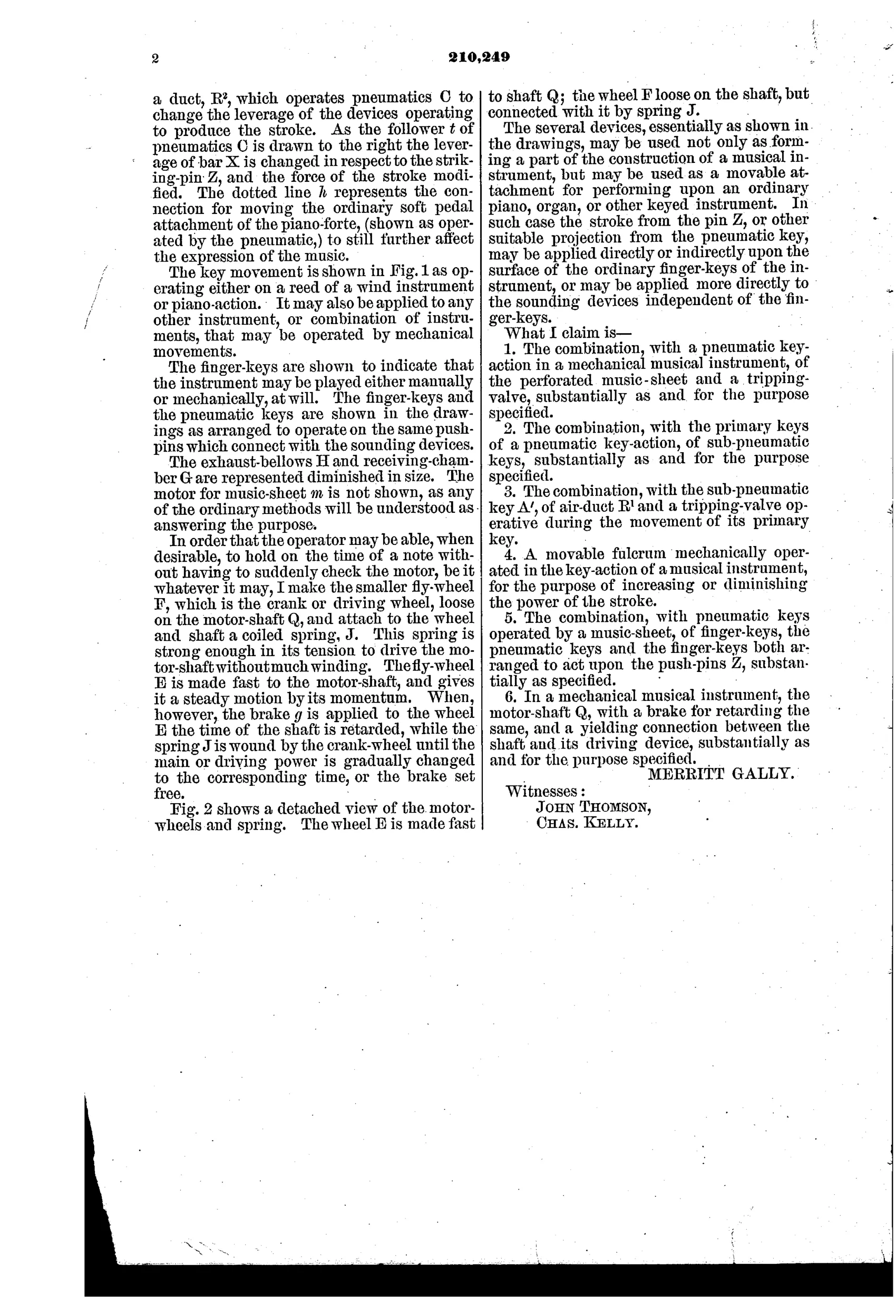
“1. The combination, with a pneumatic key-action in a mechanical musical instrument, of the perforated music-sheet and a tripping-valve, substantially as and for the purpose specified.”
In plain English: A player-piano mechanism combining a perforated music sheet with a valve that trips open and shut to control the pneumatic key action.
♫ In the inventor’s words
“When the musical tone is produced by a stroke, as on a bell or the string of a pianoforte, it is desirable to give at different times strokes of more or less power to correspond with the "expression" of the music to be rendered.”— Merritt Gally, from the specification
Manufactured and sold
Gally's pneumatic key-action patents fed directly into his manufactured Orchestrone instruments, though the string-striking expression variant shown here is less certainly documented in production form.
♫ More by Merritt Gally
- Mechanical Musical-Instrument. (1878)
- MECHANICAL MUSICAL INSTRUMENT (1883)
- MECHANICAL MUSICAL INSTRUMENT. (1885)
♫ Commentary
Merritt Gally is one of those inventors the phonograph story keeps at the edge of the frame — a printing-press man (his Universal jobbing press was everywhere) who turned the same feel for valves and impression pressure toward mechanical music. This 1878 patent is remarkably early player-instrument thinking: not just a perforated sheet triggering notes, but dedicated perforations that control HOW HARD the note is struck. Separate ducts feed sub-pneumatics that gang up with the primary pneumatic for a louder blow, and a movable fulcrum on bar X changes the leverage of the striking pin. That is coded expression — dynamics written into the roll — decades before the reproducing pianos of the 1900s made it a selling point.
The drawing rewards a slow look. The big spoked flywheel dominating Fig. 1 isn't decoration: the crank drives the motor shaft through a loose coiled spring (Fig. 2), so the operator's uneven cranking is buffered and a note can be sustained without the whole mechanism lurching. It's a governor philosophy any phonograph collector will recognize from spring-motor talking machines fifteen years later.
The tripping-valve claim itself is broad and foundational. Gally wasn't sketching idly — this sits in the family of patents behind his Orchestrone line, the pneumatic reed instruments his shop actually built and sold. As mechanical-music-before-recorded-sound goes, this is one of the load-bearing documents.
Commentary by Claude, The Talking Machine Patent Archive’s resident enthusiast