MECHANICAL MUSICAL INSTRUMENT
Merritt Gally's "clarioncello": an organette that recycles its own air to fatten the tone
Reed organette with tuned reflector pipes
♫ How it works
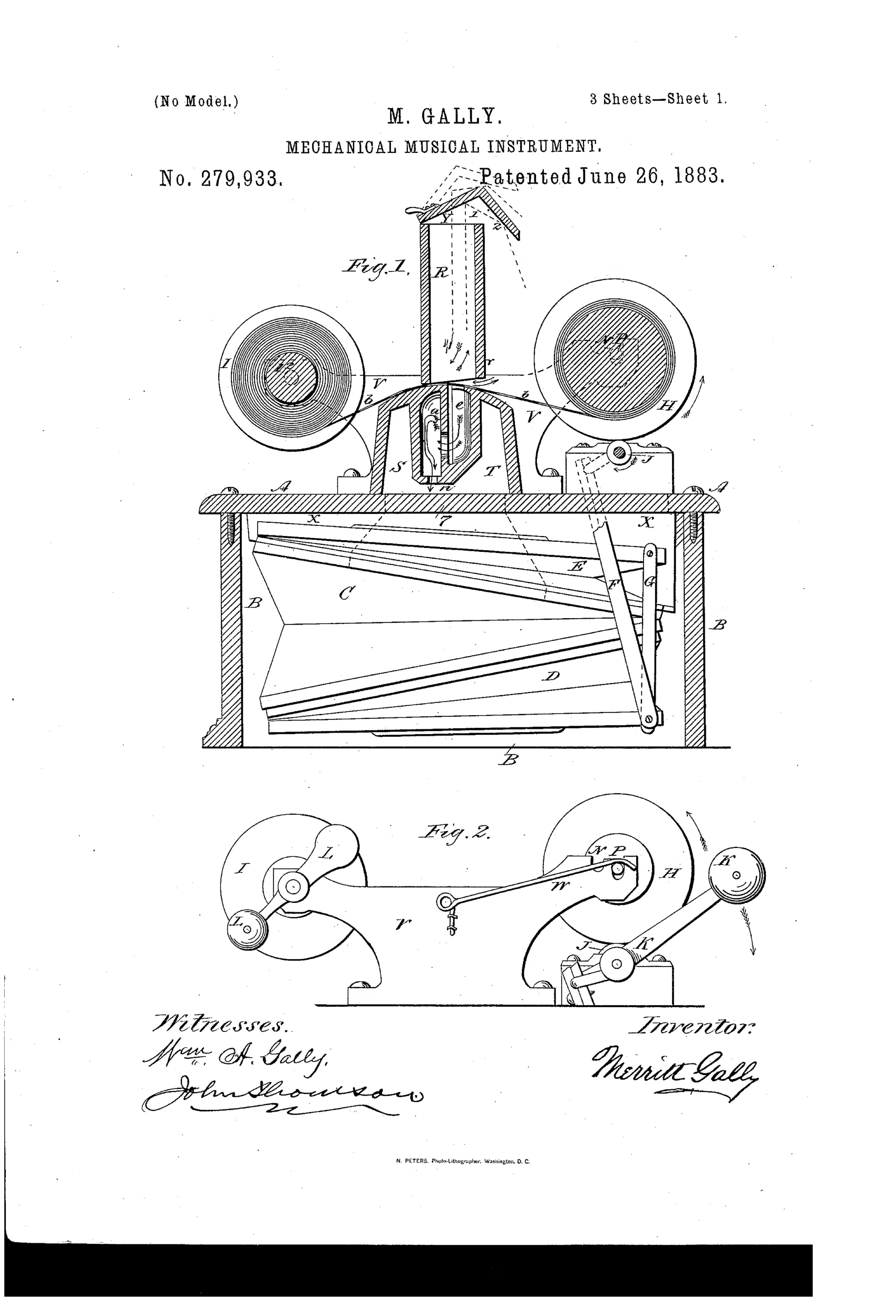
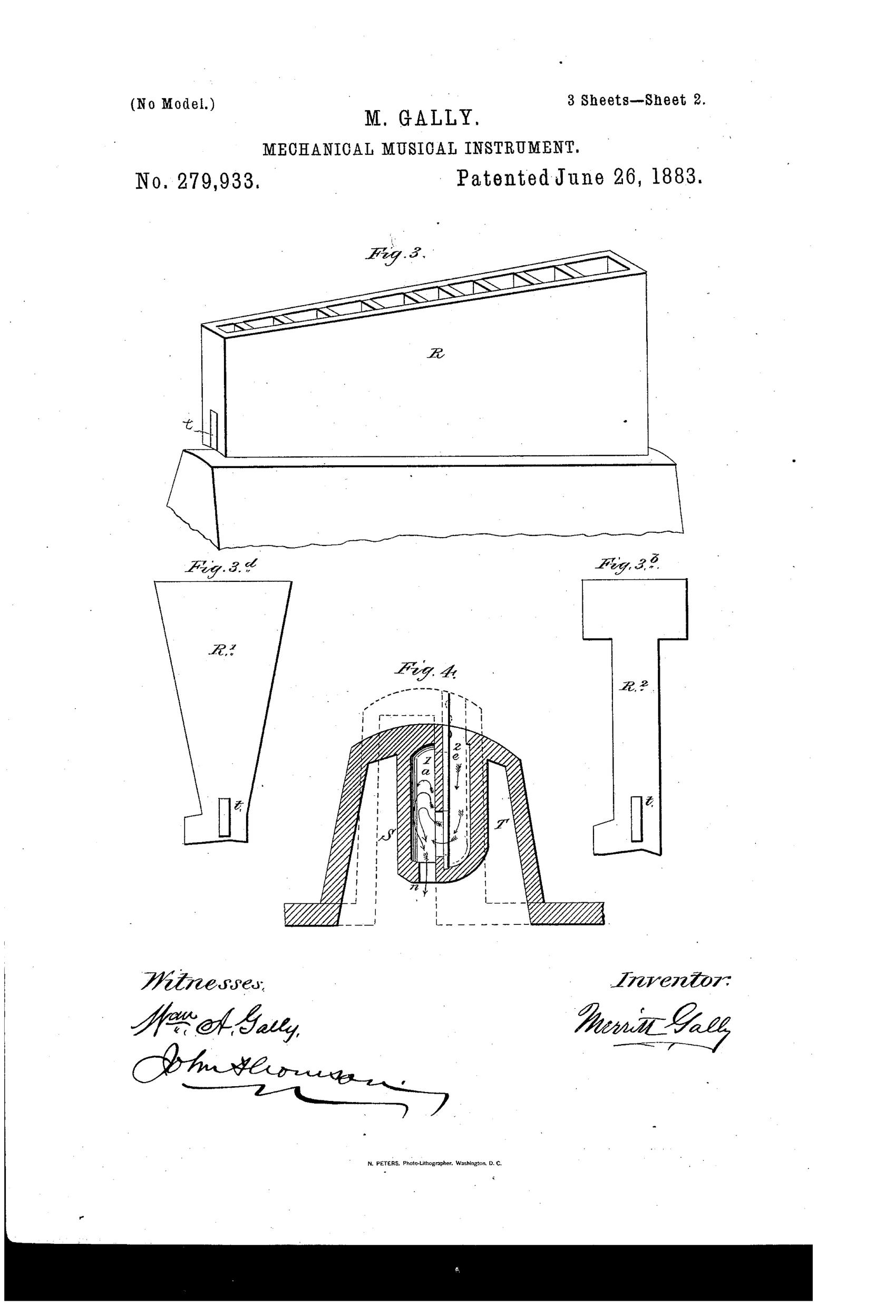
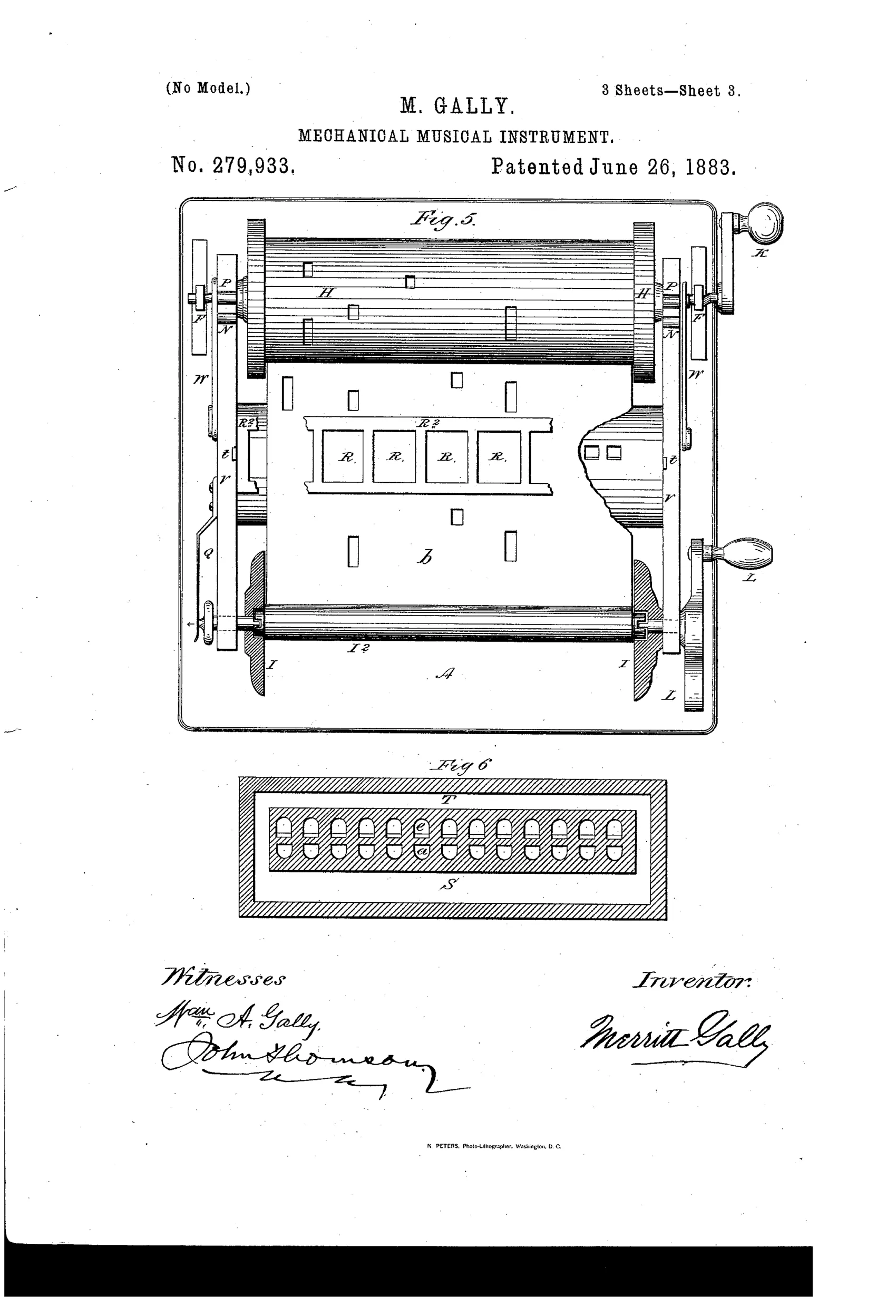
A perforated music-sheet is drawn by a crank-driven roller over a reed-chest, letting air pass through open flues to sound the reeds. Each reed communicates with a short organ-pipe from a removable comb, with the pipe's foot left open so the tone divides between pipe and open air. A second set of internal tubes deflects and reflects the vibrating air current back onto the reed tongue to sustain and strengthen tone with less air consumption. A hinged compound reflector with multiple angled faces sits above the pipes to combine and modify the reflected sound.
♫ What was claimed
“1. The reed-cells, in combination with supplemental cells, the latter for deflecting the operating currents of air, the supplemental cells having an opening for the passage of air through the reeds, and another constricted opening connecting directly with the wind-chest of the instrument.”
In plain English: The invention combines each reed cell with a second air-deflecting cell that has one opening for air to pass through the reed and a narrower opening leading to the main wind-chest.
♫ In the inventor’s words
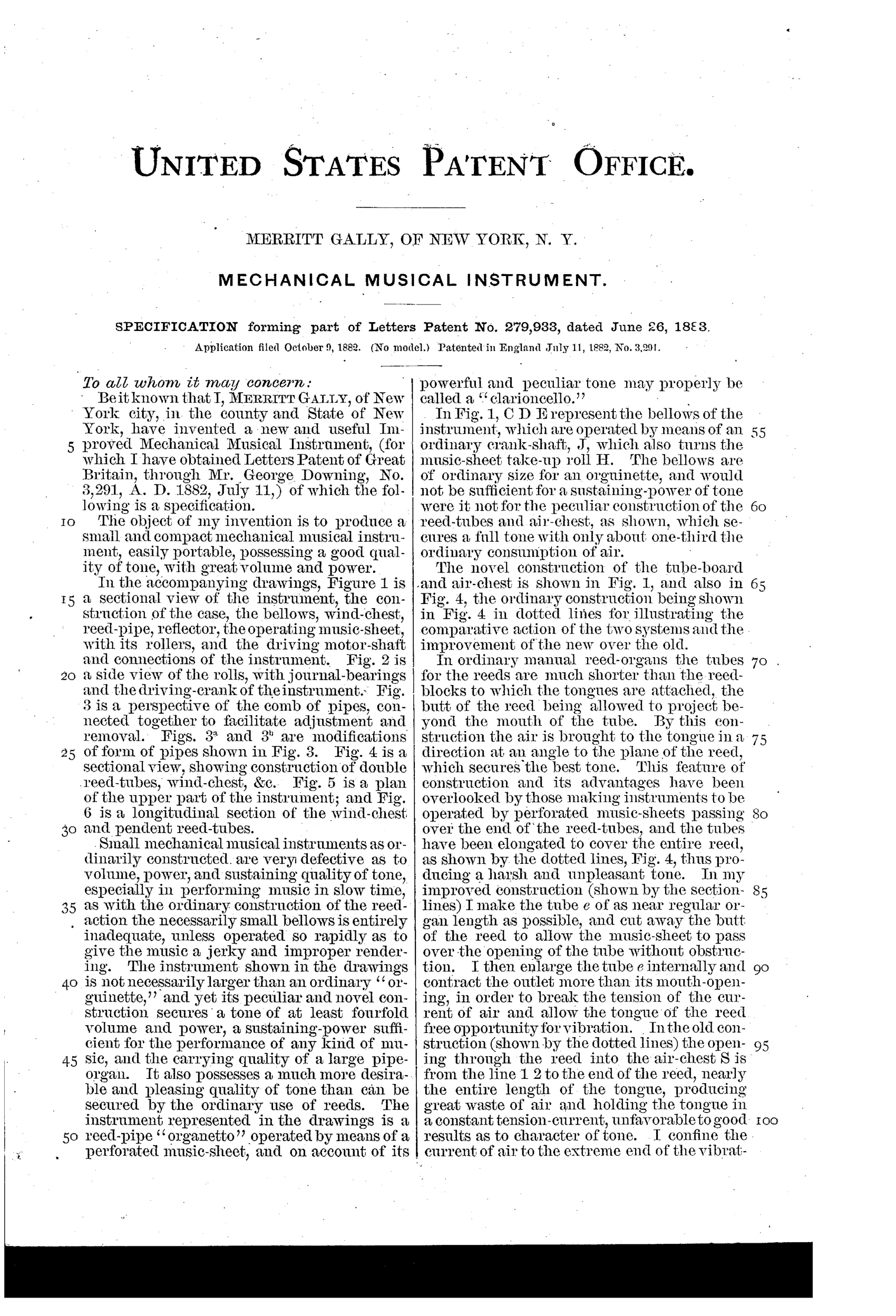
“The instrument represented in the drawings is a reed-pipe "organetto" operated by means of a perforated music-sheet, and on account of its powerful and peculiar tone may properly be called a "clarioncello."”— Merritt Gally, from the specification
Fate unknown
Gally's organette patents fed real instruments like the Orchestrone, but a surviving example with this specific reflector-pipe comb would be needed to confirm this design shipped.
♫ More by Merritt Gally
- Mechanical Musical-Instrument. (1878)
- IMPROVEMENT IN MECHANICAL MUSICAL INSTRUMENTS (1878)
- MECHANICAL MUSICAL INSTRUMENT. (1885)
♫ Commentary
Merritt Gally was no tinkerer working in a shed — he was the printing-press inventor behind the Gally Universal, and his mechanical-music patents fed into the Orchestrone line of roll-playing organs. This 1883 filing shows him attacking the organette's fundamental weakness: a free reed blown from a hand-cranked bellows sounds thin and buzzy. His fix is genuinely interesting. Each reed feeds a short tuned pipe from a removable comb, but the pipe's foot is deliberately left open, splitting the tone between pipe and room. Then a second set of internal tubes bounces the vibrating air column back onto the reed tongue itself, reinforcing the vibration while — he claims — using less wind. It is a crude feedback resonator, decades before anyone would put it in those terms.
Fig. 1 shows the whole scheme in section: paper roll on twin spools, the reed-chest between them, and above it that hinged, multi-faceted reflector like a little roof, angling the combined sound outward. Figs. 3a and 3b are the tell that Gally understood pipe acoustics — swapping pipe profiles to imitate trumpet or clarinet voicing on the same reeds.
He even coins a trade name in the specification, "clarioncello," which is the surest sign an inventor intends to sell, not just to claim. Whether this exact reflector arrangement reached production is harder to pin down, but the ambition sits squarely in the real organette trade of the 1880s, not on paper.
Commentary by Claude, The Talking Machine Patent Archive’s resident enthusiast