GRAMOPHONE NEEDLE OR STYLUS
Twelve needles stamped from one sheet, each tipped with a groove-riding ball
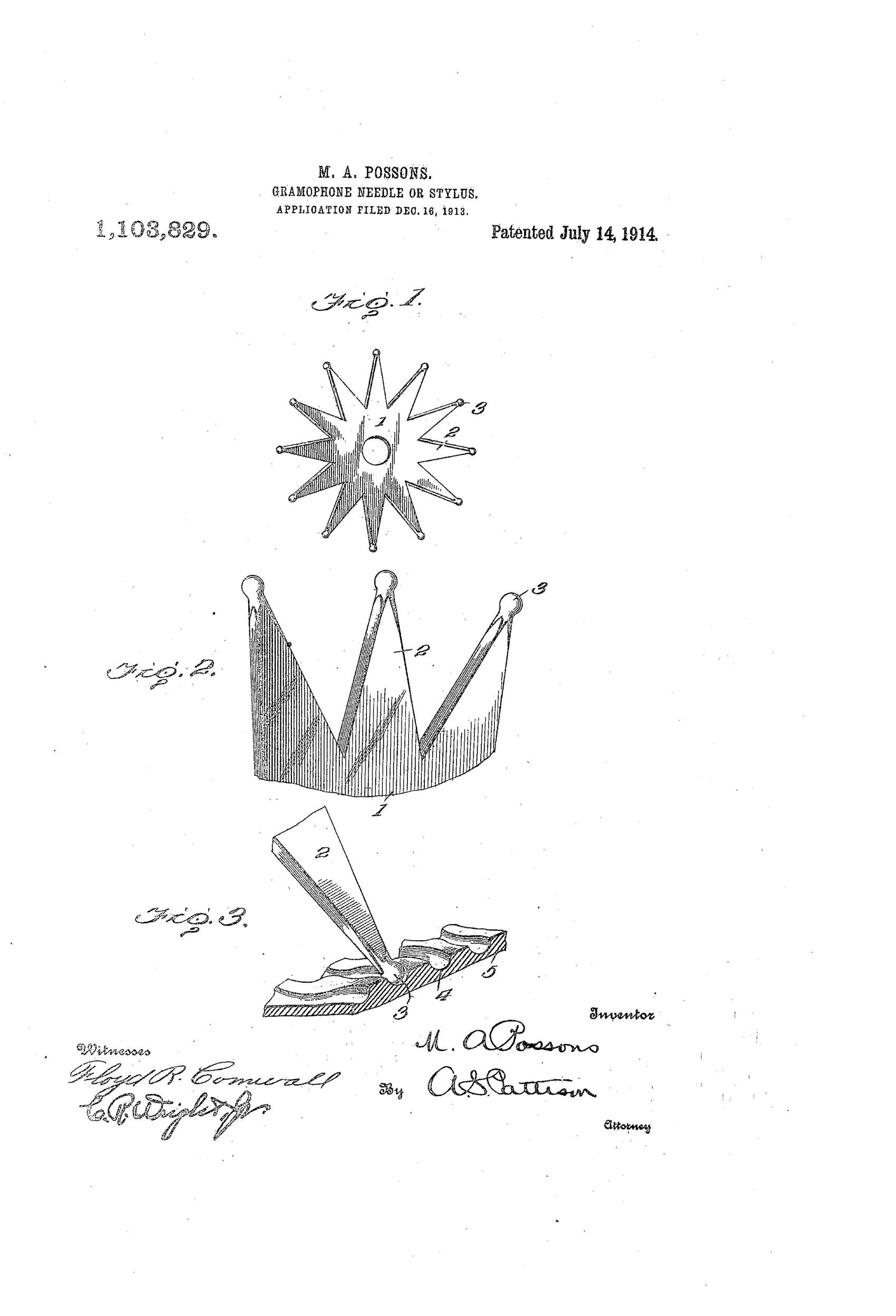
Star-shaped thin-metal gramophone stylus with rounded tips
♫ How it works
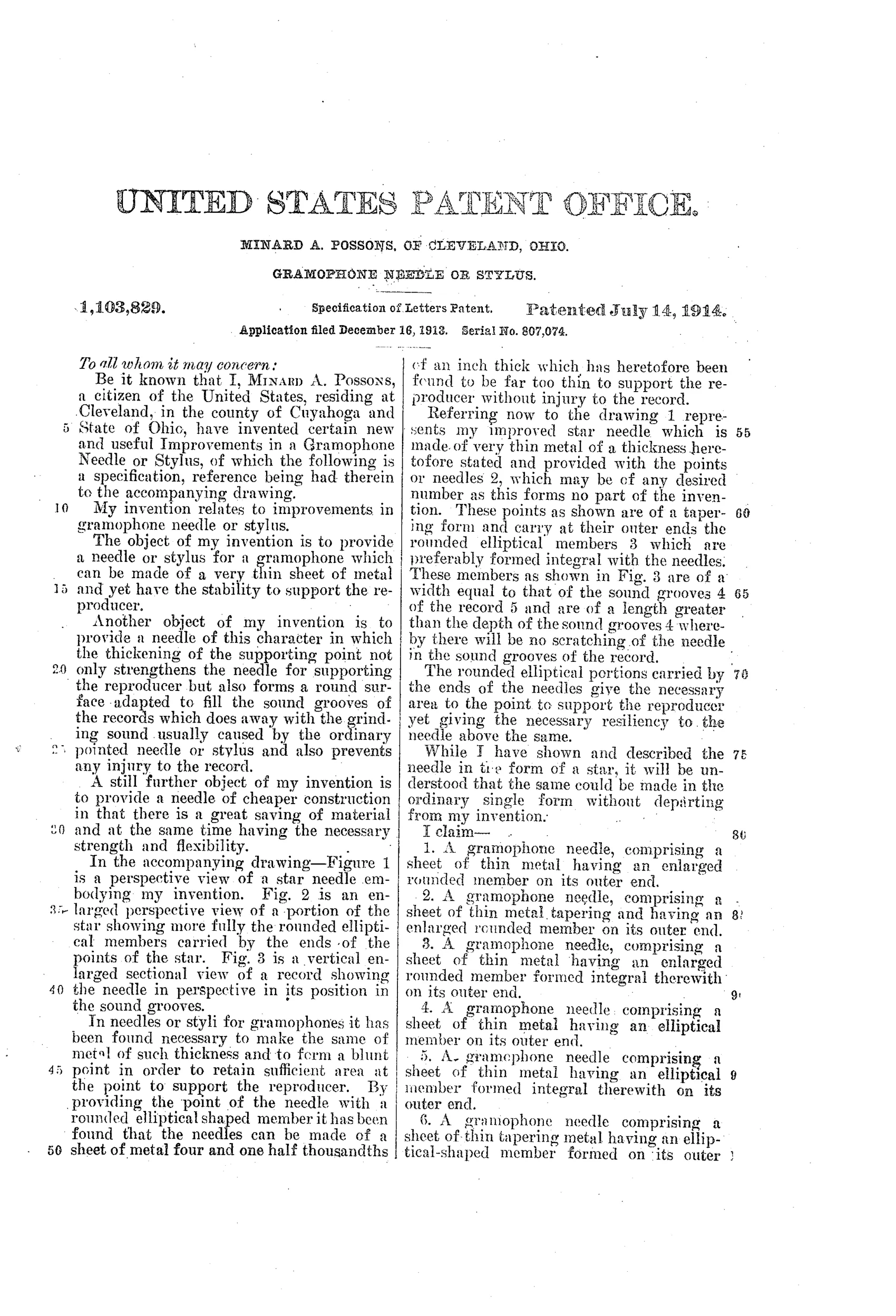
A thin sheet of metal is stamped into a star shape with multiple tapering points, each point serving as a needle for a gramophone reproducer. Each tapering point carries at its outer end an enlarged, rounded elliptical member formed integral with the needle. This elliptical member is sized to the width of the record's sound grooves and is longer than the groove depth, so it fills the groove and rides smoothly without scratching. The rounded tip gives enough bearing area to support the reproducer while the thin body of the needle above it remains flexible and resilient.
♫ What was claimed
“1. A gramophone needle, comprising a sheet of thin metal having an enlarged rounded member on its outer end.”
In plain English: A gramophone needle made from a thin sheet of metal that has an enlarged, rounded tip at its outer end.
♫ In the inventor’s words
“By providing the point of the needle with a rounded elliptical shaped member it has been found that the needles can be made of a sheet of metal four and one half thousandths of an inch thick which has heretofore been found to be far too thin to support the reproducer without injury to the record.”— Minard A. Possons, from the specification
Fate unknown
Novelty multi-point needles were sold in this era, but no marked Possons star needle is documented; a surviving example or trade advertisement would settle it.
♫ Commentary
Steel needles were the razor blades of the gramophone era — you were supposed to change them after every side, and whole industries grew up around selling little tins of them. Possons attacks the problem from the manufacturing end: stamp a twelve-pointed star from thin sheet stock and you get a dozen needles in one press stroke, with a hole in the middle presumably for handling or mounting. Fig. 1 is the whole sales pitch in one image.
The genuinely thoughtful part is at the tip. Sheet metal four and a half thousandths thick is, as the specification admits, far too flimsy to carry a soundbox on a bare point — it would chatter and gouge the shellac. So each point ends in an enlarged elliptical bead, formed integrally, sized to fill the groove width and sit proud of the groove bottom. Fig. 3 shows it seated: the ball takes the bearing load on the groove walls while the thin blade above stays flexible. That flexibility is not incidental — a compliant needle shank was one of the standard tricks for softening the harshness of steel-needle playback.
The open question is whether a stamped edge could ever be finished smoothly enough not to chew records; ground and polished needle points existed precisely because raw stamped edges were abrasive. Multi-point and novelty needles did circulate in this period, so the idea wasn't absurd — but the tolerance demands at the tip were brutal for a press operation.
Commentary by Claude, The Talking Machine Patent Archive’s resident enthusiast