TALKING-MACHINE
An advertising phonograph built to repeat its pitch forever, one step at a time
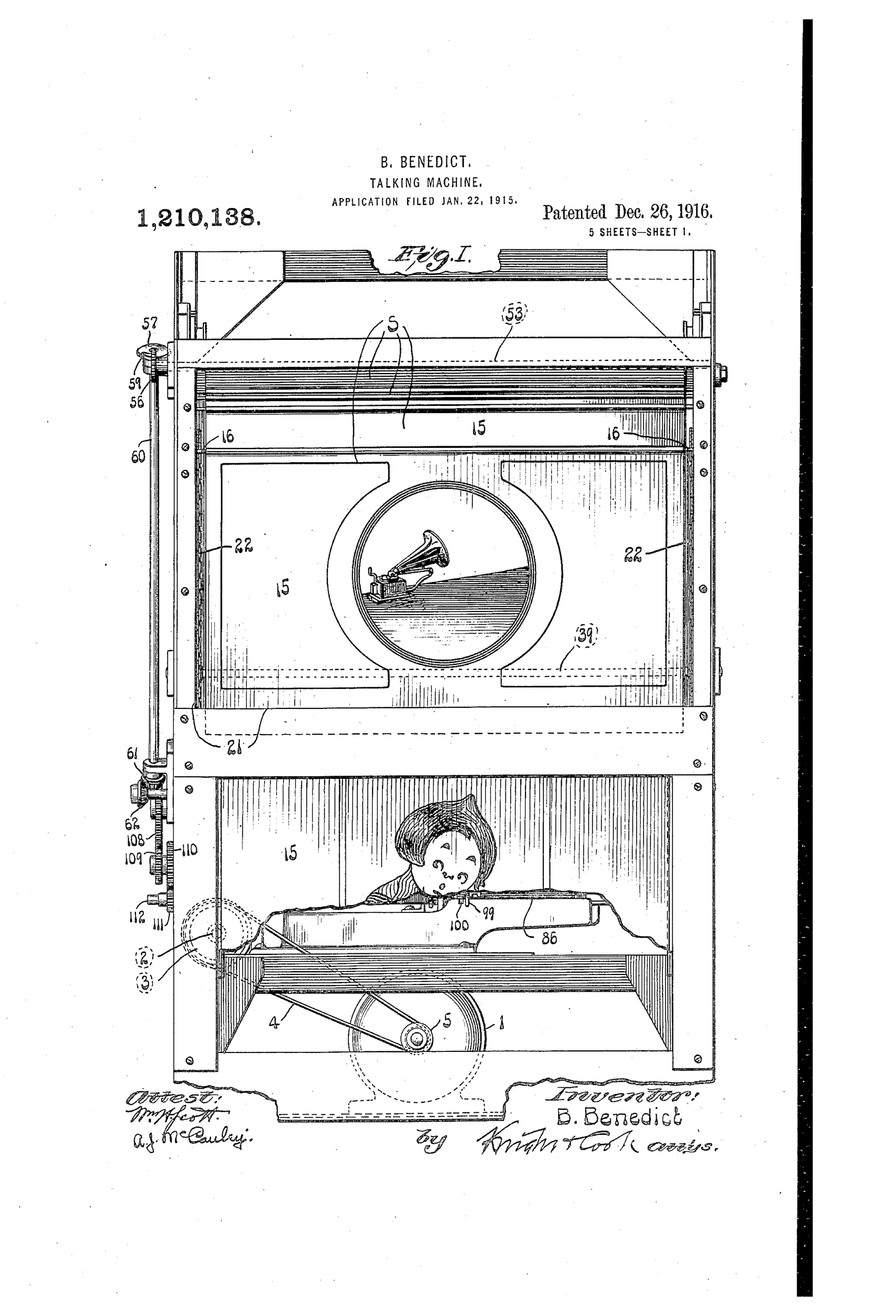
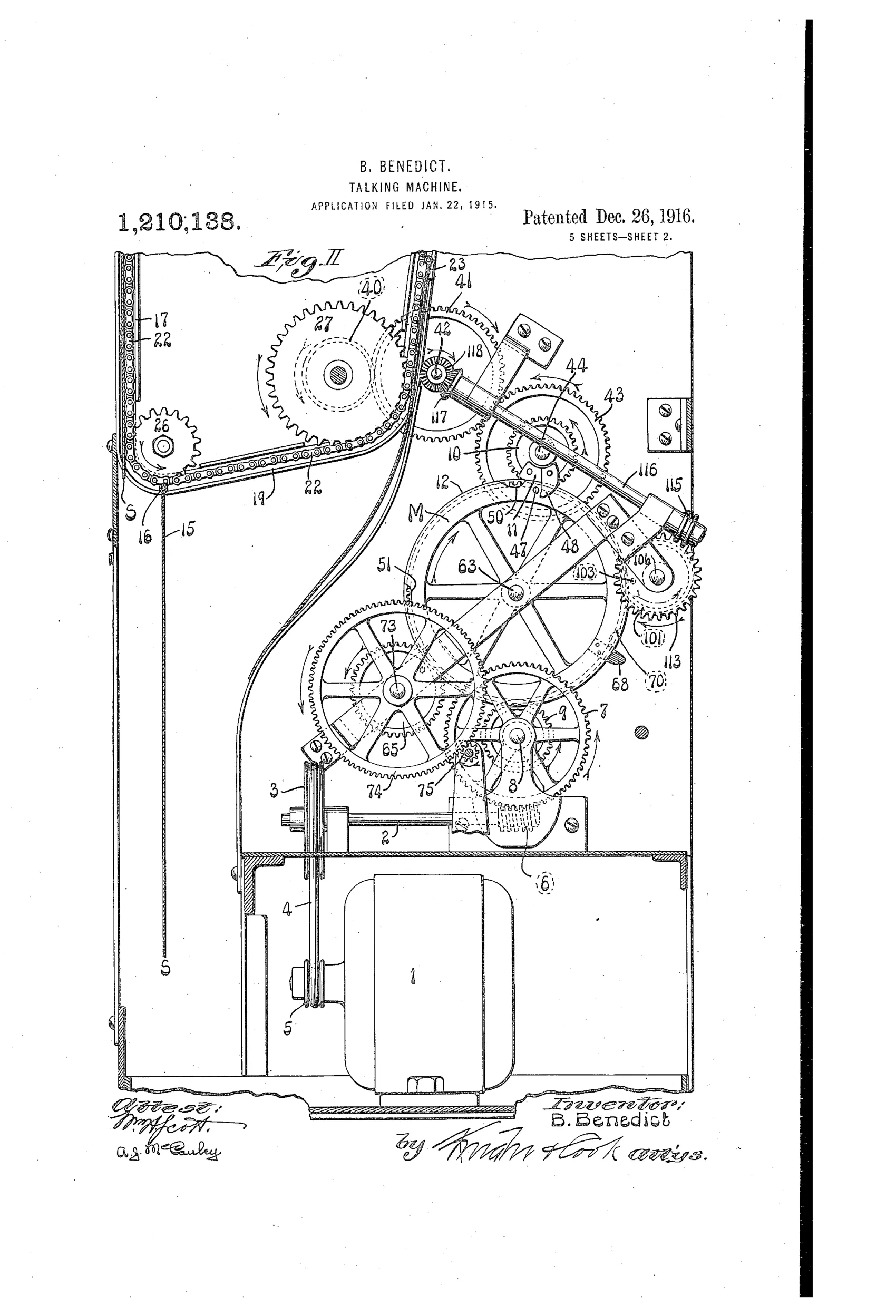
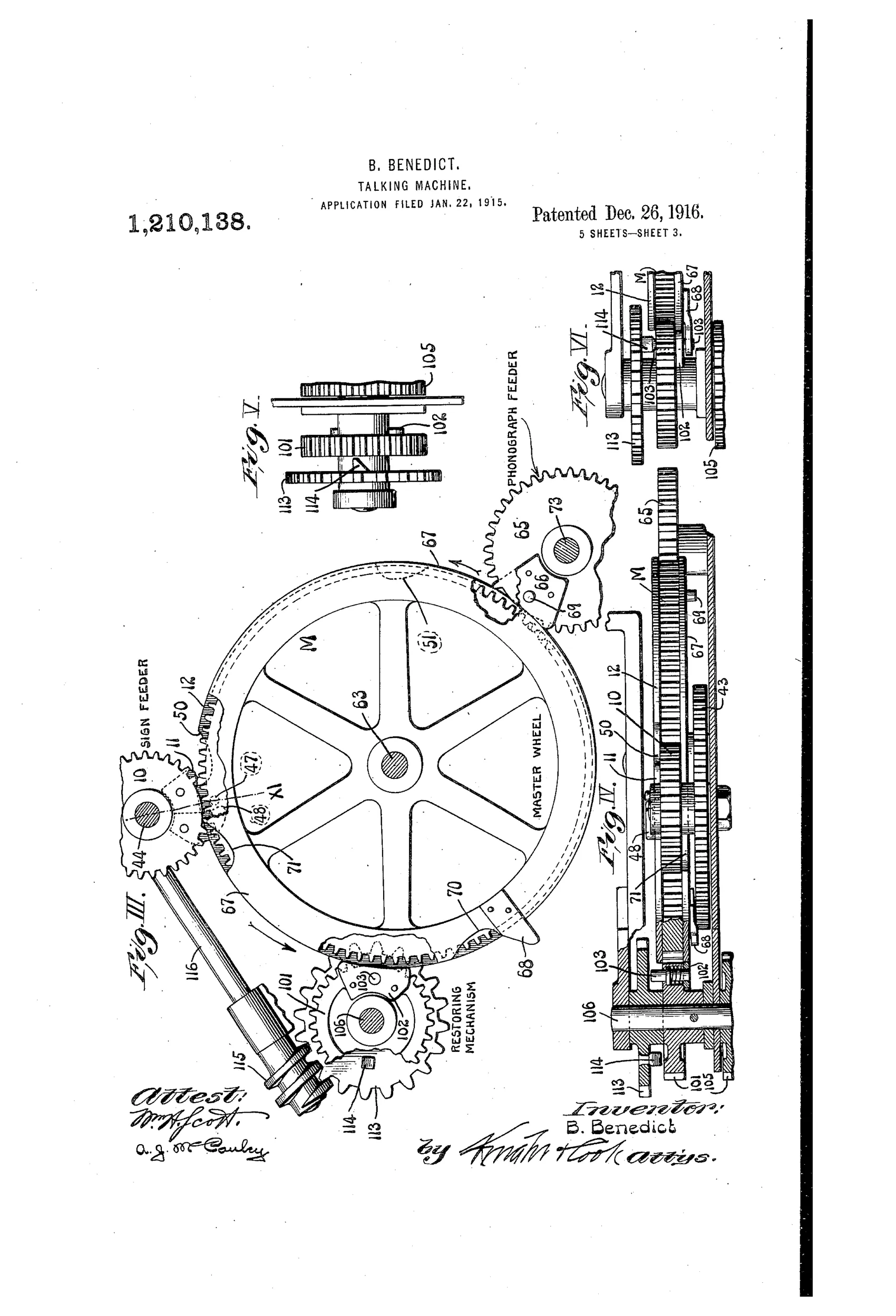
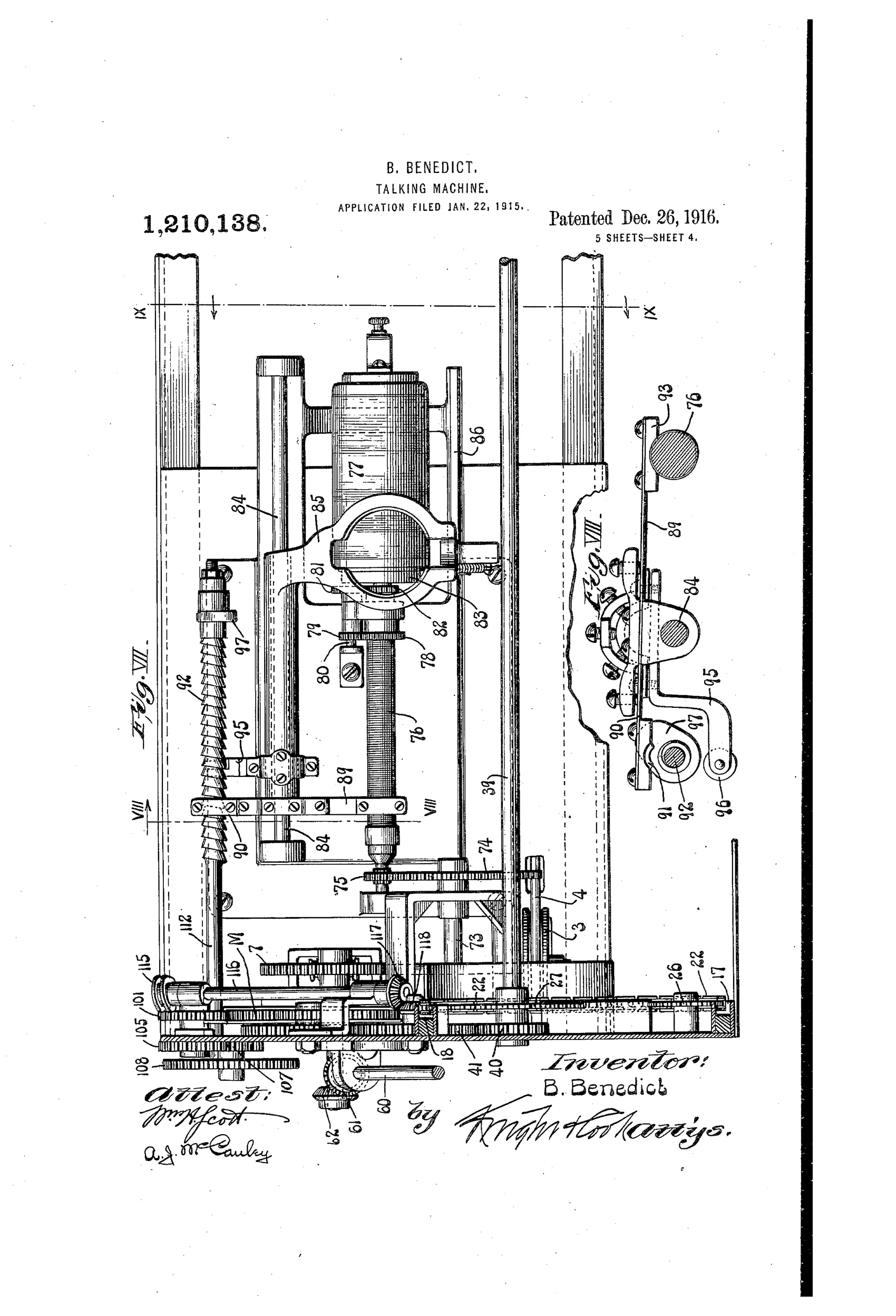
Phonograph with automatic step-feed and reset carriage
♫ How it works
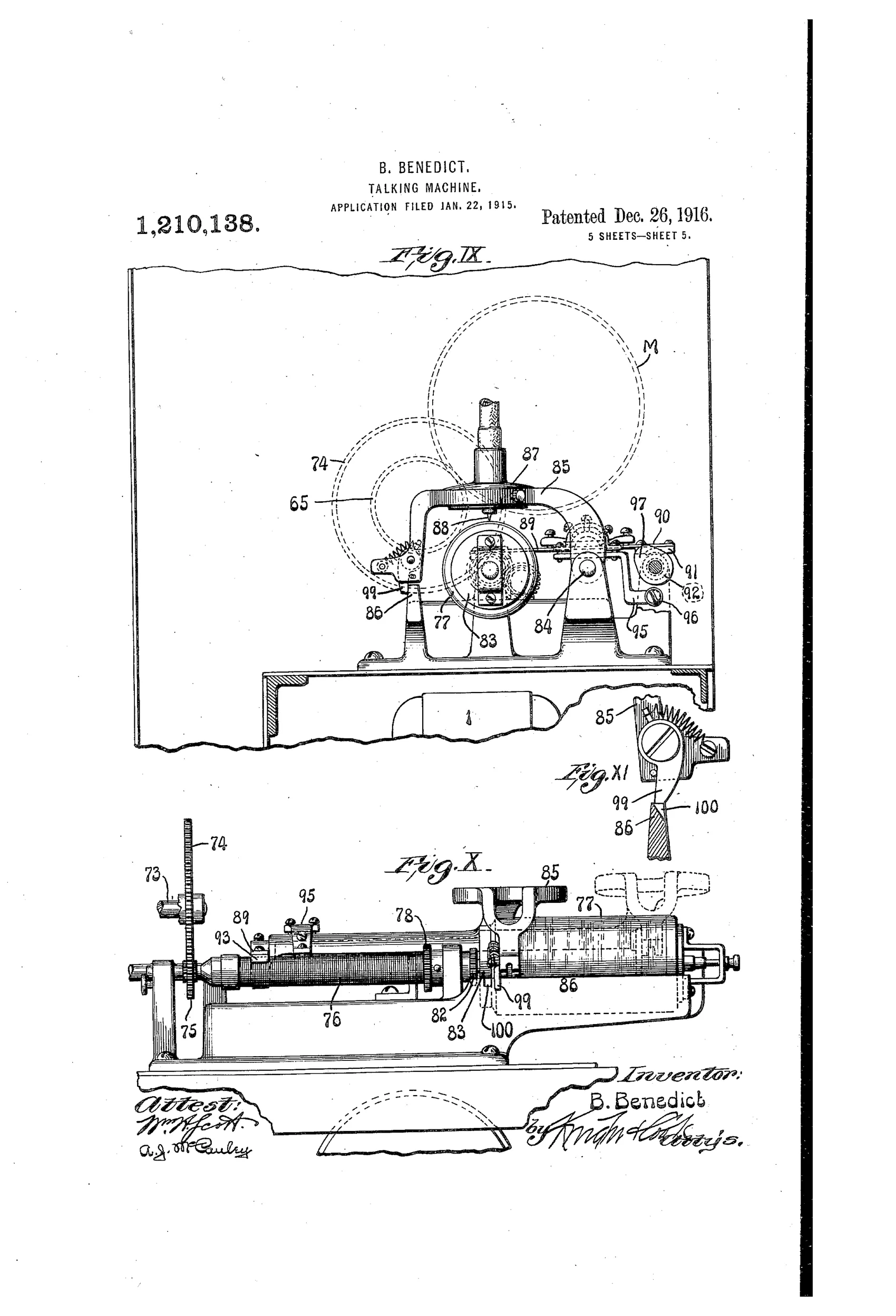
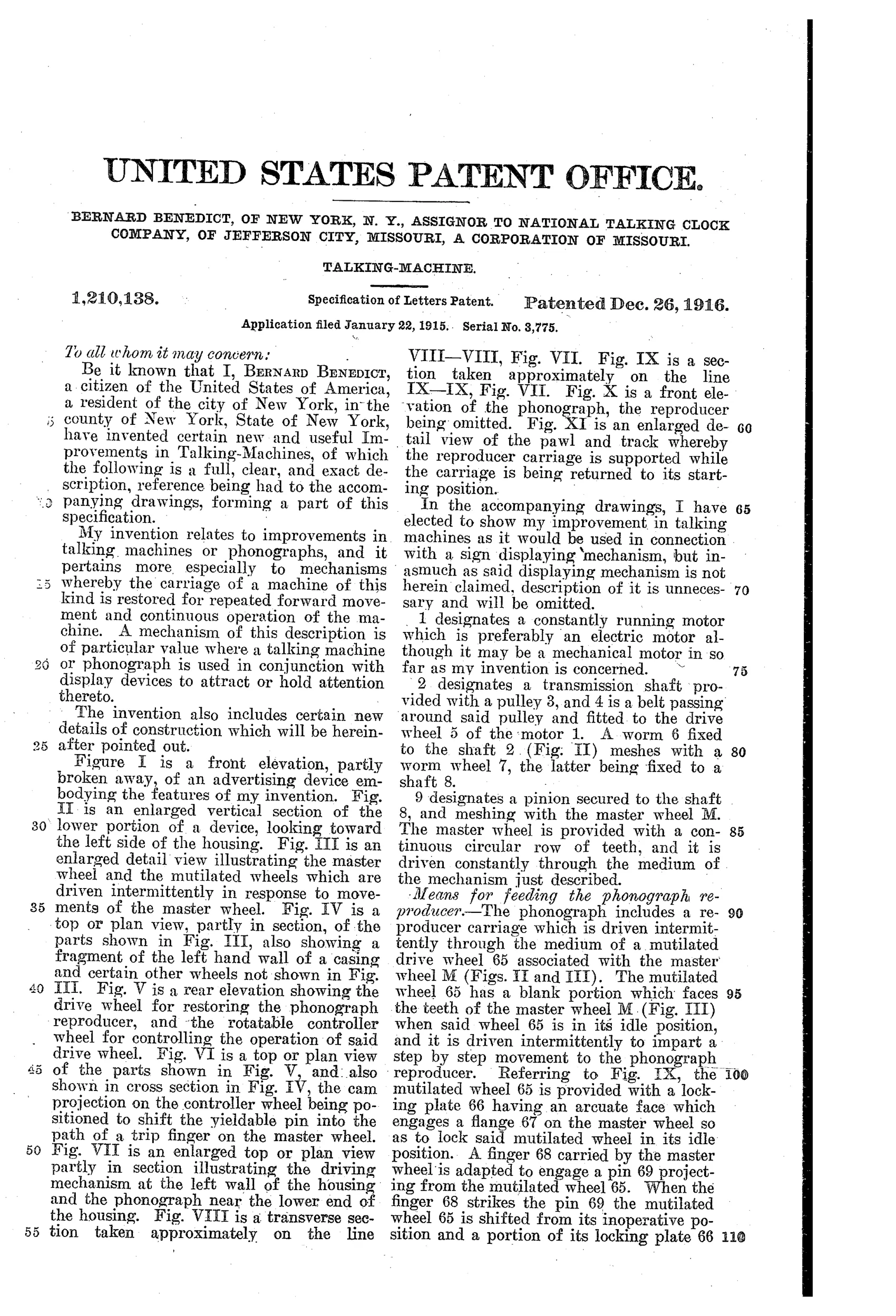
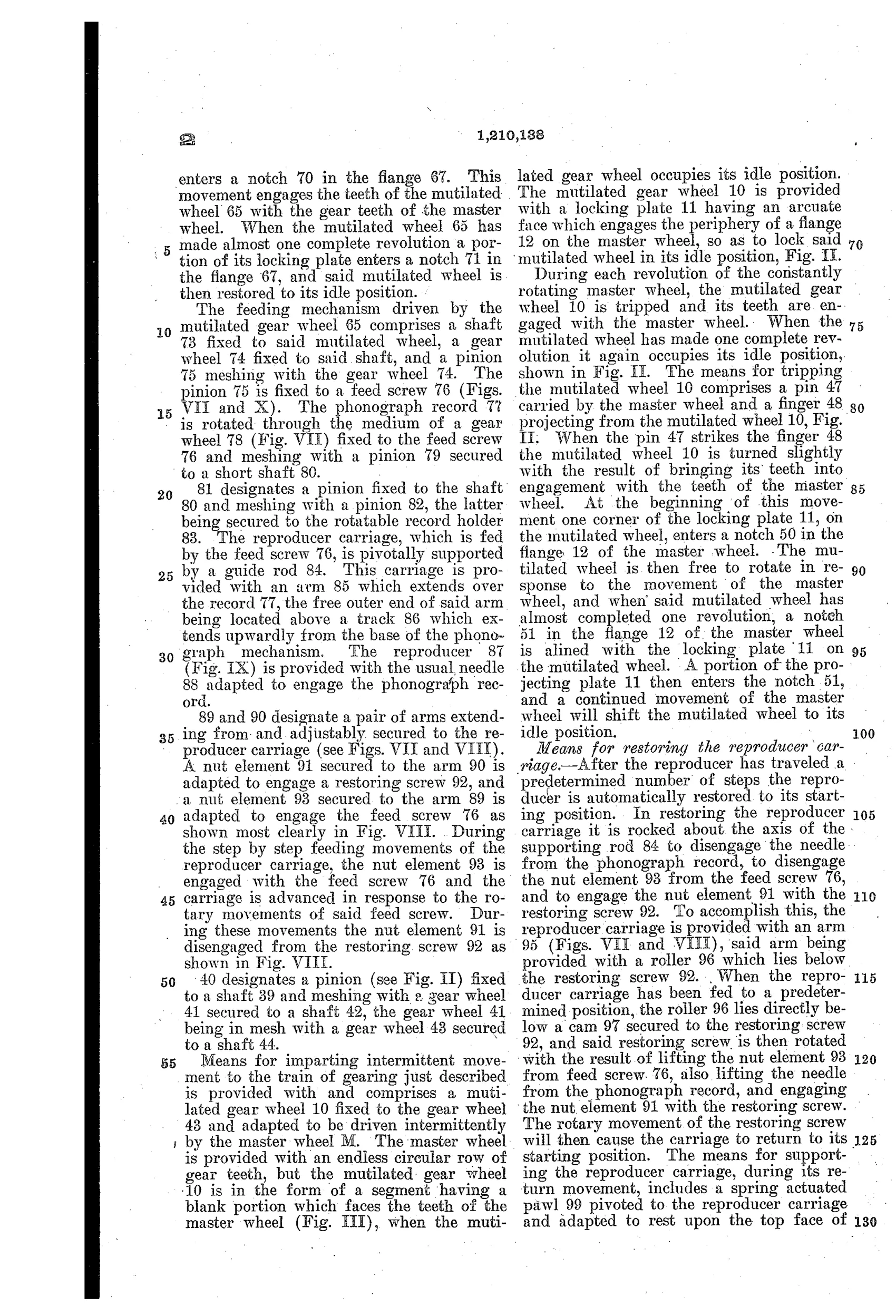
A constantly running motor drives a master wheel through a worm and gear train. The reproducer carriage is fed step by step along the phonograph record by a feed screw driven intermittently through mutilated gear wheels engaged periodically by the master wheel. After a predetermined number of steps, a spring-pressed pin is shifted into the path of a tripping finger on the master wheel, engaging a restoring drive train that rotates a restoring screw. This restoring screw lifts the reproducer carriage's needle from the record, disengages the feed nut, engages a restoring nut, and returns the carriage to its starting position, where a spring-actuated pawl drops it back into engagement with the record for continuous repeated operation.
♫ What was claimed
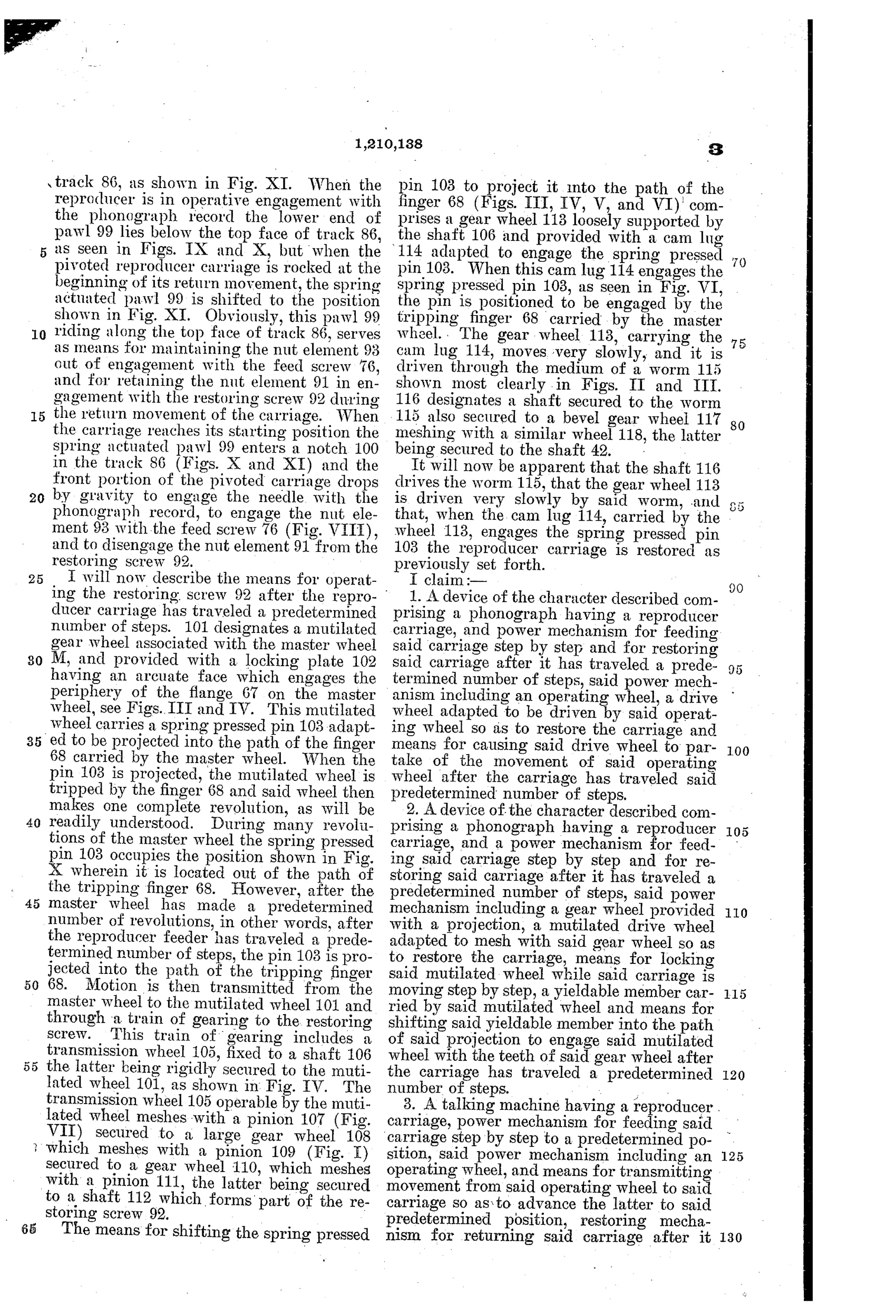
“1. A device of the character described comprising a phonograph having a reproducer carriage, and power mechanism for feeding said carriage step by step and for restoring said carriage after it has traveled a predetermined number of steps, said power mechanism including an operating wheel, a drive wheel adapted to be driven by said operating wheel so as to restore the carriage and means for causing said drive wheel to partake of the movement of said operating wheel after the carriage has traveled said predetermined number of steps.”
In plain English: The machine automatically feeds the phonograph pickup carriage forward in steps and, after a set number of steps, uses a driven wheel mechanism to reset the carriage back to its start.
♫ In the inventor’s words
“The invention also includes certain new details of construction which will be hereinafter pointed out.”— Bernard Benedict, from the specification
Fate unknown
No surviving advertising machine from the National Talking Clock Company is documented to me; a marked cabinet or trade-press mention would settle it.
♫ Commentary
By 1915 the phonograph's core problems — motors, soundboxes, horns — were solved, so inventors turned to what a phonograph could be made to do unattended. Benedict's answer: an advertising machine. The drawing shows a tall cabinet with a display window up top (note the little gramophone-and-horn emblem in the circle) and, below, a doll-like figure perched over the works. The mechanism's whole job is repetition without a human hand: play the record, lift the needle, run the carriage home, drop it back in, play again, all day long.
The clever part is how the reset is triggered. The carriage doesn't feed continuously; a master wheel engages mutilated gears to advance it in counted steps. After a preset number of steps a spring-pressed pin shifts into the path of a tripping finger, which clutches in a whole second drive train — a restoring screw that lifts the stylus, swaps the feed nut for a restoring nut, and cranks the carriage back to start. Counting steps rather than sensing position is a clockmaker's instinct, which fits the assignee: the National Talking Clock Company.
It would work, but it's a lot of gearing to do what a simple cam-and-return did on later repeating attachments, and constant repetition chews through records and needles. A characteristic dead-end of the coin-op and advertising fringe — ingenious, over-built, and swimming against the tide of ever-simpler machines.
Commentary by Claude, The Talking Machine Patent Archive’s resident enthusiast