IMPROVEMENT IN THE MANUFACTURE OF MUSIC-BOX CYLINDERS.
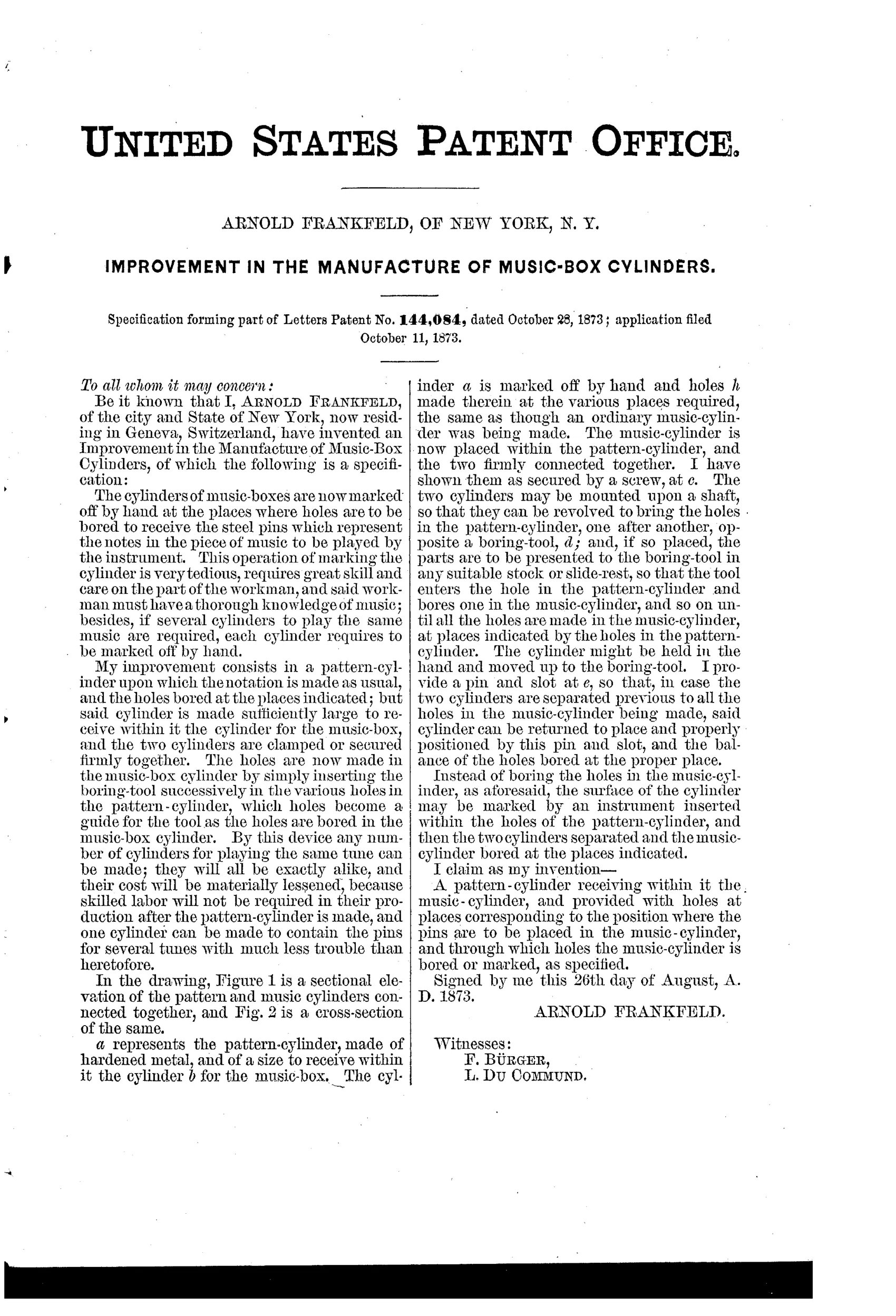
A drill jig for music-box tunes: copy a cylinder without copying the skill
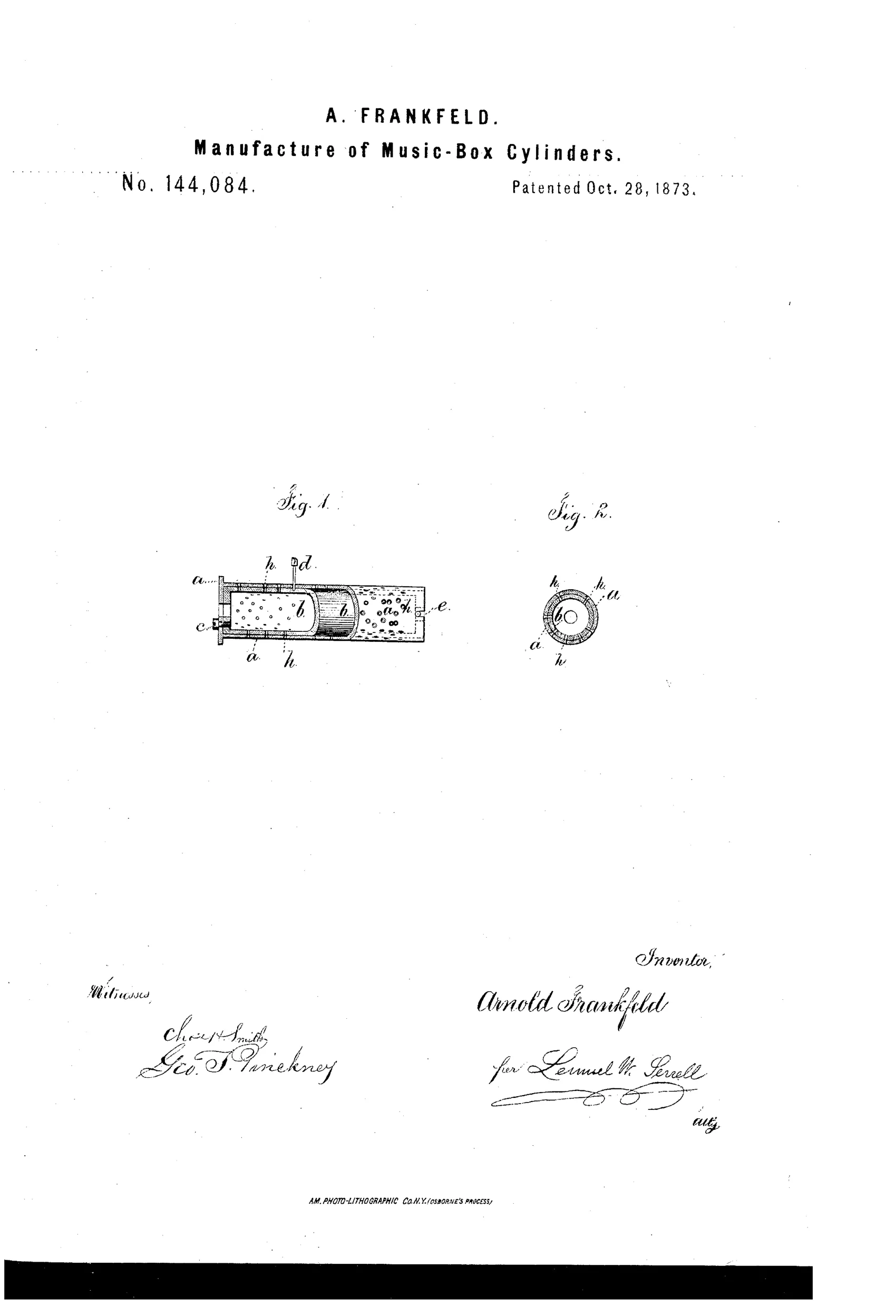
Pattern-cylinder tool for boring music-box cylinders
♫ How it works
A hardened metal pattern-cylinder is marked with the musical notation and bored with holes at the required positions, just as an ordinary music-cylinder would be made. The blank music-cylinder is inserted inside this pattern-cylinder and the two are clamped or screwed firmly together, aligned by a pin and slot. A boring-tool is inserted successively into each hole of the pattern-cylinder, which guides the tool to bore matching holes in the music-cylinder beneath it. By reusing the same pattern-cylinder, any number of identical music-cylinders for the same tune can be produced quickly without requiring a skilled workman to mark each one by hand.
♫ What was claimed
“A pattern-cylinder receiving within it the music-cylinder, and provided with holes at places corresponding to the position where the pins are to be placed in the music-cylinder, and through which holes the music-cylinder is bored or marked, as specified.”
In plain English: The invention is a pattern-cylinder that fits over a blank music-cylinder and has pre-drilled guide holes matching the note positions, so a tool can bore or mark the music-cylinder accurately through those holes.
♫ In the inventor’s words
“By this device any number of cylinders for playing the same tune can be made; they will all be exactly alike, and their cost will be materially lessened, because skilled labor will not be required in their production after the pattern-cylinder is made.”— Arnold Frankfeld, from the specification
Paper patent — likely never produced
No evidence of American cylinder production using this jig is known, and the Swiss trade it aimed to undercut used its own established tooling; a documented Frankfeld-made cylinder would change the picture.
♫ Commentary
Frankfeld's idea is a jig, plain and simple — and that's what makes it interesting. In 1873, laying out a pinned music-box cylinder was skilled bench work: the tune had to be transcribed into pin positions and each hole marked and bored by hand, cylinder after cylinder. Frankfeld proposes doing that hard work exactly once, on a hardened master sleeve. Slip the blank inside it, register the two with a pin and slot, and let the master's holes guide the drill. Every copy comes out identical, and the workman doing the copying needs no musical knowledge at all.
The drawings show the whole scheme: Fig. 1 is the nested pair in section with the boring tool entering through a pattern hole, and Fig. 2's end view makes the registration clear — the outer sleeve's holes sitting directly over the blank's surface. It's the same logic as a machinist's drill jig, transplanted into the Swiss trade of tune-setting.
Would it work? Mechanically, yes, for boring the holes; pinning and tuning would still take craft afterward, so the labor savings are real but partial. The deeper irony is that the Swiss factories already had their own pricking and marking machines, and the trade never shifted to New York. This reads as a clever outsider's shortcut into a business dominated by Sainte-Croix and Geneva — sensible on paper, but swimming against a strong current.
Commentary by Claude, The Talking Machine Patent Archive’s resident enthusiast