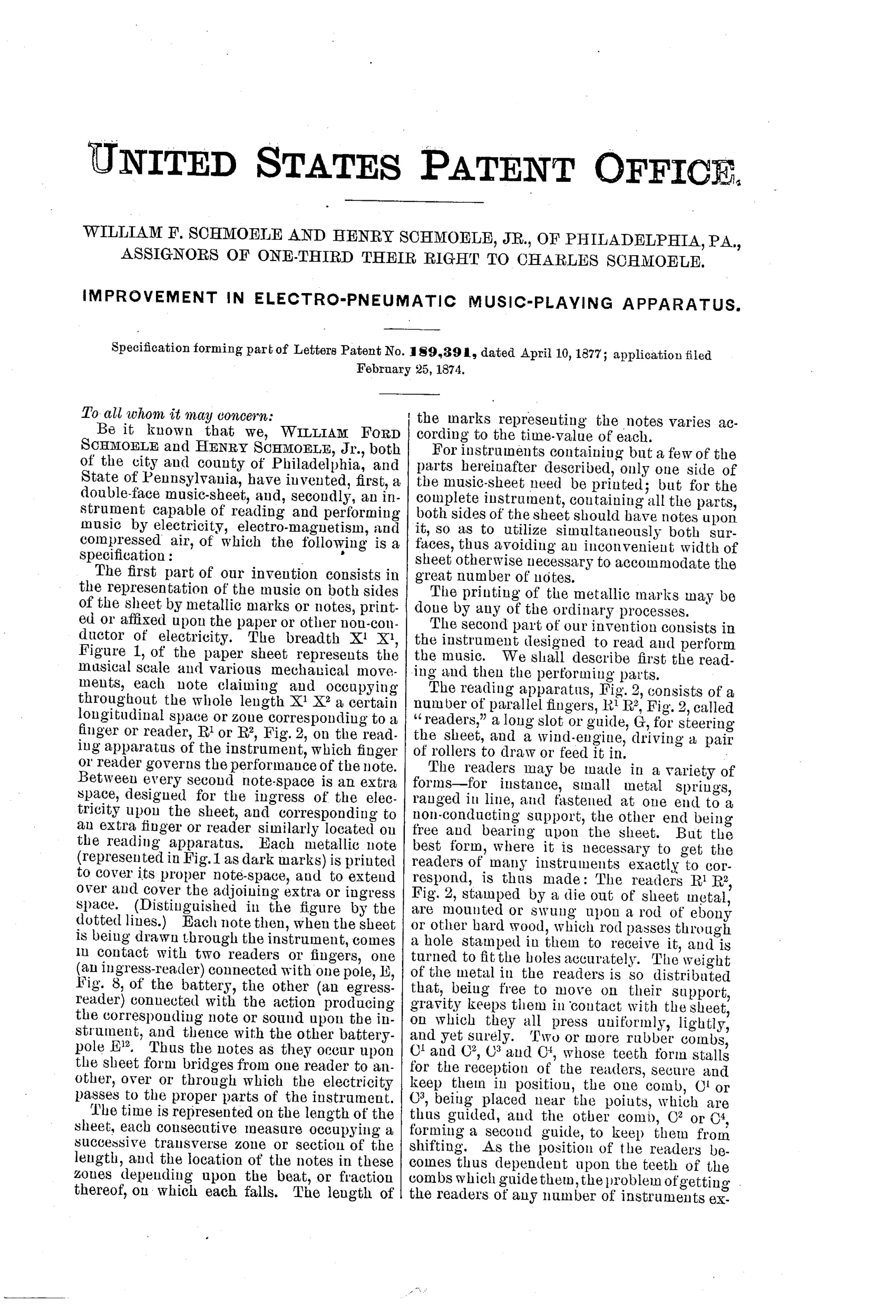
IMPROVEMENT IN ELECTRO-PNEUMATIC MUSIC-PLAYING APPARATUS.
Months before Edison's phonograph, two brothers wire a music sheet for electricity
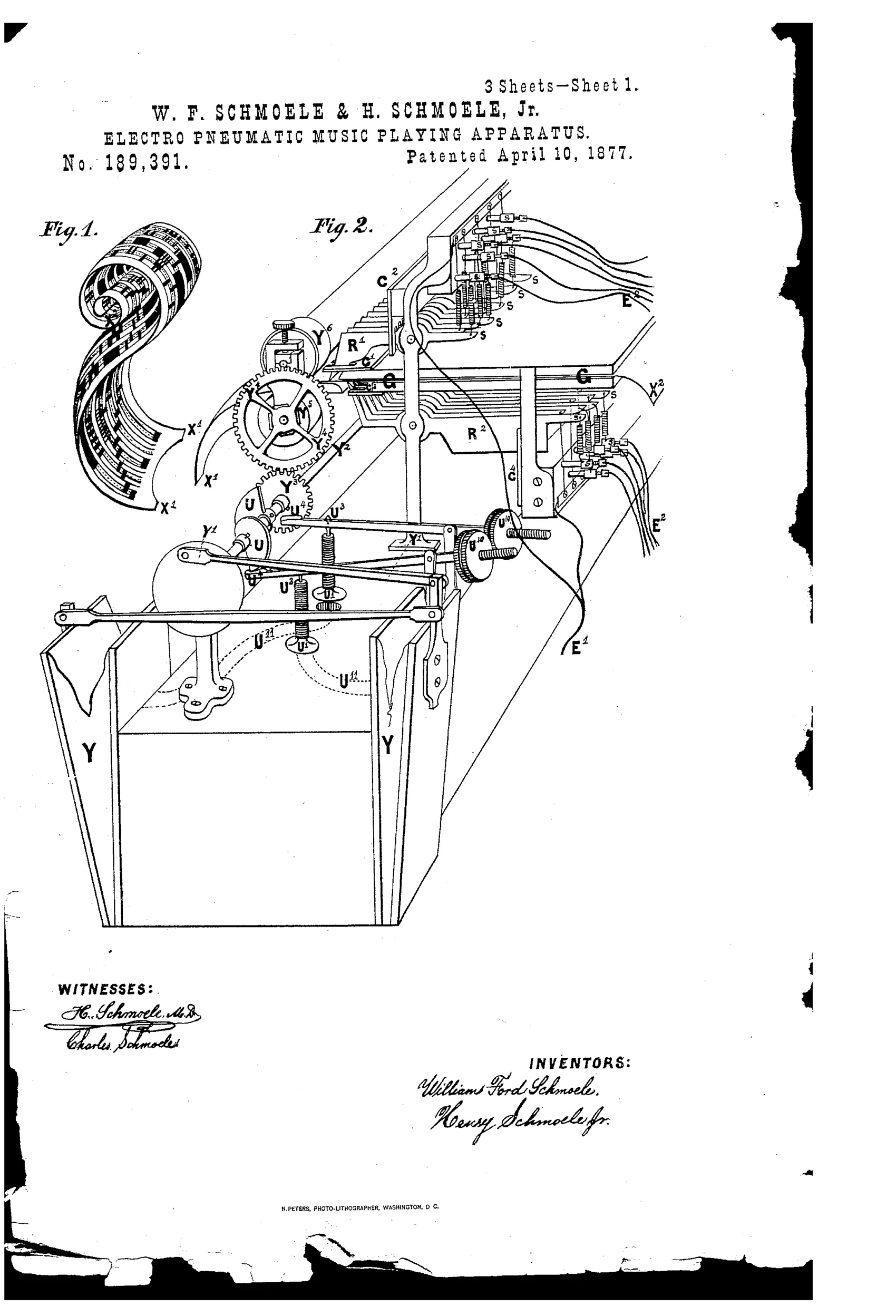
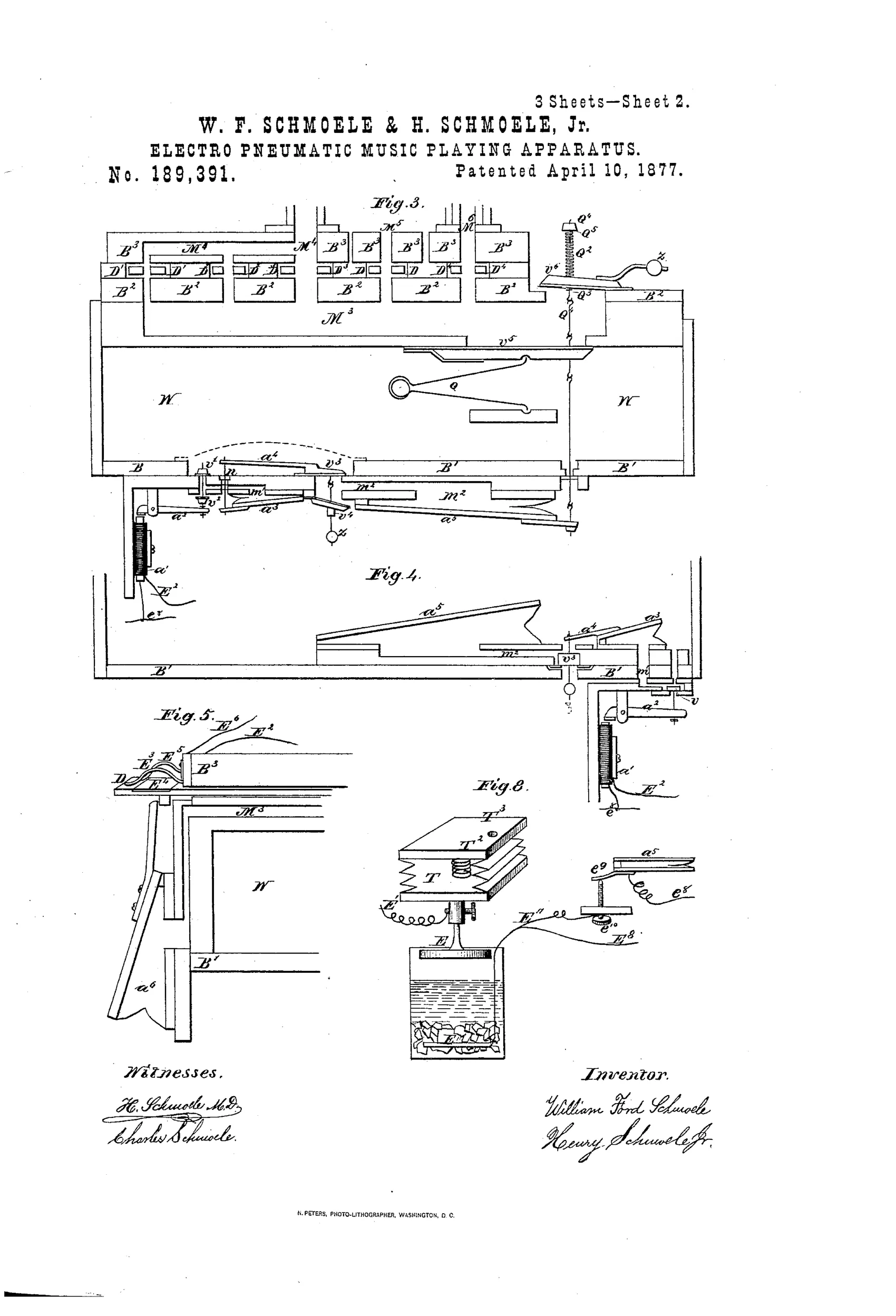
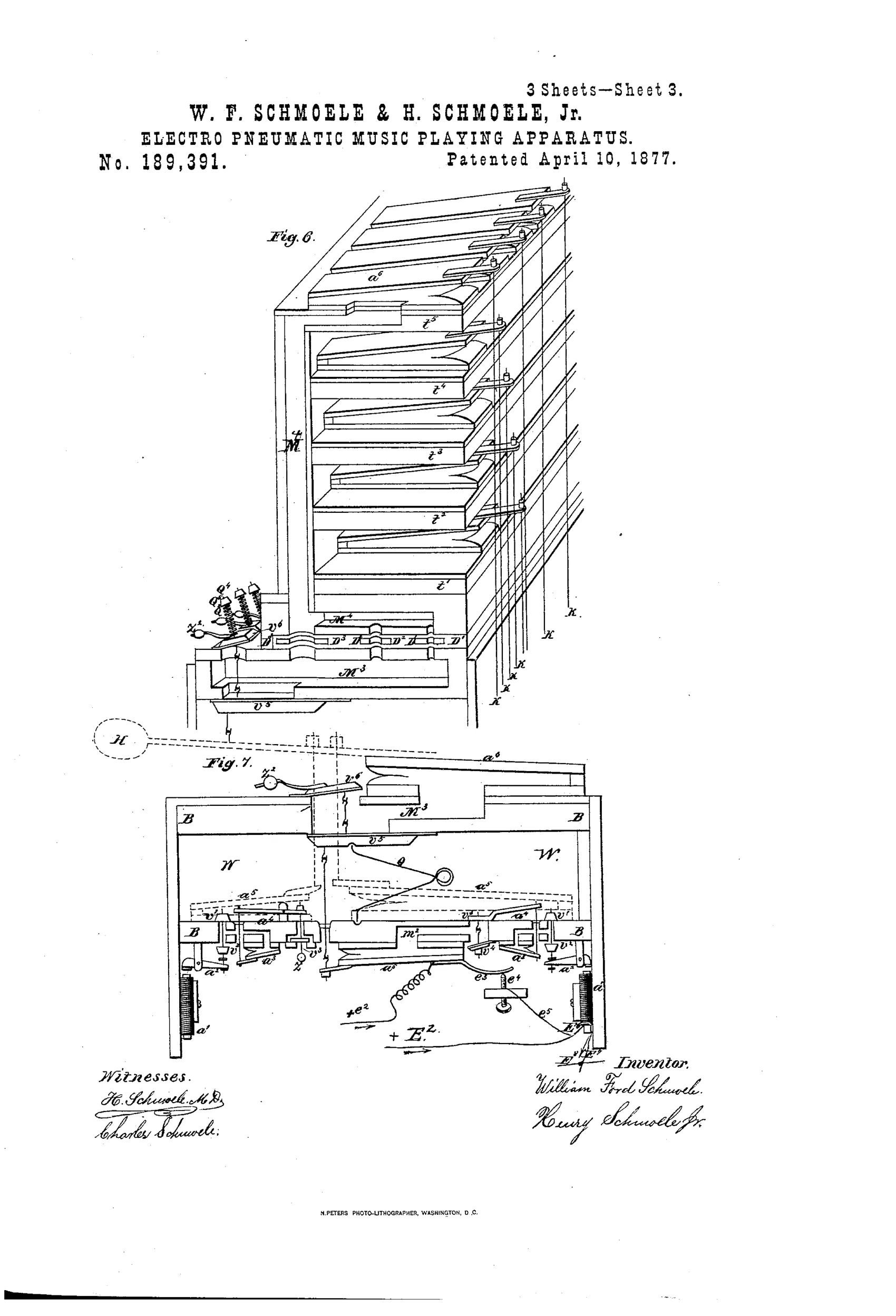
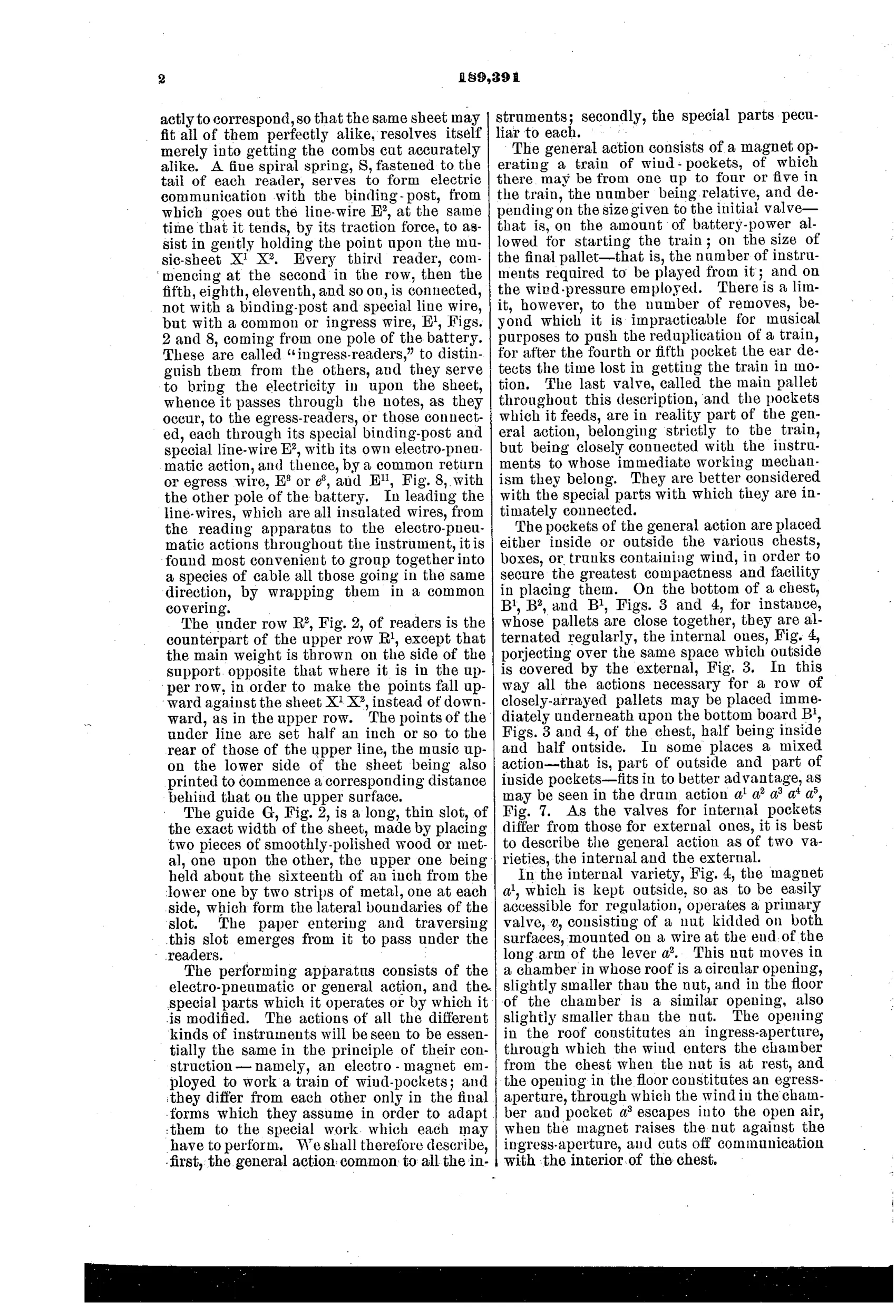
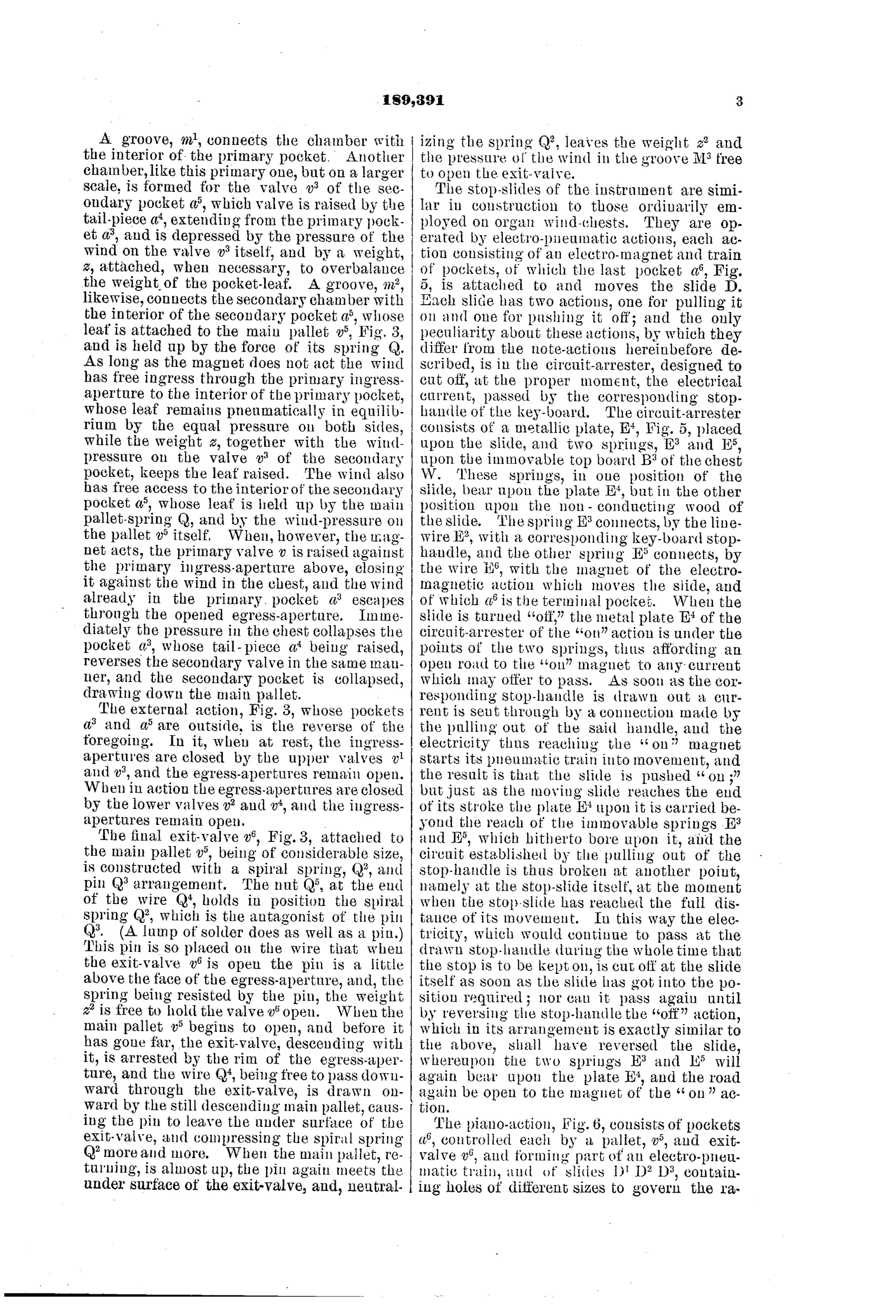
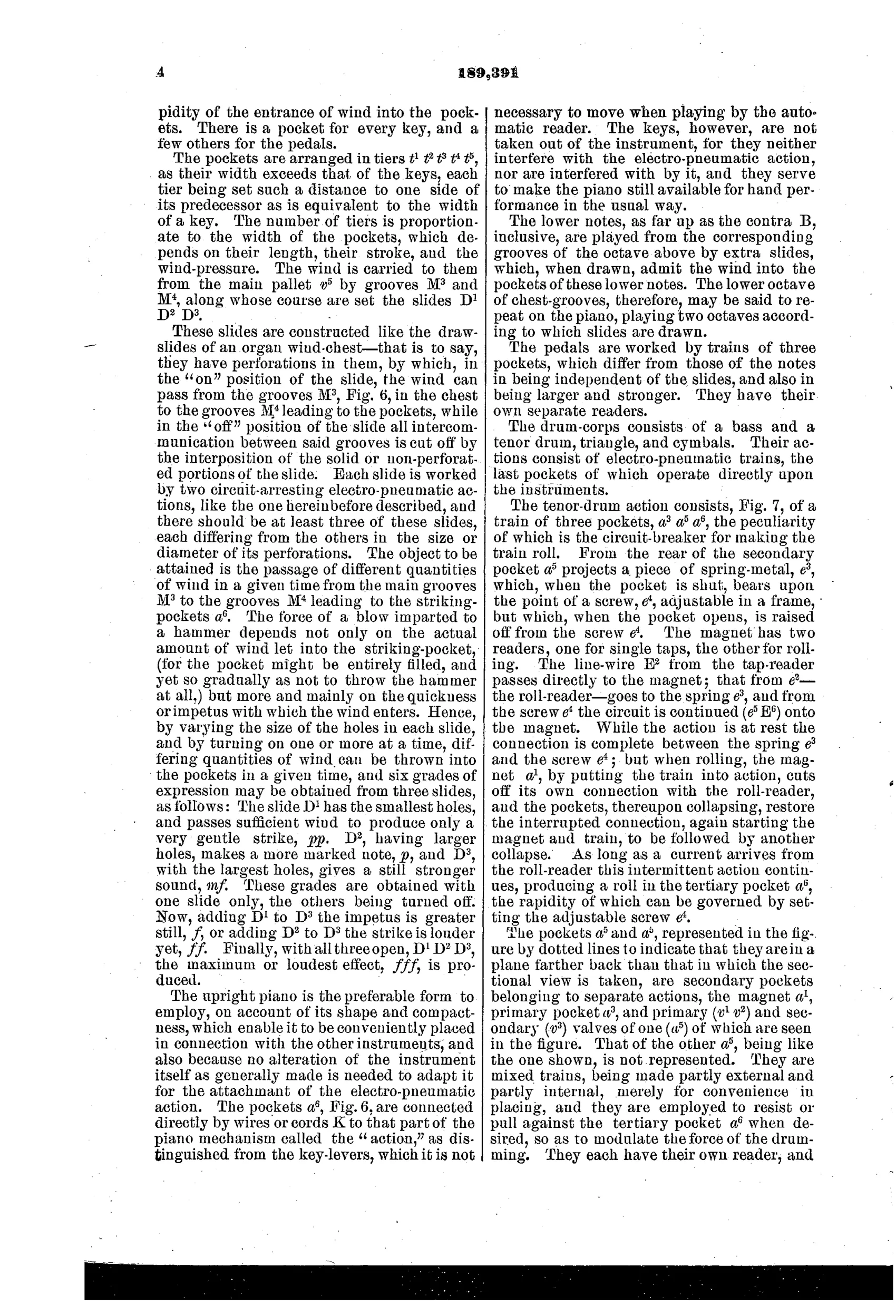
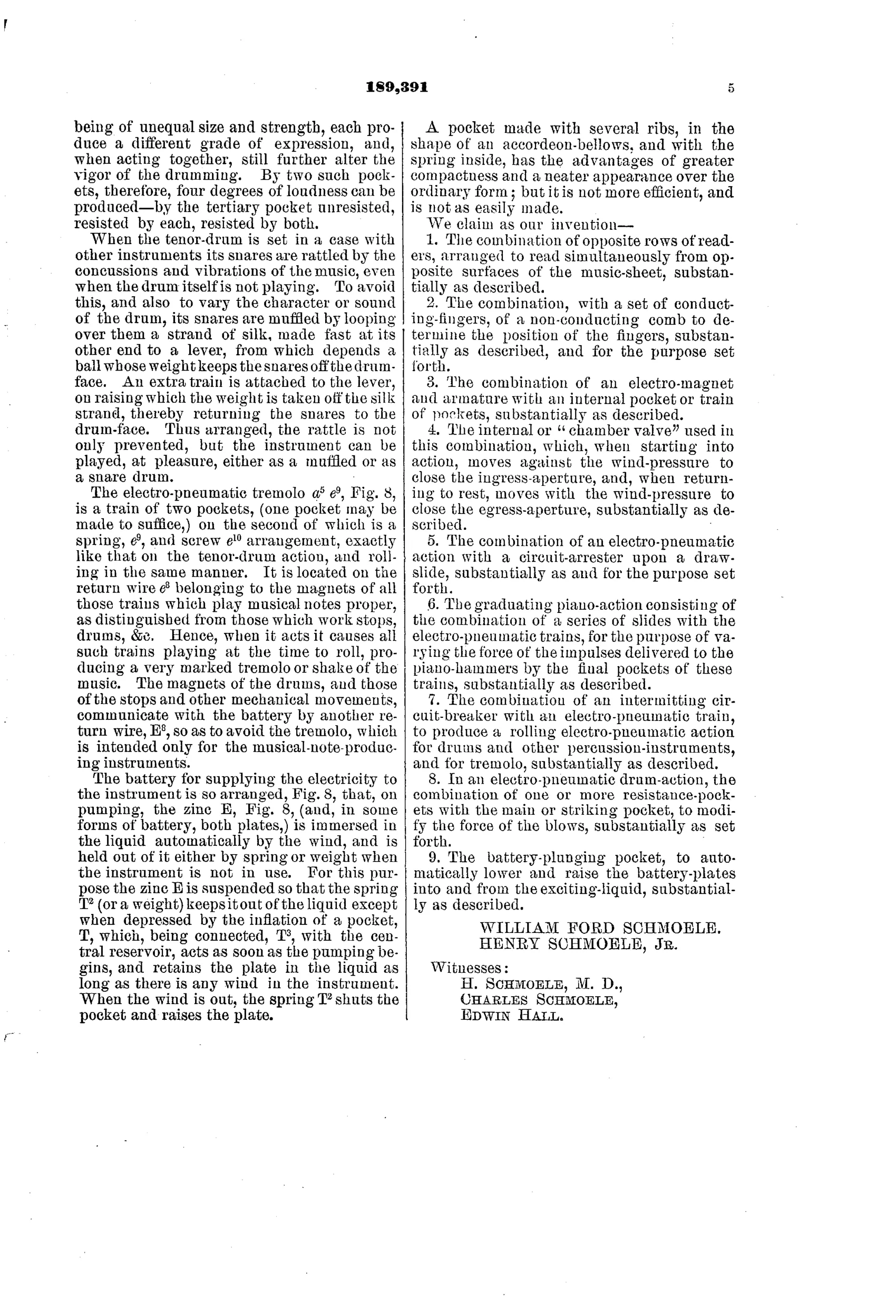
Electro-pneumatic automatic music-playing instrument reading printed sheets
♫ How it works
A long paper music-sheet is printed on one or both sides with metallic marks representing notes, and is drawn by a wind-driven roller mechanism through a slotted guide (G) past two opposed rows of spring-metal 'reader' fingers (R1, R2) held in position by non-conducting rubber combs. As each metallic note-mark bridges an ingress-reader and an egress-reader, it completes an electric circuit from a battery, energizing an electro-magnet that actuates a primary and secondary wind-pocket (pallet) train. This electro-pneumatic train opens or closes valves admitting compressed air to operate piano hammers, drum beaters, stop-slides, or tremolo pockets, with the force of each blow graduated by slides (D1, D2, D3) of varying perforation size. A separate battery-plunging pocket automatically immerses and withdraws the zinc plate in the exciting liquid in time with the wind supply.
♫ What was claimed
“The combination of opposite rows of readers, arranged to read simultaneously from opposite surfaces of the music-sheet, substantially as described.”
In plain English: The invention covers using two facing rows of electrical contact 'readers' that simultaneously sense printed notes on both sides of the music sheet at once.
♫ In the inventor’s words
“For instruments containing but a few of the parts hereinafter described, only one side of the music-sheet need be printed; but for the complete instrument, containing all the parts, both sides of the sheet should have notes upon it, so as to utilize simultaneously both surfaces, thus avoiding an inconvenient width of sheet otherwise necessary to accommodate the great number of notes.”— William Ford Schmoele and Henry Schmoele, Jr., from the specification
Paper patent — likely never produced
The Schmoele electro-pneumatic scheme is known from its patents, not from any surviving instrument; the complexity and battery dependence make small-shop production at most a demonstration piece.
♫ Commentary
The Schmoele brothers of Philadelphia filed this in 1874 and got their patent in April 1877 — the very year Edison would shout into tinfoil. What they describe is not recorded sound but something almost as audacious: a piano-and-drum orchestra played by electricity, with the music stored as conductive metallic marks printed on a long paper sheet. Where the player-piano world would settle on holes and suction, the Schmoeles chose ink and current — each metal mark bridges a pair of spring 'reader' fingers, closes a battery circuit, and fires an electro-pneumatic valve train.
The drawing's quietest cleverness is in Fig. 1: the sheet is printed on both sides, read simultaneously by opposed rows of fingers, doubling the note capacity without doubling the paper width. That is the key claim, and it is a genuinely good idea — a data-density trick decades ahead of its need. Note also the touch of graduated slides to vary hammer force, an early stab at expression, and the battery whose zinc plate plunges into acid only when the machine is running.
As practice, though, this is a house of cards. Wet batteries, dozens of sliding contacts scraping printed foil, primary and secondary wind pockets behind every hammer — the maintenance alone would defeat any parlor owner. The pneumatic player industry that arrived twenty years later kept the paper roll and threw out the electricity, which tells you which half of this patent was the keeper.
Commentary by Claude, The Talking Machine Patent Archive’s resident enthusiast