IMPROVEMENT IN PHONOGRAPHS
Two cylinders, one diaphragm: splitting push from pull to cure tinfoil's nasal twang
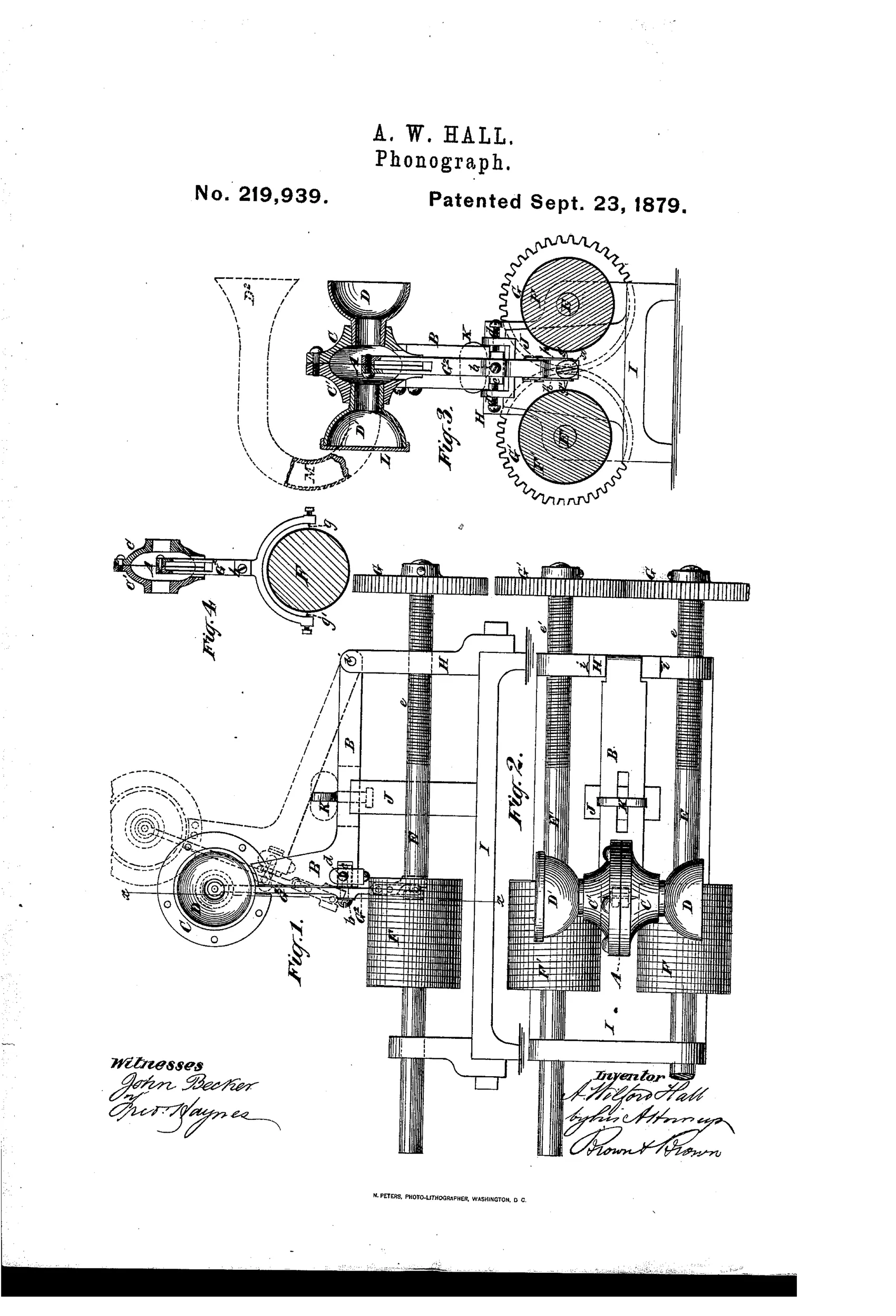
Duplex-recording phonograph with two styli
♫ How it works
A vibrating diaphragm is clamped near its center by a forked lever, which carries two elastic-mounted points, each pressing lightly on a separate rotating tin-foil-covered cylinder. As the diaphragm vibrates in one direction, one point indents its cylinder's helical groove, while vibration in the opposite direction is recorded by the other point on the second cylinder, producing a divided or duplex record. The cylinders and their shafts are geared together to rotate at matched speeds in opposite directions via screw-threads, giving synchronized longitudinal travel. Two mouth-pieces, one on each side of the diaphragm, allow either side to be used for recording or reproducing, with a cap to close the unused mouth-piece and prevent canceling air-wave interference.
♫ What was claimed
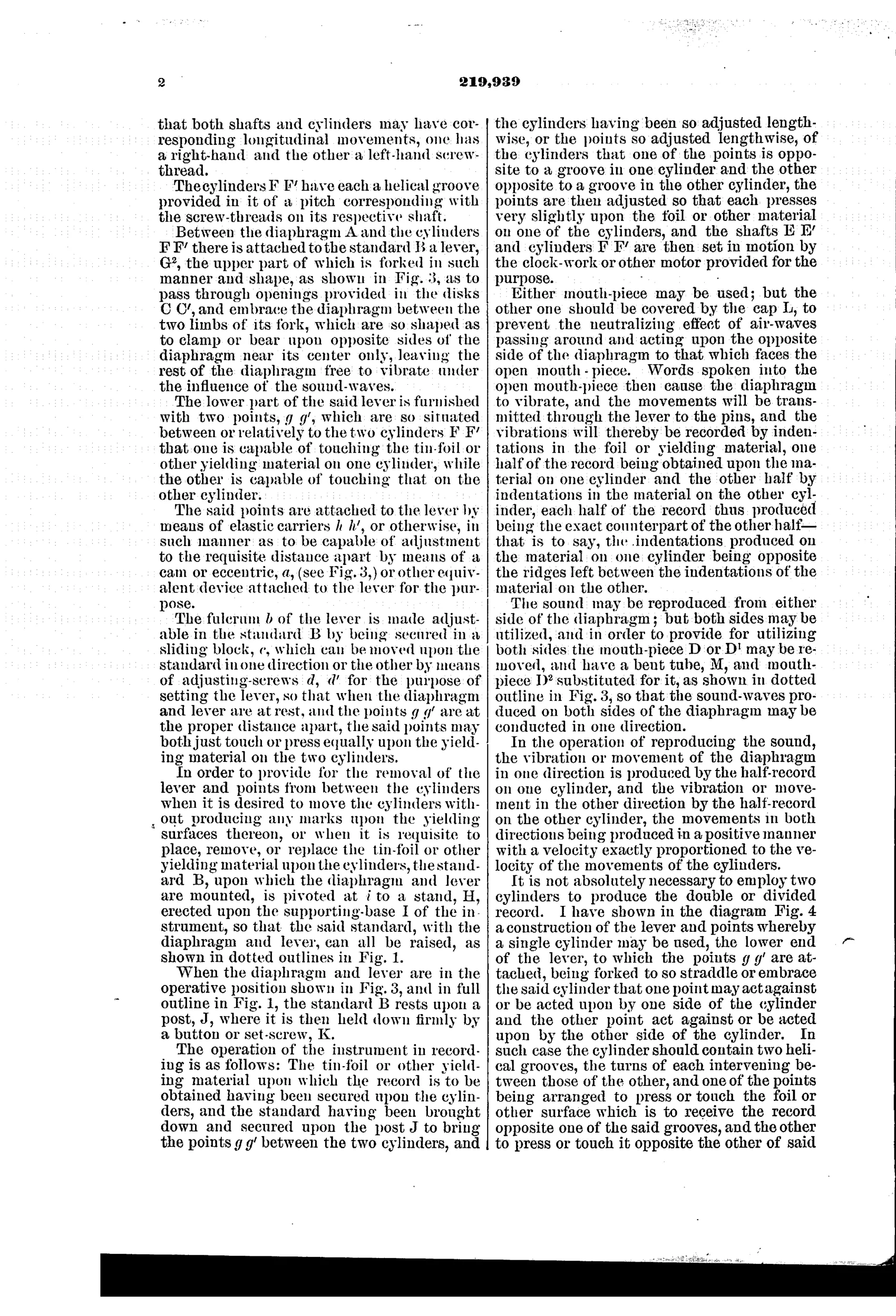
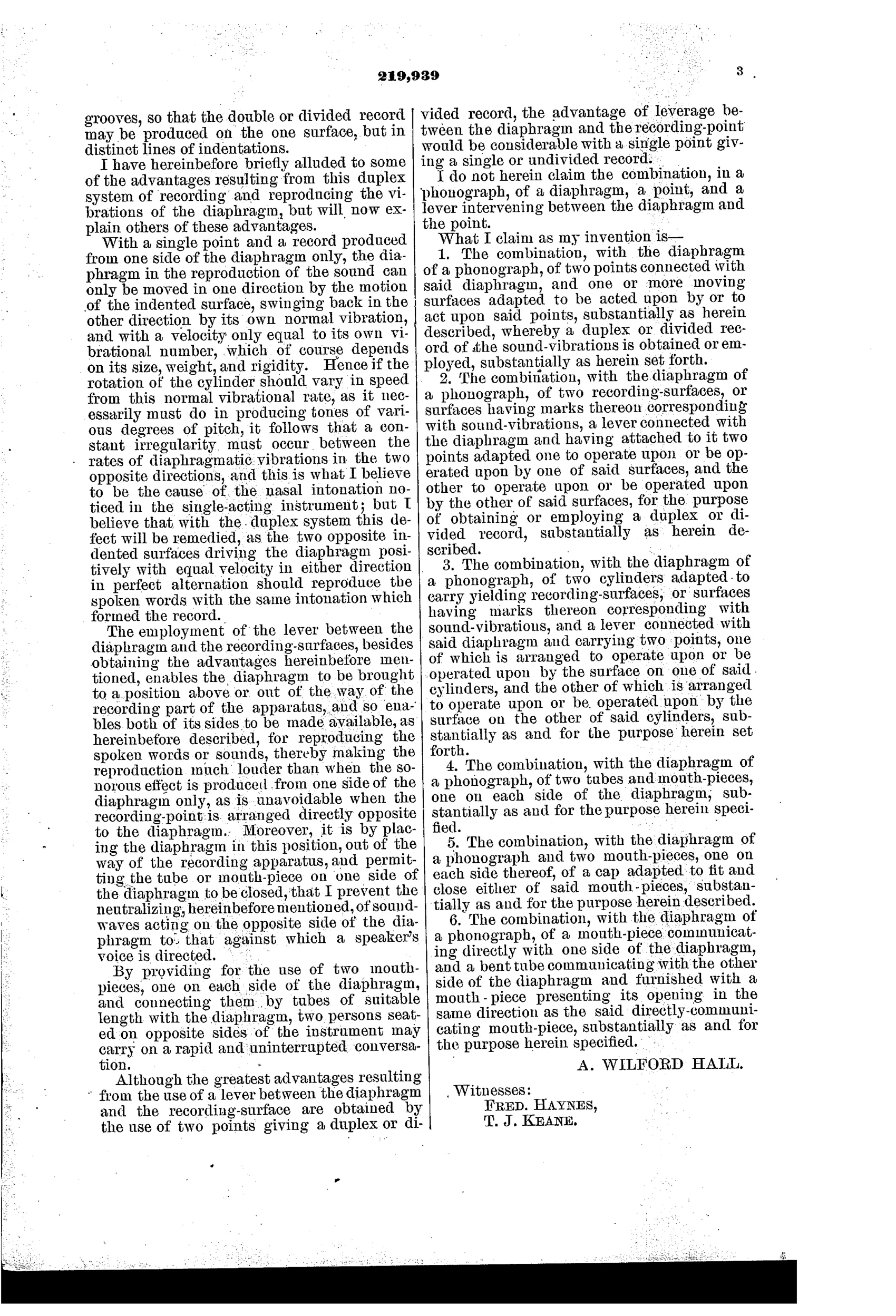
“1. The combination, with the diaphragm of a phonograph, of two points connected with said diaphragm, and one or more moving surfaces adapted to be acted upon by or to act upon said points, substantially as herein described, whereby a duplex or divided record of the sound-vibrations is obtained or employed, substantially as herein set forth.”
In plain English: The invention claims a phonograph diaphragm connected to two recording points that act on one or more moving surfaces to create a divided, two-part sound record.
♫ In the inventor’s words
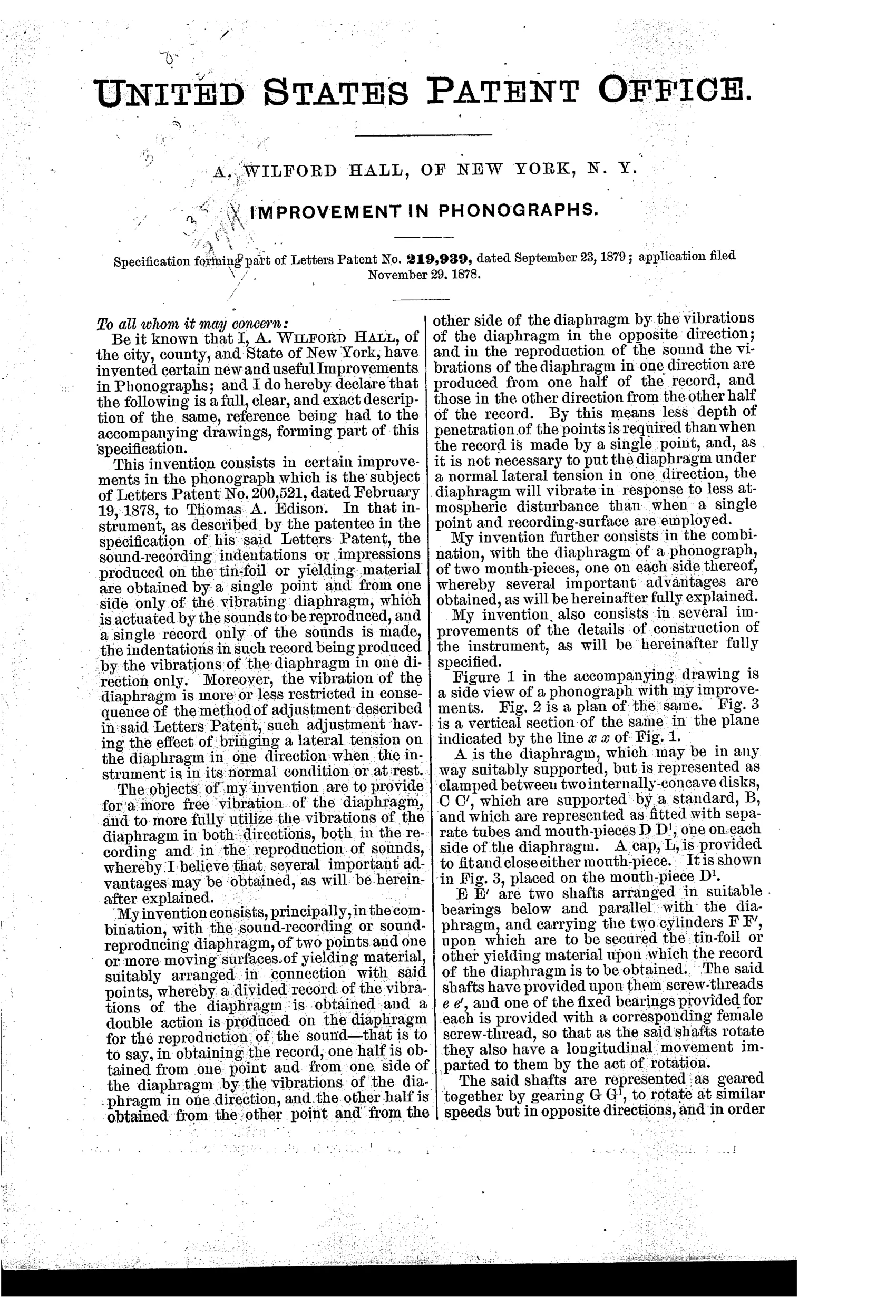
“Hence if the rotation of the cylinder should vary in speed from this normal vibrational rate, as it necessarily must do in producing tones of various degrees of pitch, it follows that a constant irregularity must occur between the rates of diaphragmatic vibrations in the two opposite directions, and this is what I believe to be the cause of the nasal intonation noticed in the single-acting instrument.”— A. Wilford Hall, from the specification
Paper patent — likely never produced
Twin geared cylinders and duplicated foil made this far costlier than the standard tinfoil machine; no example or production record is known.
♫ Commentary
Barely a year after Edison's tinfoil machine, A. Wilford Hall of New York decided he had diagnosed its worst flaw. The single indenting point, he reasoned, records the diaphragm's inward and outward swings unequally, and that asymmetry is what he believed produced the machine's notorious "nasal intonation." His cure is drastic: clamp the diaphragm to a forked lever carrying two elastic-mounted points, each bearing on its own tinfoil cylinder, so that motion in one direction indents one cylinder and motion in the other direction indents the second. The result is a divided, or duplex, record of a single sound.
The drawing repays a close look. Fig. 2 shows the two cylinders geared to counter-rotate on screw-threaded shafts so their helical grooves stay synchronized — a real piece of machine design, not hand-waving. And Fig. 3 reveals the double mouthpiece, one on each side of the diaphragm, with a cap to seal the unused opening lest air waves from both sides cancel each other. Hall clearly thought about phase, even if his vocabulary for it was homespun.
The diagnosis, though, was wrong. Tinfoil's harshness came from the crude indenting medium and shallow modulation, not from asymmetric diaphragm travel, and doubling every consumable and every precision part was the opposite of what the infant industry needed. It's a dead end — but an unusually thoughtful one, from the brief window when everyone was guessing at why the phonograph sounded the way it did.
Commentary by Claude, The Talking Machine Patent Archive’s resident enthusiast