APPLICATION OF KEY-BOARD MECHANISM TO MUSIC-BOXES
A piano where every key plays the same tune — by design
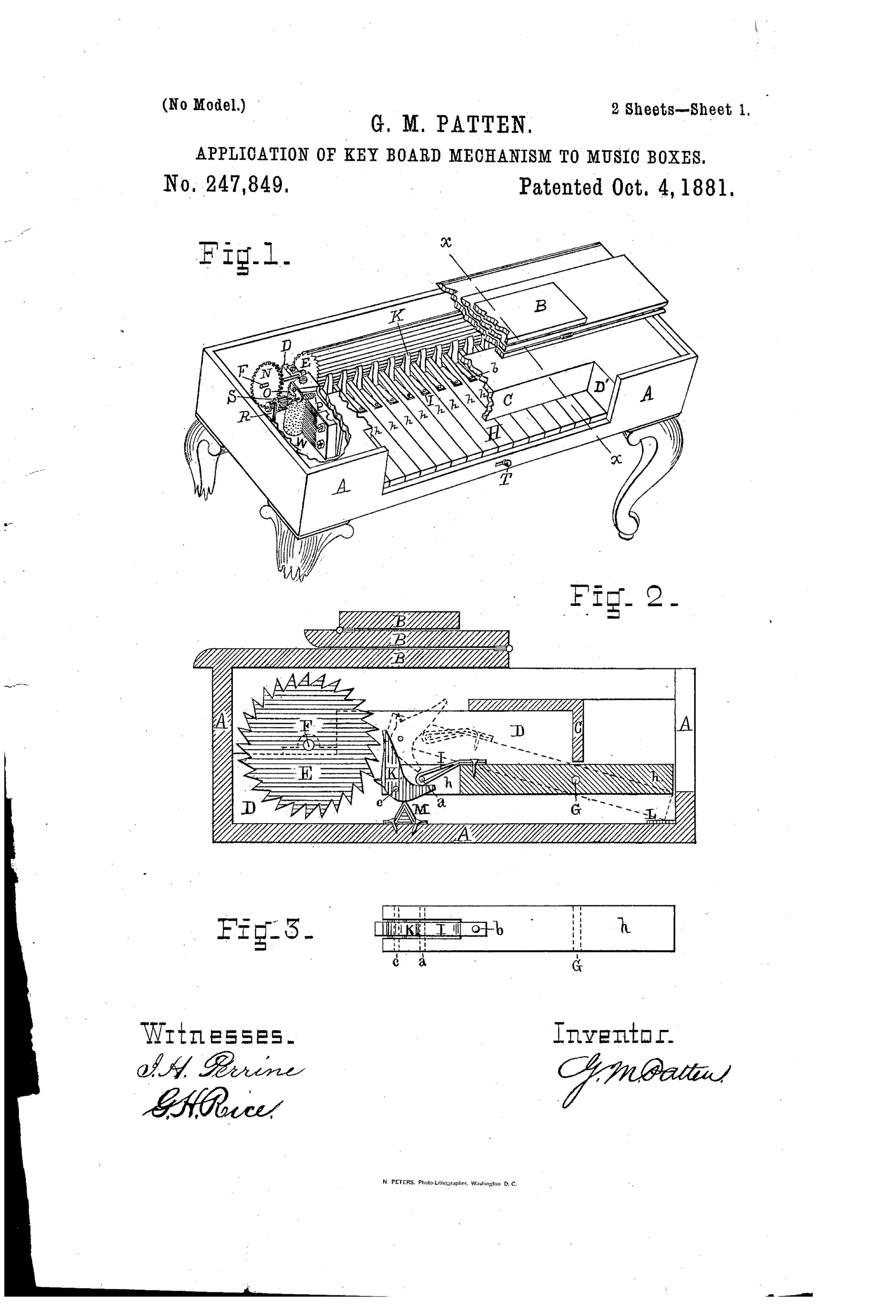
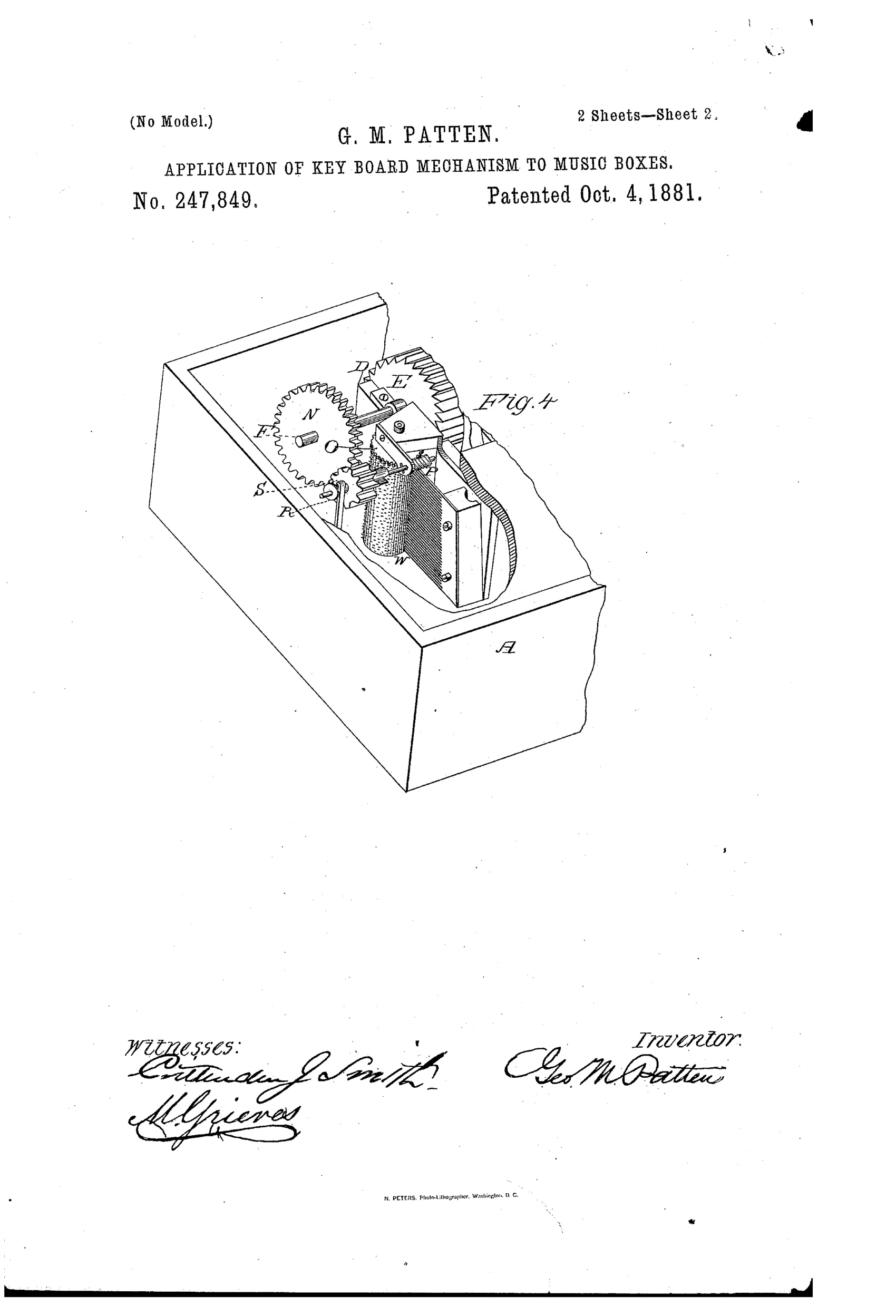
Keyboard-operated toy piano driving a music box
♫ How it works
A piano-like case holds a row of keys pivoted on a rod, each key operating a pawl that engages a ratcheted roller when the key is depressed. The ratcheted roller, turning as keys are struck in any order, drives a train of gears (spur-wheels, a worm, and a clutch-pinion) that transmits rotary motion to the barrel of an ordinary music-box mechanism housed at one end of the case. Felt buffers and rubber-clad contact points silence the mechanism, while a shifter and knob engage the clutch-pinion to start the music. Because each key and pawl act independently, striking the keys in any order or combination simply keeps the ratcheted cylinder turning and the music box playing without producing discord.
♫ What was claimed
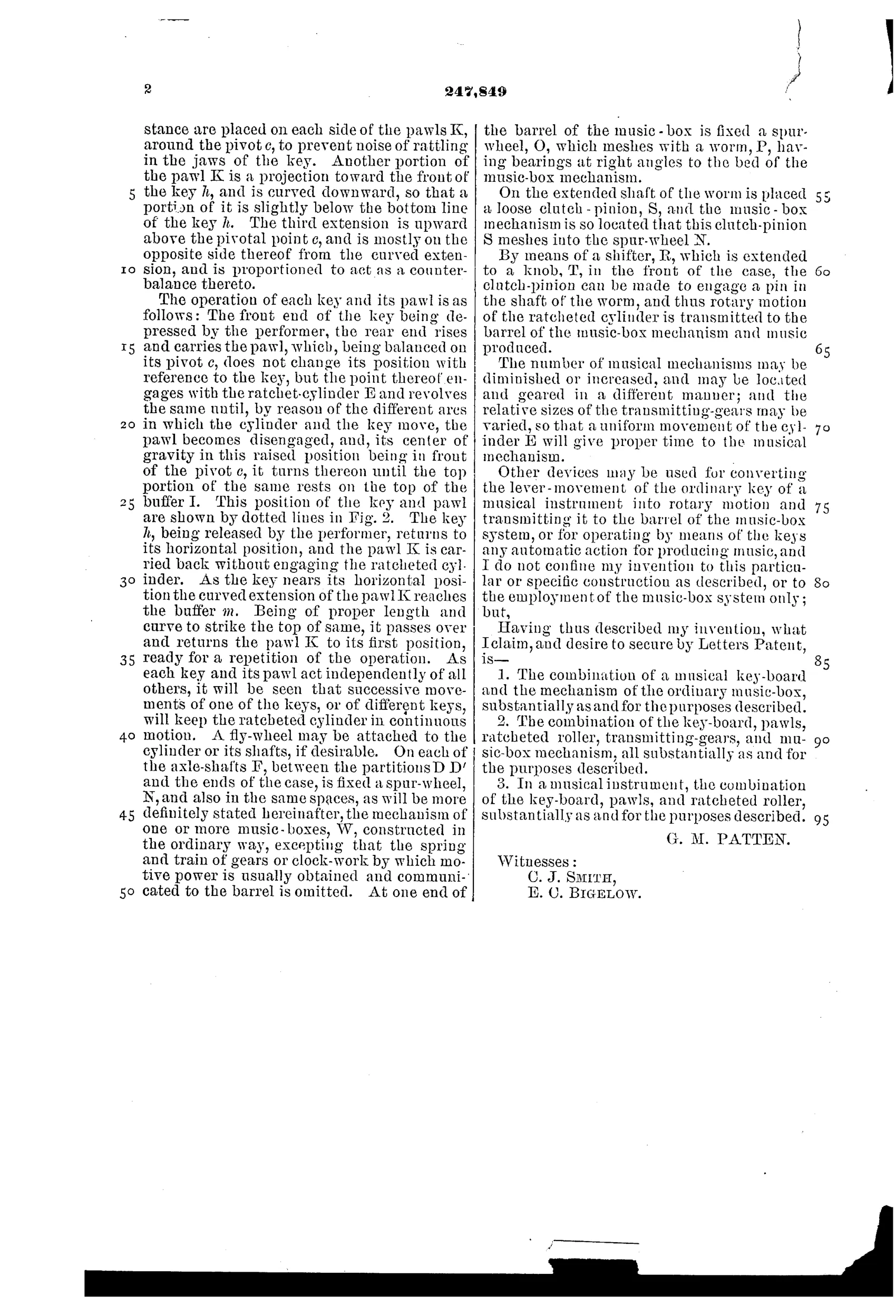
“The combination of a musical key-board and the mechanism of the ordinary music-box, substantially as and for the purposes described.”
In plain English: The invention claims combining a piano-style keyboard with a standard music-box mechanism so that pressing any keys makes the music box play.
♫ In the inventor’s words
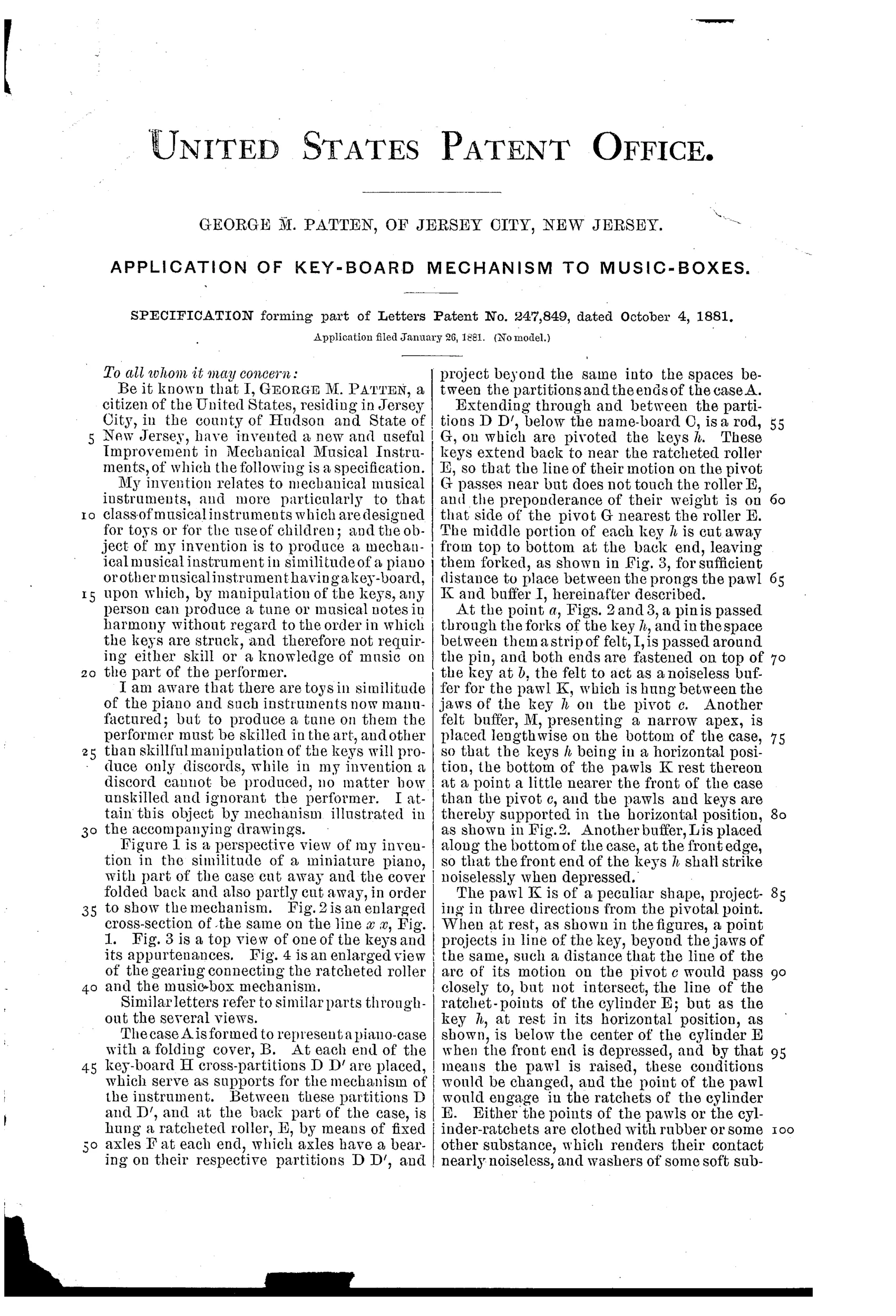
“I am aware that there are toys in similitude of the piano and such instruments now manufactured; but to produce a tune on them the performer must be skilled in the art, and other than skillful manipulation of the keys will produce only discords, while in my invention a discord cannot be produced, no matter how unskilled and ignorant the performer.”— George M. Patten, from the specification
Fate unknown
No manufactured example or maker's record is documented; a surviving marked toy would settle whether this Jersey City design reached production.
♫ Commentary
Patten's confession is right there in the specification: toy pianos exist, but children produce discords on them. His fix is disarmingly honest — take the keys out of the music-making business entirely. Each key just works a pawl against a ratcheted roller, so mashing the keyboard in any order does nothing but keep the roller turning, and the roller drives an ordinary music-box barrel through a gear train and clutch-pinion. The child pounds away, the pinned cylinder plays the actual tune, and 'a discord cannot be produced, no matter how unskilled and ignorant the performer.'
Mechanically it's a small, tidy piece of work. Fig. 2 shows the real cleverness: because the pawls act independently, overlapping keystrokes don't jam — one key's stroke simply rides over another's. The felt buffers and rubber contact points show he thought about the giveaway problem, too: if the child hears clacking pawls instead of music, the illusion collapses. Tempo, though, is at the mercy of how fast the keys are struck — a frantic toddler gets a frantic tune.
This sits in the pre-recorded-sound toy corner of the category, a cousin of the organette in spirit: mechanical music dressed up as performance. It's a dead end as instrument design, but as a piece of child psychology in cast metal and felt, it's rather charming. The Regina generation would make automatic music respectable; Patten just wanted it foolproof.
Commentary by Claude, The Talking Machine Patent Archive’s resident enthusiast