MECHANICAL MUSICAL INSTRUMENT.
Autophone's self-sealing trick: the bellows' own wind clamps the paper roll airtight
Pneumatic valve-sheet presser for automatic reed organ
♫ How it works
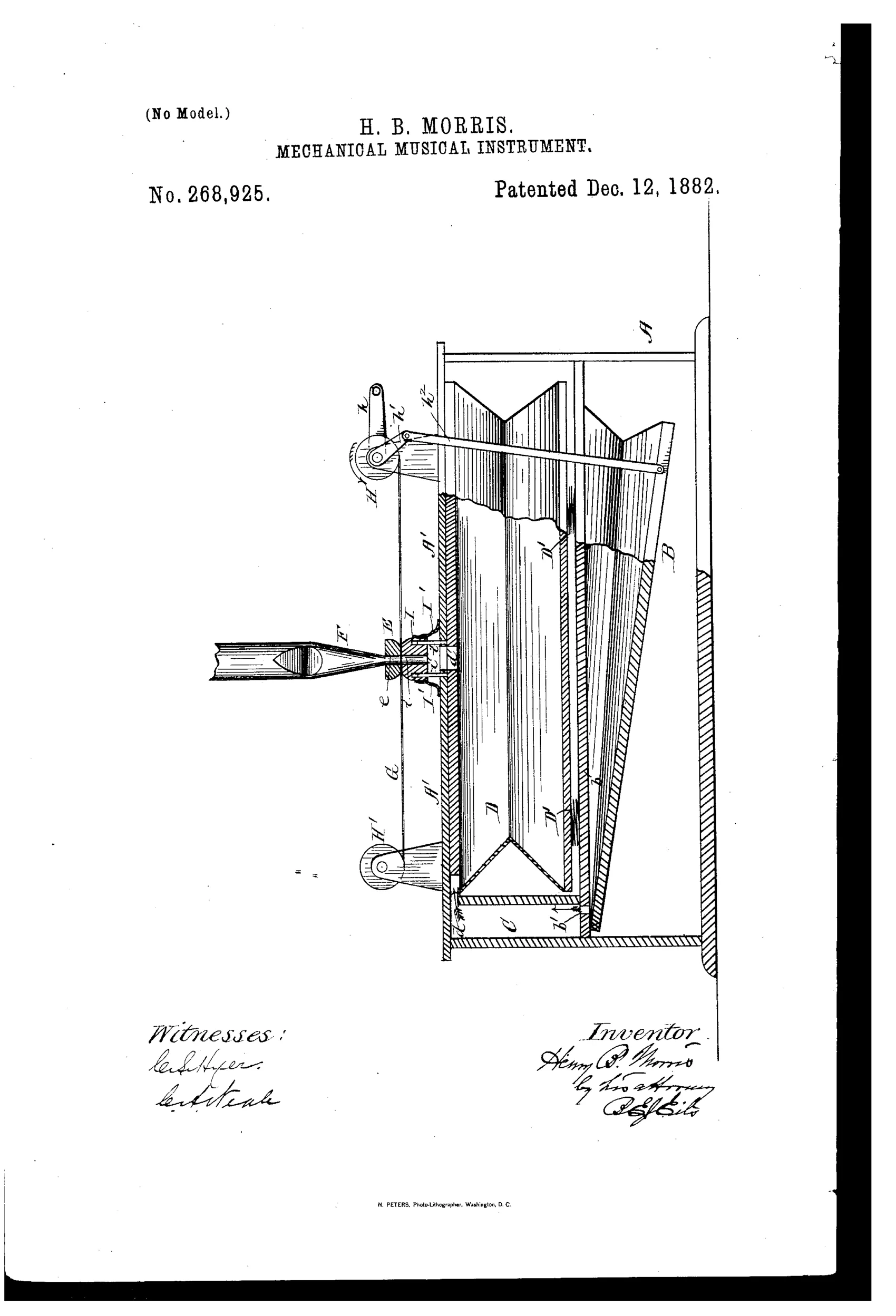
A supply-bellows forces air through a reservoir-bellows into a wind-chest fitted with a bar E containing vertical holes leading to reed pipes above. A perforated valve-sheet, wound on rollers H and H', passes between bar E and a flexible presser-bar I. When the bellows are worked, pneumatic pressure raises the presser-bar so it clamps the valve-sheet tightly against bar E, sealing the ducts to prevent air leakage. Guide-pins steady the presser-bar's vertical movement, and when the bellows stop, the presser-bar falls away to allow insertion of another valve-sheet.
♫ What was claimed
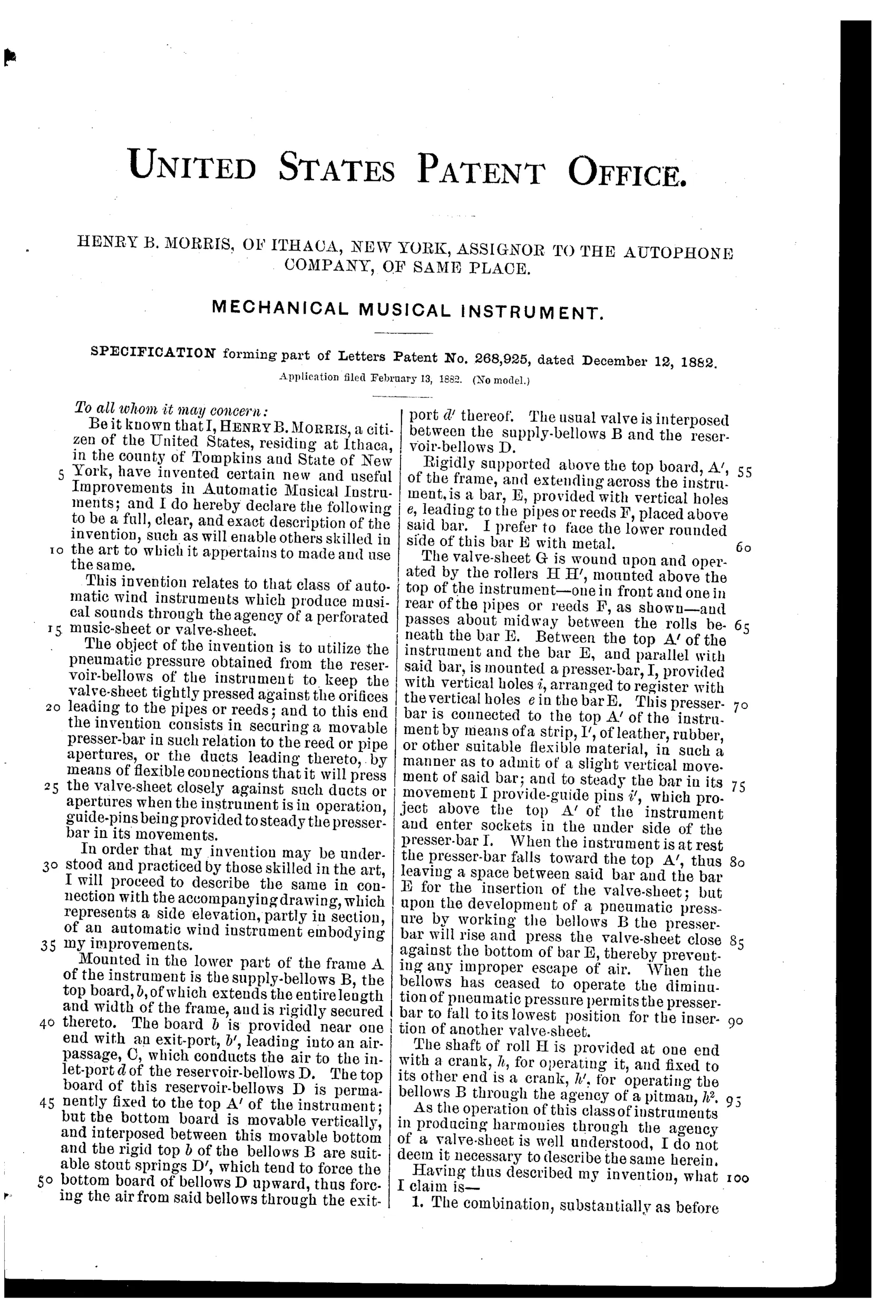
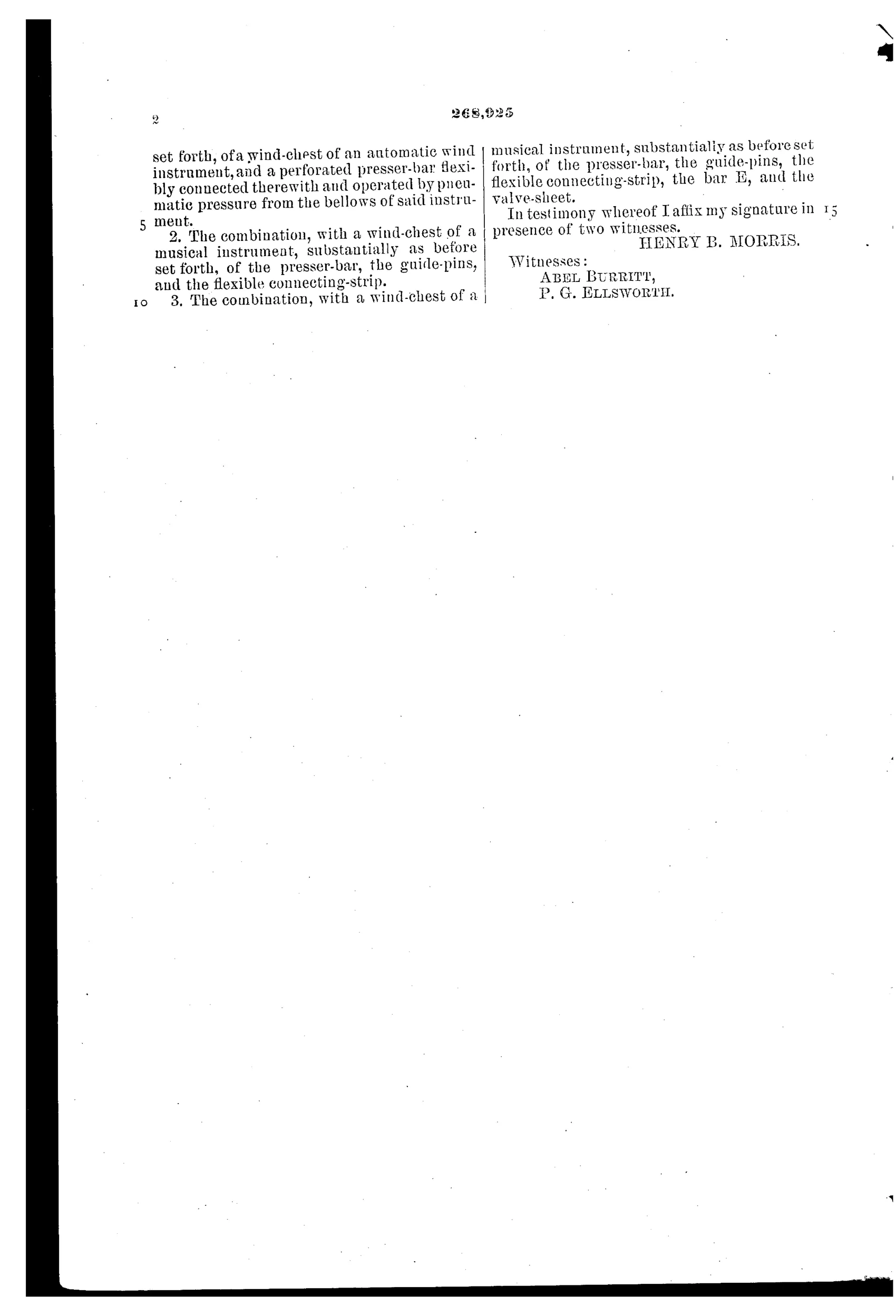
“The combination, substantially as before set forth, of a wind-chest of an automatic wind instrument, and a perforated presser-bar flexibly connected therewith and operated by pneumatic pressure from the bellows of said instrument.”
In plain English: The invention combines a wind-chest with a perforated presser-bar that is flexibly connected to it and moved by air pressure from the instrument's bellows.
♫ In the inventor’s words
“The object of the invention is to utilize the pneumatic pressure obtained from the reservoir-bellows of the instrument to keep the valve-sheet tightly pressed against the orifices leading to the pipes or reeds.”— Henry B. Morris, from the specification
Manufactured and sold
The Autophone Company of Ithaca manufactured and sold Morris's organettes commercially in the 1880s, and surviving instruments are well documented, though confirming this exact presser-bar in a specific model would take a teardown.
♫ Commentary
The chronic weakness of every organette is the seal between the perforated paper and the holes it is supposed to open and close. Press the paper too lightly and air leaks everywhere, making the reeds wheeze; press it too hard and the strip drags, tears, or jams. Morris's answer is elegantly circular: use the instrument's own wind pressure to do the pressing. When you crank the bellows, pneumatic pressure lifts a flexible presser-bar that clamps the valve-sheet firmly against the duct bar; stop cranking and the pressure drops, the bar falls away, and the paper can be threaded or swapped freely. The seal is exactly as tight as the wind demands, and only when it needs to be.
That self-regulating quality is the clever part. A spring-loaded presser would need adjustment as paper thickness and humidity varied; this one tracks the operating pressure automatically. The drawing shows the whole economy of the machine — supply bellows, reservoir, the fan of reed pipes, and the paper running between rollers H and H' with the presser tucked between bar and sheet.
Morris was the man behind the Autophone itself, and this patent is assigned to the Autophone Company of Ithaca, which built and sold organettes in real numbers in the 1880s. This sits squarely in the pre-phonograph mechanical-music trade, a working refinement from a shop that shipped product, not a dreamer's sketch.
Commentary by Claude, The Talking Machine Patent Archive’s resident enthusiast