MECHANICAL MUSICAL INSTRUMENT.
An organette that solves its own biggest headache: getting the sheet in and out
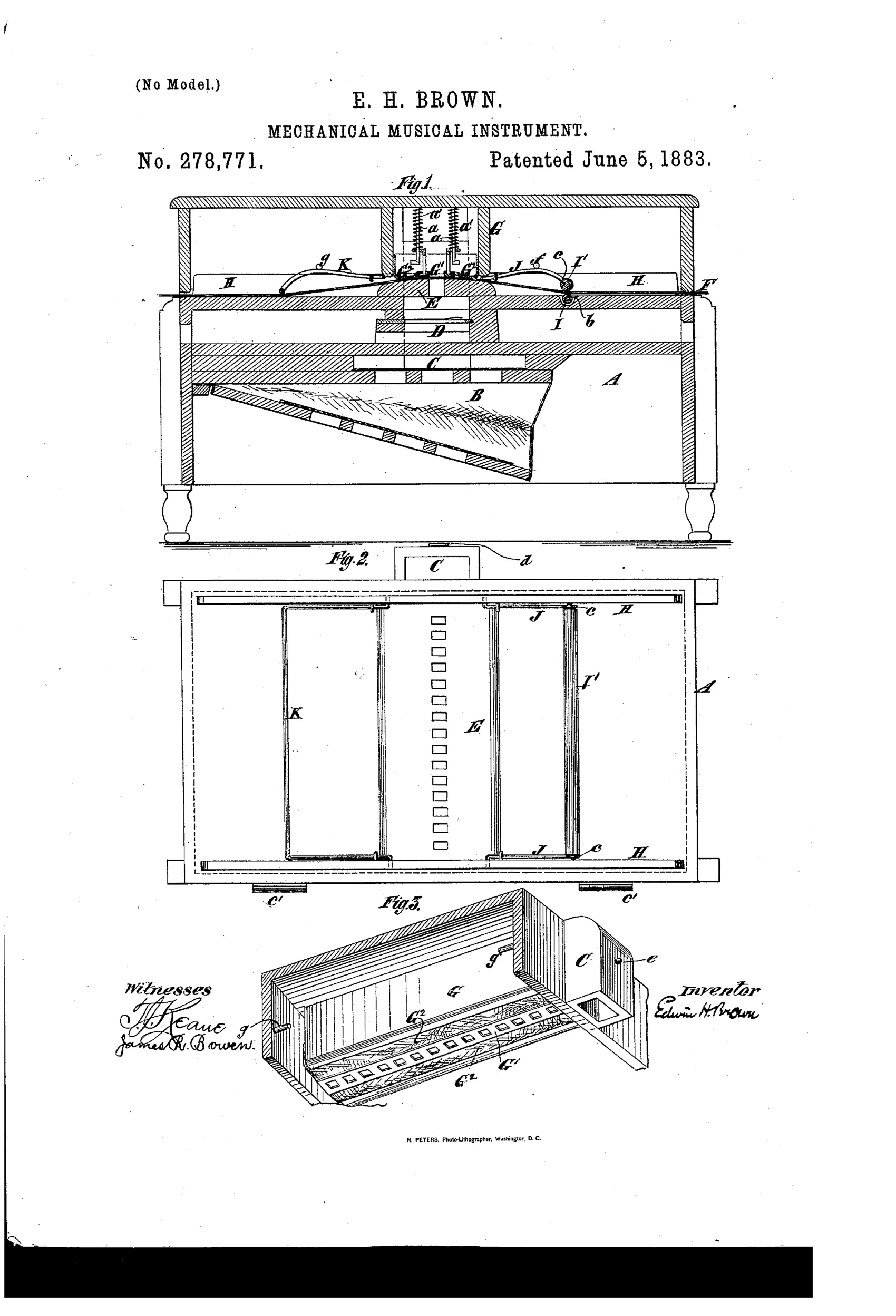
Pneumatic mechanical musical instrument with removable air-chamber
♫ How it works
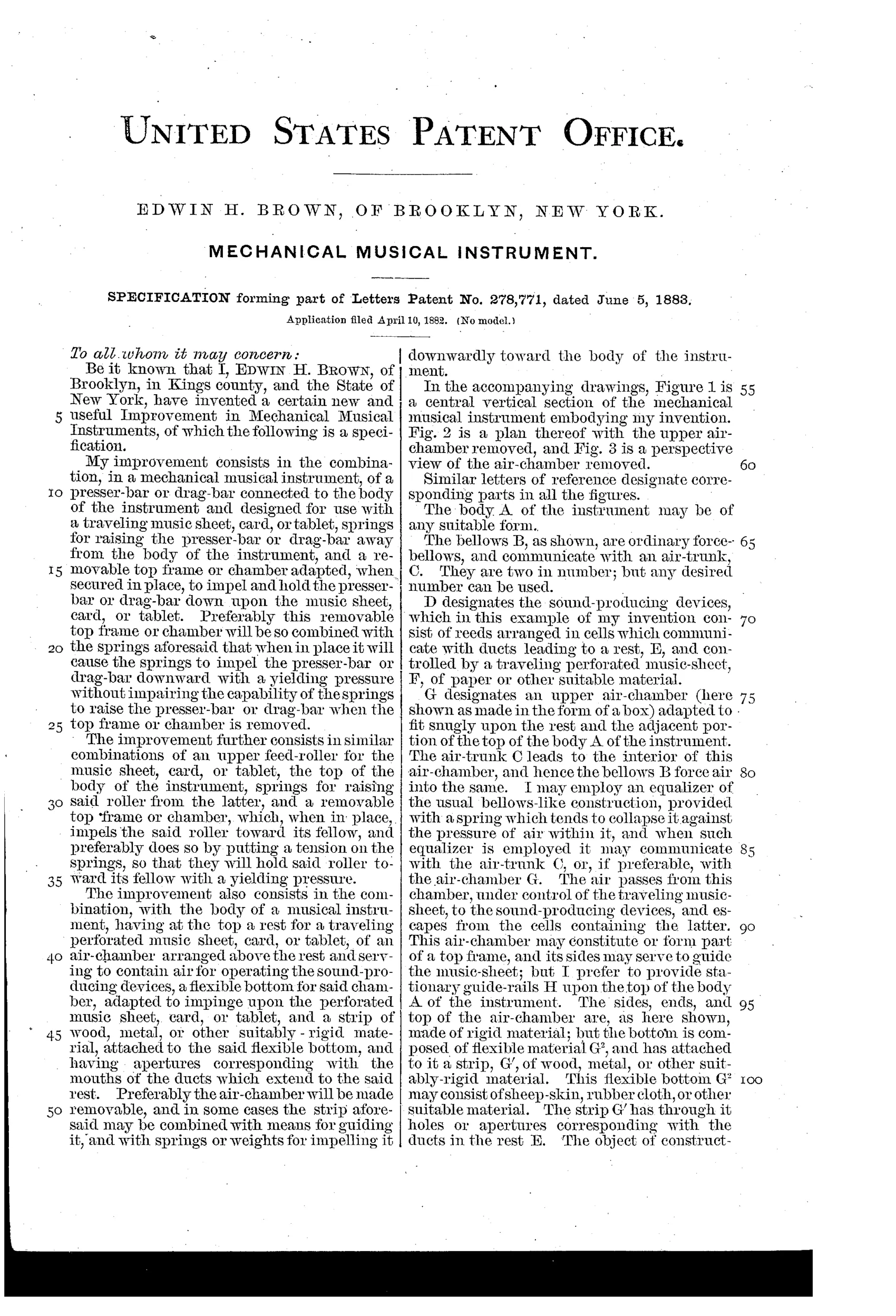
Bellows force air through an air-trunk into an upper air-chamber that sits over a rest carrying a traveling perforated music sheet. A flexible bottom on the air-chamber, backed by a rigid strip with apertures aligned to the ducts, presses down to seal against the music sheet so air passes only through its perforations into ducts leading to reed cells, producing sound. A presser-bar or drag-bar and spring-mounted upper feed-roller hold and advance the music sheet against the rest, with springs lifting these parts when the removable top air-chamber or frame is swung open, and pressing them down with yielding tension when it is closed and latched.
♫ What was claimed
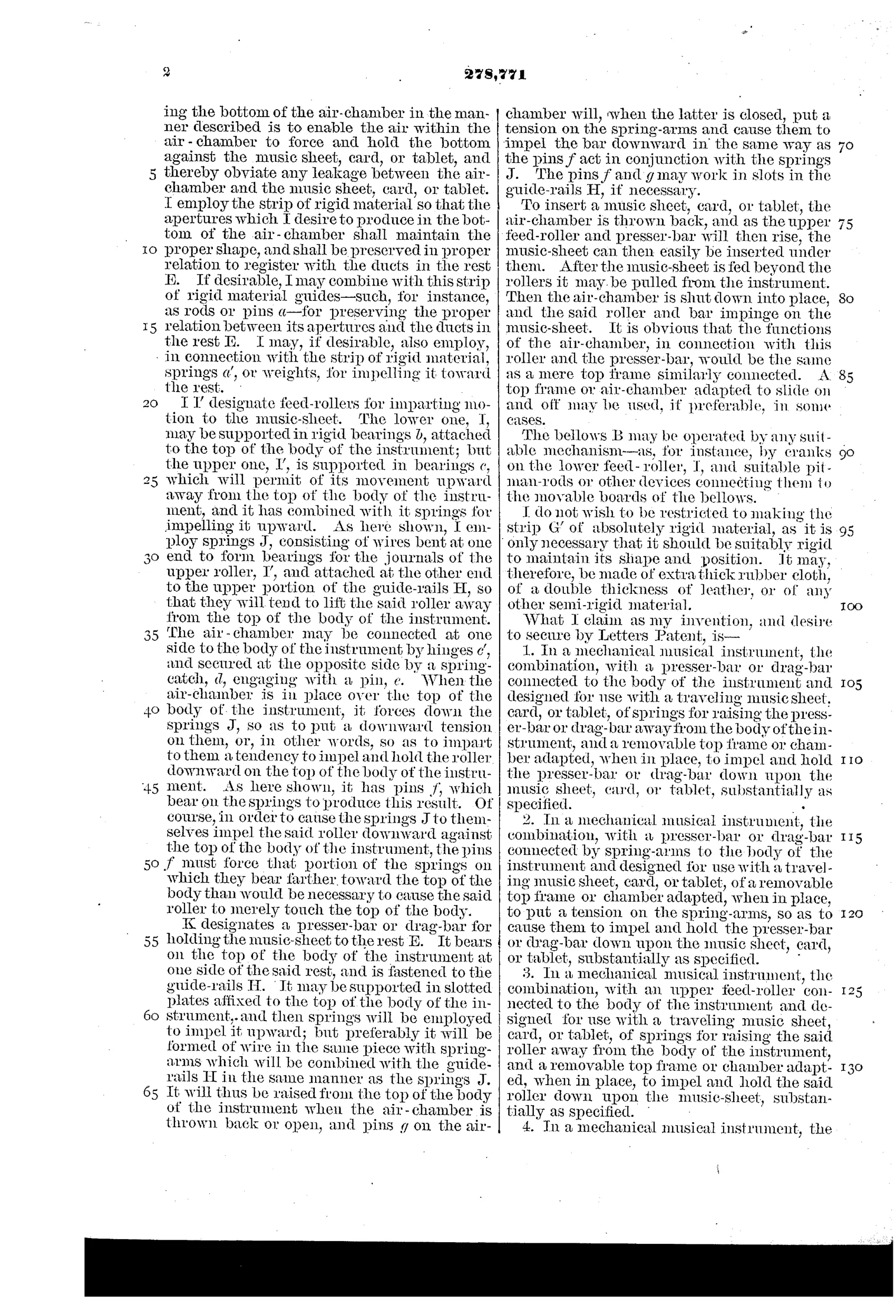
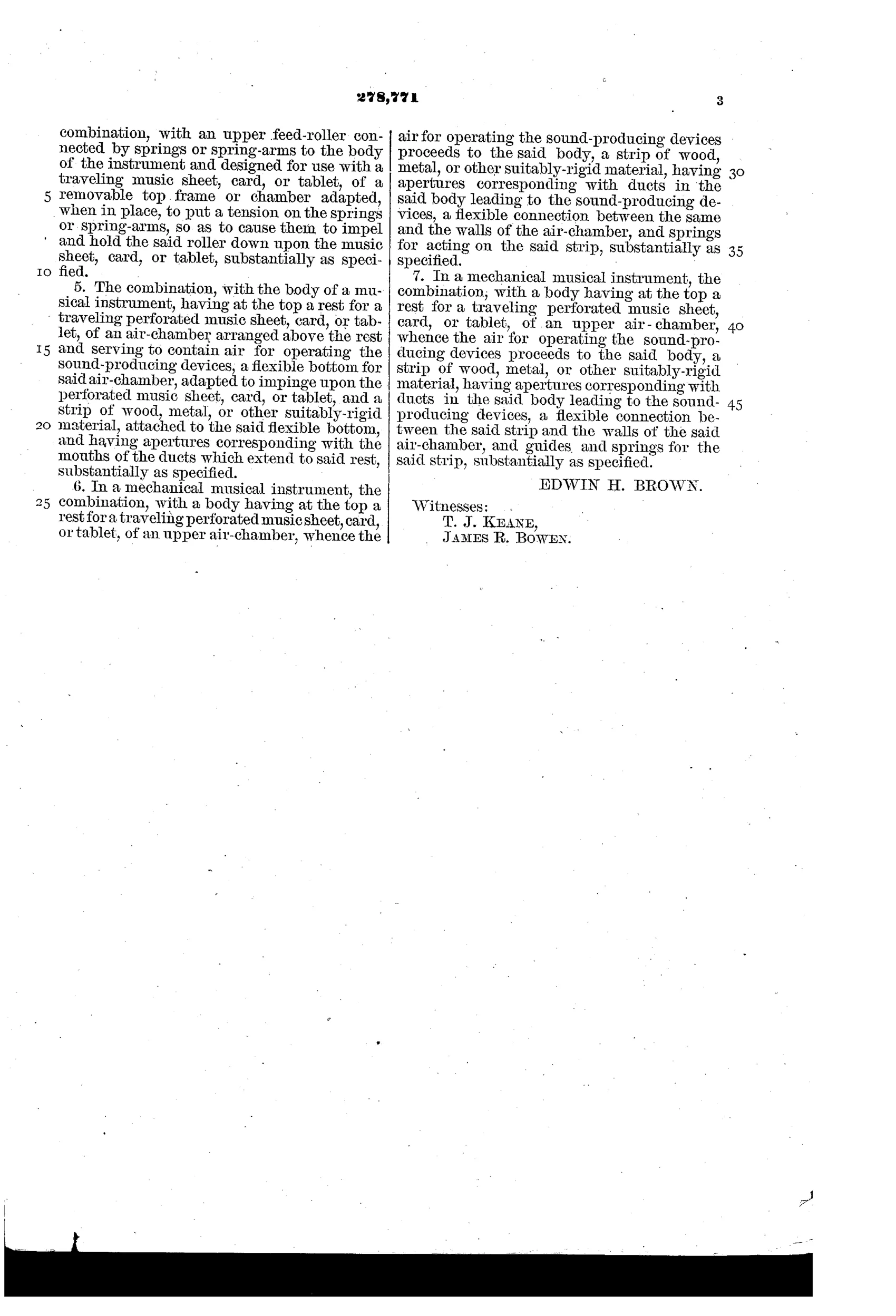
“In a mechanical musical instrument, the combination, with a presser-bar or drag-bar connected to the body of the instrument and designed for use with a traveling music sheet, card, or tablet, of springs for raising the presser-bar or drag-bar away from the body of the instrument, and a removable top frame or chamber adapted, when in place, to impel and hold the presser-bar or drag-bar down upon the music sheet, card, or tablet, substantially as specified.”
In plain English: A spring-loaded presser bar holds the traveling music sheet against the instrument, and a removable top frame or chamber pushes that bar down firmly onto the sheet when it is closed in place.
♫ In the inventor’s words
“I do not wish to be restricted to making the strip G' of absolutely rigid material, as it is only necessary that it should be suitably rigid to maintain its shape and position.”— Edwin H. Brown, from the specification
Fate unknown
No production organette is documented carrying Brown's name or this patent date; a marked instrument or a patent-date plate citing 278,771 would settle it.
♫ Commentary
By 1882 the organette trade had settled on a basic architecture: bellows, a bank of reeds, and a perforated paper strip dragged over a row of ducts. The eternal problem was the seal. Air pressure has to pass only through the perforations, which means the sheet must be pressed flat and tight against the tracker surface — but pressed too hard and the paper drags, tears, or refuses to feed at all. Brown's answer is tidy: the whole upper air-chamber is removable, and closing it does double duty, latching the pneumatic circuit shut and simultaneously bearing down on a spring-mounted presser bar that clamps the sheet with yielding tension. Open the top and the springs lift everything clear, so threading a new tune is a two-handed job instead of a fight.
The cross-section in Fig. 1 rewards a close look: the flexible bottom of the air-chamber, backed by a perforated rigid strip, is essentially a compliant gasket that conforms to the paper. That's the genuinely thoughtful part — the seal follows the sheet rather than expecting the sheet to be perfectly flat. His disclaimer that the backing strip need only be 'suitably rigid' shows a man who had actually fussed with prototypes.
As invention it's a refinement, not a breakthrough — one of dozens of organette patents chasing the same seal-and-feed problem in the decade before Regina discs and Edison cylinders redirected the whole parlor-music market. But it's a competent, buildable refinement.
Commentary by Claude, The Talking Machine Patent Archive’s resident enthusiast