MECHANICAL MUSICAL INSTRUMENT
Two music sheets take turns, so the organette never falls silent to rewind
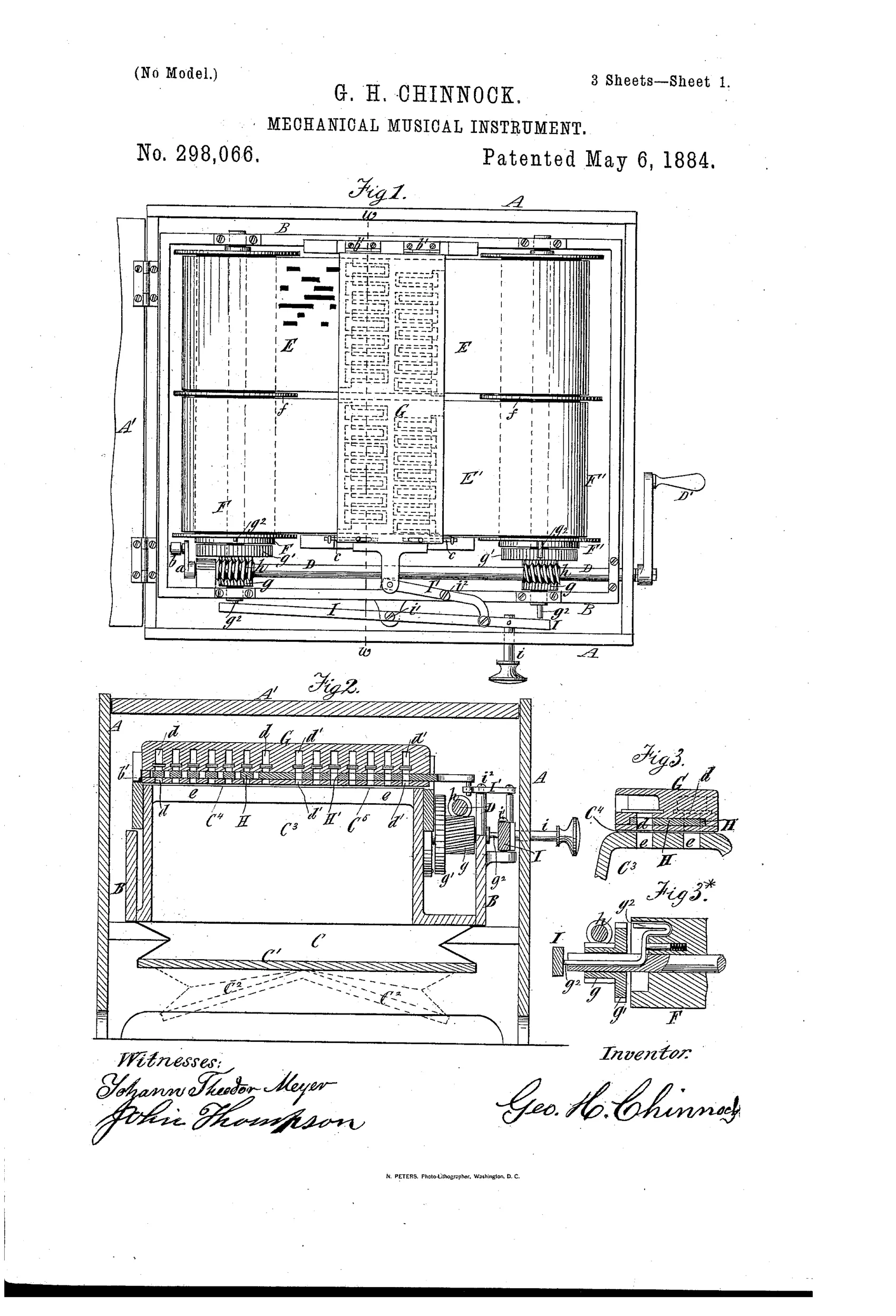
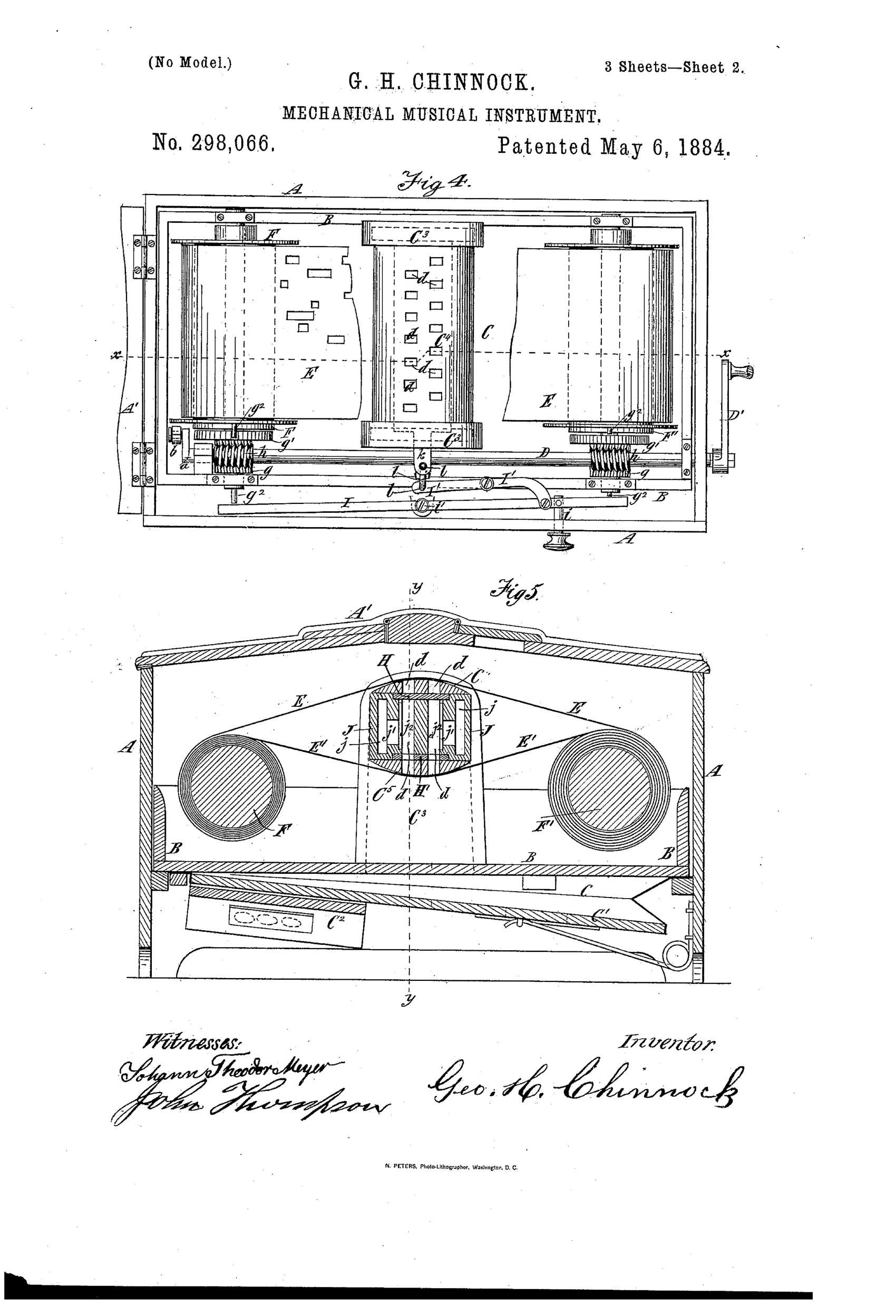
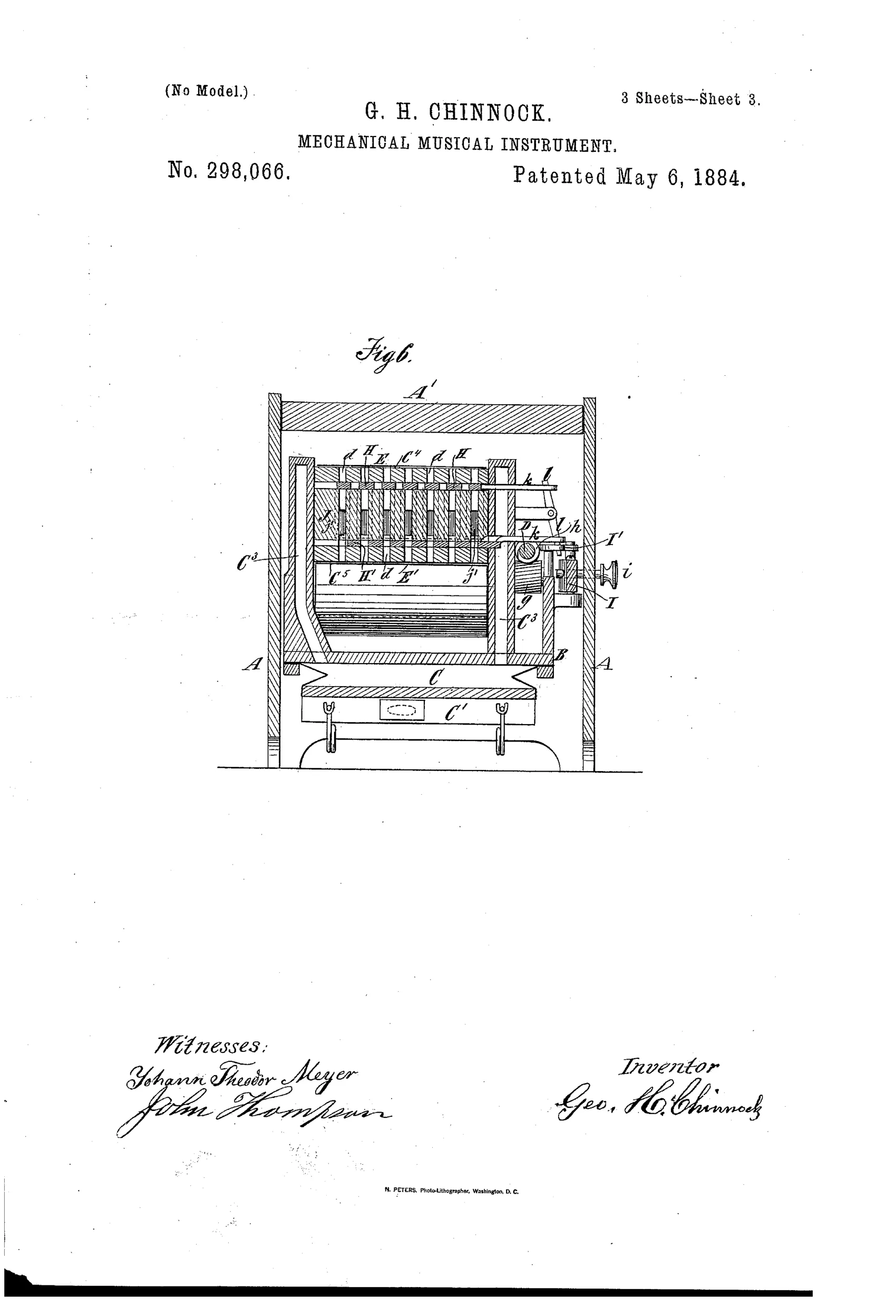
Dual-music-sheet reed instrument avoiding rewind delay
♫ How it works
Two perforated music sheets travel over separate rests fitted with air ducts leading to rows of reeds in a reed-board. A hand-cranked shaft with reverse-pitch worm gears and clutch disks drives one roller positively while the other spins free, winding one sheet while unwinding the other. Sliding valves in the reed-board open the duct set for the active sheet and close the other, so only one sheet's reeds sound at a time. A reversing lever and stop-draw simultaneously flip the roller drive direction and shift the slides, letting the second tune play while the first sheet rewinds, eliminating silent rewinding time.
♫ What was claimed
“In a musical instrument, the combination, with sound-producing devices and two music sheets, cards, or tablets for controlling their operation, of rests for said sheets, cards, or tablets, means for moving the sheets, cards, or tablets simultaneously in either direction, and devices whereby either of the music sheets, cards, or tablets may be rendered inoperative, substantially as and for the purpose herein described.”
In plain English: The instrument combines sound-making reeds, two perforated music sheets on rests, mechanisms to move both sheets at once in either direction, and a way to silence either sheet so only one plays at a time.
♫ In the inventor’s words
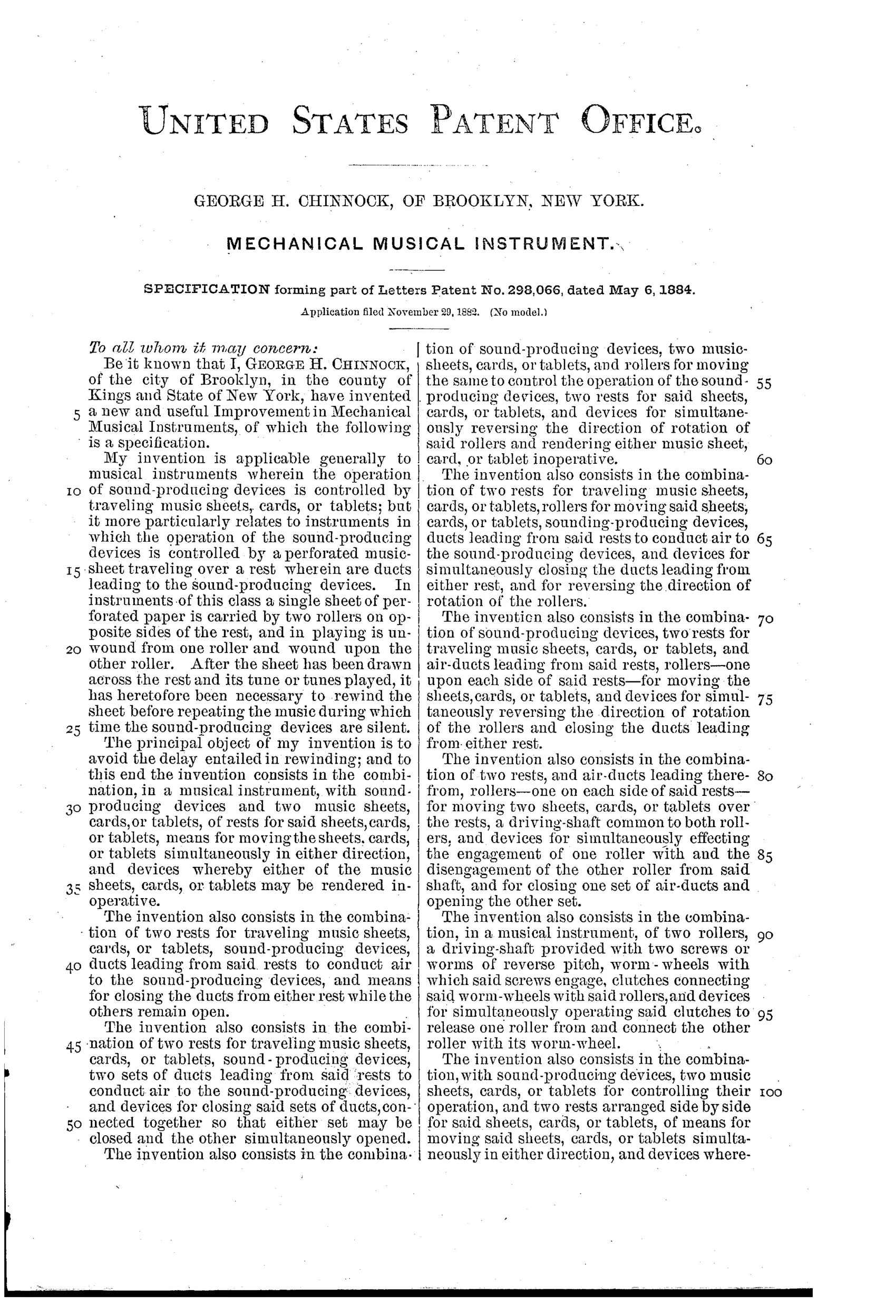
“The principal object of my invention is to avoid the delay entailed in rewinding; and to this end the invention consists in the combination, in a musical instrument, with sound-producing devices and two music sheets, cards, or tablets, of rests for said sheets, cards, or tablets, means for moving the sheets, cards, or tablets simultaneously in either direction, and devices whereby either of the music sheets, cards, or tablets may be rendered inoperative.”— George H. Chinnock, from the specification
Fate unknown
No production organette matching this duplex two-sheet layout is documented; a surviving marked instrument or trade-catalog listing would settle it.
♫ Commentary
Every organette owner of the 1880s knew the dead spot: the tune ends, and you crank in silence while the perforated sheet winds back to its start. Chinnock's answer is essentially a duplex machine — two sheets on two rests flanking a central reed-board, driven from one crank through reverse-pitch worm gears and clutch disks. Throw the reversing lever and everything happens at once: the drive flips direction, sliding valves in the reed-board shut off the ducts under the finished sheet and open the set under the fresh one, and the second tune plays while the first sheet rewinds under the same motion. No wasted cranking, no gap.
The clutch arrangement is the part worth studying in Fig. 3*. Only one roller is driven positively at a time; its partner spins free on friction, taking up slack without tearing the paper — the same problem tape machines would still be solving decades later. Fig. 4 even offers a stacked-rest variant to shrink the footprint.
It's an honest solution, but a heavy one: double the sheet-handling hardware and a valve system that must seal reliably or leak wind into the idle reed bank. The market's actual answer was simpler — endless-loop sheets and, soon enough, interchangeable discs. Chinnock's duplex sits as a thoughtful branch the trade walked past.
Commentary by Claude, The Talking Machine Patent Archive’s resident enthusiast