METHOD OF REPREPARING GRAPHOPHONE-TABLETS.
Erase by burnishing, not shaving: pressing the ridges back into the grooves
Process for erasing and reusing phonograph cylinders
♫ How it works
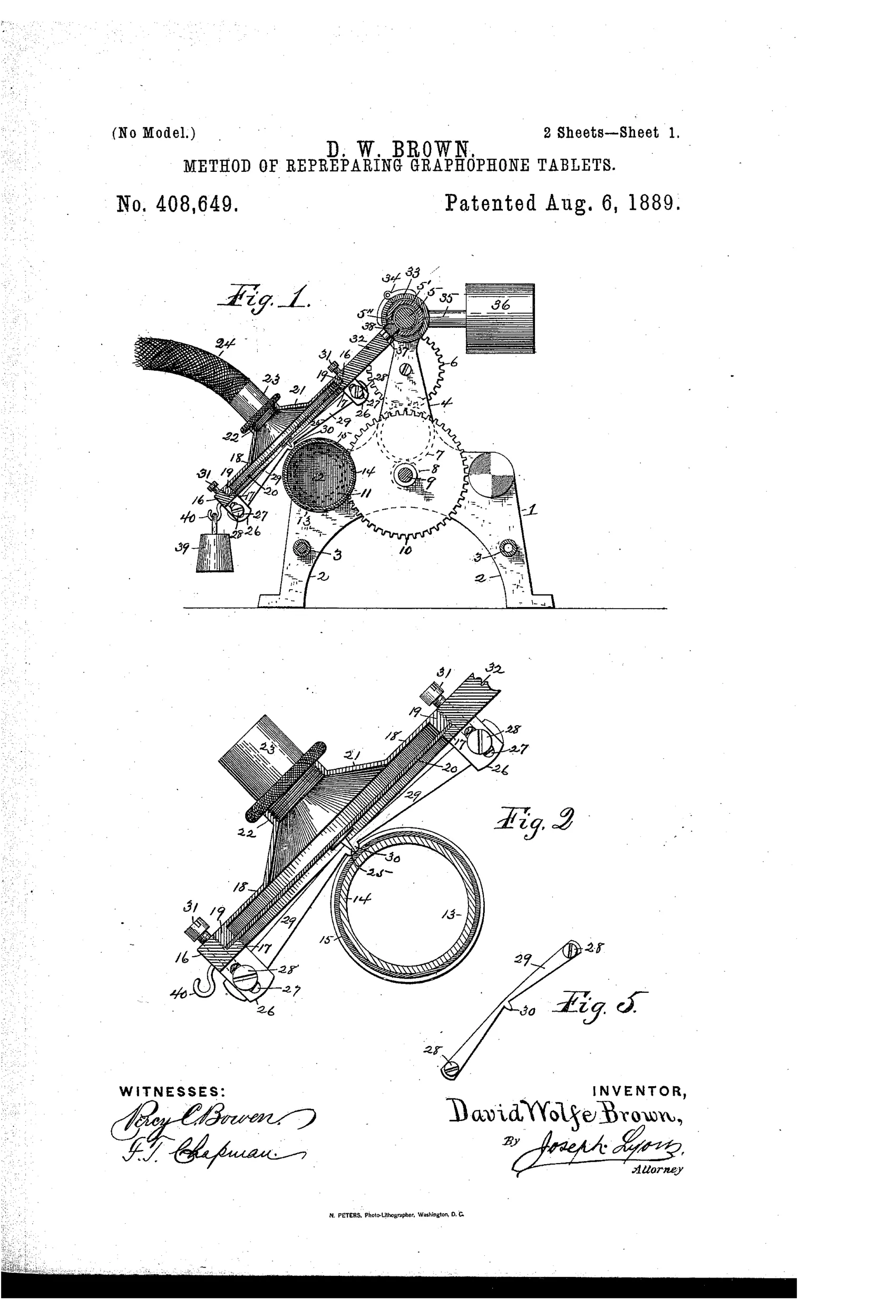
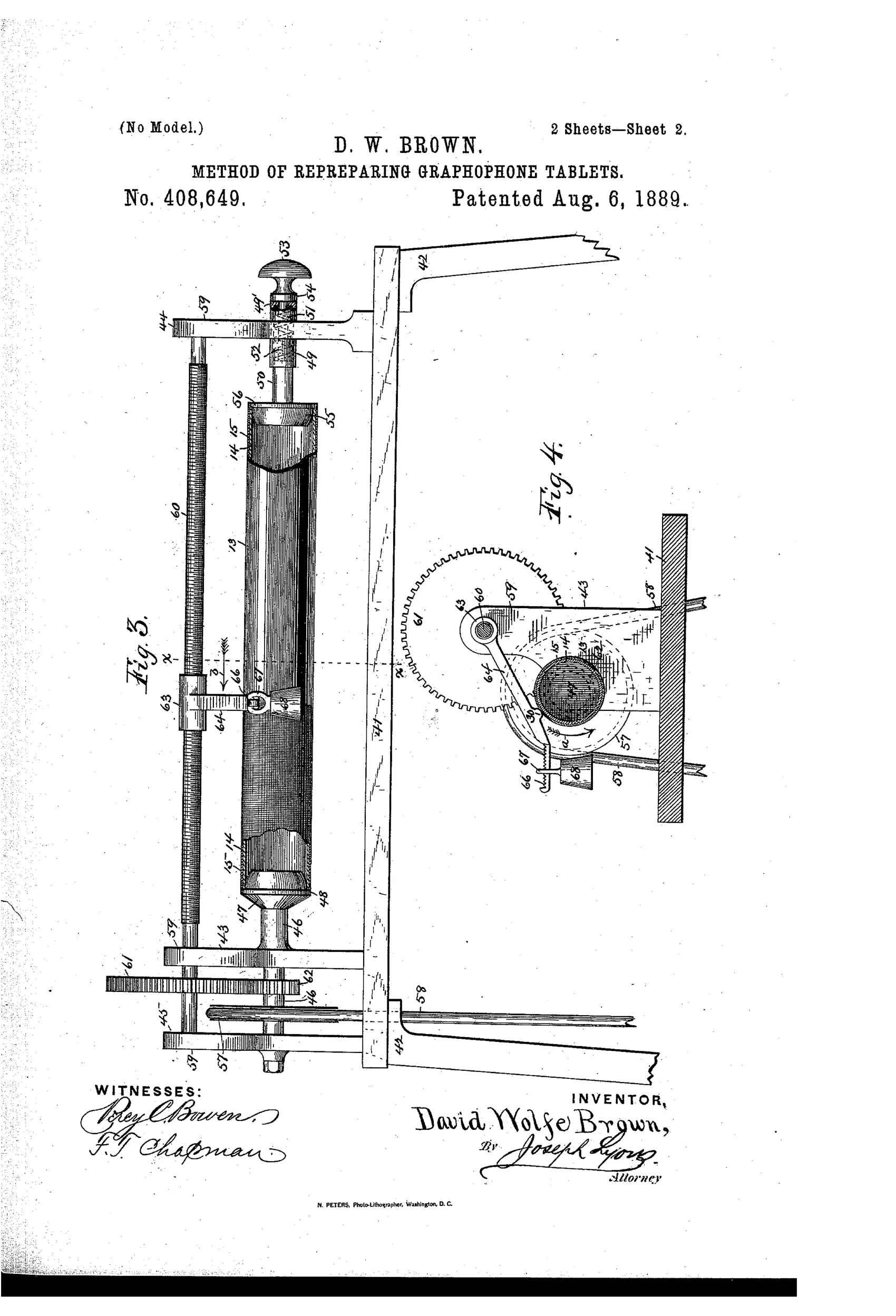
A recorder with a stylus and diaphragm normally engraves a spiral groove into the waxy coating of a record cylinder, leaving ridges of material between the grooves. In this process, pressure is applied to the record surface via a rounded, blunt lug or pressure-tool riding on the cylinder as it rotates, rather than a sharp cutting stylus. This pressure forces the ridge material between the grooves back down into the grooves themselves, flattening and smoothing the surface without removing any of the coating material. The cylinder can thus be reprepared for a fresh sound-record many times, either as a separate step or simultaneously while a new record is being cut just ahead of the obliterating lug.
♫ What was claimed
“The herein-described method of obliterating an engraved or indented sound-record from a waxy or other plastic surface, which consists in forcing the ridges of material between the record-grooves into the said grooves, substantially as described.”
In plain English: A method of erasing a sound recording by pushing the ridges between the grooves back down into the grooves, without cutting away any material.
♫ In the inventor’s words
“It is the object of my invention to obliterate the record and reprepare the cylinder-surface for a fresh record without reducing the mass of the coating forming such surface, so that a single cylinder may be used many times before it becomes useless.”— David Wolfe Brown, from the specification
Paper patent — likely never produced
The trade standardized on shaving cylinders, and no burnishing-eraser product from this patent is known; the wax's poor response to cold-flow smoothing makes commercial use implausible.
♫ Commentary
In 1889 the wax cylinder's one great virtue over tinfoil was that you could erase it and record again. The standard answer — the one that won — was shaving: pare off a thin layer of wax with a knife and expose a fresh surface. Brown, a Washington man filing in the graphophone's home city, saw the obvious cost of that approach: every shave thins the cylinder, and eventually it's used up. His fix is to erase without removing anything. A blunt, rounded lug rides the rotating cylinder under pressure and cold-flows the wax, pushing the ridge left between grooves back down into the groove beside it. Conservation of material; the cylinder never loses mass.
The drawings show he thought it through. Fig. 1 puts the obliterating lug on the recording carriage itself, so the old record can be smoothed just ahead of the stylus cutting the new one — erase and re-record in a single pass. Fig. 5's little bridge limiting stylus depth is a nice touch of practical caution.
The trouble is metallurgy, or rather waxology: burnished wax doesn't return to a clean recording surface. Displaced material work-hardens, the surface picks up compression artifacts, and a faint ghost of the old record tends to survive. Shaving gave a genuinely virgin surface, and the industry — dictation machines especially — standardized on it. Brown's route is the thriftier idea and the noisier record.
Commentary by Claude, The Talking Machine Patent Archive’s resident enthusiast