PHONOGRAPH.
The mechanism behind Edison's ill-fated talking doll, patented by its true inventor
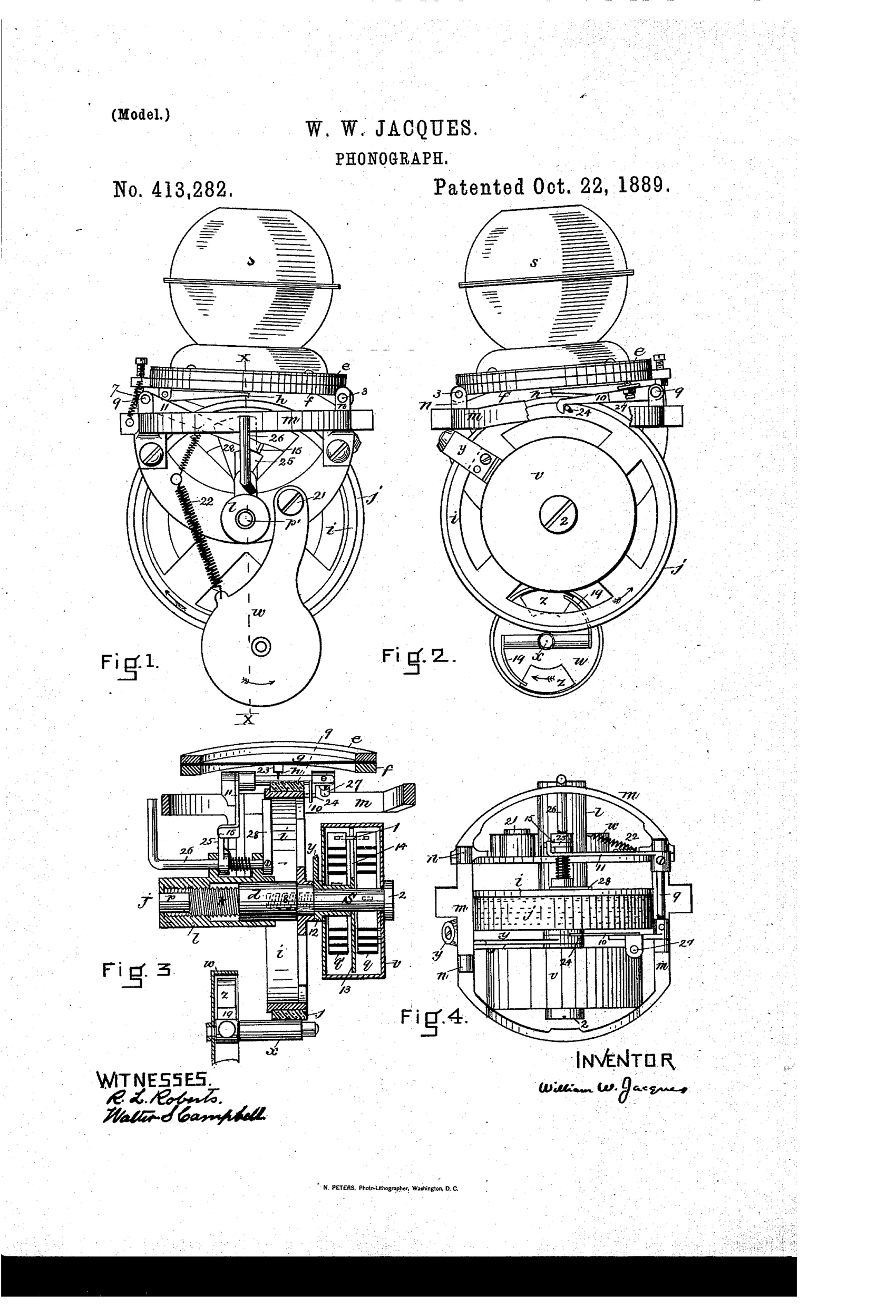
Spring-driven toy phonograph with automatic stopping mechanism
♫ How it works
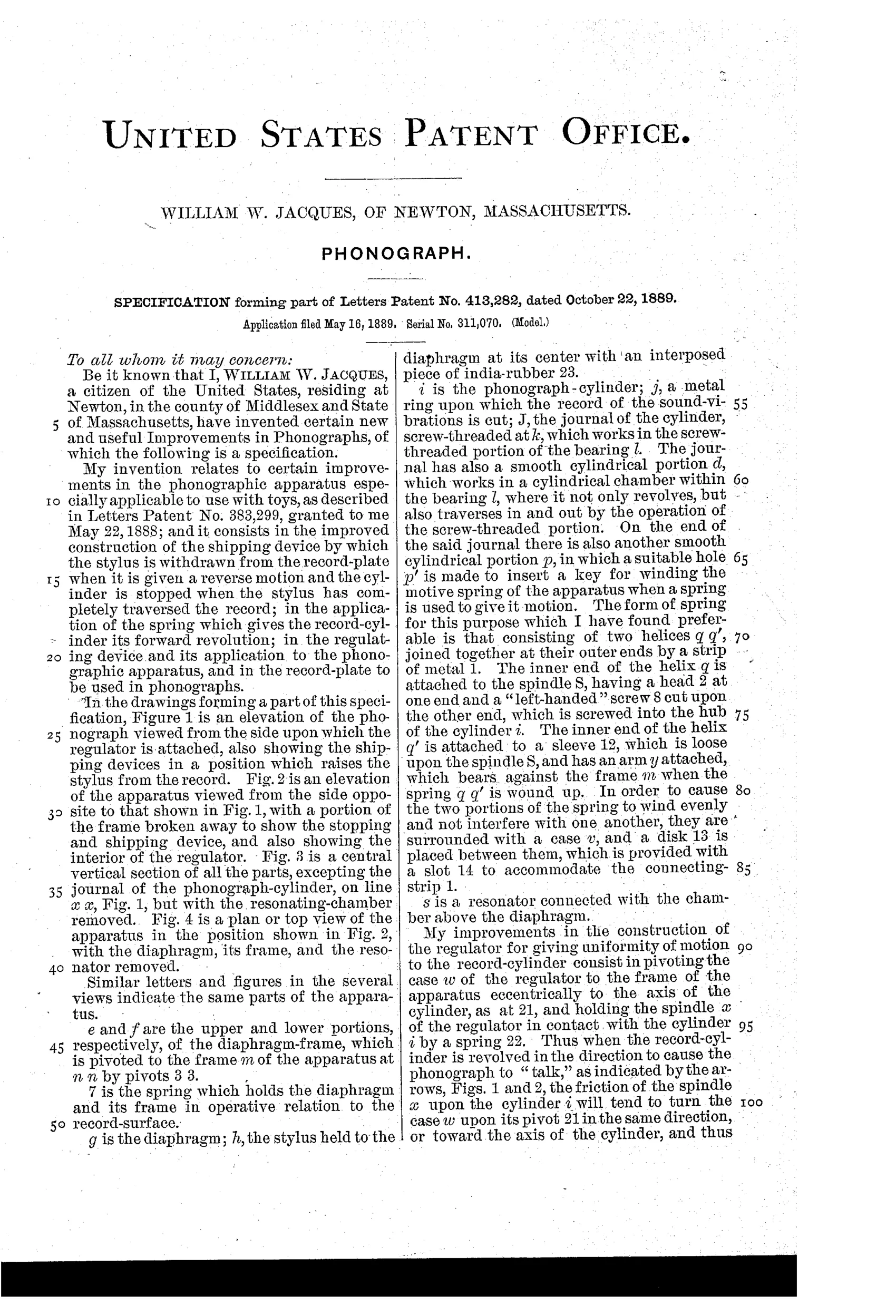
A spring-driven cylinder rotates a metal record-plate past a stylus connected to a hinged diaphragm and resonator, cutting or reproducing sound-vibrations. A regulator, pivoted eccentrically and held by a spring, frictionally engages the cylinder to govern its speed evenly. A latch-lever and cam-actuated arm automatically raise the stylus and stop the cylinder's rotation once the stylus has completely traversed the record, and a cam-brake locks the cylinder while the mainspring is being wound. The record-plate itself is made of a substantially inflexible tin alloy (with copper and antimony) rather than a soft foil or wax, so that the cut undulations endure repeated playback.
♫ What was claimed
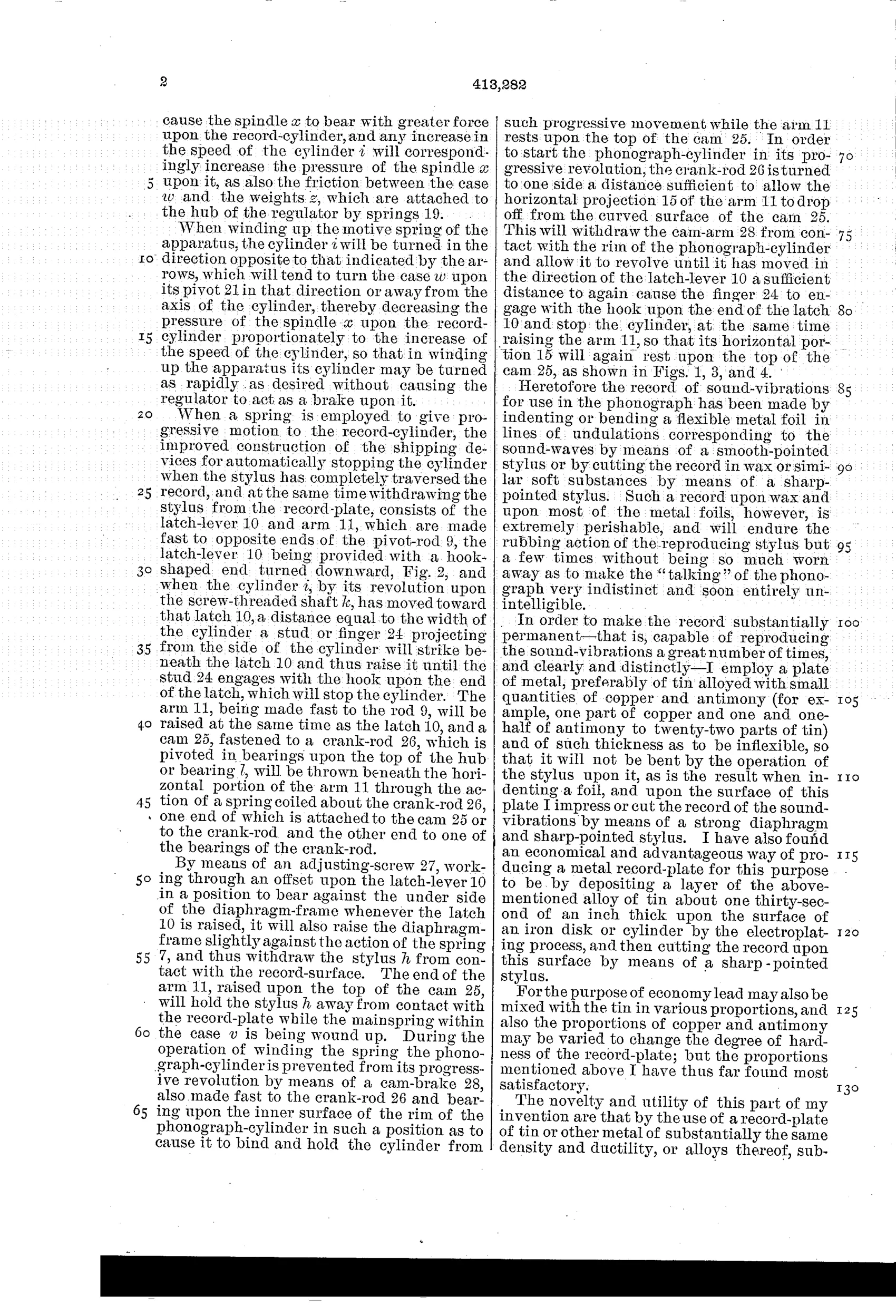
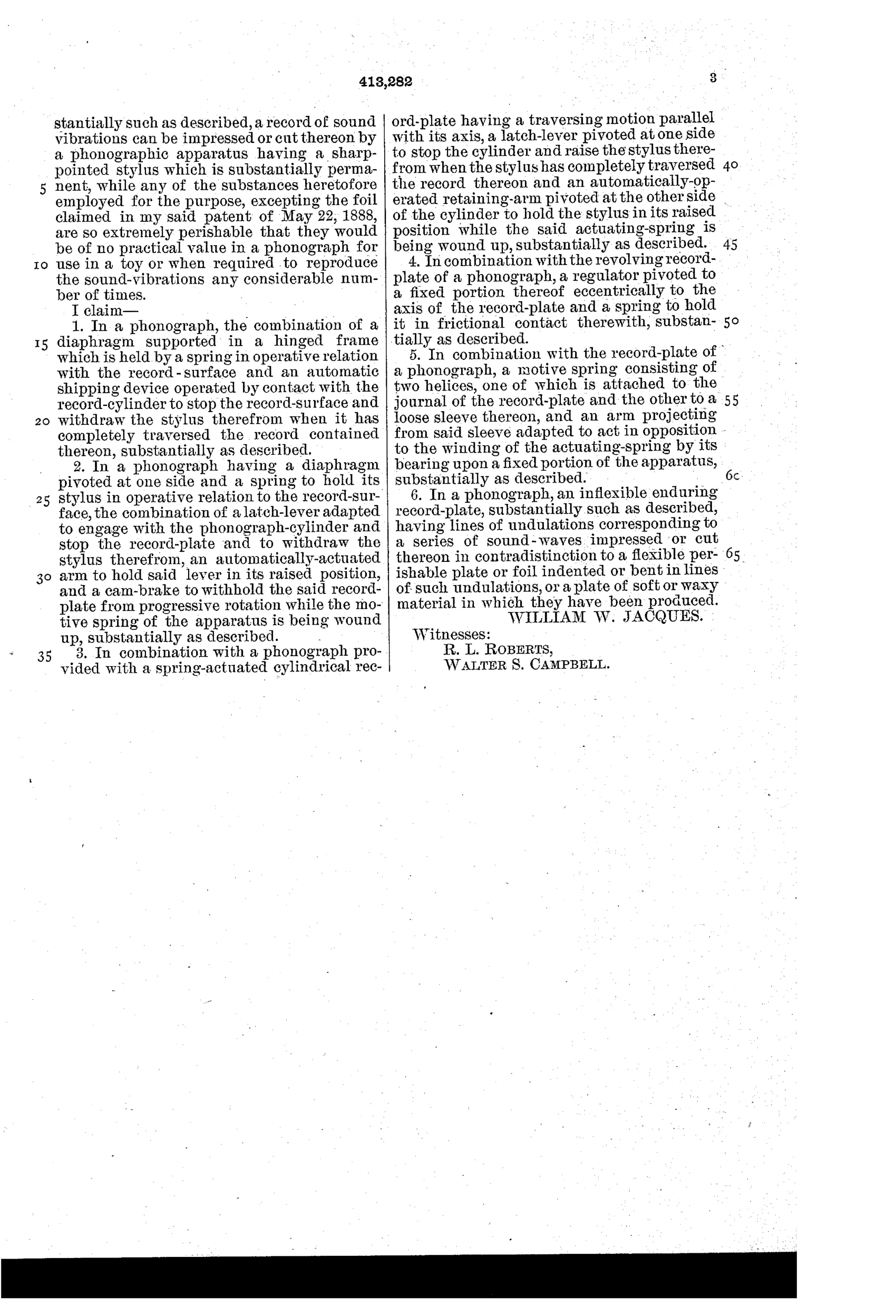
“In a phonograph, an inflexible enduring record-plate, substantially such as described, having lines of undulations corresponding to a series of sound-waves impressed or cut thereon in contradistinction to a flexible perishable plate or foil indented or bent in lines of such undulations, or a plate of soft or waxy material in which they have been produced.”
In plain English: The patent claims a durable, rigid metal record plate with cut sound-wave grooves, as opposed to a soft or perishable foil/wax record.
♫ In the inventor’s words
“Such a record upon wax and upon most of the metal foils, however, is extremely perishable, and will endure the rubbing action of the reproducing stylus but a few times without being so much worn away as to make the "talking" of the phonograph very indistinct and soon entirely unintelligible.”— William W. Jacques, from the specification
Manufactured and sold
Jacques's toy phonograph mechanism was manufactured for the 1890 Edison talking doll, though the commercial version diverged in details (notably reverting to wax records) and the venture failed quickly.
♫ Commentary
William Jacques of Newton, Massachusetts is one of the quietly important names in early recorded sound: he organized the Edison Phonograph Toy Manufacturing Company, and this patent is the heart of the miniature phonograph that went inside the 1890 Edison talking doll. The spherical resonator perched on top in Figs. 1 and 2 gives the game away — this is a machine meant to be buried in a doll's torso and heard through its chest, not played on a parlor table.
The most interesting claim here isn't the spring motor or the clever automatic stop (though the cam-brake that locks the cylinder during winding is a thoughtful touch for a toy handled by children). It's the record itself: a rigid tin-alloy plate with the sound-wave cut into it, claimed explicitly in contradistinction to perishable foil or soft wax. Jacques had put his finger on the real problem of 1889 — tinfoil records died after a few plays, and wax wasn't much hardier under a child's repeated cranking. A metal record that could survive abuse was exactly what a toy demanded.
History's verdict was mixed: the dolls reached production in 1890, but the enterprise collapsed within weeks as the fragile mechanisms failed in shipping and use, and production dolls largely reverted to wax rings. Still, this is no paper patent — it's a genuine engineering answer to a genuine problem, from the man who arguably invented the talking doll only to see Edison's name go on it.
Commentary by Claude, The Talking Machine Patent Archive’s resident enthusiast