AUTOMATIC REPEATING MECHANISM FOR PHONOGRAPHS.
A 1890 phonograph that resets itself to hawk goods through a store window
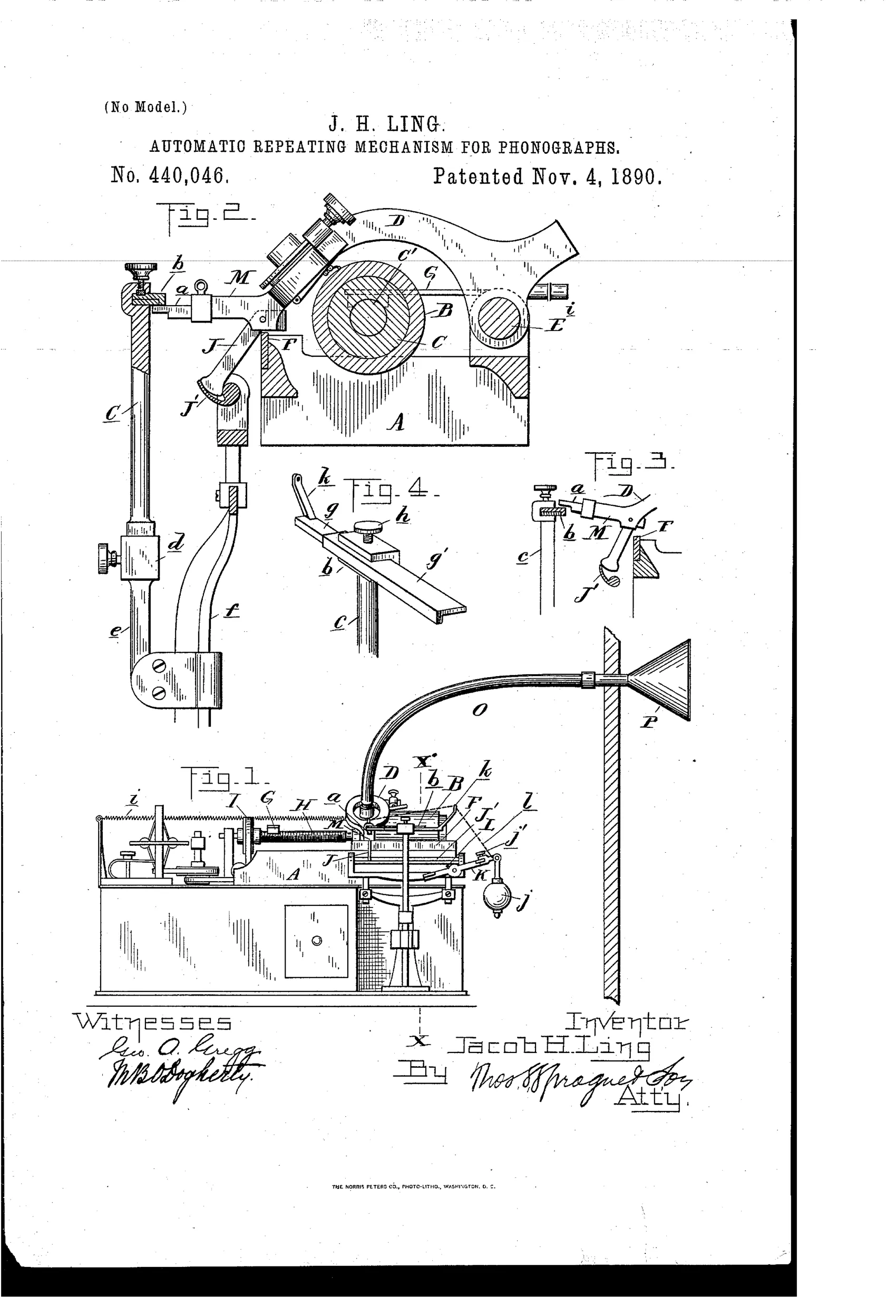
Automatic self-repeating mechanism for advertising phonographs
♫ How it works
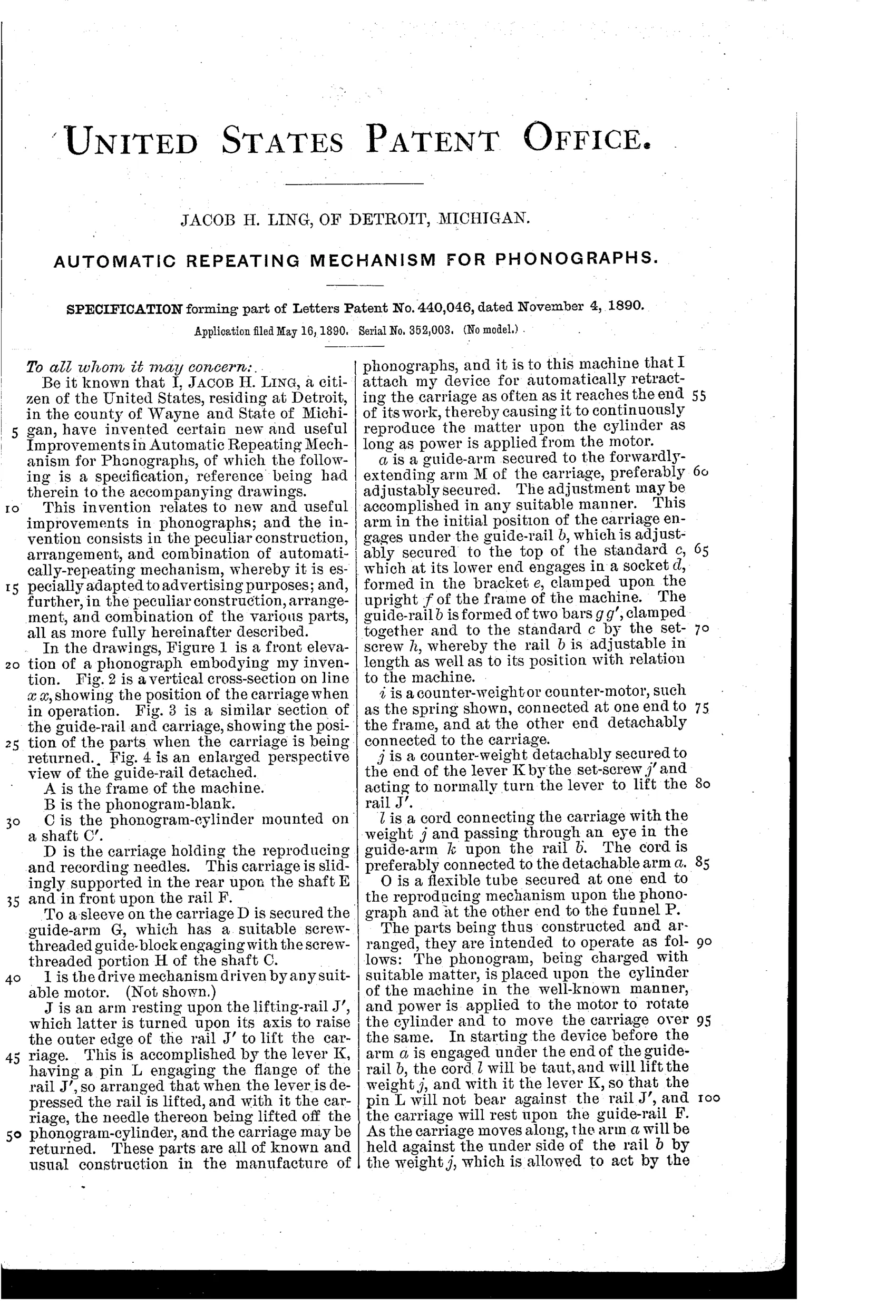
A reproducing carriage carrying the needle rides on a screw-threaded shaft that engages a guide-block to traverse the phonogram cylinder as it plays. A weighted lever and lifting-rail disengage the guide-block from the lead screw at the end of the cylinder, raising the carriage clear of the mandrel. A counter-weight or spring then draws the carriage back along a guide-rail to its starting position, where it drops again into engagement with the screw-threaded shaft to repeat the cycle automatically. A flexible tube connects the reproducer to an external funnel so the recorded sound can be broadcast, such as through a store window.
♫ What was claimed
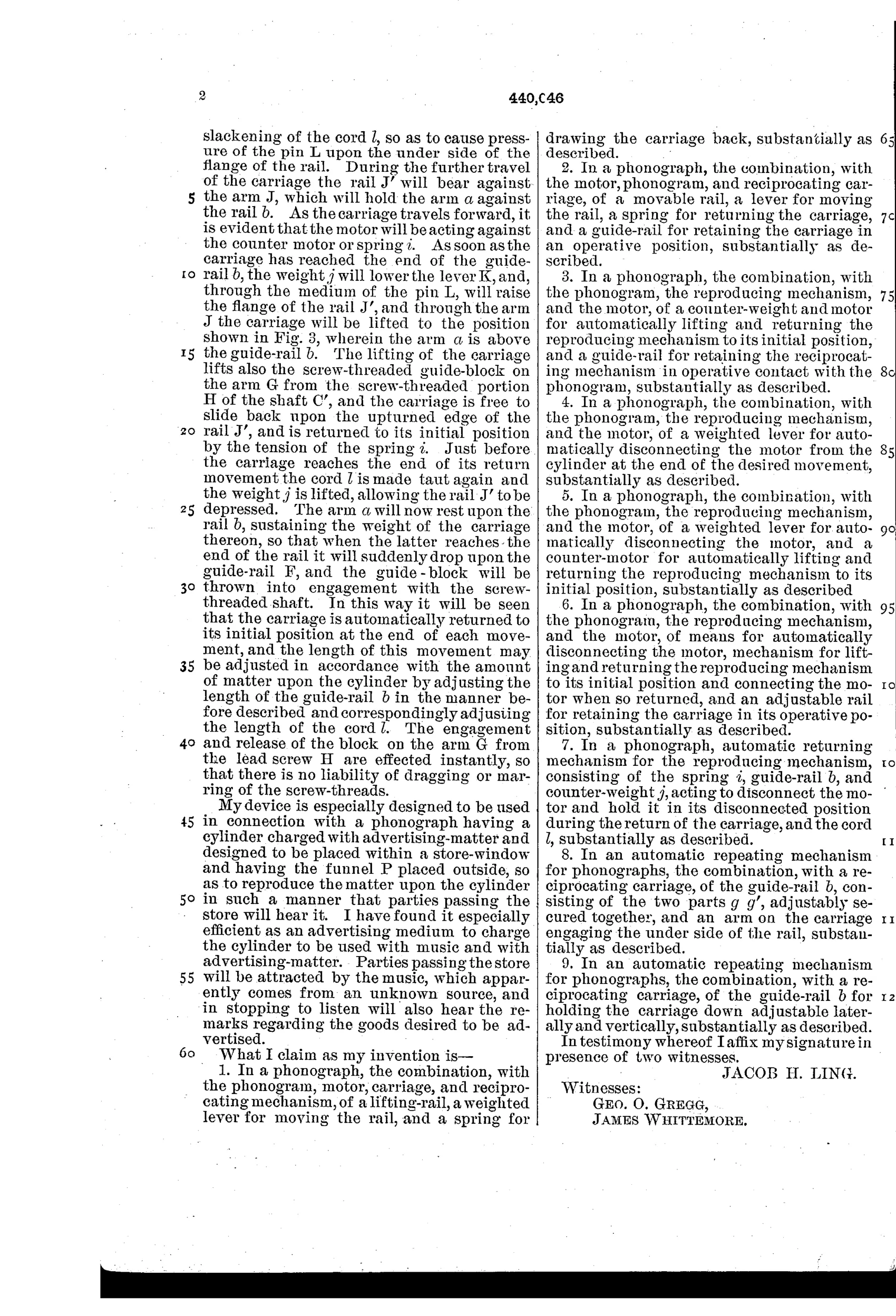
“In a phonograph, the combination, with the phonogram, motor, carriage, and reciprocating mechanism, of a lifting-rail, a weighted lever for moving the rail, and a spring for drawing the carriage back, substantially as described.”
In plain English: The patent covers a phonograph carriage that is automatically lifted off the cylinder by a weighted lever and rail, then pulled back to its start by a spring.
♫ In the inventor’s words
“Parties passing the store will be attracted by the music, which apparently comes from an unknown source, and in stopping to listen will also hear the remarks regarding the goods desired to be advertised.”— Jacob H. Ling, from the specification
Fate unknown
Repeating attachments were later made by others, but no manufactured example of Ling's specific design is documented; a marked specimen or trade-press mention would settle it.
♫ Commentary
Ling's patent is really two ideas welded together, and the second one is the fun part. The first is the mechanism itself: the reproducer carriage rides the lead screw across the cylinder as usual, but at the end of the record a weighted lever trips a lifting-rail, which pops the guide-block out of the screw threads and hoists the whole carriage clear of the mandrel. A spring or counterweight then drags it back down a guide-rail to the start, where it drops back into the threads and plays again. Fig. 4's detached rail is the heart of it — a simple ramp-and-latch that turns a two-minute record into an endless loop.
The second idea is what the loop is for. That flexible tube in Fig. 1 snakes up to a funnel poking through a wall, and Ling says it plainly: passersby will hear music "from an unknown source," stop to listen, and get an advertising pitch. This is 1890 — coin-op phonograph parlors were brand new, and Ling was already thinking about unattended, unpaid, repeat-cycle audio advertising. That's the jukebox's cousin, and arguably an ancestor of every looping mall announcement since.
Mechanically it's plausible; repeat attachments of broadly this kind did get built by others in the following decades. Whether Ling's Detroit version ever made it past the drawing board is another matter — no assignee, no known product bearing his name.
Commentary by Claude, The Talking Machine Patent Archive’s resident enthusiast