PHONOGRAPH.
One lever, timed by a cam: motor first, needle second, every time
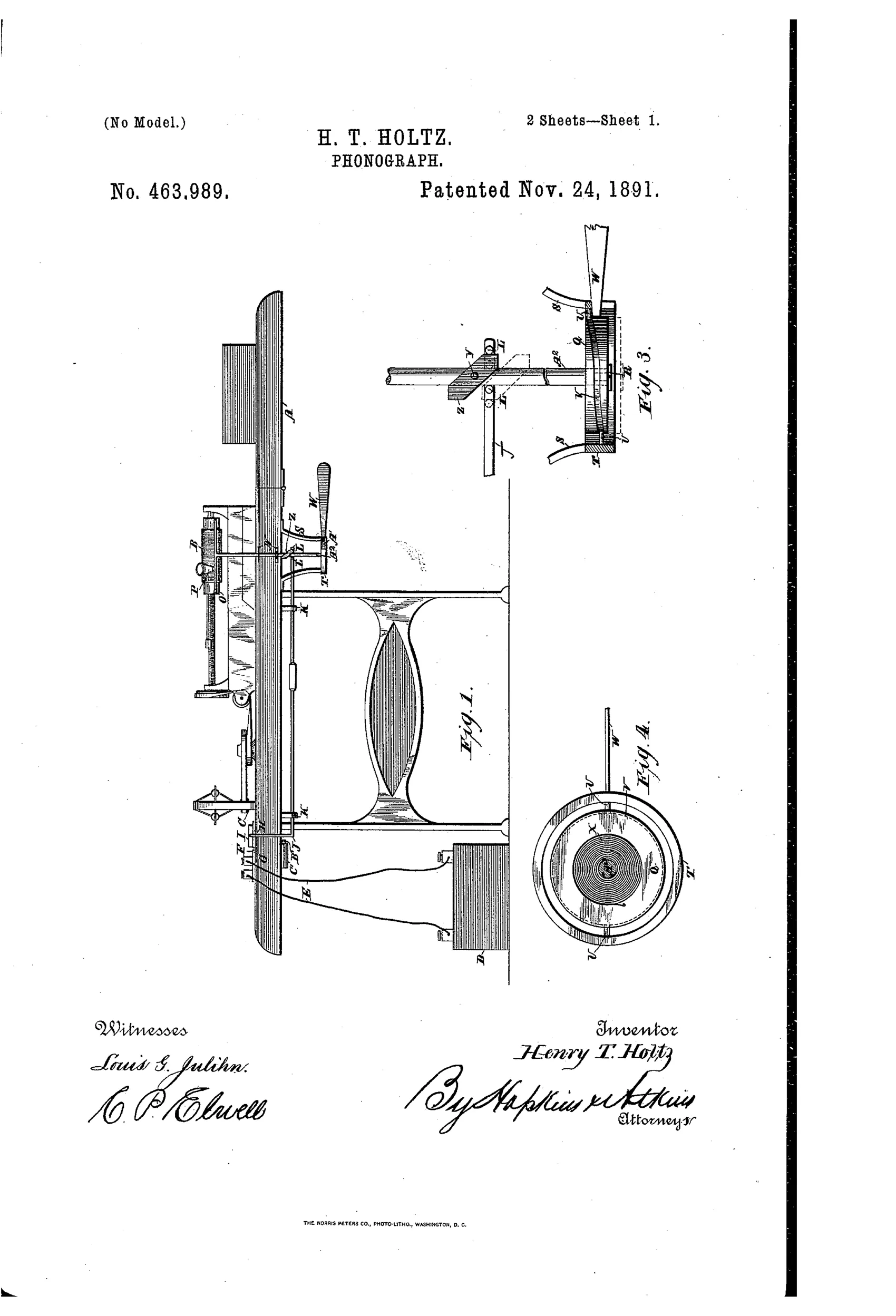
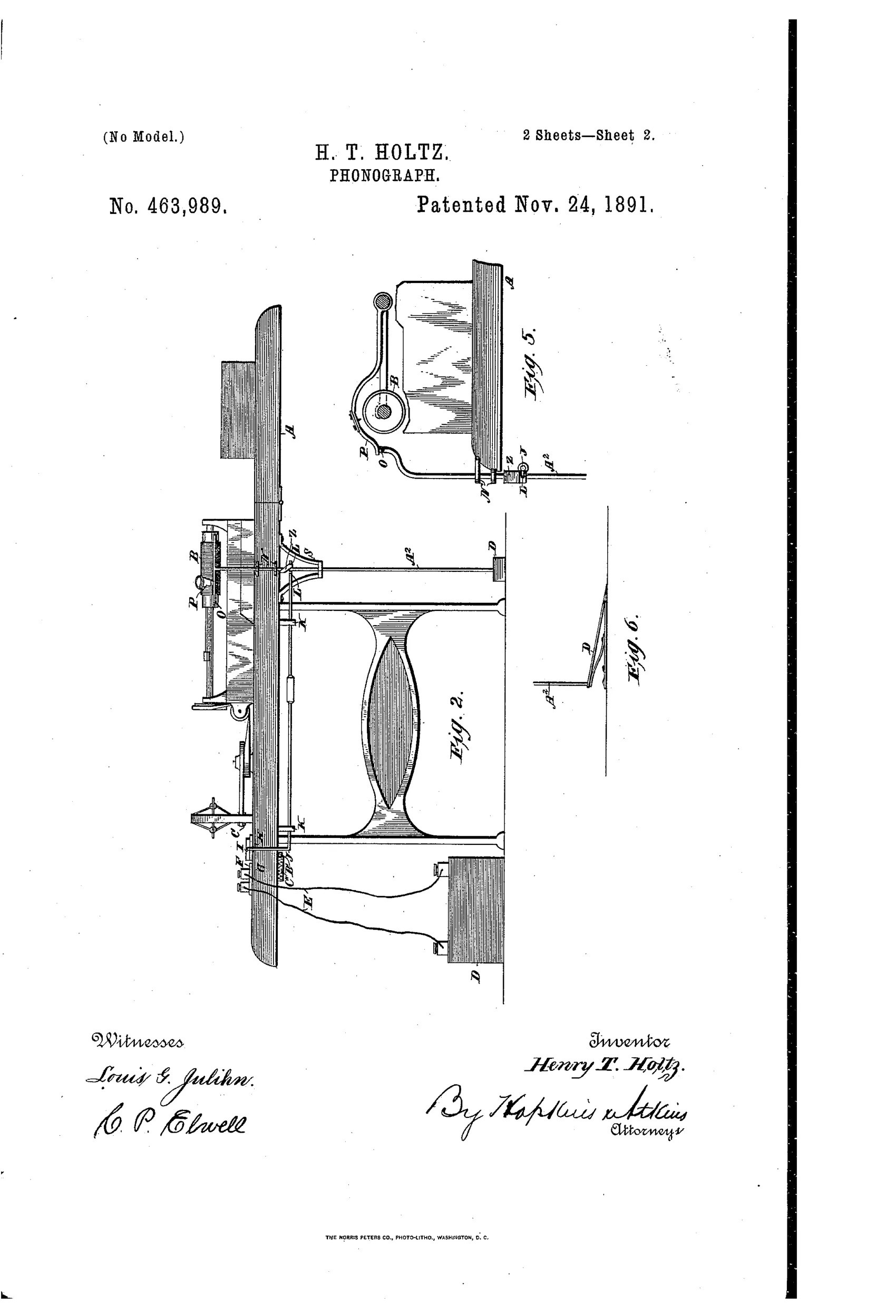
Start-and-stop control device for phonographs
♫ How it works
A pivoted lever called the prime mover rotates a cam-disk that both closes an electric switch to start the motor and, after a delay, moves a vertically-sliding lifting-bar to lower the diaphragm needle onto the revolving cylinder. A cam-collar and pins on a horizontal rod operate the electric switch slightly before the lifting-piece disengages from the disk-lever carrying the needle, ensuring the motor reaches full speed before the stylus contacts the cylinder. A volute spring returns the cam to its normal position when pressure on the lever is released, lifting the needle and stopping the machine so the operator can transcribe recorded speech. This arrangement allows the operator to interrupt and resume playback repeatedly without wasting battery current or losing the groove alignment.
♫ What was claimed
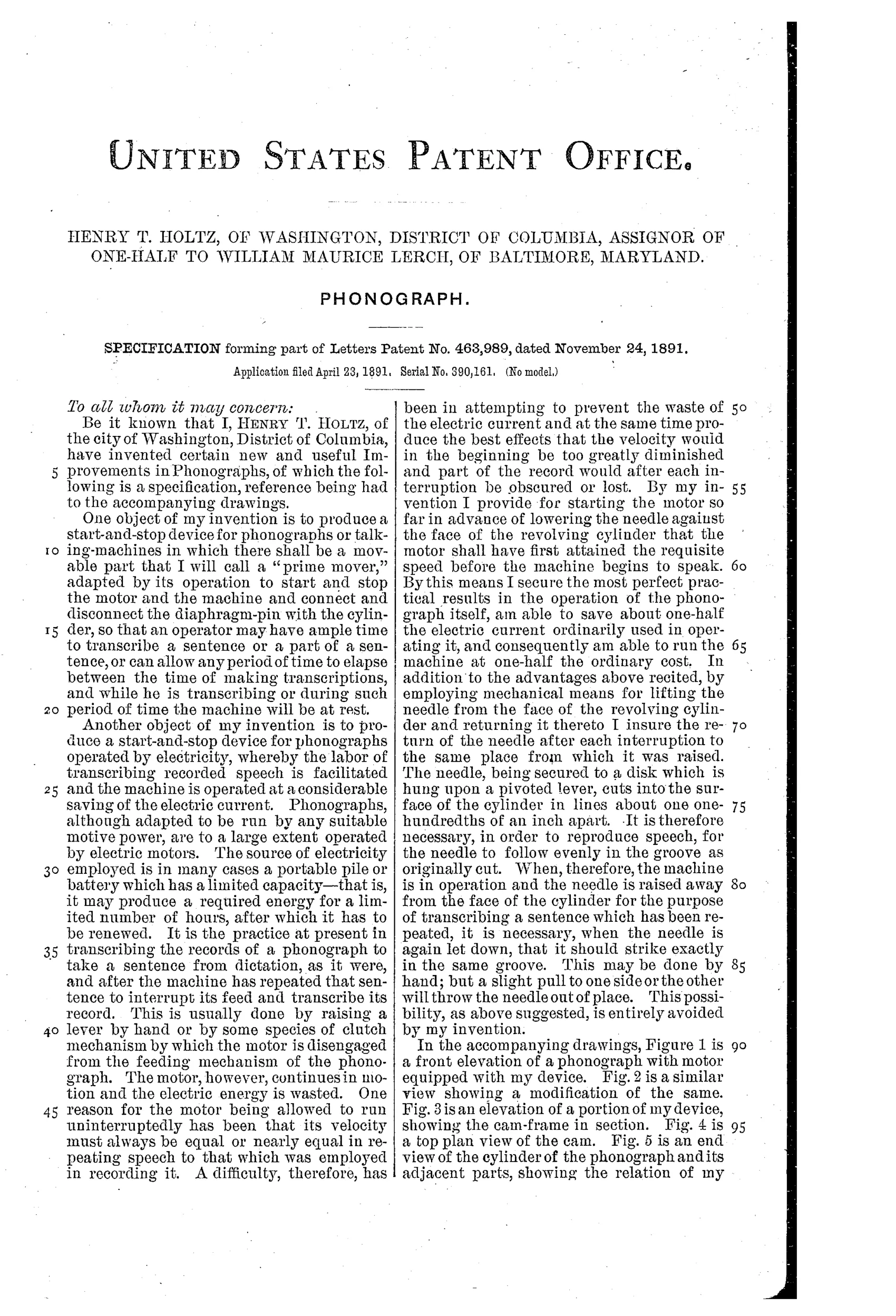
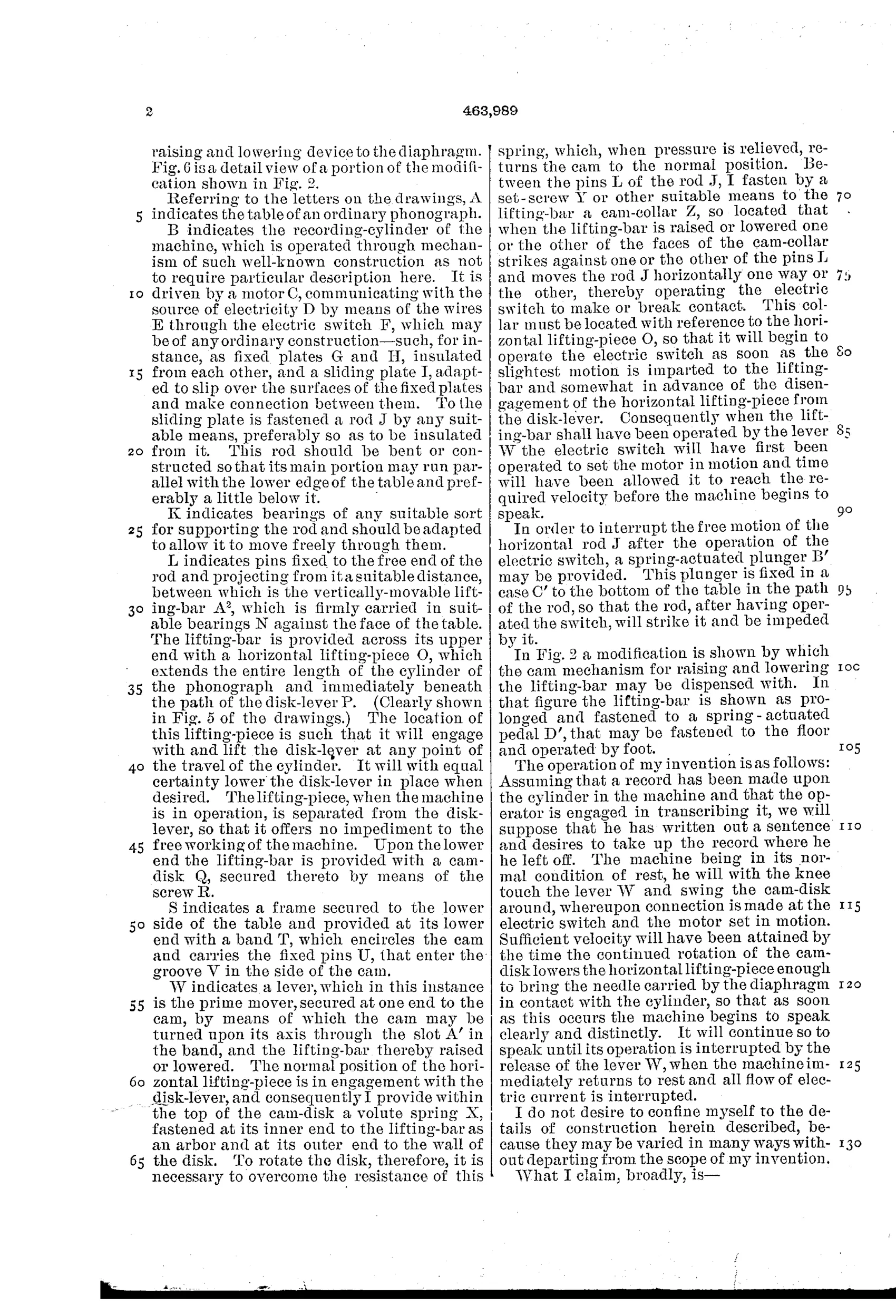
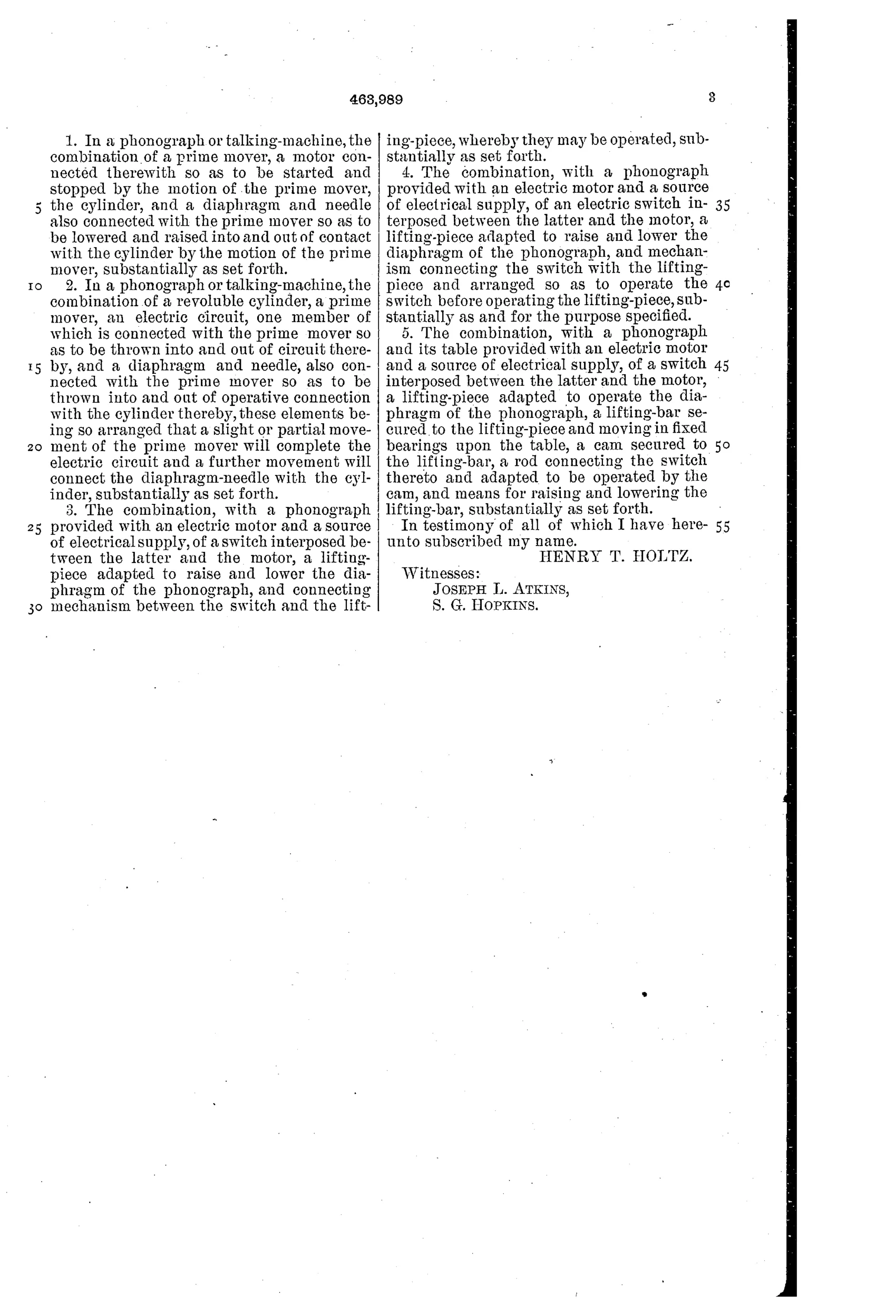
“1. In a phonograph or talking-machine, the combination of a prime mover, a motor connected therewith so as to be started and stopped by the motion of the prime mover, the cylinder, and a diaphragm and needle also connected with the prime mover so as to be lowered and raised into and out of contact with the cylinder by the motion of the prime mover, substantially as set forth.”
In plain English: A single lever (the prime mover) both starts/stops the phonograph's motor and raises/lowers the diaphragm needle onto the cylinder.
♫ In the inventor’s words
“By my invention I provide for starting the motor so far in advance of lowering the needle against the face of the revolving cylinder that the motor shall have first attained the requisite speed before the machine begins to speak.”— Henry T. Holtz, from the specification
Fate unknown
No production machine with this control is documented; a surviving phonograph fitted with the cam-lever attachment, or trade-catalog mention, would settle it.
♫ Commentary
Holtz's problem is the transcriptionist's problem. In 1891 the phonograph's real commercial hope was dictation — a clerk playing a wax cylinder back in short bursts, typing between stops. Every stop-and-start meant two chances to botch it: drop the needle before the motor is up to speed and the playback drags and growls; fumble the switch and you waste battery current, no small thing when the motor ran off wet cells.
His answer is a sequencing cam. A single pivoted lever — he calls it the prime mover — turns a cam-disk that closes the motor circuit first, then, a beat later, lets a lifting-bar lower the stylus onto the cylinder. Release the lever and a volute spring runs the sequence in reverse, lifting the needle before the current cuts. Fig. 4's spiral cam plan is the heart of it: the timing lives entirely in the cam profile, so the operator can't get the order wrong no matter how they jab at the lever. The specification says it plainly — the motor 'shall have first attained the requisite speed before the machine begins to speak.'
It's a genuinely sensible interlock, the same logic later baked into commercial dictating machines with foot pedals. But Holtz was an independent with a half-interest sold to a Baltimore backer, competing against Edison and Columbia machines that solved the same problem in-house. Sound idea, crowded room.
Commentary by Claude, The Talking Machine Patent Archive’s resident enthusiast