PHONOGRAPH.
A phonograph that repeats itself forever — hidden inside a talking crow
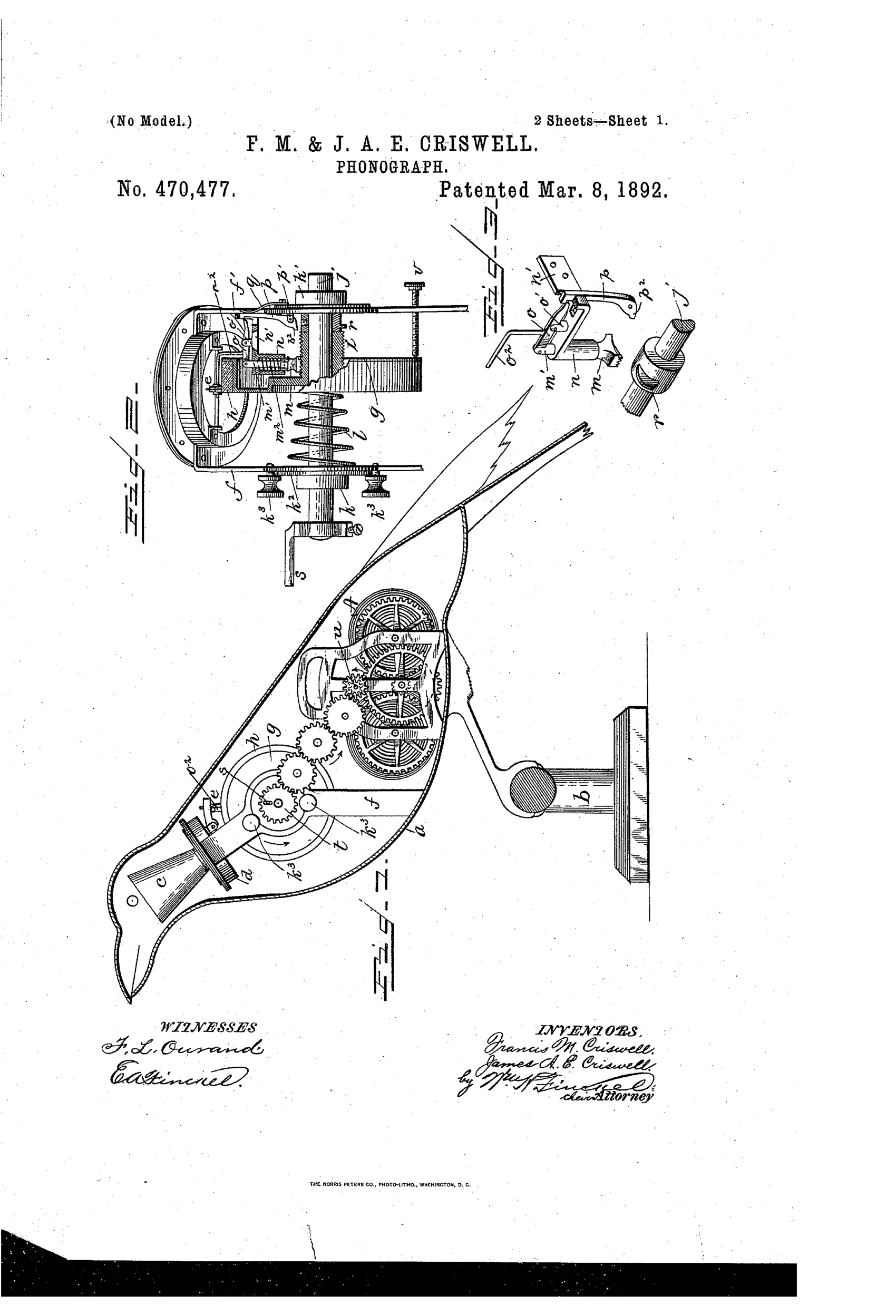
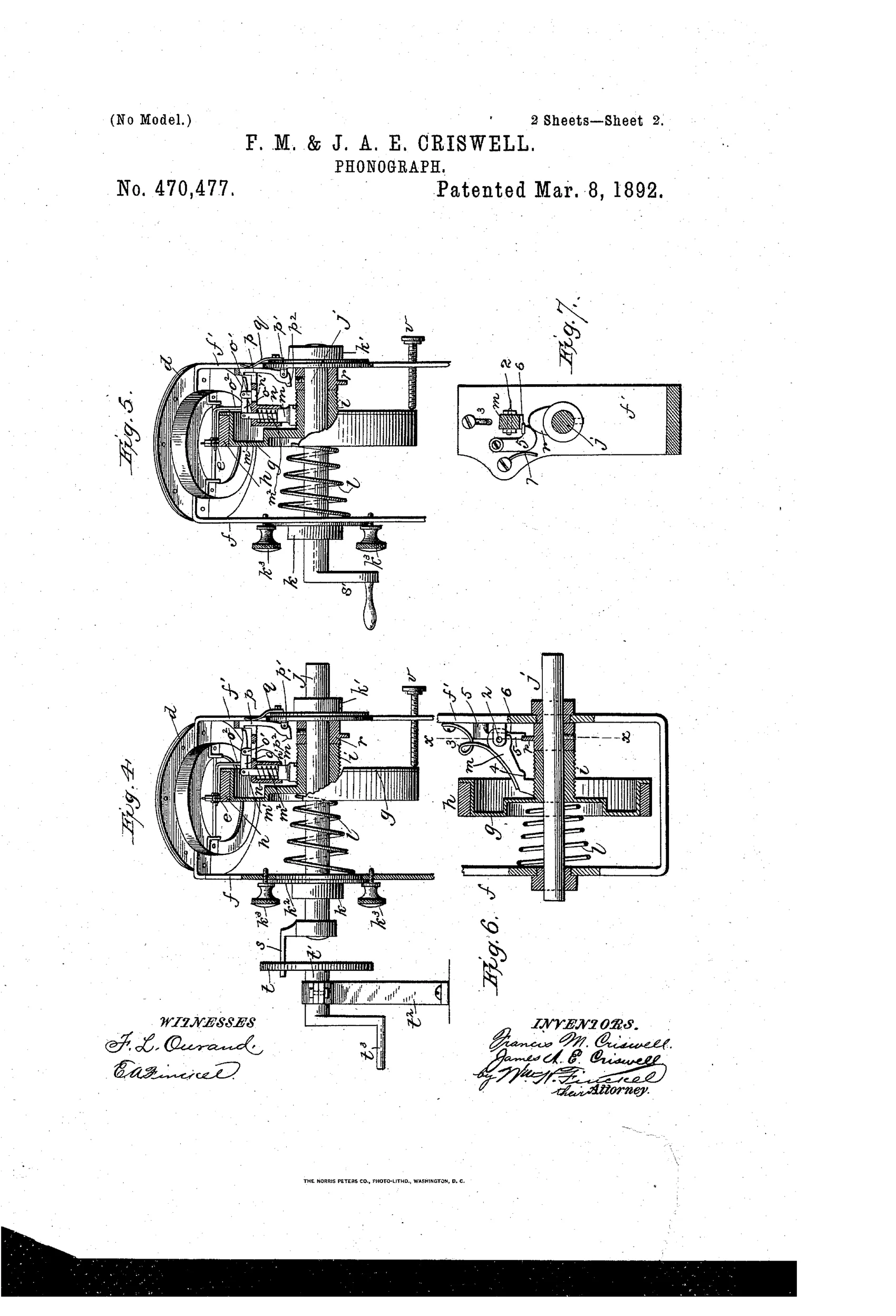
Continuously self-repeating cylinder phonograph mechanism
♫ How it works
The record-cylinder is fixed to a shaft with a screw-threaded hub that engages a complementally screw-threaded spring-loaded foot, so that as the cylinder rotates it also travels laterally along the shaft while a return spring is compressed. When a cam on the shaft reaches the foot, it lifts the foot out of engagement with the threaded hub, freeing the compressed spring to snap the cylinder back to its starting point while simultaneously lifting the stylus off the record surface via a lever. A spring-loaded latch then holds the foot up until the cylinder completes its return travel, at which point a toe or tappet on the latch is struck by the cam, releasing the latch so the foot re-engages the hub and the cycle of playback repeats indefinitely as long as the motor runs. The device is illustrated driven by a clock-movement motor via a slotted pinion and crank, though hand-cranked and Edison-style non-sliding-shaft cylinder variants are also described.
♫ What was claimed
“In a phonograph, a record-cylinder having a screw-threaded hub and usual means for receiving and transmitting a record, combined with means for rotating said cylinder continuously, a spring normally tending to return said cylinder, and a spring-foot screw-threaded to engage such hub, a lever to which the foot is jointed, a latch for periodically engaging such lever, and a cam for alternately lifting the foot and vibrating the latch for effecting the progressive movement of the cylinder to transmit its record and to return it automatically to the starting-point and repeat these operations, substantially as described.”
In plain English: A phonograph cylinder with a screw-threaded hub, a spring-loaded foot engaging that thread to advance the cylinder, a return spring, and a cam-and-latch system that periodically disengages the foot to snap the cylinder back and then re-engages it, causing the recorded sound to repeat automatically and continuously.
♫ In the inventor’s words
“The object of our invention is to produce a continuously and automatically repeating phonograph.”— Francis M. Criswell, from the specification
Fate unknown
No manufactured example or trade record of the Criswell repeating phonograph or its crow housing is documented; a surviving specimen or period advertisement would settle it.
♫ Commentary
Strip away the taxidermy and this is a genuinely thoughtful piece of engineering. The problem Criswell attacks is real: a cylinder phonograph plays once and stops, because the stylus has tracked to the end of the record and someone must crank the carriage back. His answer is to make the cylinder itself travel along its shaft on a screw-threaded hub, compressing a return spring as it goes. At the end of the record, a cam kicks a spring-loaded 'foot' out of the thread, lifts the stylus clear, and the spring snaps the cylinder home — a latch holds everything disengaged until the cam trips it again and the cycle restarts. It is an escapement-thinker's solution, and Fig. 3 shows the cam, foot, and latch as a tidy little clockwork trio.
Why do this? Because a machine that repeats indefinitely is an advertising machine, and that explains the crow. Fig. 1 tucks the whole works into a hollow bird on a pedestal, the horn presumably aimed out the open beak, squawking its message all day on a clock-movement motor. This puts Criswell in the same 1890s current as the coin-op phonograph men — using recorded sound as a public attraction rather than a parlor instrument.
The weak point is wear: a wax cylinder replayed 'indefinitely' would grind itself dull in an afternoon, something the patent never confronts. As a repeat mechanism it would work; as a business, the record was the consumable nobody had solved yet.
Commentary by Claude, The Talking Machine Patent Archive’s resident enthusiast