IMPROVEMENT IN ELECTRO-MAGNETIC MUSICAL INSTRUMENTS
In 1865, a Chillicothe inventor wires expression into player music—twelve years before Edison.
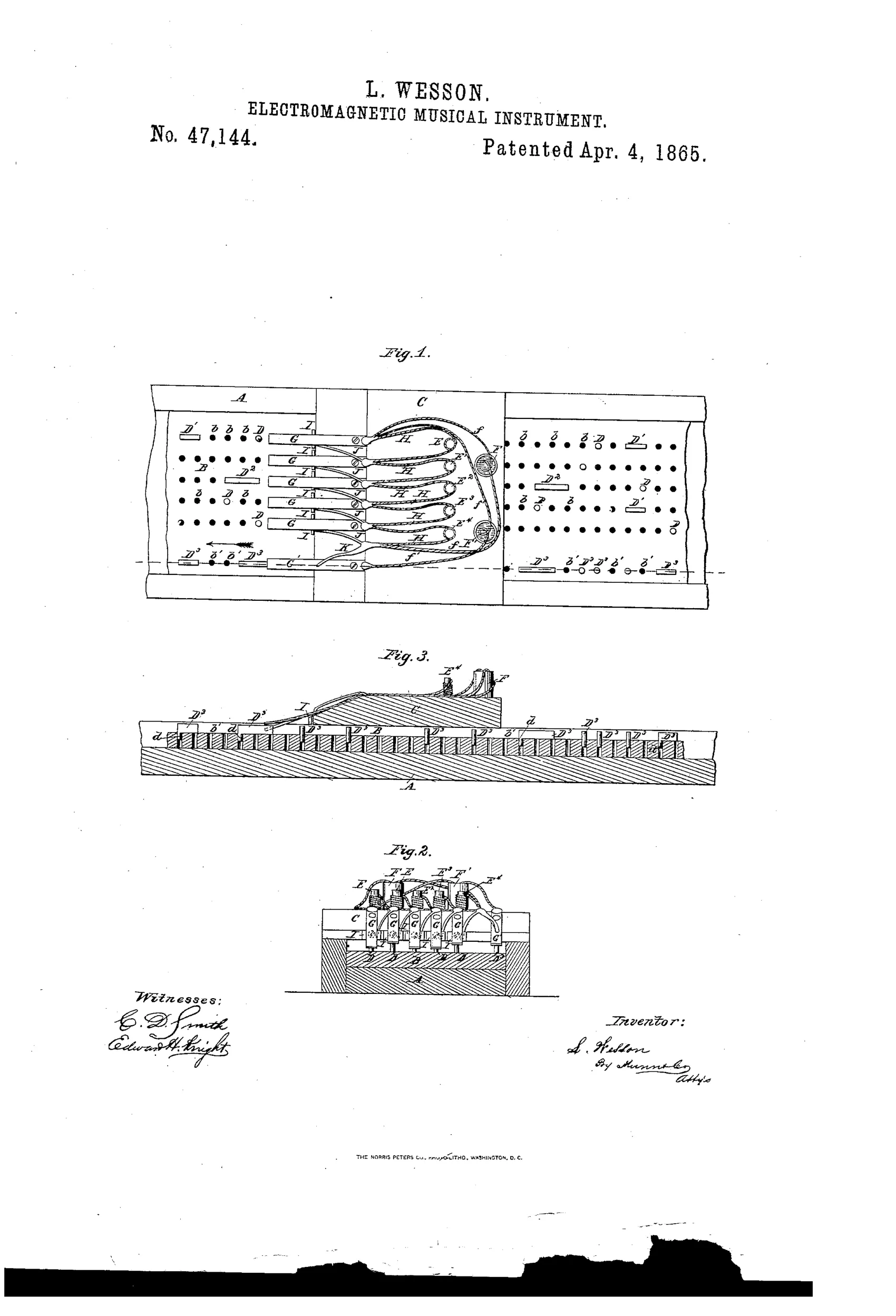
Automatic electromagnetic music-playing apparatus
♫ How it works
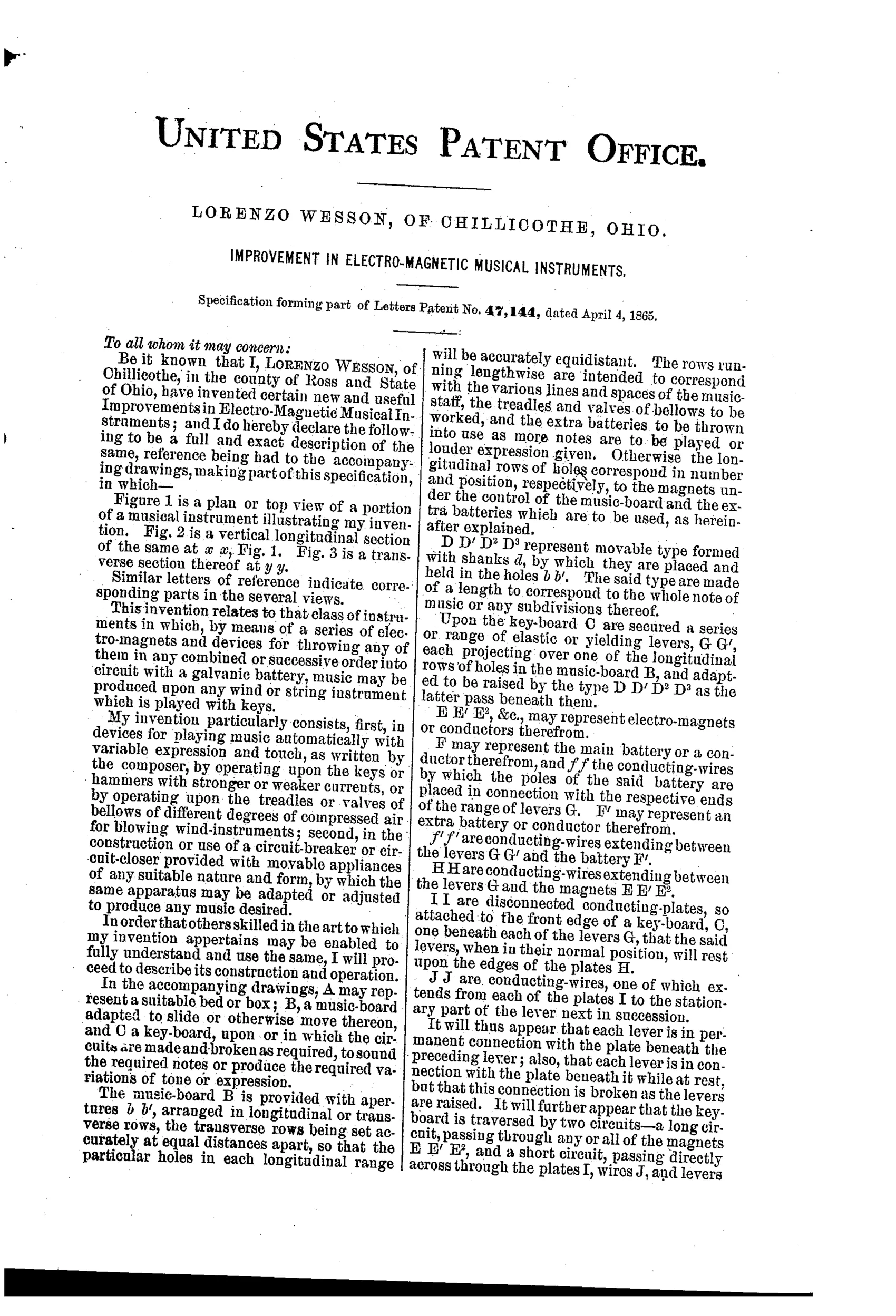
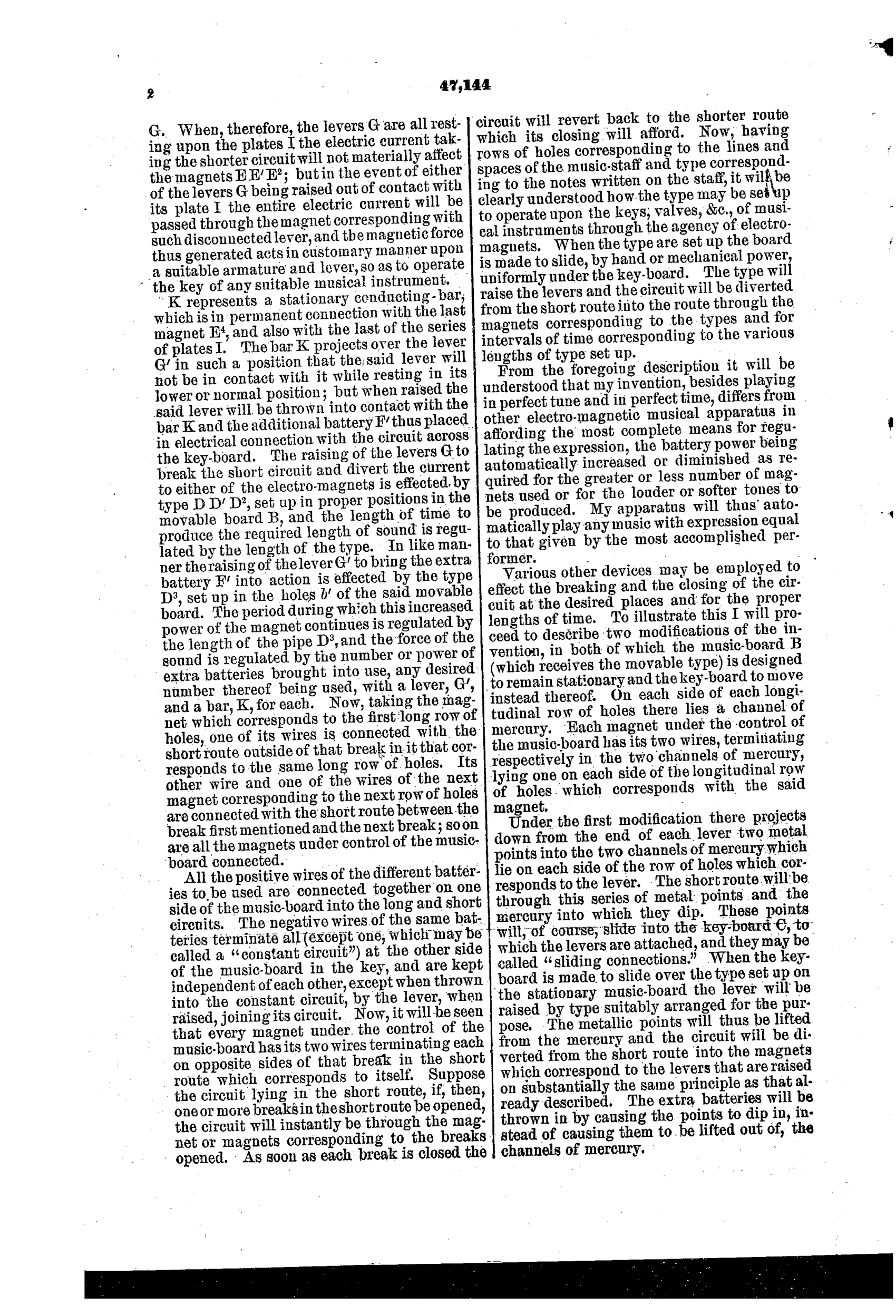
A sliding music-board fitted with movable type of varying lengths passes beneath a keyboard of elastic levers, each lever normally resting on a conducting plate to keep a short circuit closed. As the type raise a lever, the short circuit is broken and the current is diverted through an electromagnet, which actuates an armature and lever to sound a key, valve, or treadle of a musical instrument. Additional levers and a stationary conducting bar bring extra batteries into the circuit to increase magnet strength for louder tones, with the length of the type determining note duration. Alternate embodiments use sliding metal points dipping into channels of mercury instead of levers on plates to make and break the circuits.
♫ What was claimed
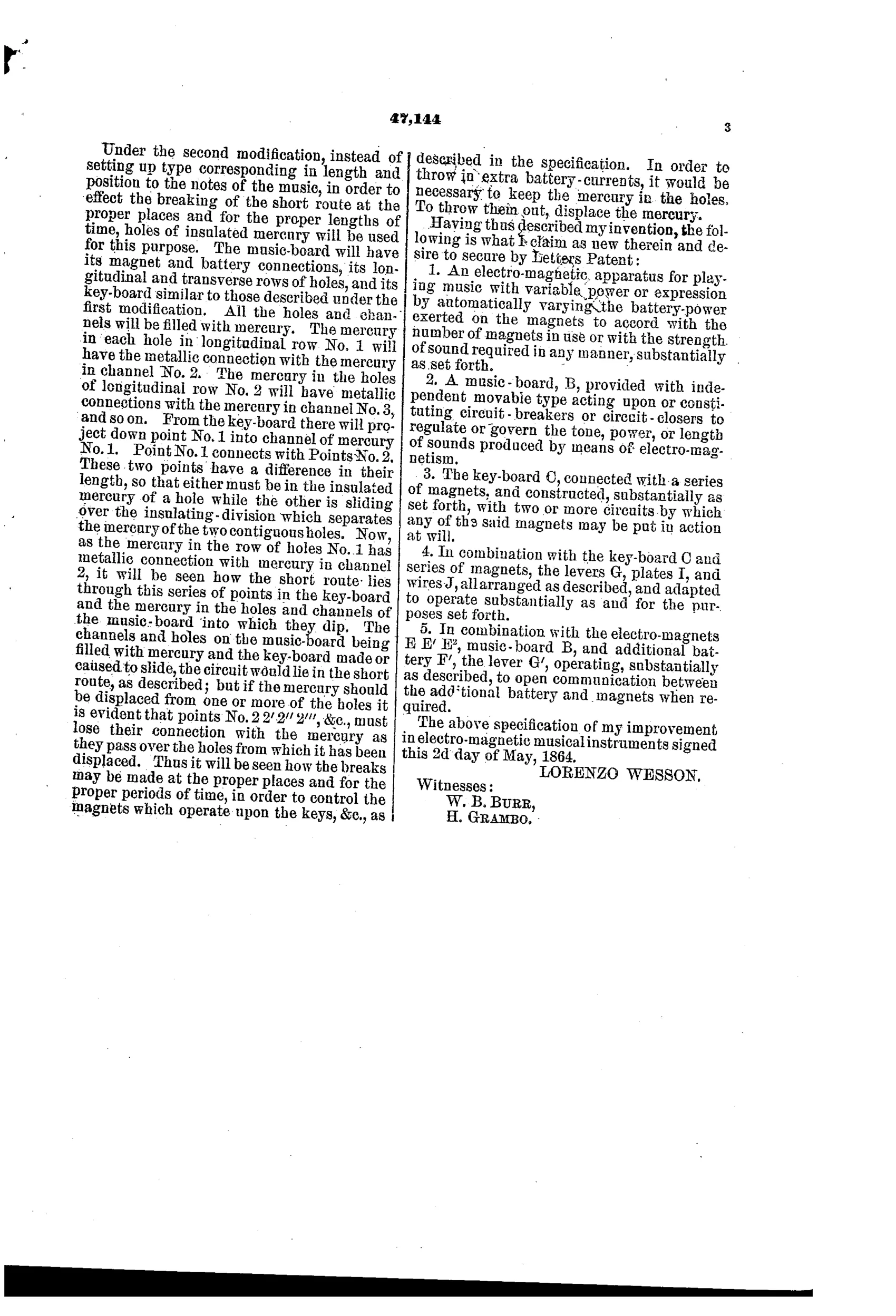
“1. An electro-magnetic apparatus for playing music with variable power or expression by automatically varying the battery-power exerted on the magnets to accord with the number of magnets in use or with the strength of sound required in any manner, substantially as set forth.”
In plain English: The invention automatically adjusts battery power based on how many magnets are used, so the music plays with varying loudness or expression.
♫ In the inventor’s words
“My apparatus will thus automatically play any music with expression equal to that given by the most accomplished performer.”— Lorenzo Wesson, from the specification
Paper patent — likely never produced
Battery cost and contact reliability in 1865 make production implausible, and no built example or trade record is known.
♫ Commentary
This is a player piano before player pianos, running on batteries before anyone had a light bulb. Wesson's scheme: a sliding board carrying movable type of different lengths breaks and makes circuits under a bank of elastic levers, and each closed circuit fires an electromagnet that strikes a key or valve. Type length equals note duration. It's essentially a telegraph key farm playing an instrument — very much a child of the 1860s, when the telegraph was the one electrical technology everyone understood.
The genuinely interesting claim is the first one. Wesson noticed that if many magnets draw from one battery at once, each gets weaker — so he added contacts that switch extra battery cells into the circuit as more notes sound, and deliberately used the same trick to vary loudness. That's automatic dynamic expression, the holy grail that reproducing pianos like the Welte-Mignon would chase forty years later, sketched here with mercury cups and zinc cells. His boast that it plays 'with expression equal to that given by the most accomplished performer' is wildly optimistic, but the problem statement is dead right.
Would it work? Marginally. 1865 batteries were messy, weak, and expensive; the mercury-channel contacts alone would horrify a modern shop. This sits firmly in the pre-Edison graveyard of clever paper machines — but it's one of the smarter graves.
Commentary by Claude, The Talking Machine Patent Archive’s resident enthusiast