MECHANICAL MUSICAL INSTRUMENT.
A paper strip plays a music-box comb — timing the damper decides everything
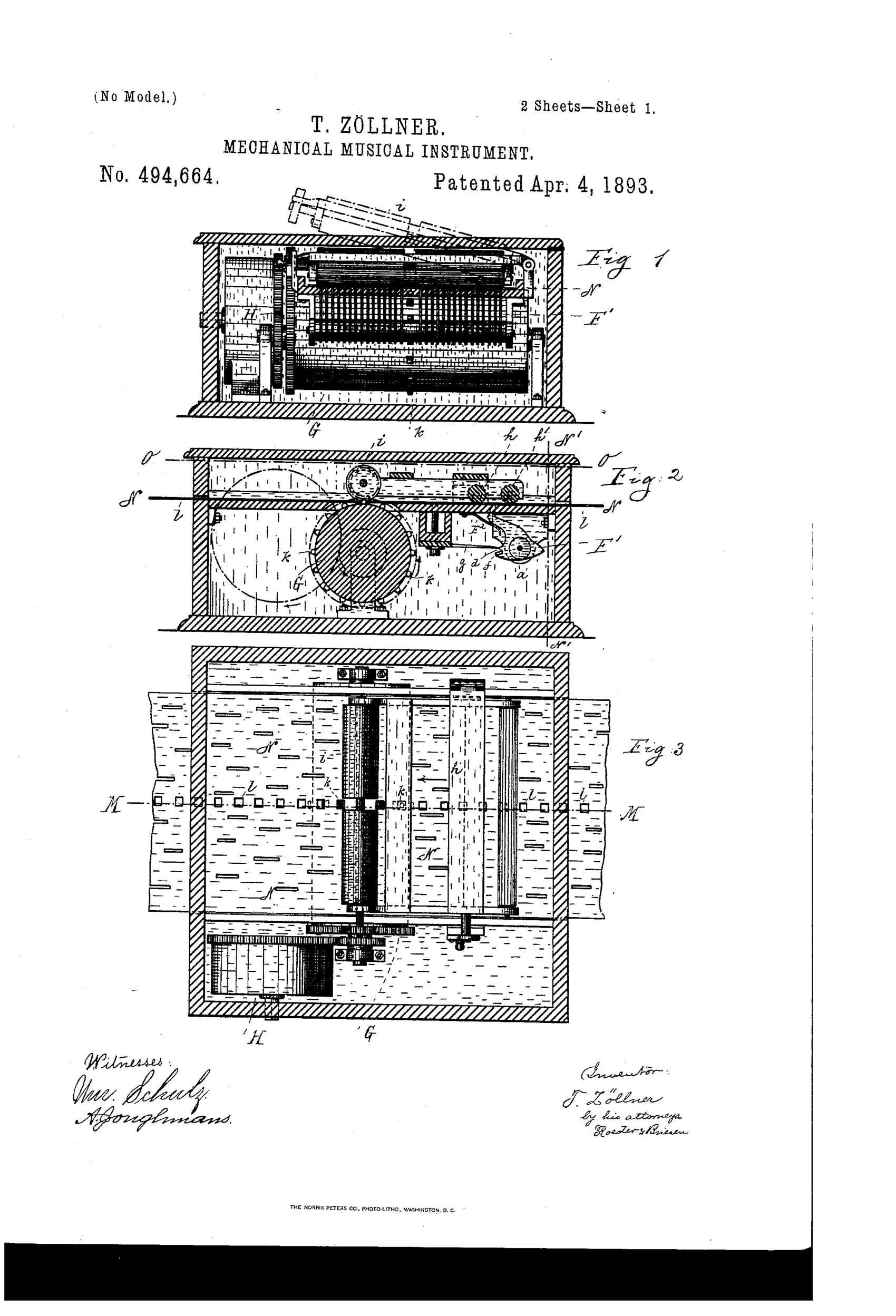
Perforated-sheet-driven musical box with spring hammers
♫ How it works
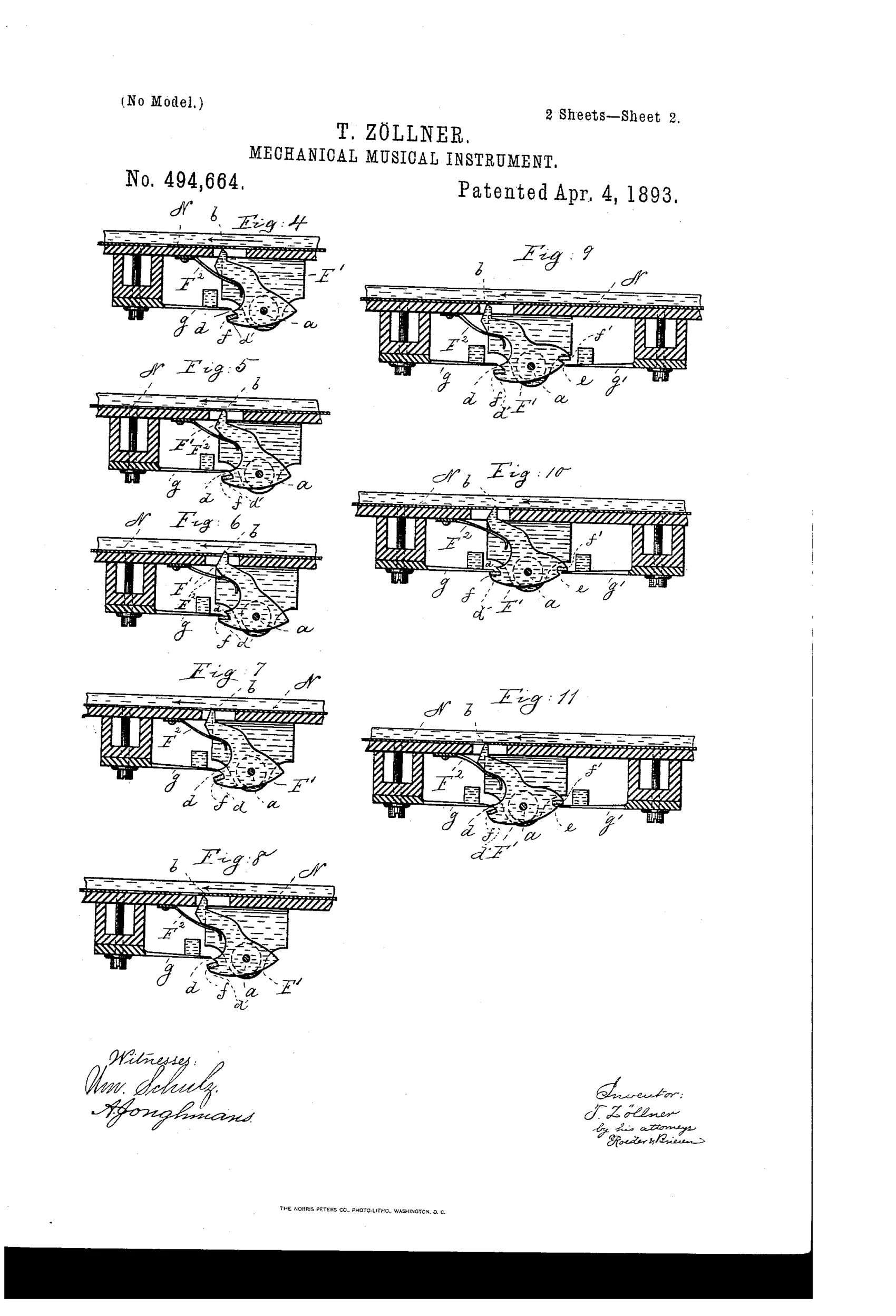
A perforated music sheet is drawn over a series of pivoted spring hammers, each hammer having an upper nose engaged by the sheet and a lower nose that strikes a tuned tongue. A damper mounted on the hammer follows closely behind the striking nose, so timing of nose versus damper contact determines whether the tongue is allowed to vibrate and sound or is immediately checked. A sprocket wheel with pins engaging the sheet's perforations, driven by hand or clockwork, feeds the sheet steadily over the hammer box. In a modified form, each hammer is doubled with an additional nose and reversed damper so it can alternately sound two separate tongues arranged on opposite sides of the hammer.
♫ What was claimed
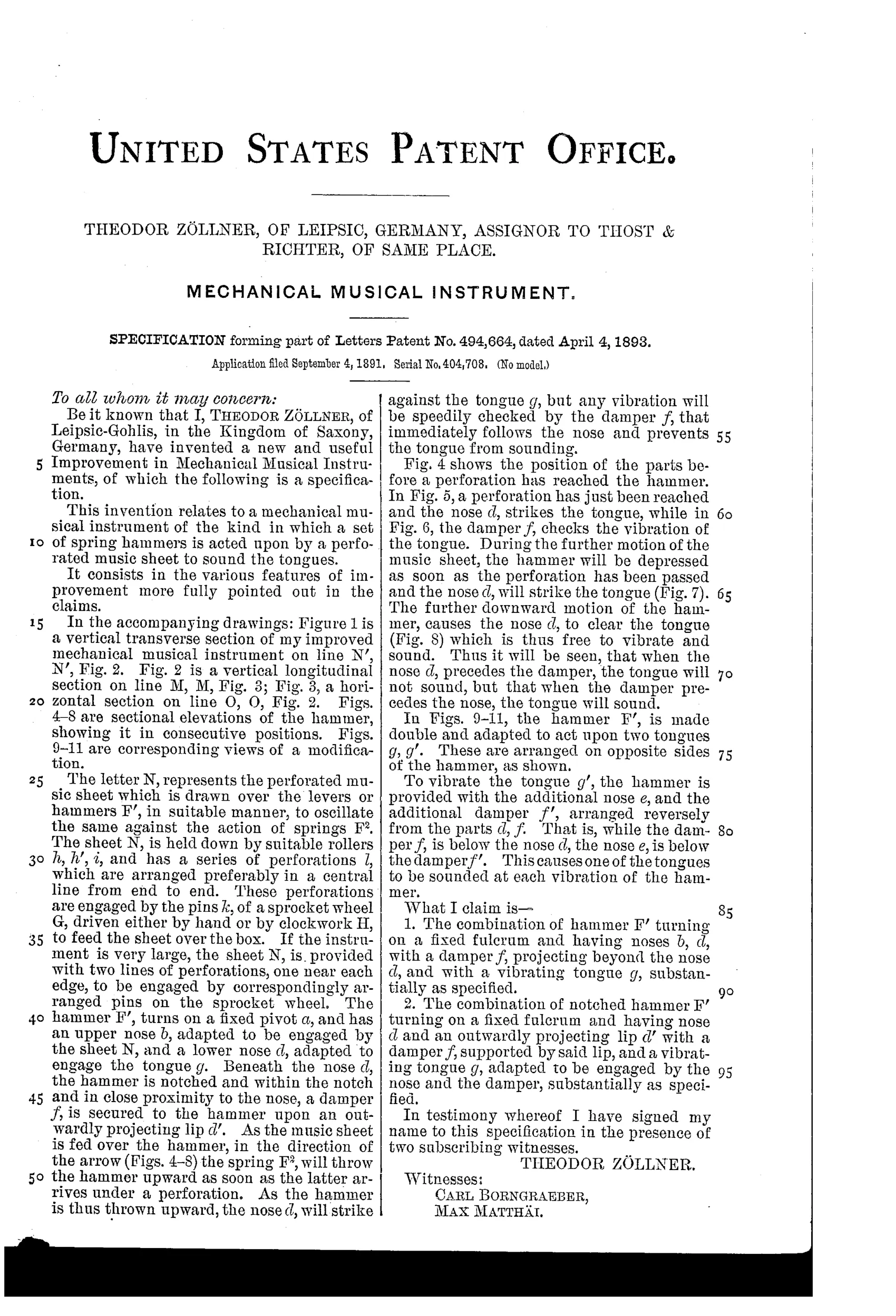
“The combination of hammer F' turning on a fixed fulcrum and having noses b, d, with a damper f, projecting beyond the nose d, and with a vibrating tongue g, substantially as specified.”
In plain English: A pivoted hammer with two noses and a damper that extends past one nose, working together with a vibrating tongue, to control when the tongue sounds.
♫ In the inventor’s words
“Thus it will be seen, that when the nose d, precedes the damper, the tongue will not sound, but that when the damper precedes the nose, the tongue will sound.”— Theodor Zöllner, from the specification
Fate unknown
The assignment to Thost & Richter suggests commercial intent, but no surviving instrument attributable to this patent is documented; a marked specimen would settle it.
♫ Commentary
The disc music box was conquering the world out of Leipzig in 1893, and Zöllner's patent is a sibling from the same city that took the other road: a perforated paper strip instead of a punched steel disc. The strip runs over a row of pivoted spring hammers, each with two noses, and the whole trick lives in one detail — a damper mounted on the hammer that trails just behind the striking nose. Whether the nose or the damper reaches the tuned tongue first determines whether the note rings or is instantly choked. That single geometric relationship replaces the separate damper works that plagued cylinder boxes, and the patent spells it out plainly: 'when the nose d precedes the damper, the tongue will not sound, but that when the damper precedes the nose, the tongue will sound.'
Figures 4 through 8 are the part worth slowing down for — a frame-by-frame of one hammer through a note cycle, the kind of sequence drawing that makes a subtle timing mechanism legible. Figure 9's doubled hammer, sounding two tongues on opposite sides, is an economical way to widen the scale without widening the strip.
Paper-strip comb players were a real, if minor, German product line in this decade — cheaper media than steel discs, at the cost of fragile paper. Zöllner's damper-on-hammer idea is genuinely neat; the assignment to a firm suggests someone intended to build it.
Commentary by Claude, The Talking Machine Patent Archive’s resident enthusiast