AUTOMATIC MUSICAL INSTRUMENT.
A powered blade cylinder does the plucking so the paper roll doesn't tear
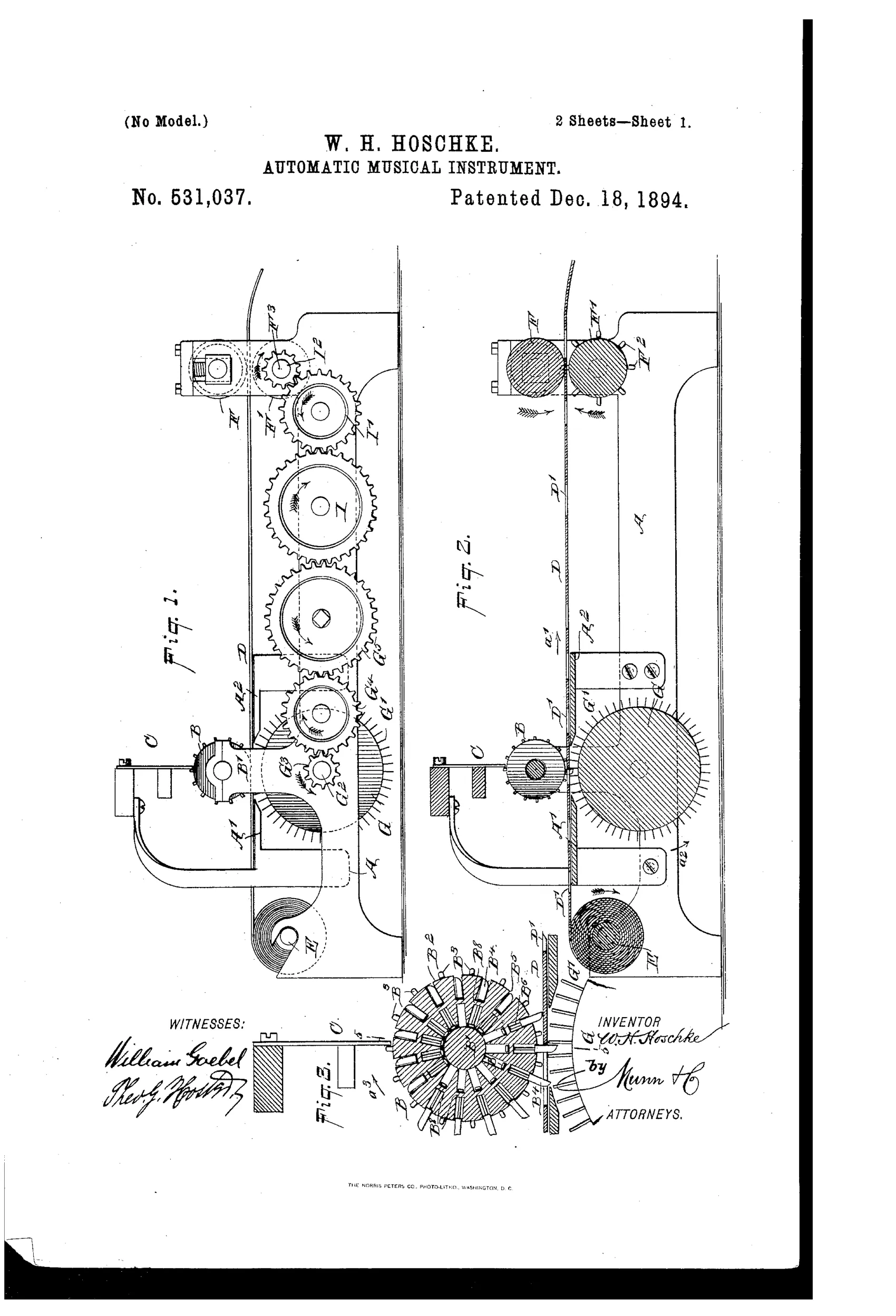
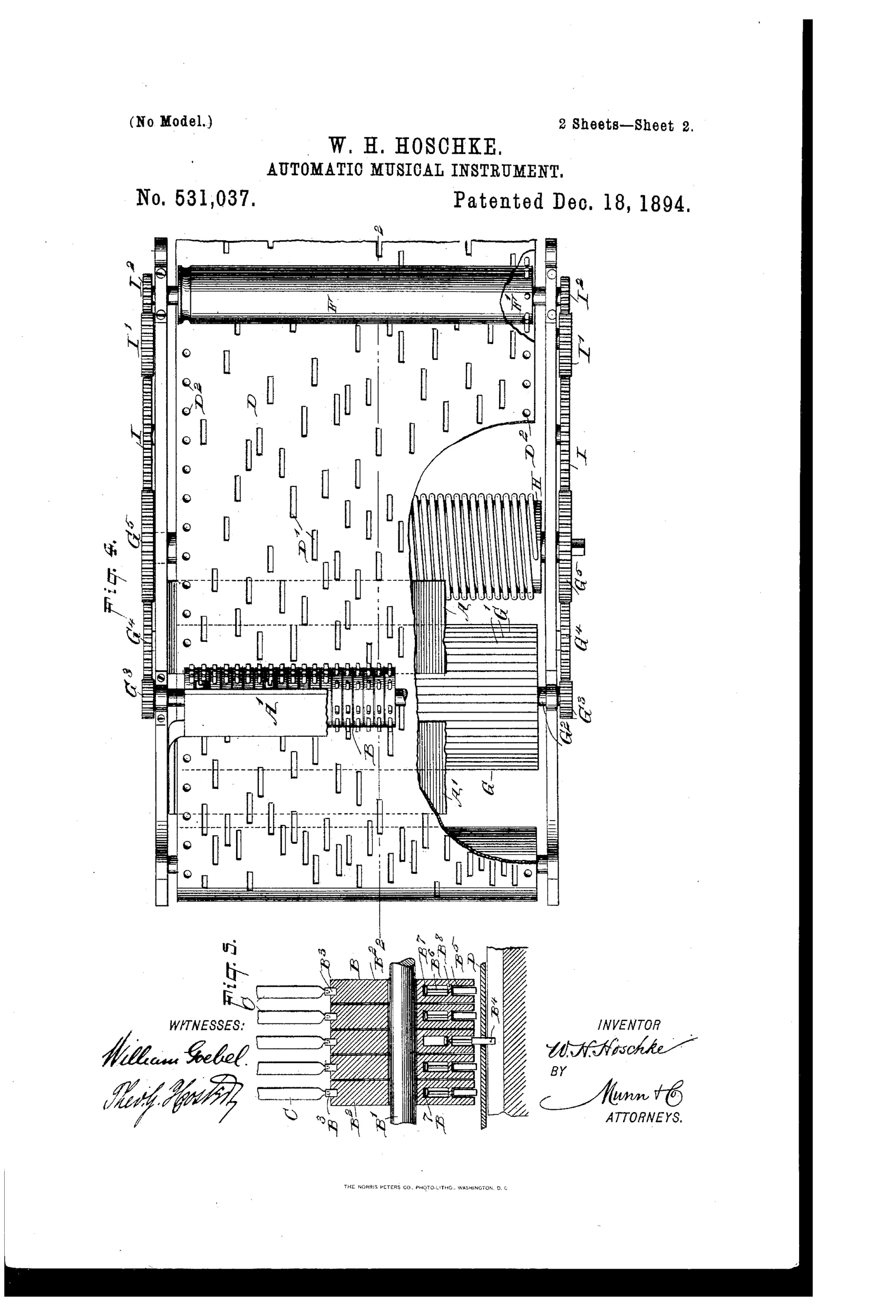
Automatic musical instrument playing perforated paper sheets
♫ How it works
A perforated paper sheet is unwound from a roll and fed forward by driven rollers past a star wheel bearing gravity plungers. The star wheel is turned not by the sheet itself but by an independently powered blade cylinder driven by a spring motor, which engages plungers as they drop through the sheet's slots. As each plunger drops through a perforation and is caught by a cylinder blade, it rotates the disk enough to bring a picking pin into contact with a comb tooth, sounding the note. Because the traveling sheet only releases the plungers rather than driving the wheel directly, it experiences very light forces and is not liable to tear or wear out.
♫ What was claimed
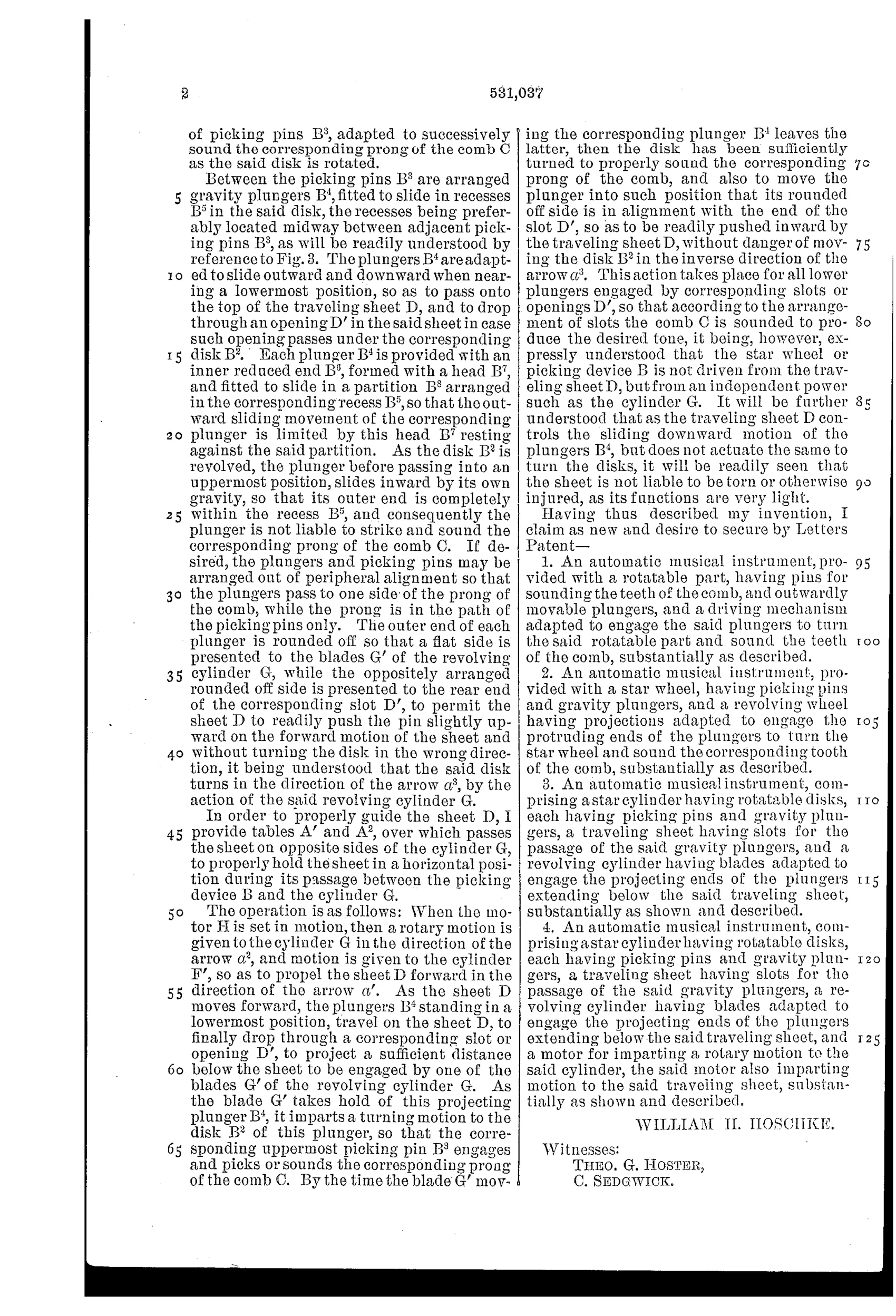
“An automatic musical instrument, comprising a star cylinder having rotatable disks, each having picking pins and gravity plungers, a traveling sheet having slots for the passage of the said gravity plungers, and a revolving cylinder having blades adapted to engage the projecting ends of the plungers extending below the said traveling sheet, substantially as shown and described.”
In plain English: The instrument uses a star wheel with picking pins and drop-down plungers, a perforated paper sheet with slots that release the plungers, and a separately powered rotating blade cylinder that catches the released plungers to turn the wheel and sound the comb.
♫ In the inventor’s words
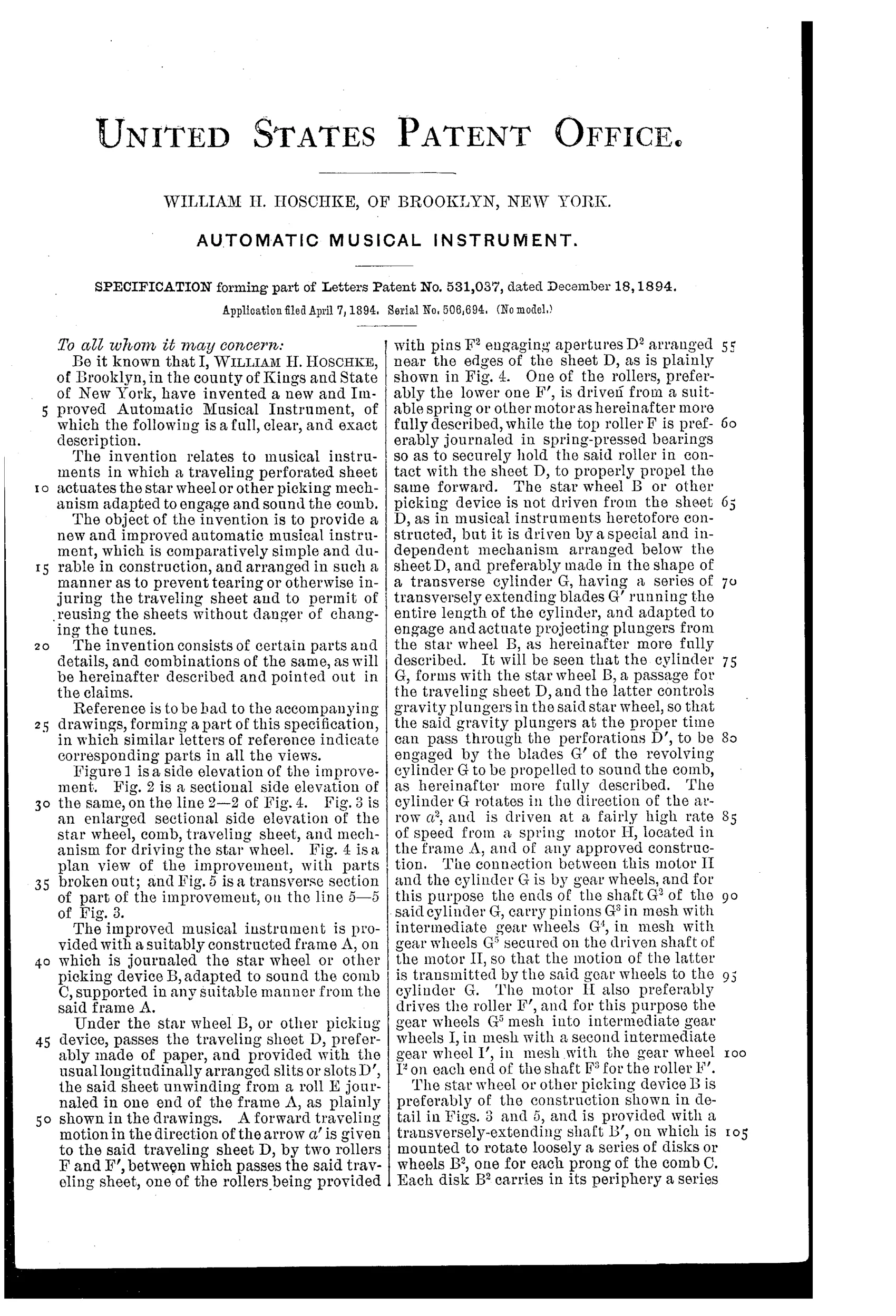
“It will be further understood that as the traveling sheet D controls the sliding downward motion of the plungers B4, but does not actuate the same to turn the disks, it will be readily seen that the sheet is not liable to be torn or otherwise injured, as its functions are very light.”— William H. Hoschke, from the specification
Fate unknown
No production paper-roll comb machine using this powered-cylinder release is documented to me; a surviving marked instrument or trade-catalog listing would settle it.
♫ Commentary
The nagging flaw in paper-roll comb instruments was that the sheet had to do work. In an organette the perforations merely admit air, but in a comb machine like the Ariston-style paper players, the paper often had to trip or drive the plucking mechanism directly, and thin perforated stock does not survive that duty for long. Hoschke's answer is to separate the two jobs completely: the sheet only permits gravity plungers to drop through its slots, while a spring-driven blade cylinder underneath catches each dropped plunger and supplies all the torque to rotate the disk and pick the comb tooth.
It's the star-wheel logic of the Regina and Polyphon disc boxes translated to paper, but with the driving projection moved off the music medium entirely. The patent says it plainly: the sheet's 'functions are very light.' That's the whole invention, and it's a genuinely sound one. Fig. 3 repays a close look — the radial blade cylinder meshing with the plunger ends is the heart of it, and the gear train in Fig. 1 exists mostly to keep sheet speed and cylinder speed in step.
The timing, though, was brutal. By late 1894 the steel disc had already won this argument — a zinc or steel disc drives star wheels directly and never wears out. Hoschke solved paper's weakness just as the market stopped caring about paper.
Commentary by Claude, The Talking Machine Patent Archive’s resident enthusiast