MECHANISM FOR ACTUATING KEYBOARDS BY MEANS OF PERFORATED CARDS
Gavioli of fairground-organ fame promises any singer an instant organist
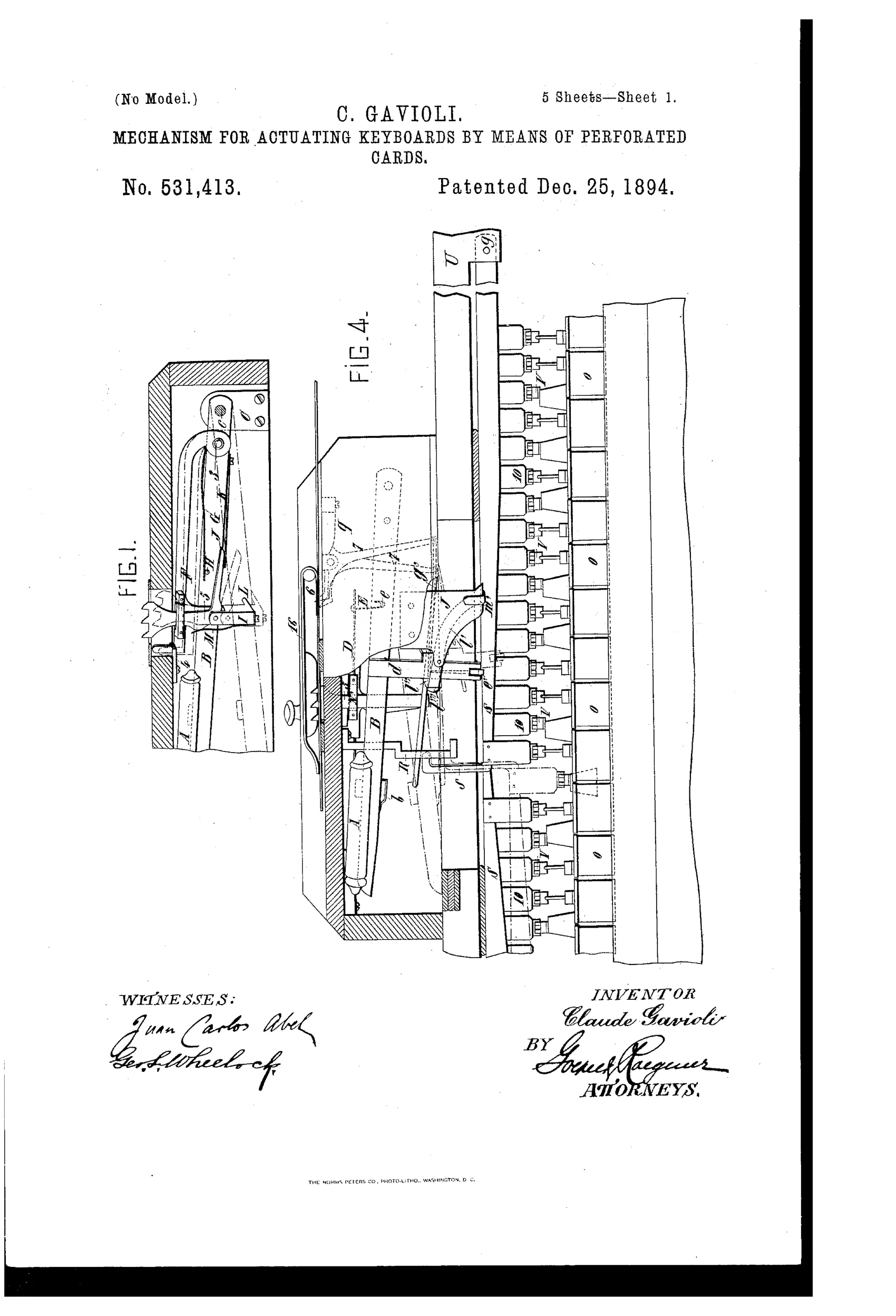
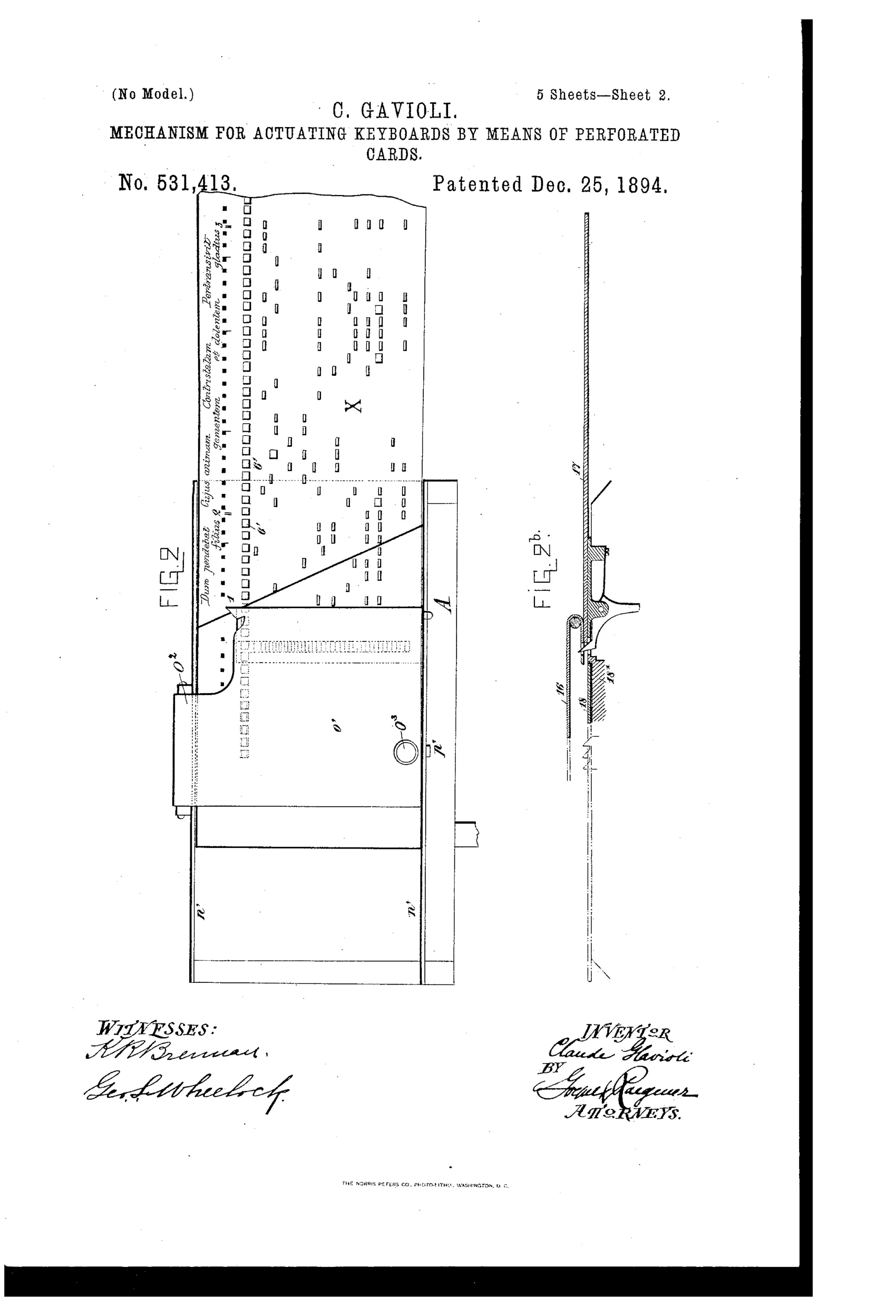
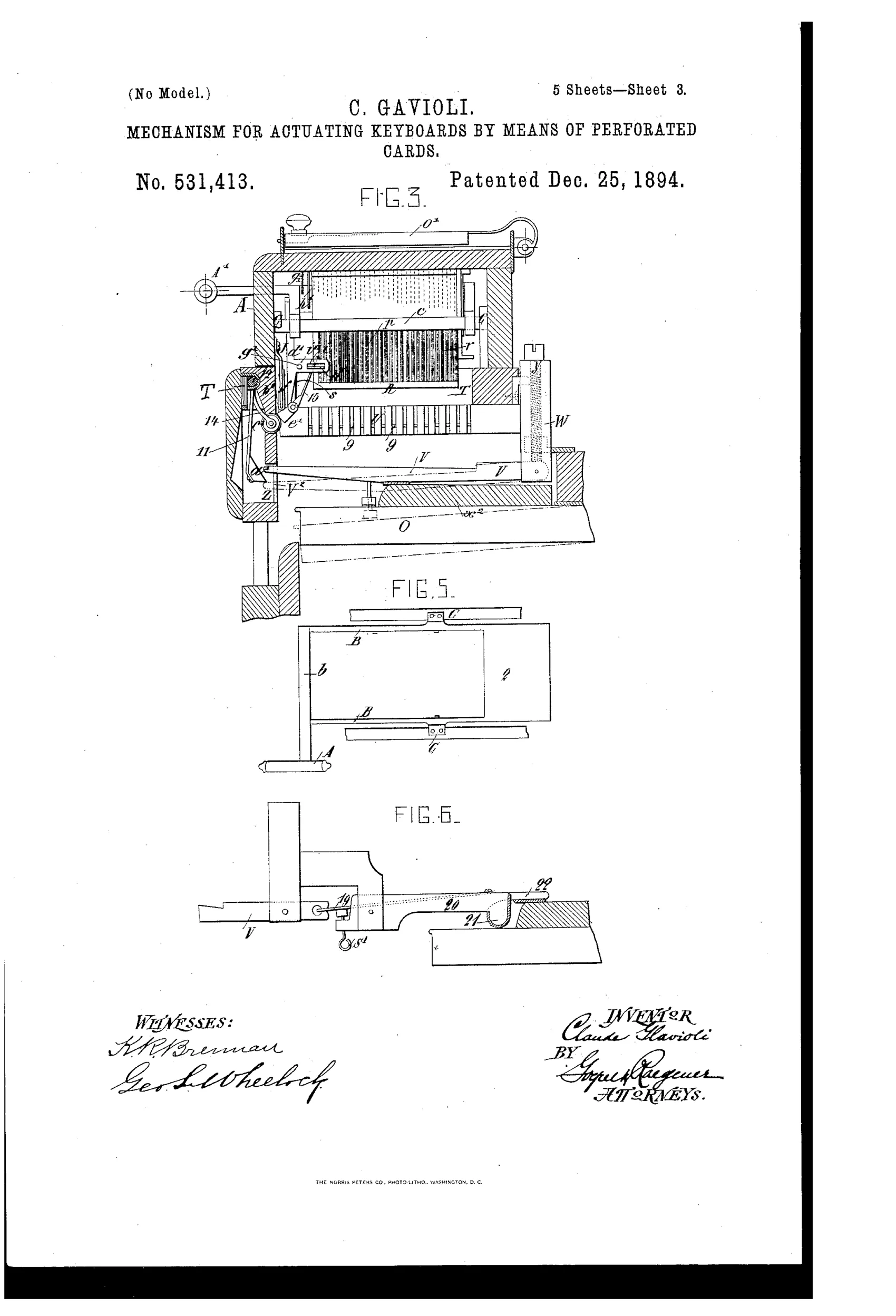
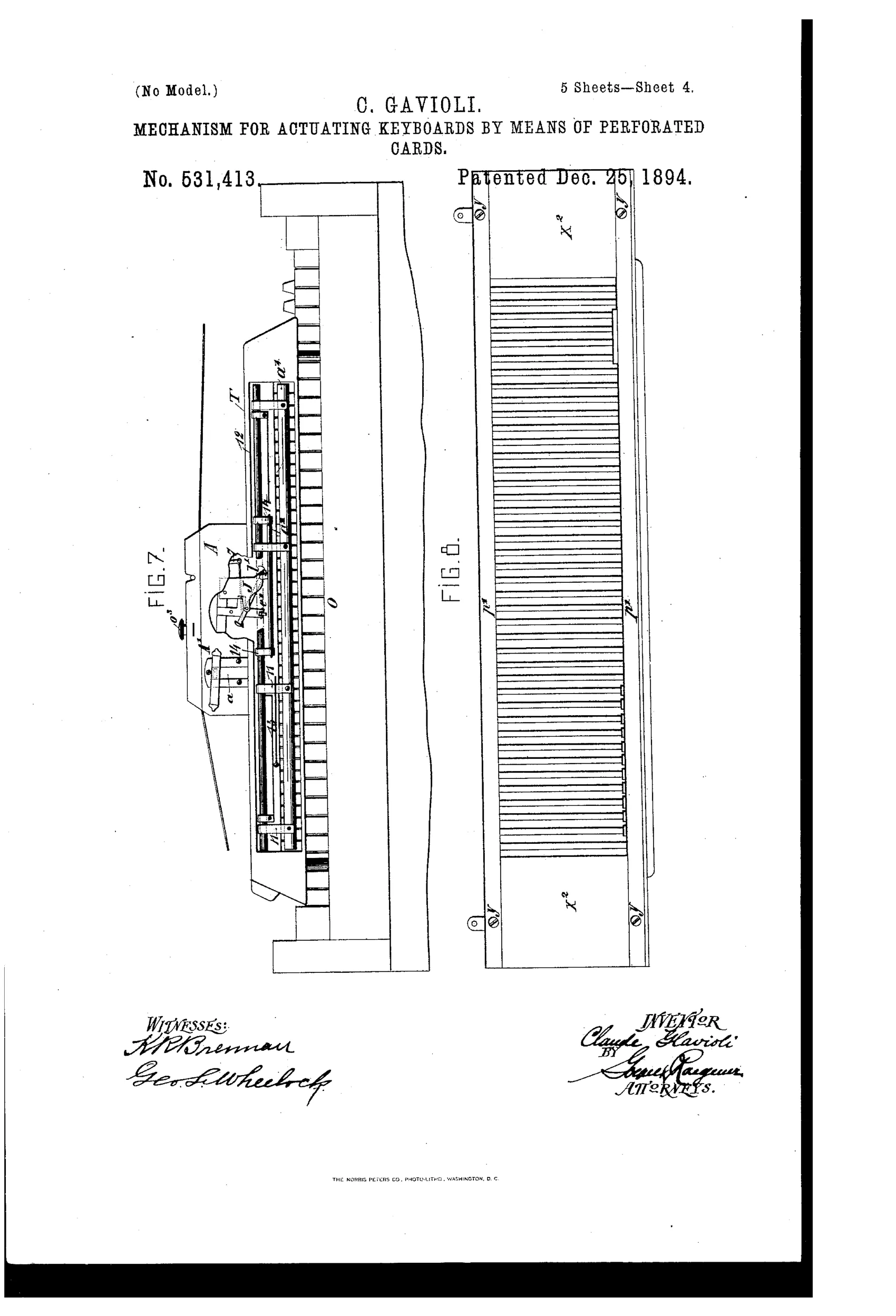
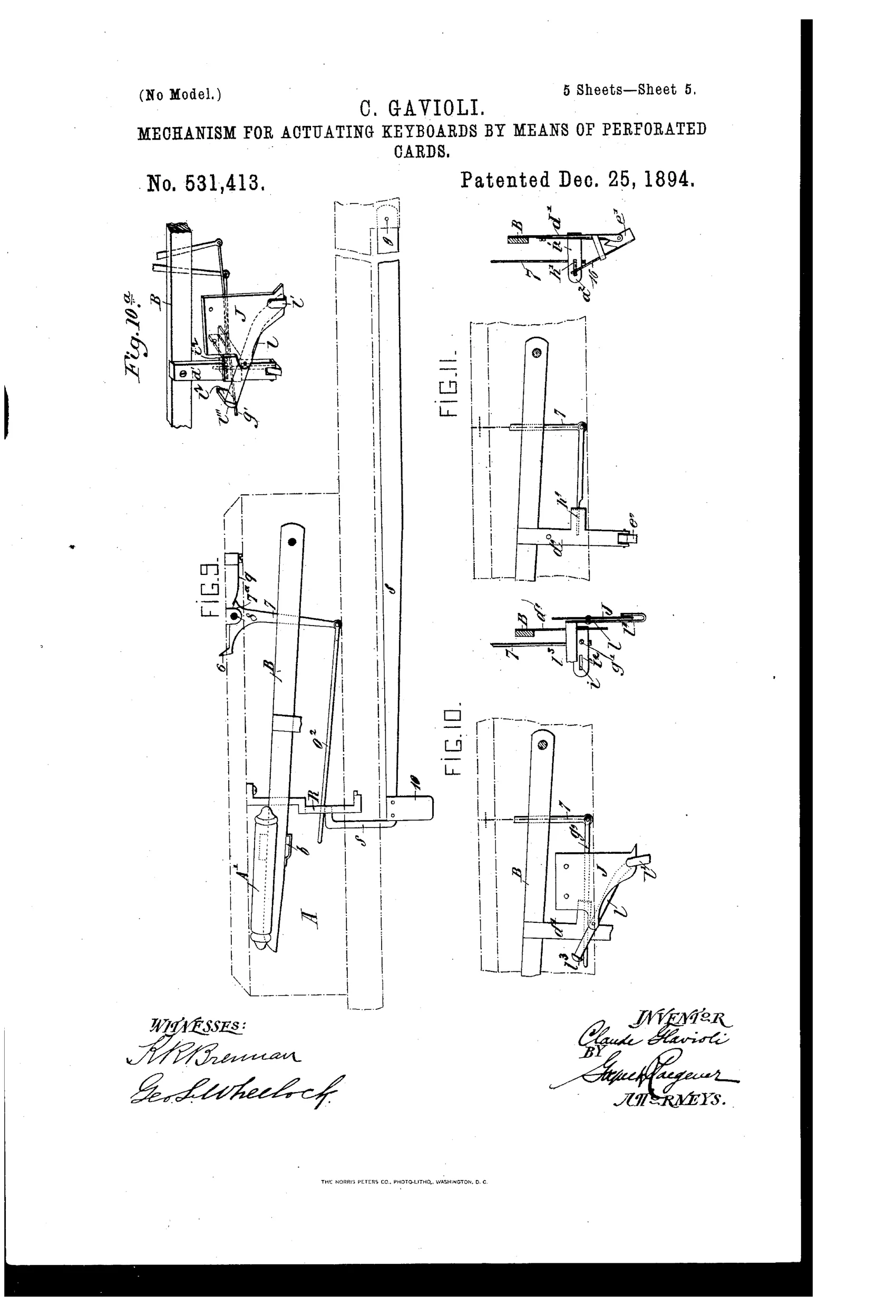
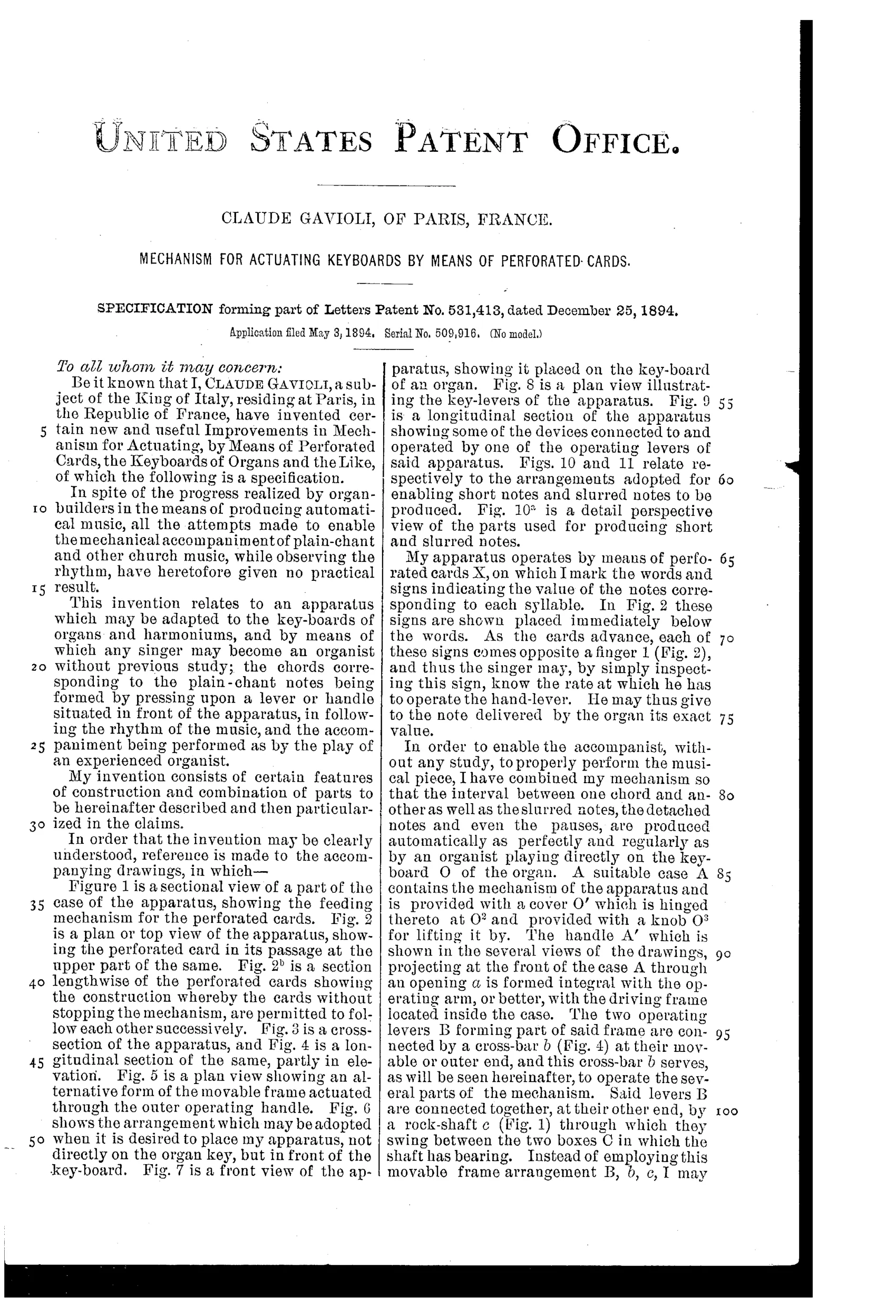
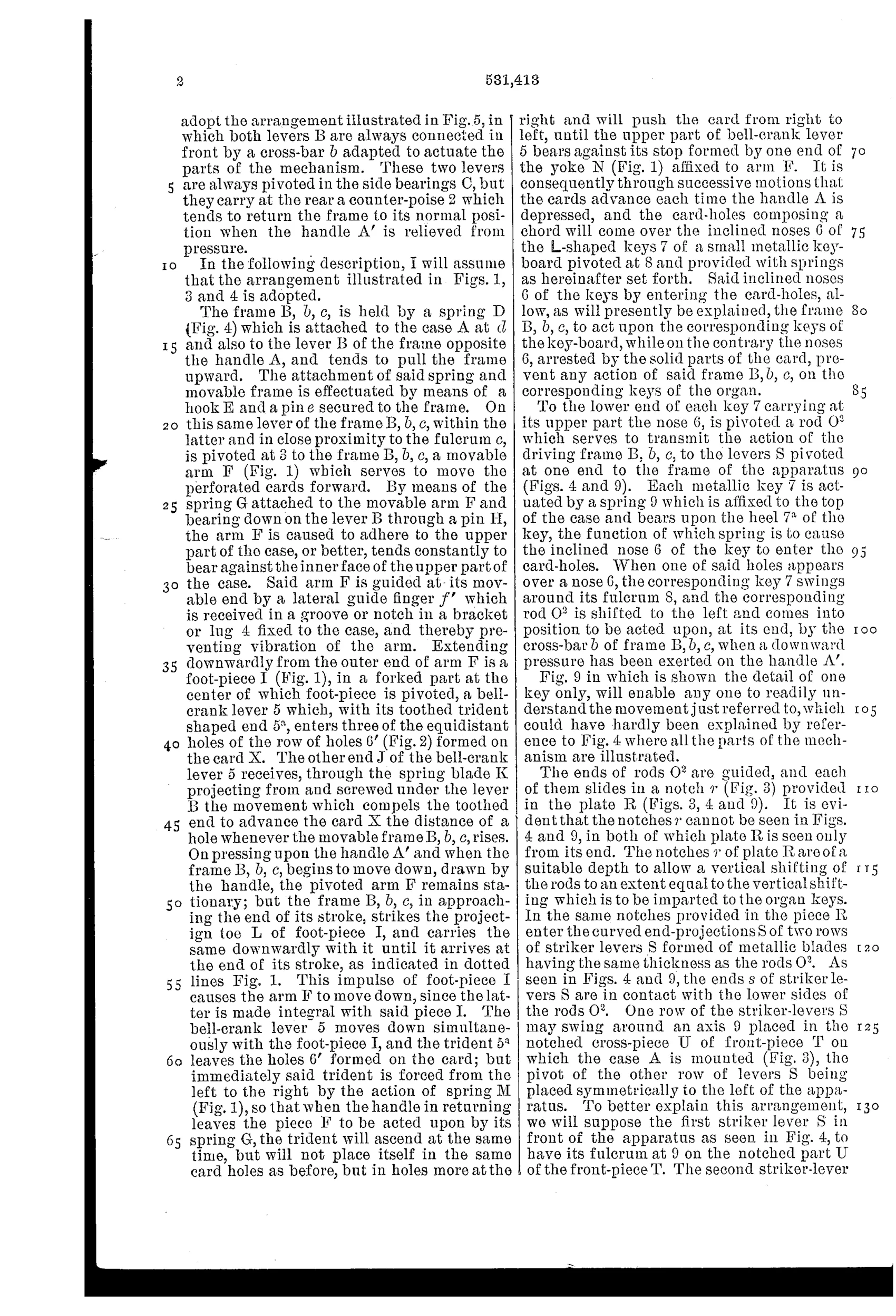
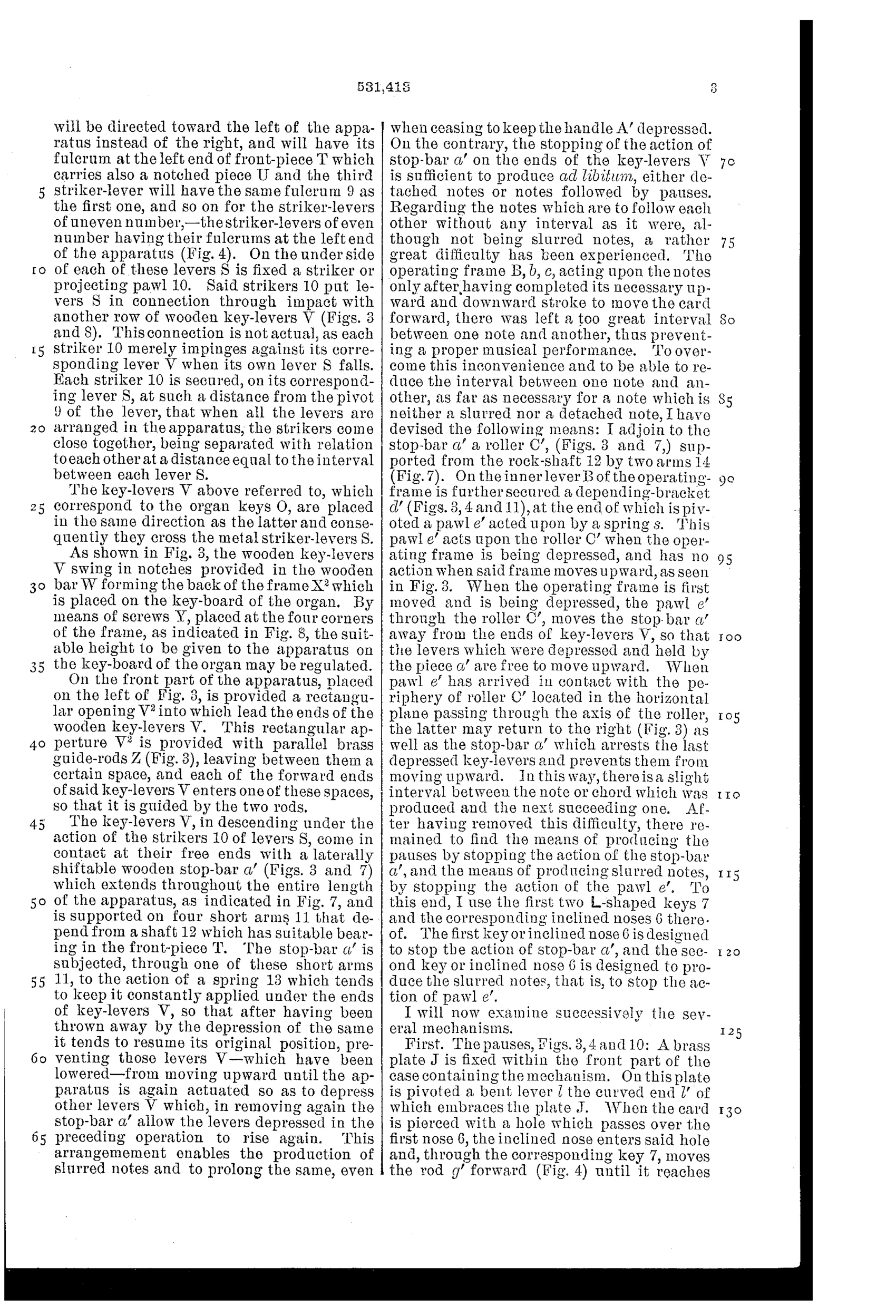
Card-driven mechanical organ-accompaniment keyboard actuator
♫ How it works
A hand-operated lever depresses a movable driving frame that advances a perforated card, whose punched holes correspond to the chords and note-values of plain-chant music. Inclined-nose keys on a small metallic keyboard read the card holes, allowing rods to shift and strike wooden key-levers that in turn depress the organ's own keys. A shiftable stop-bar and pawl-and-roller arrangement regulate the timing to permit detached notes, slurred notes, and pauses. The singer operates the hand-lever in rhythm with printed value-signs on the card, letting an untrained person perform correct organ accompaniment.
♫ What was claimed
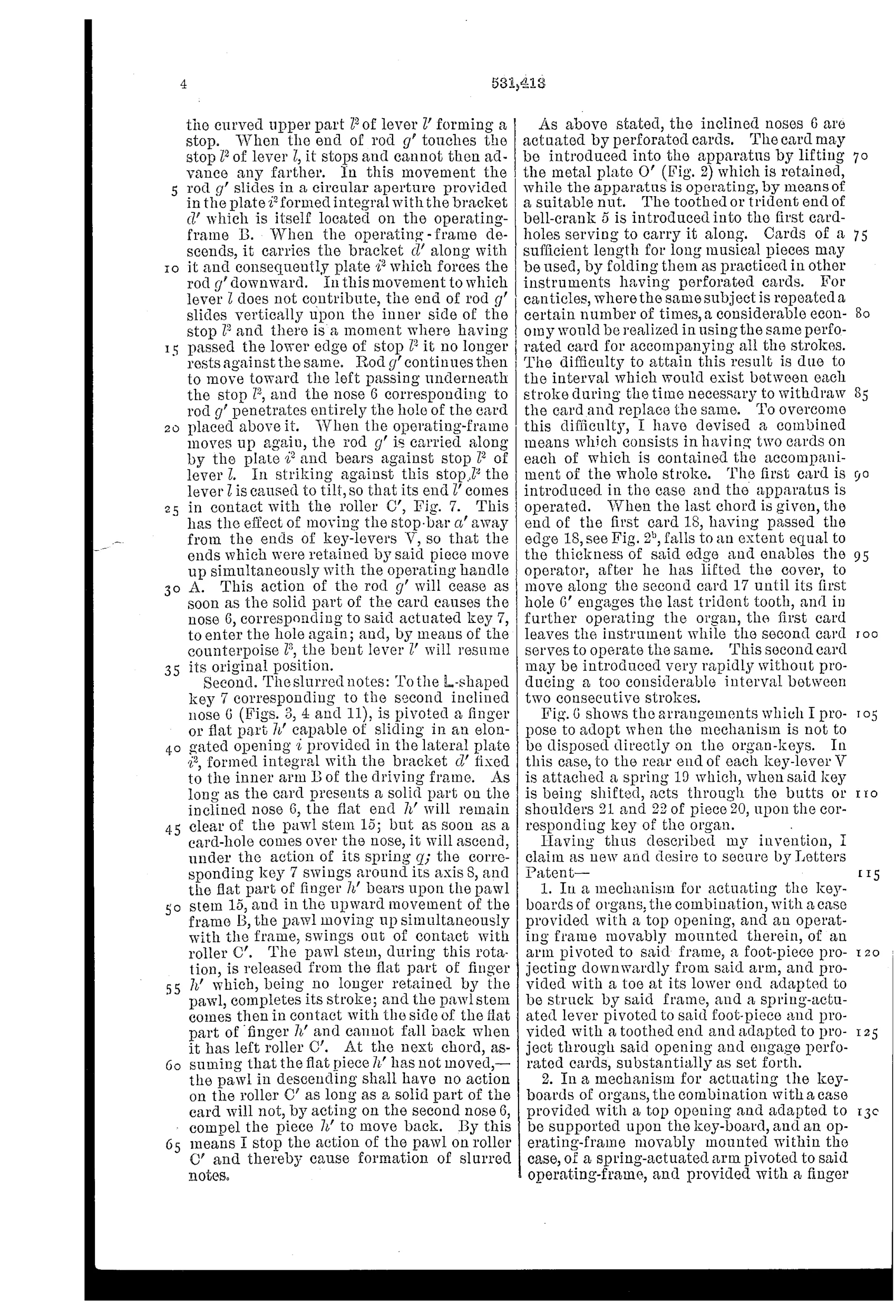
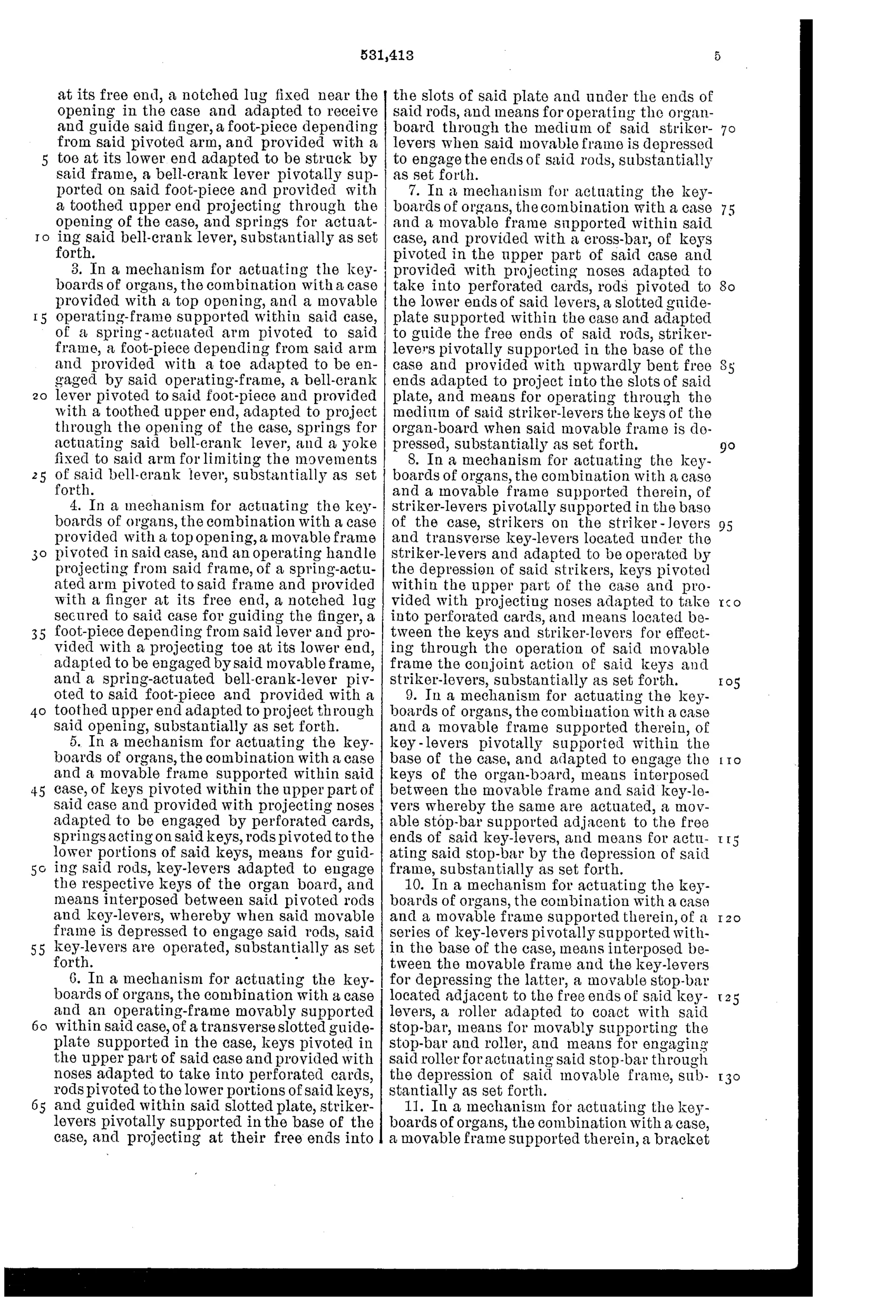
“In an apparatus for actuating the keyboards of organs and the like by means of perforated cards, the combination of a case, a movable operating-frame mounted therein, a perforated card adapted to be advanced step by step by said frame, a series of inclined-nose keys adapted to enter the perforations of the card, rods connected to said keys, and a series of striker-levers adapted to be actuated by said rods to operate the keys of the organ, substantially as described.”
In plain English: The patent covers a device where a hand lever moves a frame that advances a punched card, and pins reading the card's holes trigger levers that press the organ's keys.
♫ In the inventor’s words
“This invention relates to an apparatus which may be adapted to the key-boards of organs and harmoniums, and by means of which any singer may become an organist without previous study.”— Claude Gavioli, from the specification
Fate unknown
Gavioli's book-music readers were made in quantity, but no surviving example of this specific keyboard-top accompaniment attachment is documented; a marked specimen or firm catalog listing would settle it.
♫ Commentary
The name is the first thing to notice. Claude Gavioli belonged to the Paris firm whose cardboard 'book music' and key-frame reading system transformed fairground and street organs in the early 1890s — the folded punched book replacing the pinned barrel. This patent takes that same core idea, an inclined-nose key riding into card perforations, and points it at a very different market: church accompaniment. The card encodes the chords of plain-chant, and the singer pumps a hand lever in time with printed value-signs on the card itself, so the machine supplies the harmony while a human supplies the rhythm.
That hand lever is the clever part. Plain-chant has no fixed meter — a clockwork feed would ruin it — so Gavioli leaves tempo entirely to the operator and mechanizes only pitch selection. The stop-bar and pawl details in Figs. 10 and 11 for detached versus slurred notes show he took the musical phrasing seriously, not just the note-hitting.
It is also a telling design choice that the device sits on top of an existing organ's keyboard, striking the keys with wooden levers, rather than tapping into the wind chest. That makes it a portable accessory any parish could add — and removes nothing from the instrument. Whether sacristans actually bought it is another question; Gavioli's fortune was made in the fairground, not the choir loft.
Commentary by Claude, The Talking Machine Patent Archive’s resident enthusiast