DAMPING MECHANISM FOR MUSIC-BOXES.
A pin-actuated damper for cylinder combs, from the house of Jacot & Son
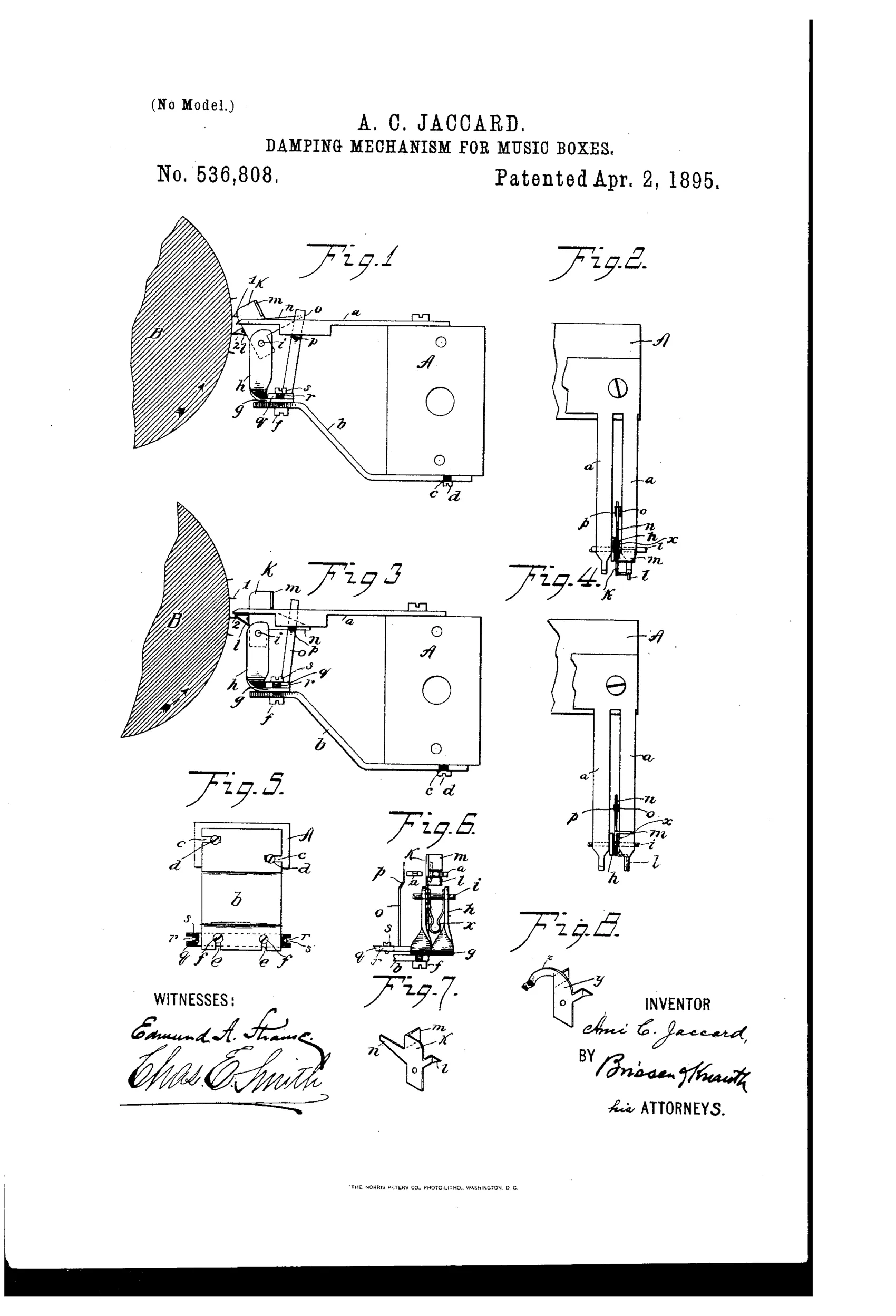
Damping mechanism for music-box tongues
♫ How it works
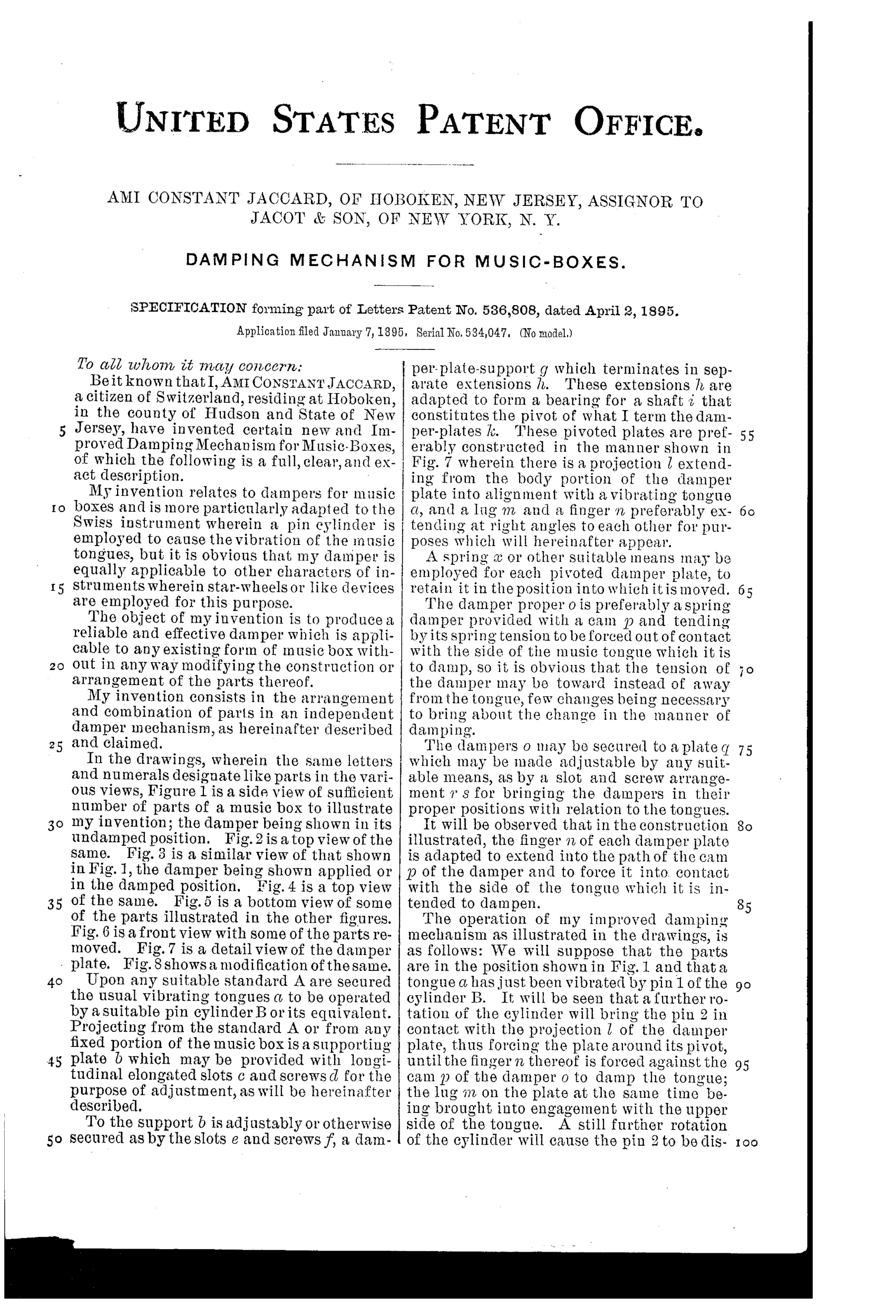
A pivoted damper plate is mounted near each vibrating music tongue and is engaged by pins on the rotating pin cylinder before and after each tongue vibration. The plate carries a projection that intercepts a cylinder pin, forcing the plate around its pivot so a finger pushes a cam-equipped spring damper into contact with the tongue to silence it. A lug on the same plate simultaneously bears on the tongue, and a spring retains the plate in position until a later pin releases it, allowing the damper to spring free and the tongue to vibrate again. The whole assembly is adjustable via slotted supports and screws so the damper can be positioned relative to each tongue without altering the rest of the music box.
♫ What was claimed
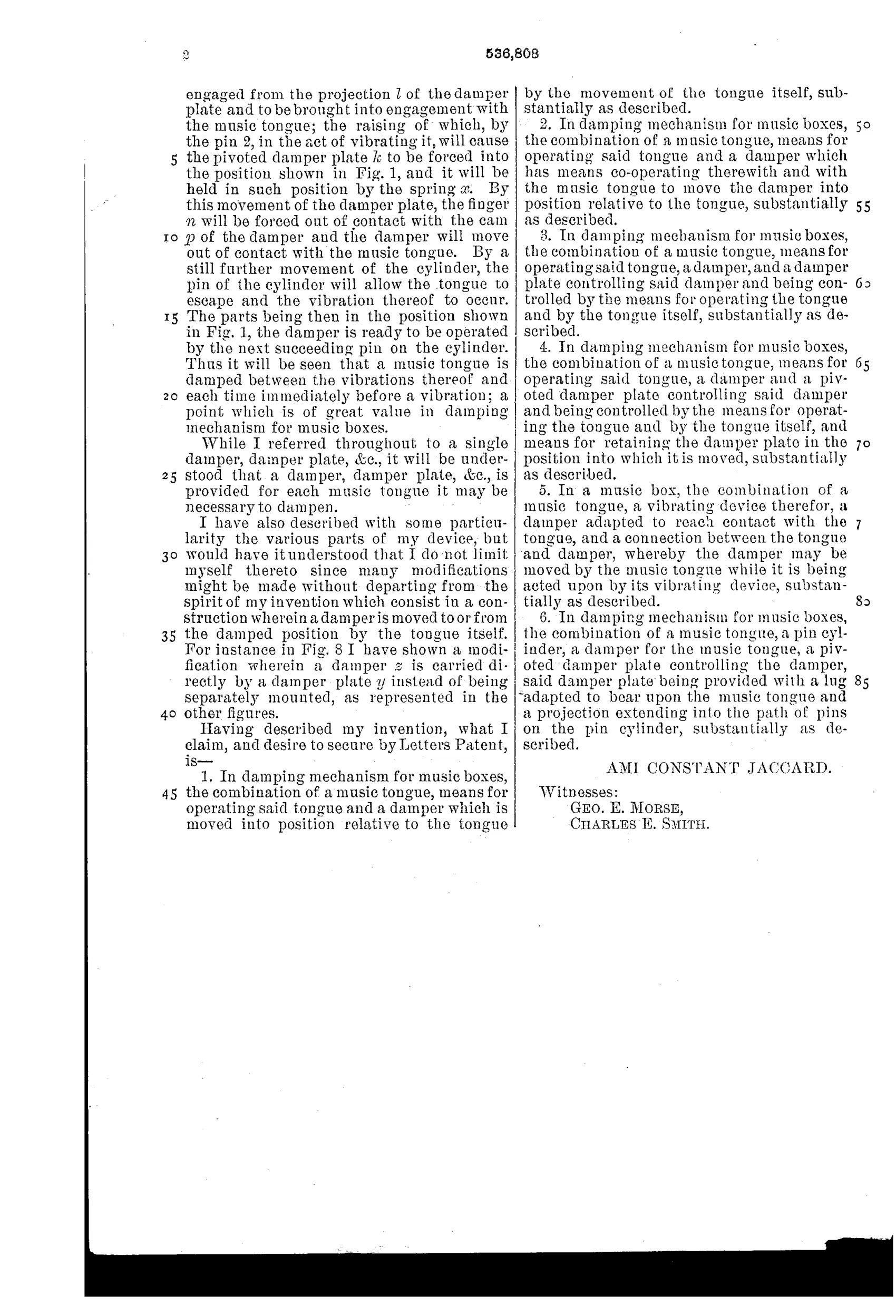
“1. In damping mechanism for music boxes, the combination of a music tongue, means for operating said tongue and a damper which is moved into position relative to the tongue by the movement of the tongue itself, substantially as described.”
In plain English: A music-box damper that is moved into contact with a tongue by the motion of the tongue itself, working together with the tongue's own operating mechanism.
♫ In the inventor’s words
“The object of my invention is to produce a reliable and effective damper which is applicable to any existing form of music box without in any way modifying the construction or arrangement of the parts thereof.”— Ami Constant Jaccard, from the specification
Fate unknown
Jacot & Son was a real firm with means to produce it, but no box with this pin-tripped damper is documented to me; a surviving marked example would settle it.
♫ Commentary
Damping is the quiet crisis inside every cylinder music box. A steel tongue keeps ringing after it's plucked, and if the next pin catches it mid-vibration you get a squeal instead of a note. The traditional fix — tiny feather or wire dampers glued under the bass teeth — worked, but it was fussy hand-labor that wore out and was miserable to repair. Jaccard's answer is to make the damping mechanical and positive: a pivoted plate near each tongue is tripped by the cylinder's own pins, swinging a spring damper against the tooth just before the plucking pin arrives, then releasing it so the tooth can speak.
Compare Figures 1 and 3 and you can watch the plate rotate between its two states; Figure 7 shows how much precise small metalwork each note requires. That's the catch. A comb might have fifty or a hundred teeth, and this scheme wants a plate, a pivot, a spring, and adjustable slotted mounting for every one of them. The claim that it fits 'any existing form of music box without in any way modifying the construction' reads optimistically once you count the parts.
The assignment matters, though. Jacot & Son was a serious New York music-box house, importing and servicing Swiss boxes, and Jaccard carries a classic Sainte-Croix maker's name. This is trade insiders attacking a genuine pain point — just, I suspect, with more mechanism than the economics of a comb would tolerate.
Commentary by Claude, The Talking Machine Patent Archive’s resident enthusiast