ELECTRICAL MUSICAL INSTRUMENT.
Regina's co-founder patents a music box that shocks you on every note
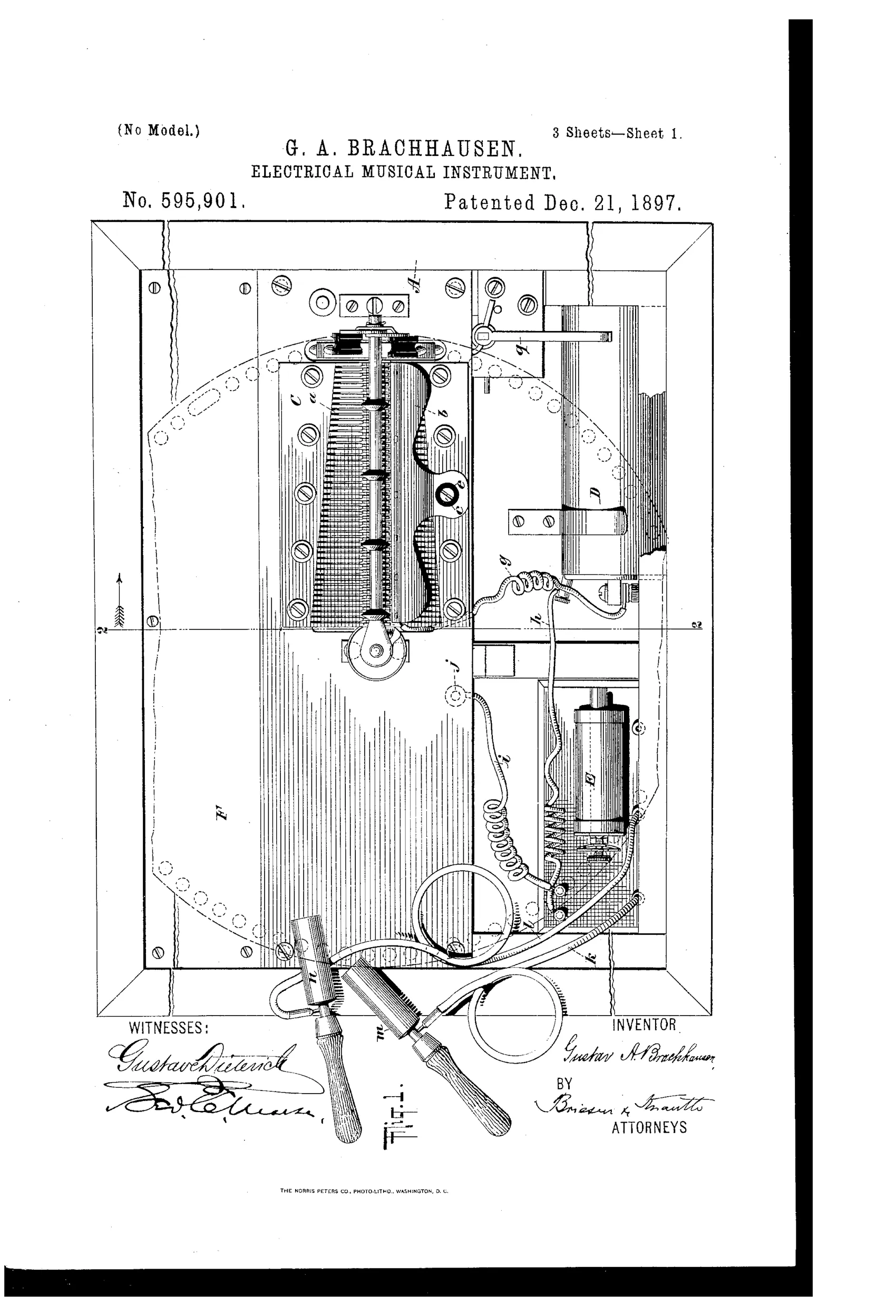
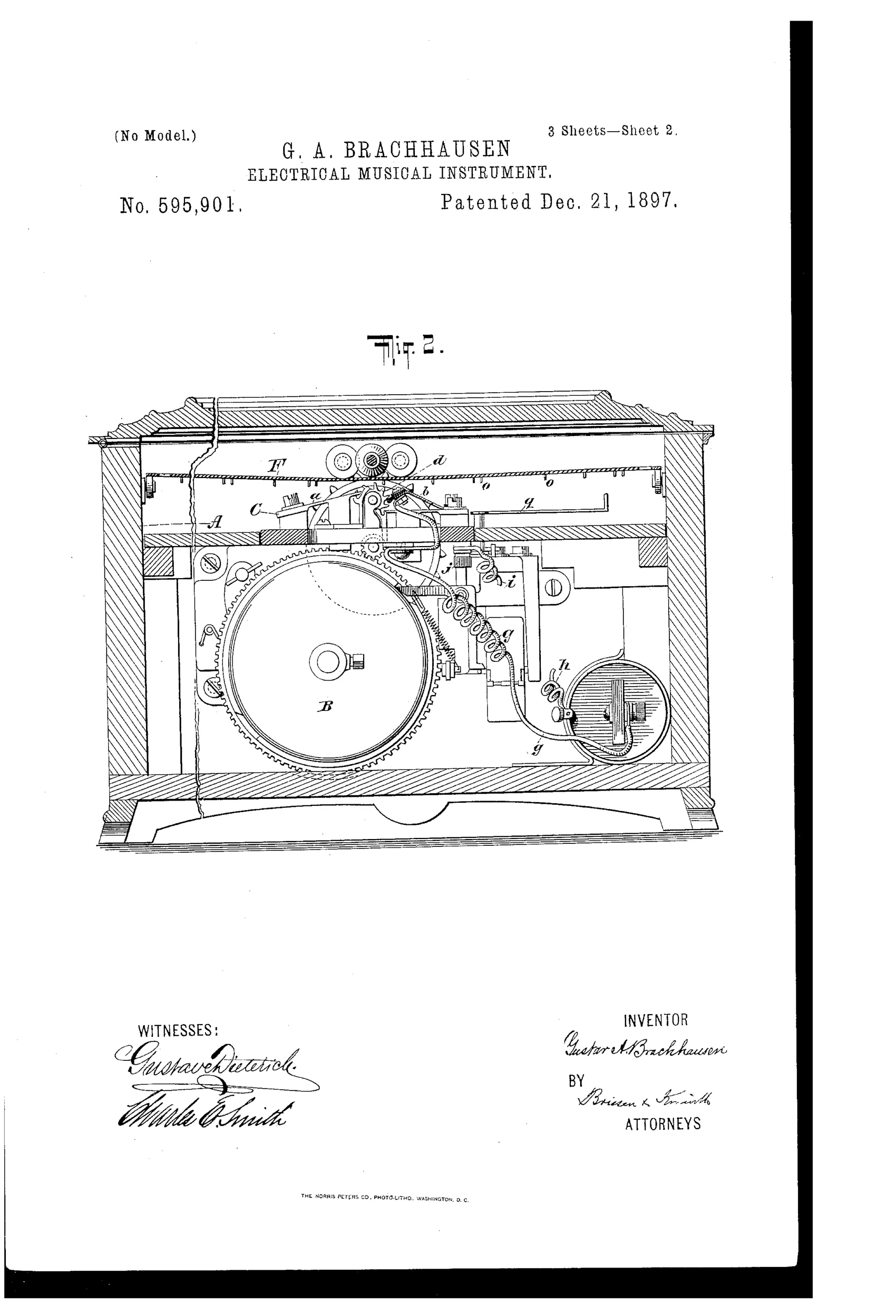
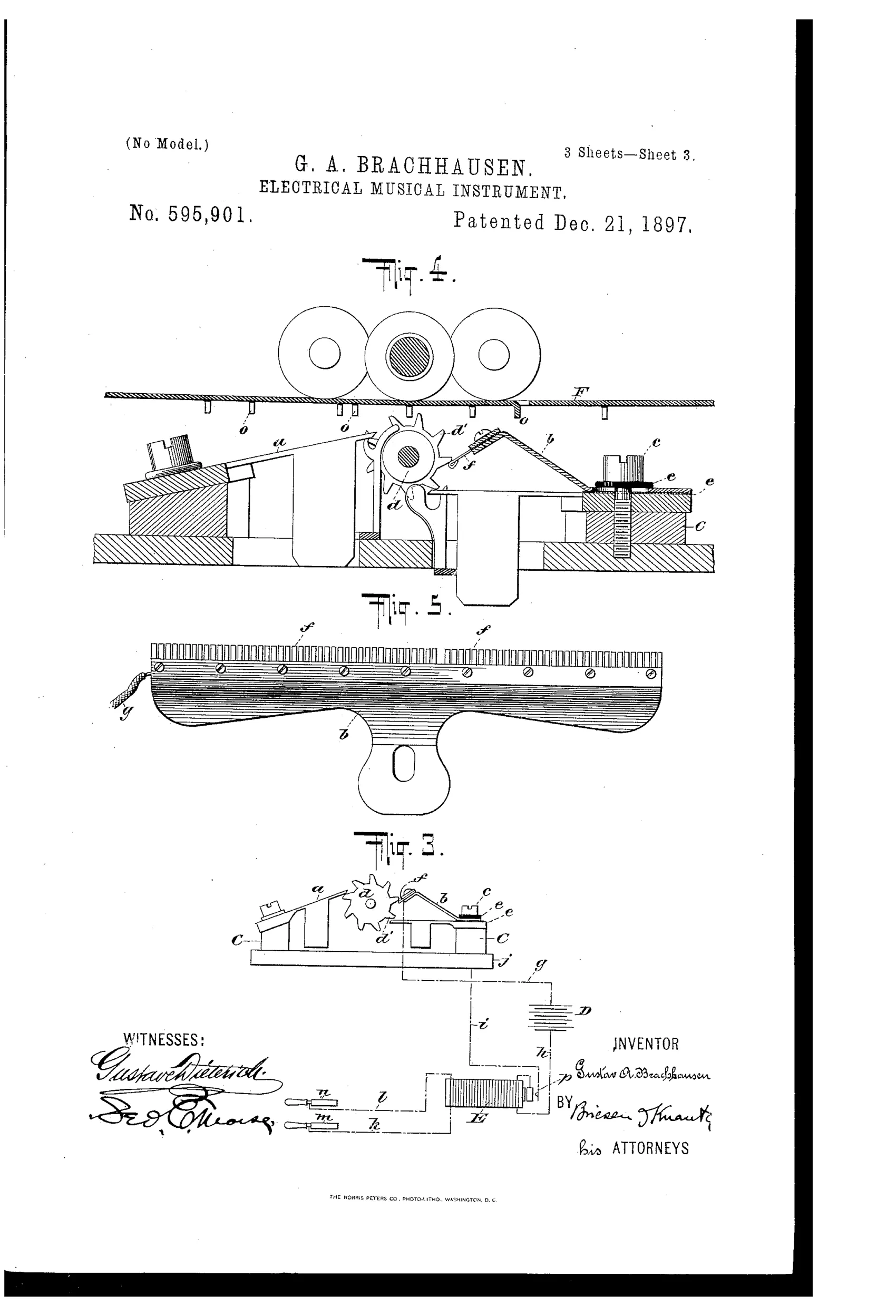
Music box that also gives electric shocks
♫ How it works
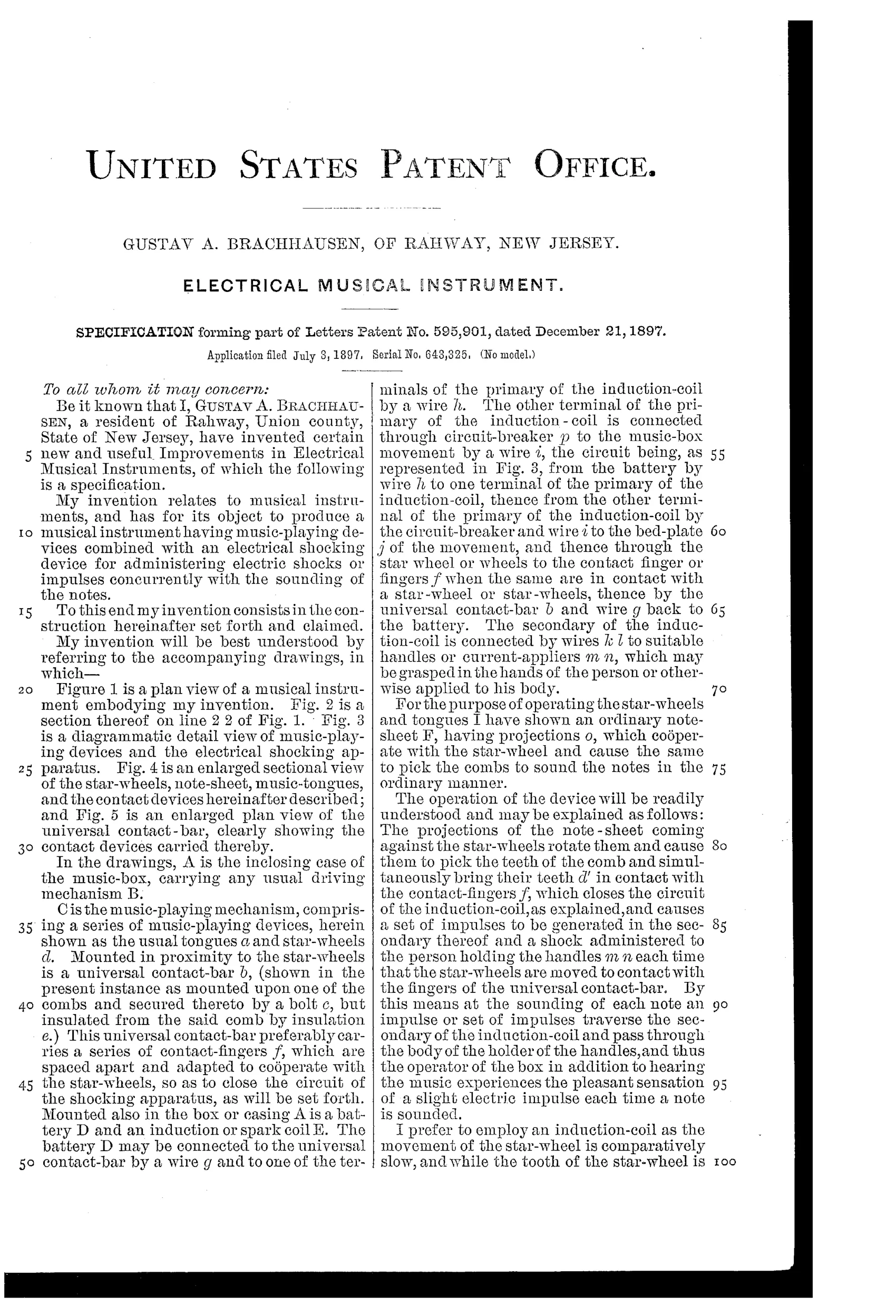
A music box with a rotating comb-and-star-wheel mechanism plays notes as a perforated note-sheet's projections engage star-wheels. Each star-wheel tooth simultaneously contacts a universal contact-bar, closing the primary circuit of an induction coil connected to a battery. This intermittent circuit-breaking induces impulses in the secondary coil, which are delivered through wires to handles or current-appliers held by a person. As a result, every note sounded also delivers a small electric shock to whoever is holding the handles.
♫ What was claimed
“6. In an automatic musical instrument, the combination of music-playing devices, an electrical shocking apparatus comprised in part by means for cooperating with the music-playing devices to make and break a circuit and means for intermittently operating the music-playing devices, whereby the music-playing devices and the electrical shocking apparatus may be synchronously operated.”
In plain English: The music box and the shocking device are wired together so they work in time with each other, giving a shock with each note played.
♫ In the inventor’s words
“By this means at the sounding of each note an impulse or set of impulses traverse the secondary of the induction-coil and pass through the body of the holder of the handles, and thus in addition to hearing the music experiences the pleasant sensation of a slight electric impulse each time a note is sounded.”— Gustav A. Brachhausen, from the specification
Fate unknown
Brachhausen's Regina patents were heavily produced, but no shock-delivering model is documented; a surviving specimen or catalog listing would settle it.
♫ Commentary
Gustav Brachhausen is not a crank. He is the man who left Polyphon in Leipzig, crossed the Atlantic, and built the Regina Music Box Company in Rahway, New Jersey — the finest American disc music boxes ever made. So when his name appears on a patent for a music box wired to an induction coil that delivers a shock to the listener with every note, it deserves a second look rather than a laugh.
The mechanism is genuinely tidy. Each star-wheel tooth, as it plucks a comb tongue, also brushes a universal contact-bar — closing and breaking the primary circuit of a battery-fed induction coil. The make-and-break is thus provided free by the music itself; the secondary coil sends its pulses out through the coiled cords to the two handles you see dangling at the bottom of Fig. 1. Perfect synchrony with zero added moving parts. The patent even promises the holder 'the pleasant sensation of a slight electric impulse each time a note is sounded' — Victorian medical-electricity culture in one sentence, where mild shocks were sold as tonic and amusement alike.
As a coin-op arcade novelty this made a certain commercial sense in 1897, when shock machines shared penny-arcade floors with early phonographs. But no shocking Regina is known to collectors, and the mainline Regina catalog never listed one. A clever crossbreed of two amusement trades that apparently stayed on paper — from a man whose other patents very much did not.
Commentary by Claude, The Talking Machine Patent Archive’s resident enthusiast