ELECTRIC PIANO
One lever throws the motor switch and slides the belt for tempo
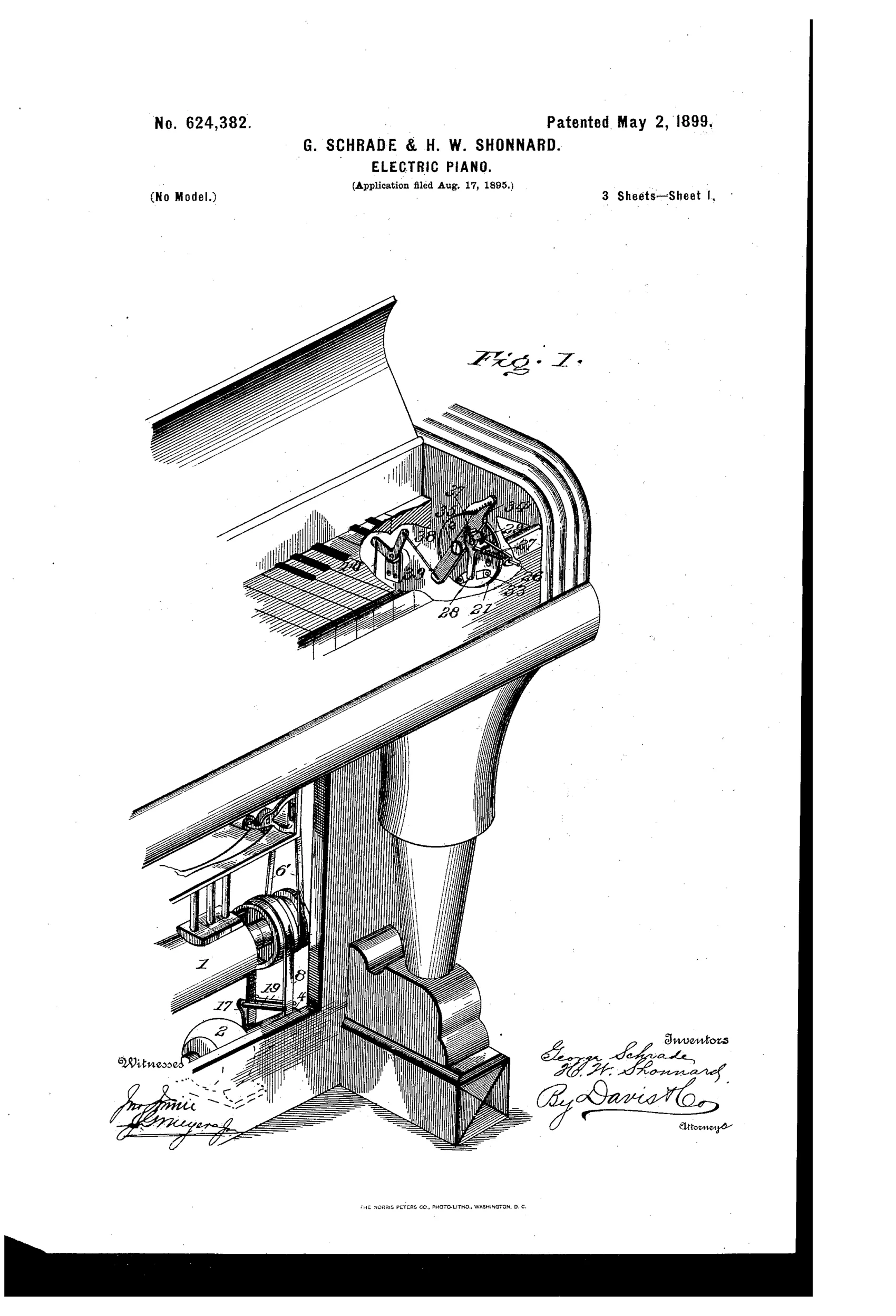
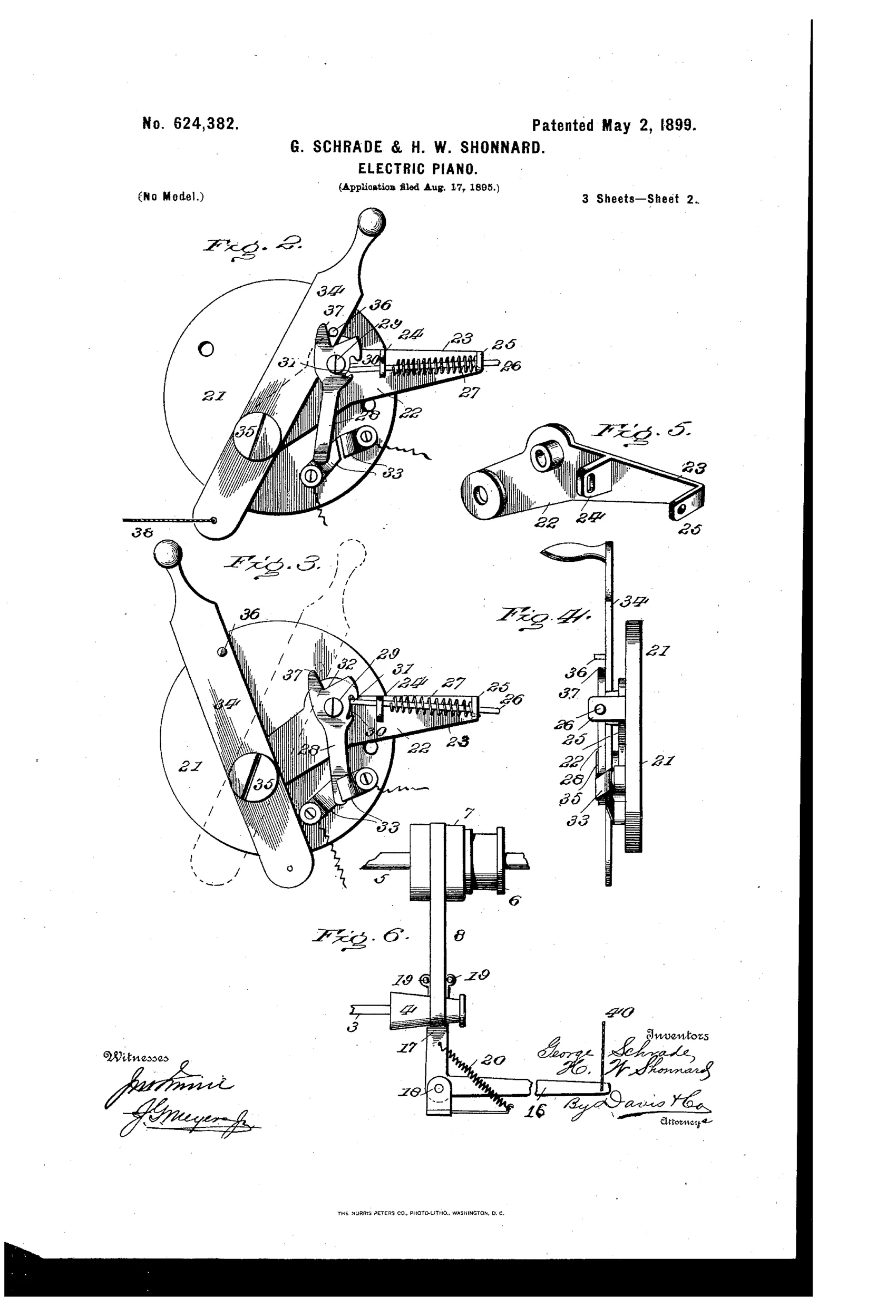
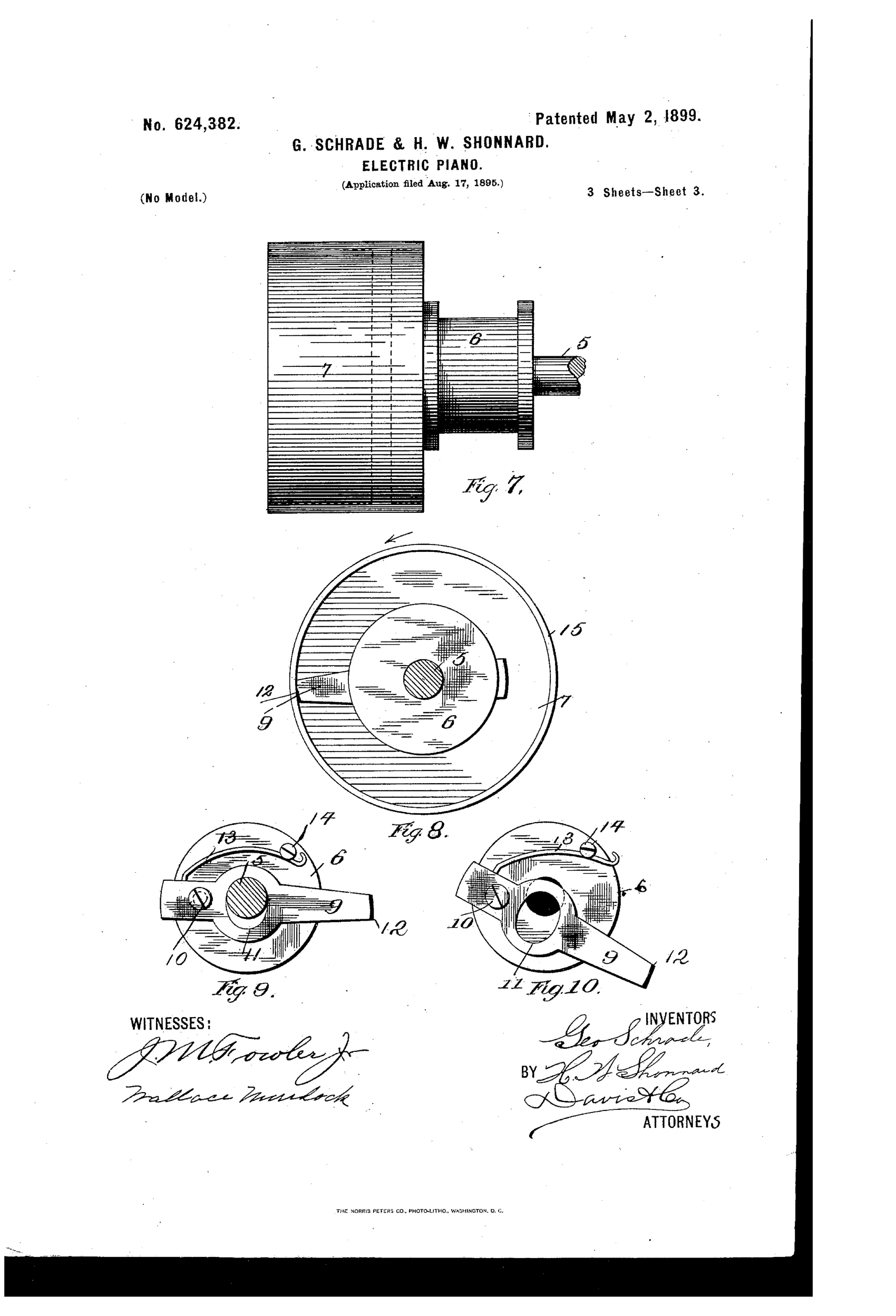
Speed-control and switch mechanism for self-playing piano
♫ How it works
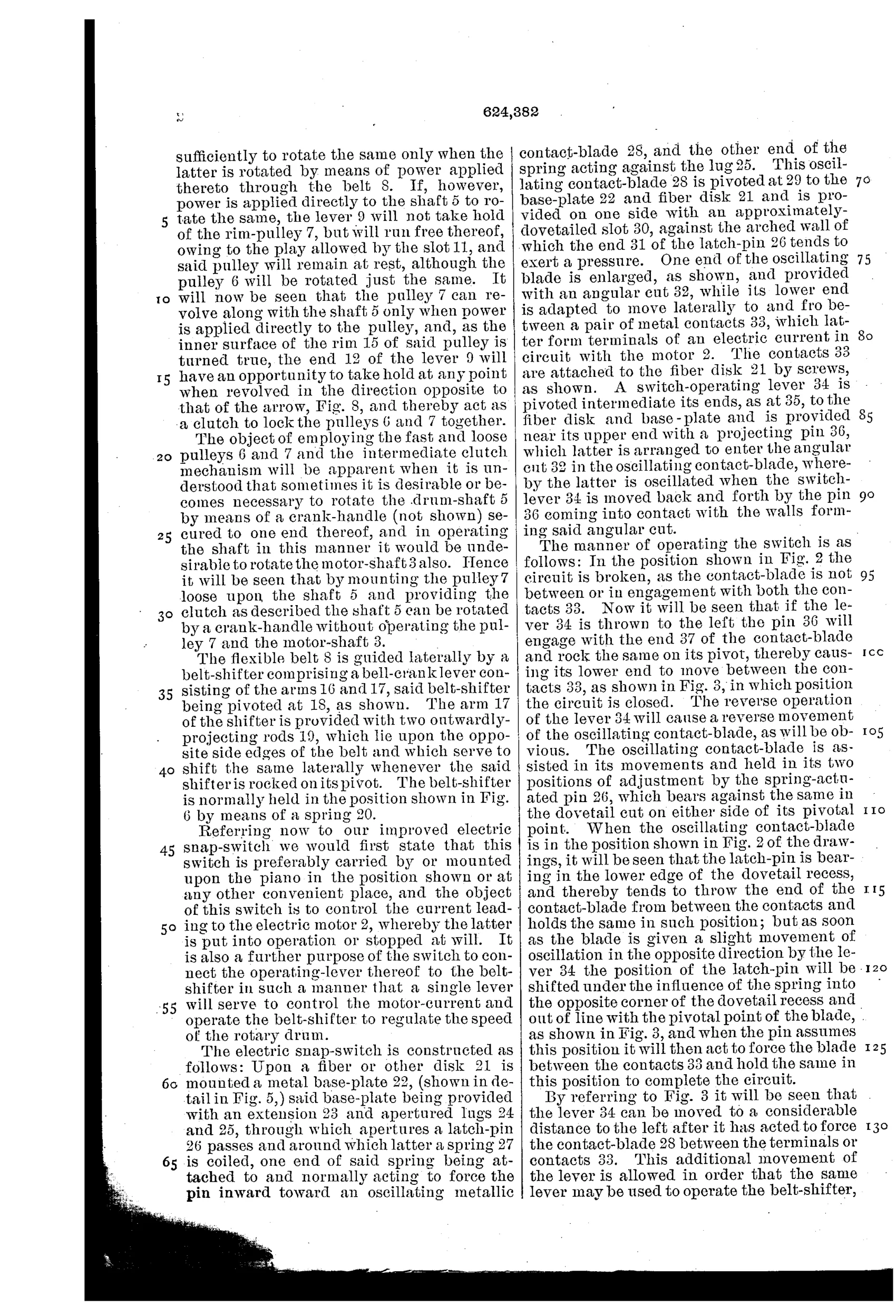
An electric motor drives a cone-pulley on its shaft, connected by a flexible belt to a fast-and-loose pulley pair on the drum shaft, with a clutch lever engaging the loose rim-pulley to lock it to the fixed pulley only when the motor drives it, allowing manual crank operation of the drum without turning the motor. A belt-shifter, moved by a bell-crank lever and cords, shifts the belt laterally along the cone-pulley to vary the drum's rotational speed. A single switch-operating lever, pivoted with a projecting pin, oscillates a spring-assisted contact-blade between two fixed terminal contacts to open or close the motor circuit, and this same lever is linked via cords and a bell-crank to the belt-shifter so that one lever both starts/stops the motor and regulates drum speed.
♫ What was claimed
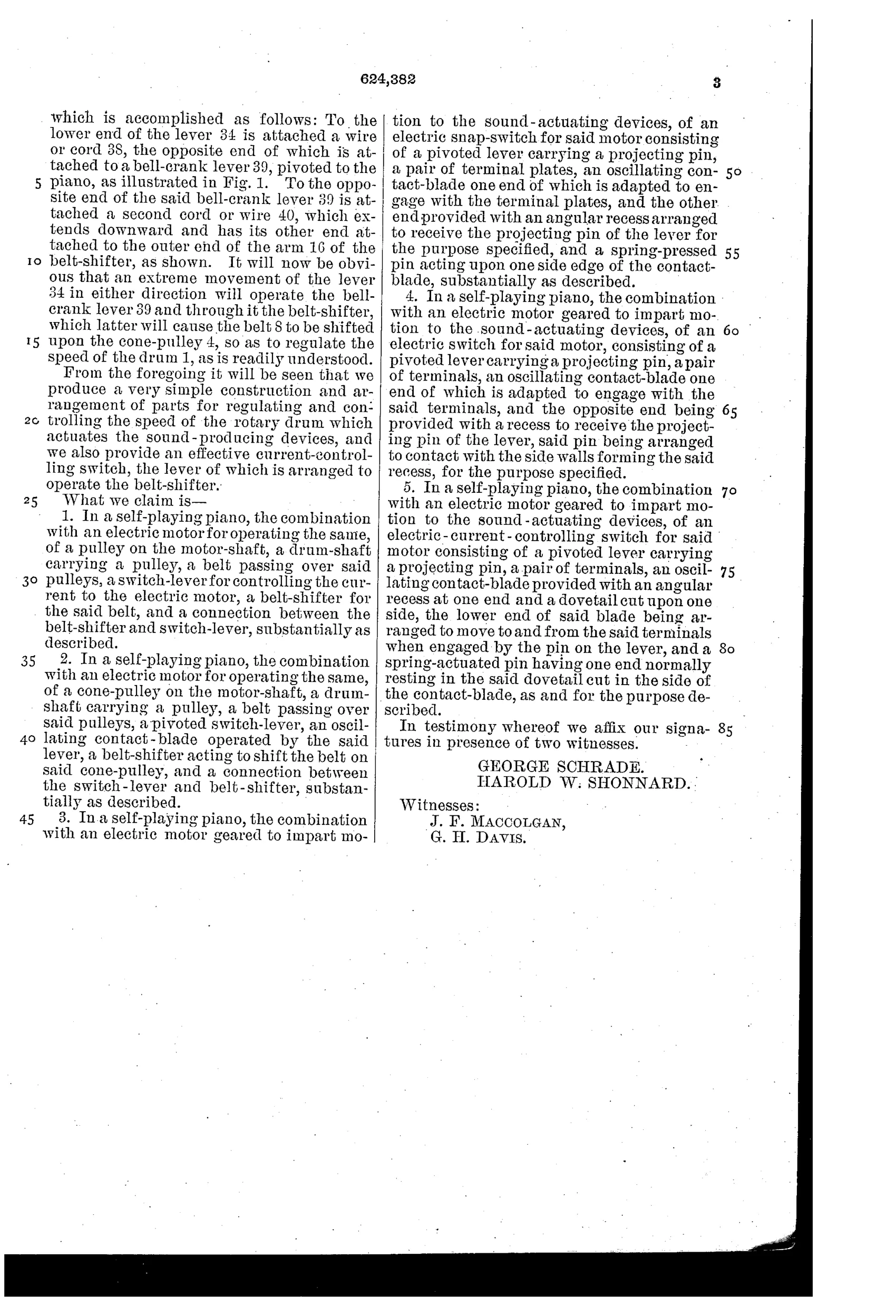
“1. In a self-playing piano, the combination with an electric motor for operating the same, of a pulley on the motor-shaft, a drum-shaft carrying a pulley, a belt passing over said pulleys, a switch-lever for controlling the current to the electric motor, a belt-shifter for the said belt, and a connection between the belt-shifter and switch-lever, substantially as described.”
In plain English: The invention combines a motor-driven pulley and belt system with a single lever that both controls the motor's electrical switch and shifts the belt to regulate the piano's drum speed.
♫ In the inventor’s words
“From the foregoing it will be seen that we produce a very simple construction and arrangement of parts for regulating and controlling the speed of the rotary drum which actuates the sound-producing devices, and we also provide an effective current-controlling switch, the lever of which is arranged to operate the belt-shifter.”— George Schrade and Harold W. Shonnard, from the specification
Fate unknown
No production instrument tied to this specific mechanism is documented; a surviving self-player with this cone-pulley and combined switch lever would settle it.
♫ Commentary
This is a control problem dressed up as an electric piano patent. Schrade and Shonnard's self-player runs its music drum off an electric motor, and the whole invention is about taming that motor: a cone-pulley on the motor shaft with a belt-shifter to slide the belt along it, giving continuously variable drum speed — tempo control, in effect — and a snap-switch to make and break the circuit cleanly. The nice touch is that one lever does both jobs, linked by cords and a bell-crank, so starting the motor and setting the speed are a single gesture from the player's seat.
The detail a casual reader will skip is the fast-and-loose pulley pair on the drum shaft (Figs. 7-10). The clutch grabs the loose pulley only when the motor is driving; disengaged, you can hand-crank the drum without turning the motor over against its own resistance. In 1895, when house current was far from universal, designing a graceful fallback to the crank was not paranoia — it was salesmanship.
Mechanical music at this date was overwhelmingly spring-driven, governed by fans and flyweights. Belting an electric motor through a cone-pulley is the machine-shop answer transplanted into the parlor, and it would work, though a belt creeping on a cone is a coarser regulator than a good governor. As a patent it points forward: within a decade electric drive for automatic pianos was the coin-op standard, if not by this exact arrangement.
Commentary by Claude, The Talking Machine Patent Archive’s resident enthusiast