MUSIC-BOX.
Piano-style sympathetic strings and hidden resonance boxes, all inside a disc music box
Sound-amplifying resonance system for a music box
♫ How it works
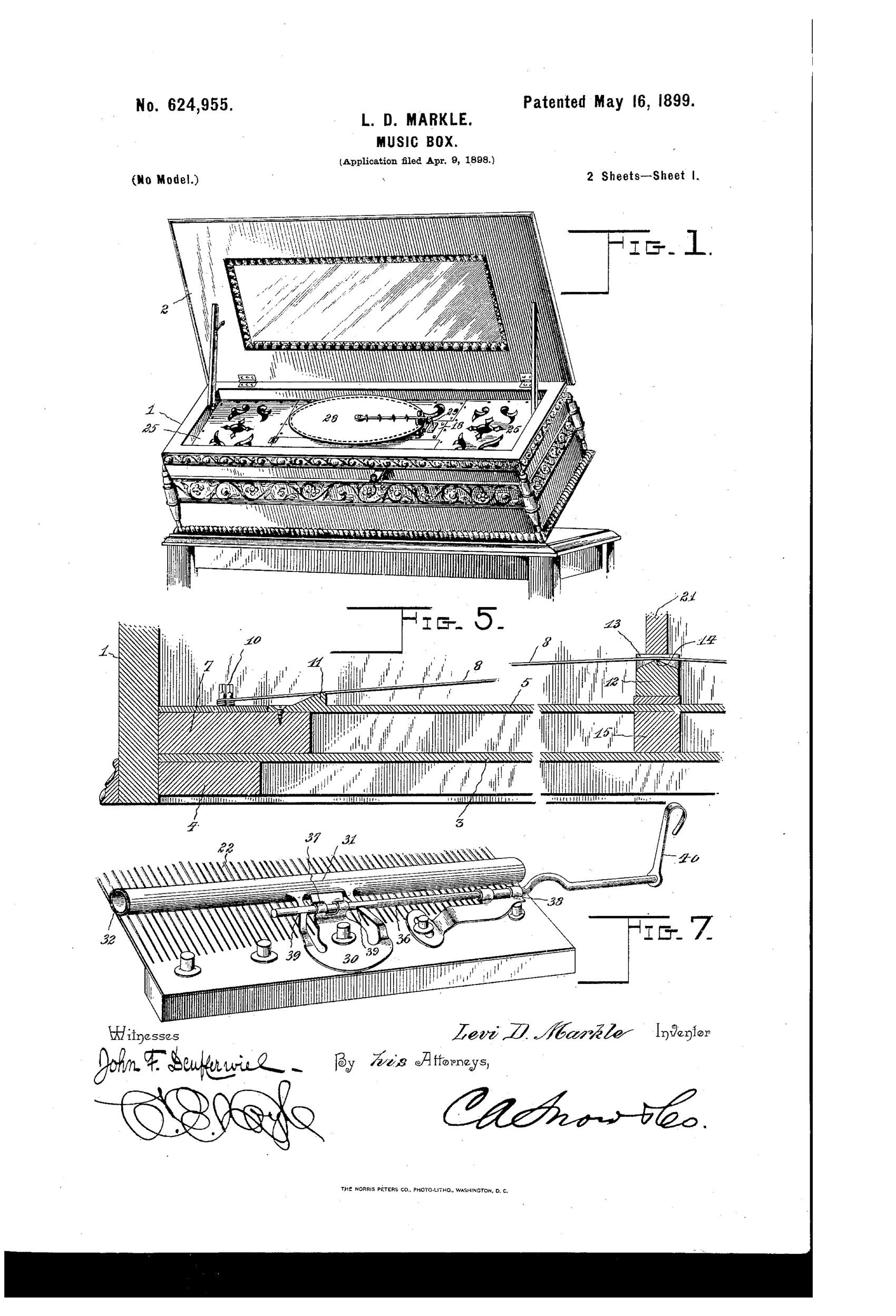
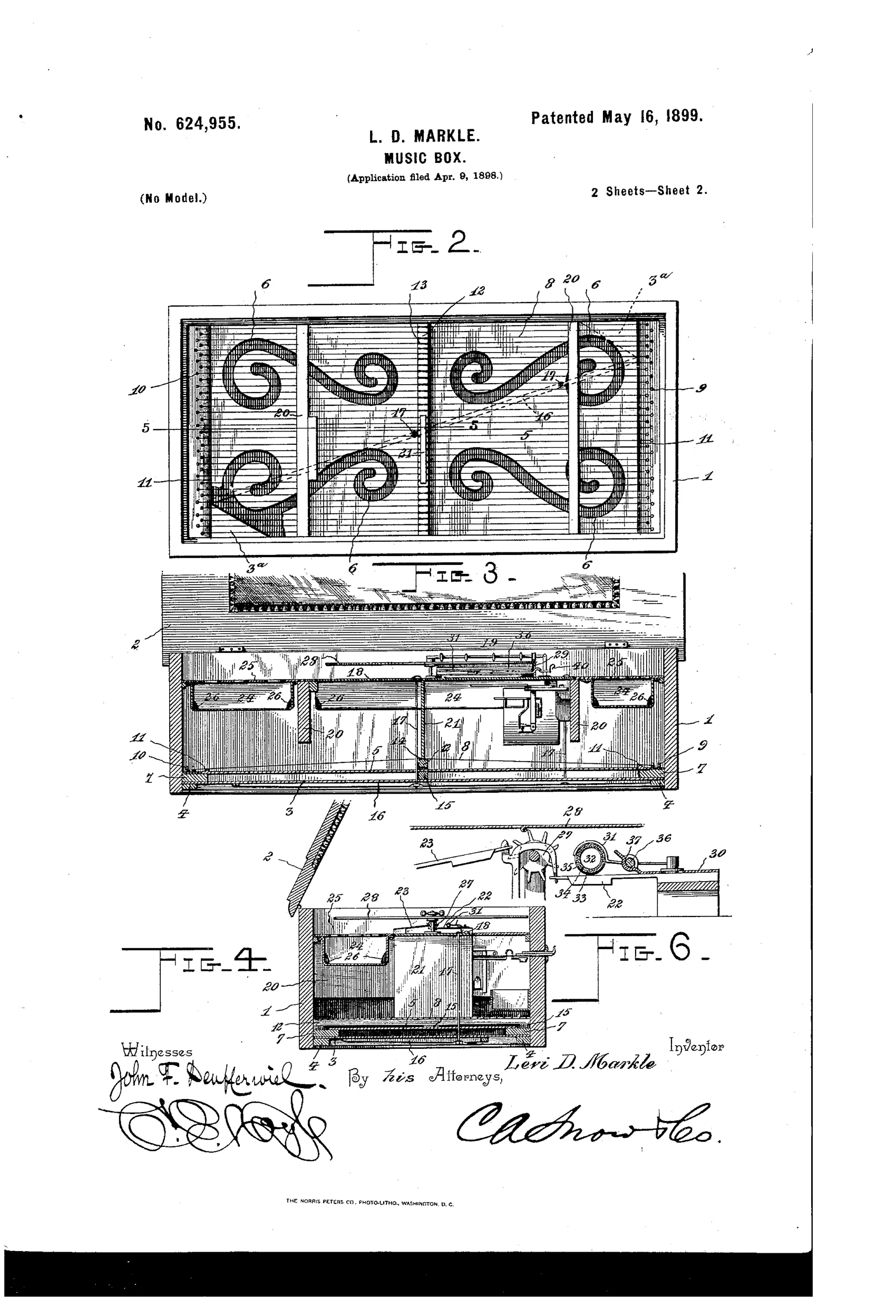
A casing wall is formed by a wooden sounding-board and a metallic sounding-plate, spanned by sympathetic strings tuned in unison to the comb tongues and pressing on an intermediate bridge. A sounding-post carries vibrations from the sound-producing comb mechanism through the bridge into the sounding-board and plate, while tension-bolts adjust string tension to tune sensitivity. Suspended sheet-metal resonance-boxes with wooden diaphragms further amplify tone by communicating vibrations to circulating air within the casing. A cithern attachment with a compressible paper-and-fabric contact tube presses against the comb tongues via a cam-operated spindle to shorten and dampen vibrations, producing a guitar-like twang.
♫ What was claimed
“A music-box casing having a sounding-board, sound-producing mechanism spaced from the plane of the sounding-board, sympathetic or sounding strings arranged between the sound-producing mechanism and the plane of the sounding-board and terminally attached to fixed portions of the casing beyond the edges of the sounding-board, and a bridge supported by the sounding-board at an intermediate point and spanned by said strings which decline toward the plane of the sounding-board as they recede from the plane of the bridge to exert upon the sounding-board a perpendicular pressure in a direction outward or from the sound-producing mechanism, substantially as specified.”
In plain English: The music box casing has a sounding-board, a separate sound-making mechanism, and tuned sympathetic strings stretched between them over a bridge, so the strings pull outward on the sounding-board to boost its vibration.
♫ In the inventor’s words
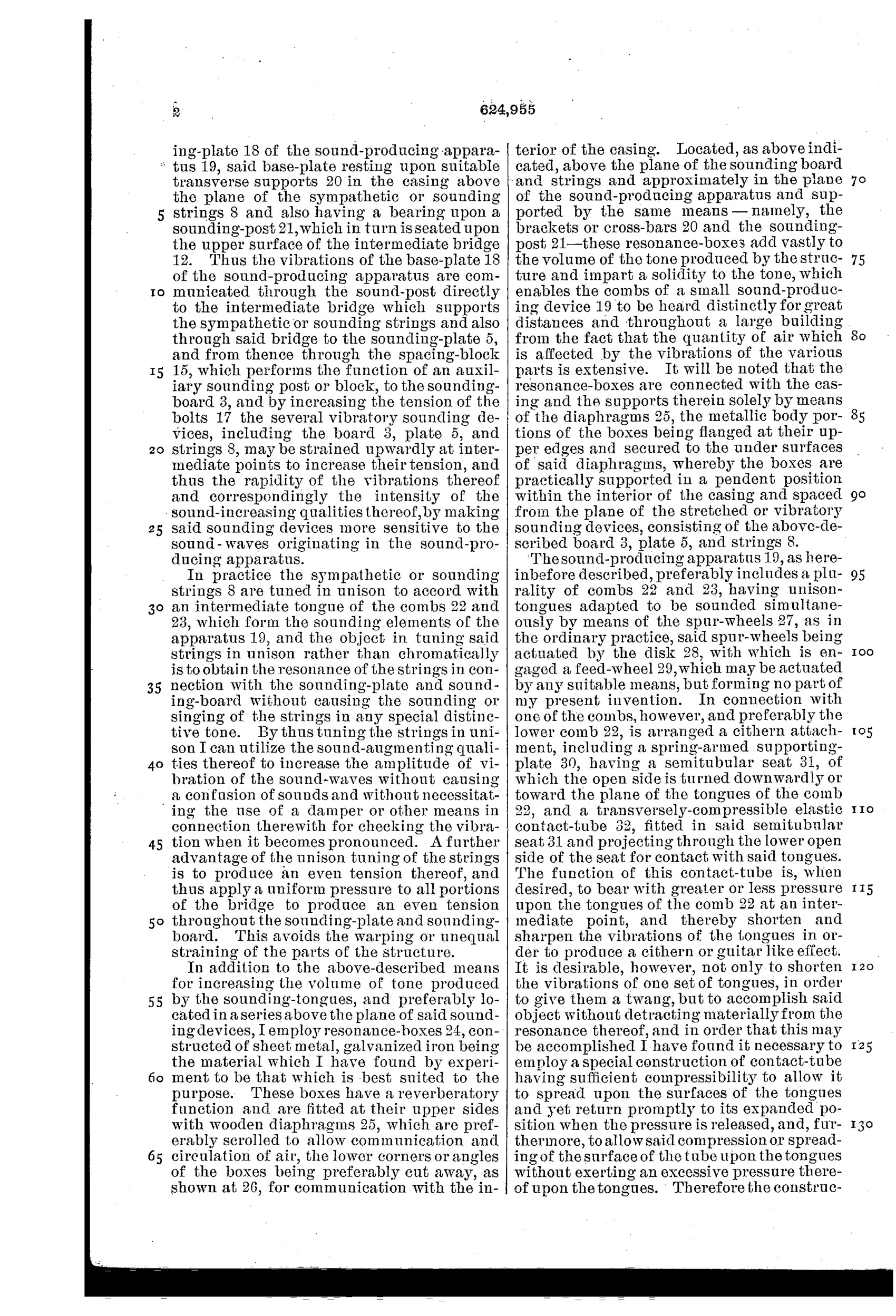
“These resonance-boxes add vastly to the volume of the tone produced by the structure and impart a solidity to the tone, which enables the combs of a small sound-producing device 19 to be heard distinctly for great distances and throughout a large building from the fact that the quantity of air which is affected by the vibrations of the various parts is extensive.”— Levi D. Markle, from the specification
Fate unknown
No production music box with sympathetic strings and internal resonance boxes is documented; a surviving marked example would settle it.
♫ Commentary
Most music-box makers chasing bigger sound in the 1890s did it the simple way: bolt the bedplate to a heavier case and let the cabinet act as a soundboard. Markle went the other direction entirely, importing the acoustics of the piano and the zither. He stretches strings tuned in unison with the comb teeth across a bridge on a real wooden sounding-board, so when the comb sounds, the strings ring sympathetically and load the board with a steady outward pressure. A sounding-post carries vibration from the mechanism into the board, exactly as in a violin. Then, for good measure, he hangs sheet-metal resonance boxes with wooden diaphragms inside the case to stir up the enclosed air.
The drawing sheet rewards a close look. Fig. 1 shows the strings and bridge laid out in plain view around the disc, like a piano soundboard folded into a parlor cabinet. Fig. 7 is the oddest part: a cam-operated cithern attachment that presses a soft paper-and-fabric tube against the comb tongues to shorten and damp their vibration into a banjo-like twang — an expression stop for a music box.
Would it work? Sympathetic strings genuinely do enrich tone, but keeping dozens of them in unison with comb teeth in a shipped cabinet is a tuner's nightmare. It is acoustically literate and commercially improbable — a dead end, but an honest, thoughtful one.
Commentary by Claude, The Talking Machine Patent Archive’s resident enthusiast