SELF-PLAYING STRINGED MUSICAL INSTRUMENT
A disc-driven machine that frets the strings as well as plucking them
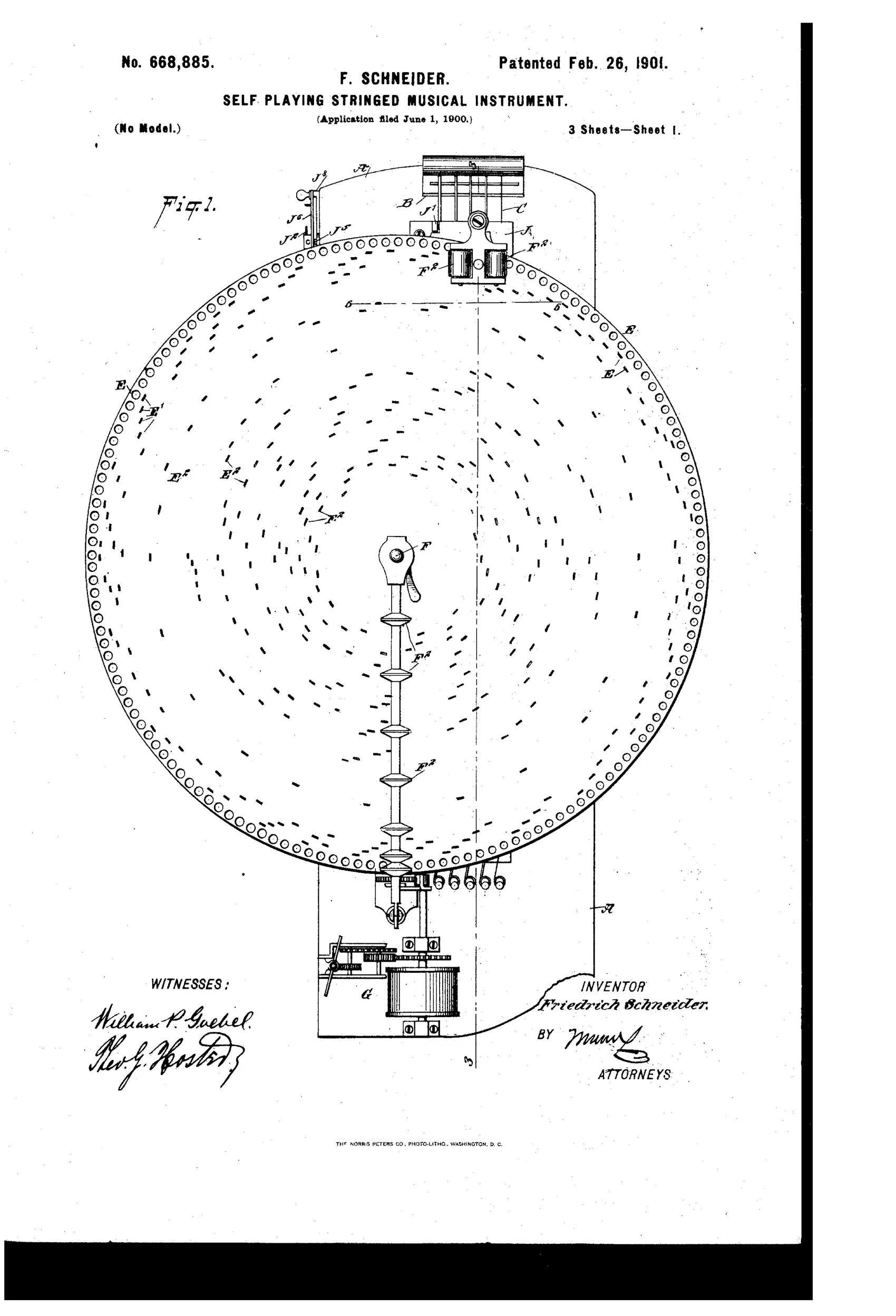
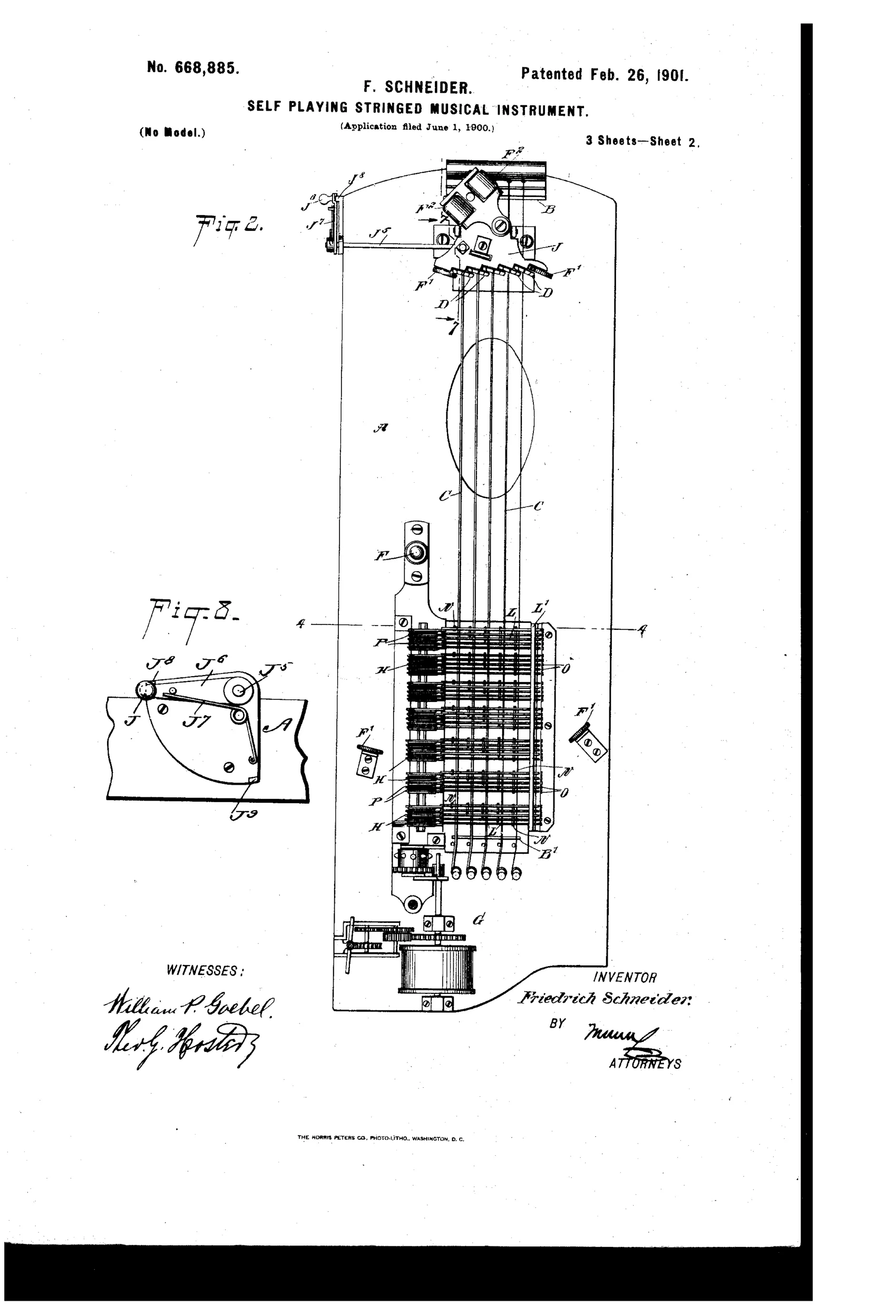
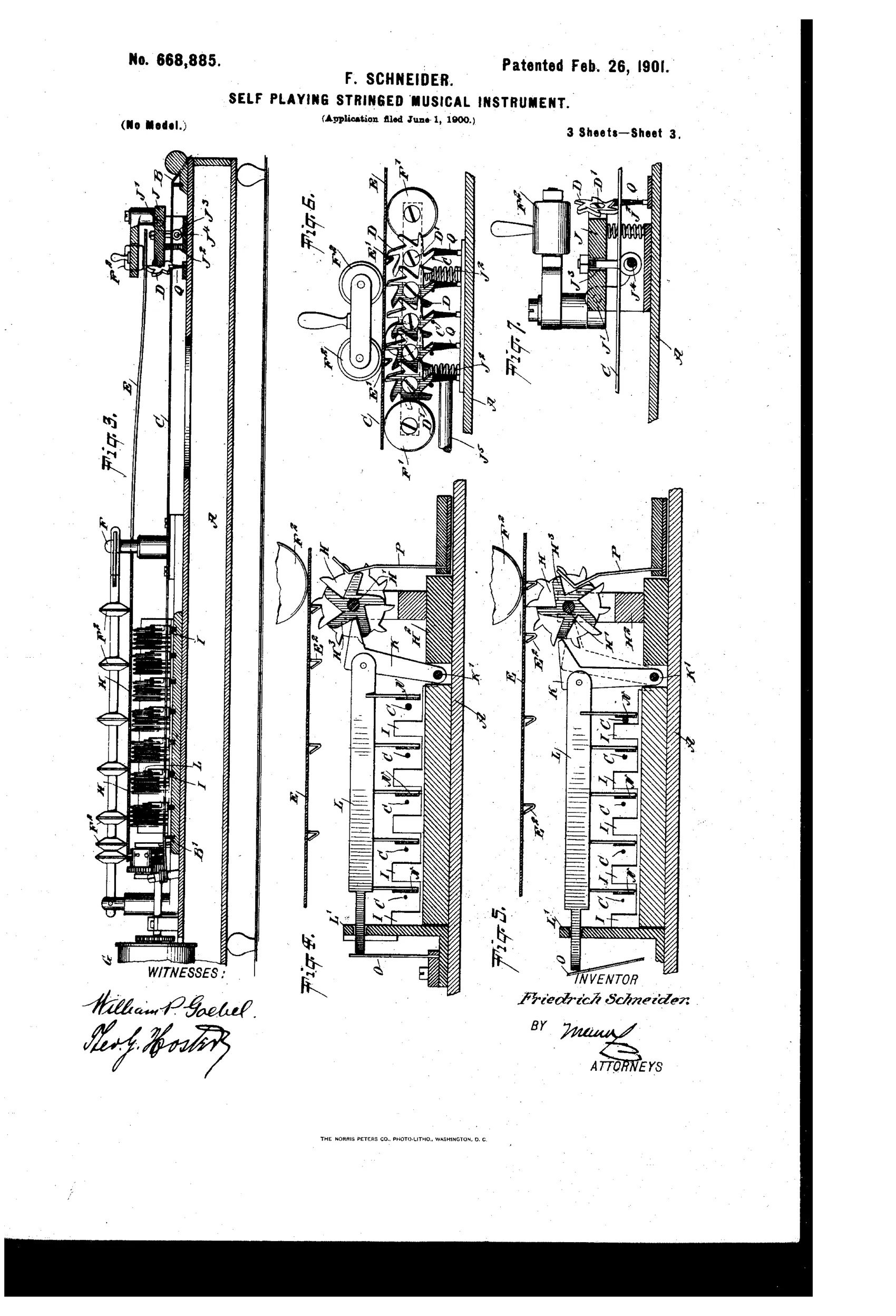
Mechanical note-sheet-driven self-playing banjo/guitar-type instrument
♫ How it works
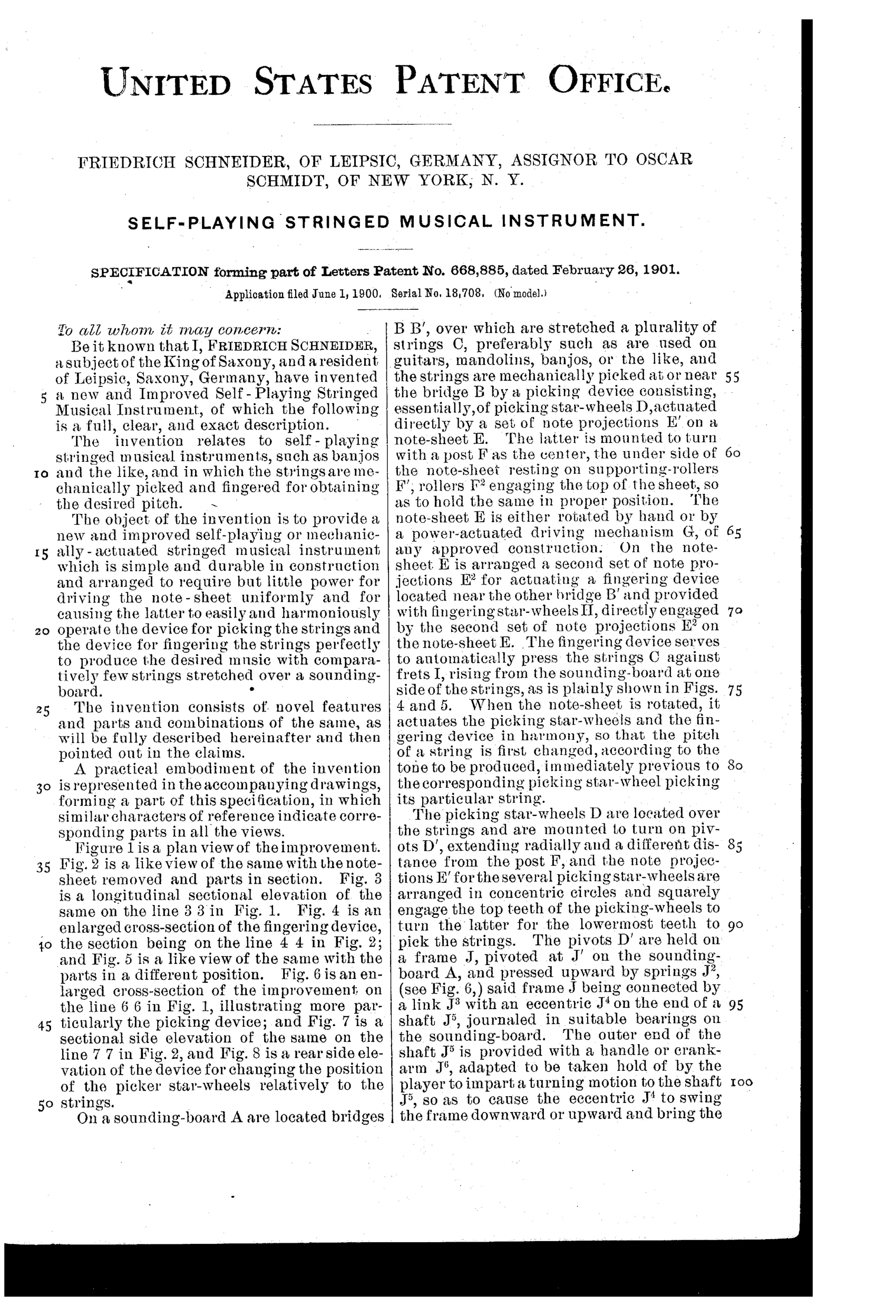
A rotating circular note-sheet bearing two concentric sets of note projections drives star-wheels above the strings. One set of projections engages picker star-wheels that pluck the strings near a bridge, while a second set actuates fingering star-wheels that press the strings sidewise against frets via spring-loaded bars and pivoted arms. A spring-tongue engages the fingering star-wheel to help move the finger-piece to the fret and to retard its return, preventing uneven string vibration. An eccentric-and-crank mechanism lets the player raise or lower the picker frame to vary picking force, and brushes damp each string immediately after it is plucked.
♫ What was claimed
“A self-playing musical instrument, comprising a sounding-board, strings stretched over the same, picker star-wheels, one for each string to pick the same, a fingering device having star-wheels, and a note-sheet having two sets of note projections, one for actuating the picker star-wheels and the other for actuating the fingering star-wheels, as set forth.”
In plain English: The instrument uses a soundboard with strings, star-wheels that pluck each string, a fingering mechanism with its own star-wheels, and a rotating note-sheet with two separate sets of raised bumps—one set to trigger the plucking wheels and another to trigger the fretting wheels—so the machine can both finger and pick the strings automatically.
♫ In the inventor’s words
“It is expressly understood that the spring-tongue is a very important feature of my invention, as it serves to assist in moving the finger-piece and pressing the string against its fret to retard the return movement of the finger-piece, so as to prevent undue vibration of the string and uneven movement of the note-sheet, as above described.”— Friedrich Schneider, from the specification
Fate unknown
Oscar Schmidt sold disc-played star-wheel zithers (the Guitarophone line), but a surviving specimen with the automatic fretting mechanism would be needed to confirm this design reached production.
♫ Commentary
Most self-playing string instruments of the 1890s dodged the hard problem. A zither or autoharp played by star-wheels only needs one string per note — you pluck open strings and never touch a fret. Schneider goes after the real thing: a banjo-guitar hybrid where the machine both picks the string and presses it against a fret to change its pitch. The rotating cardboard disc carries two concentric families of projections, one commanding picker star-wheels near the bridge, the other tripping fingering star-wheels that shove spring-loaded finger-pieces sidewise onto the frets.
The detail Schneider himself flags as essential is the spring-tongue on each fingering wheel — it helps snap the finger down onto the fret and then drags against the wheel on release. Without it, a finger-piece popping off a still-ringing string would let the pitch slur and, worse, the reaction would jerk the note-sheet unevenly. That's the kind of problem you only discover by building the thing, which is quietly encouraging.
The assignment matters too: Oscar Schmidt of New York, the firm behind the Menzenhauer & Schmidt disc-played zithers, the direct commercial cousins of this design. Schneider in Leipzig was feeding patents to a company that actually shipped star-wheel instruments. Whether the full fretting apparatus — far fussier than an open-string zither — survived contact with the factory floor is the open question. Either way, this is mechanical music at its most ambitious, five years before the player piano made the argument moot.
Commentary by Claude, The Talking Machine Patent Archive’s resident enthusiast