METHOD OF RECORDING SPEECH.
Recording on tape softened by an oil lamp, filed a year before Berliner
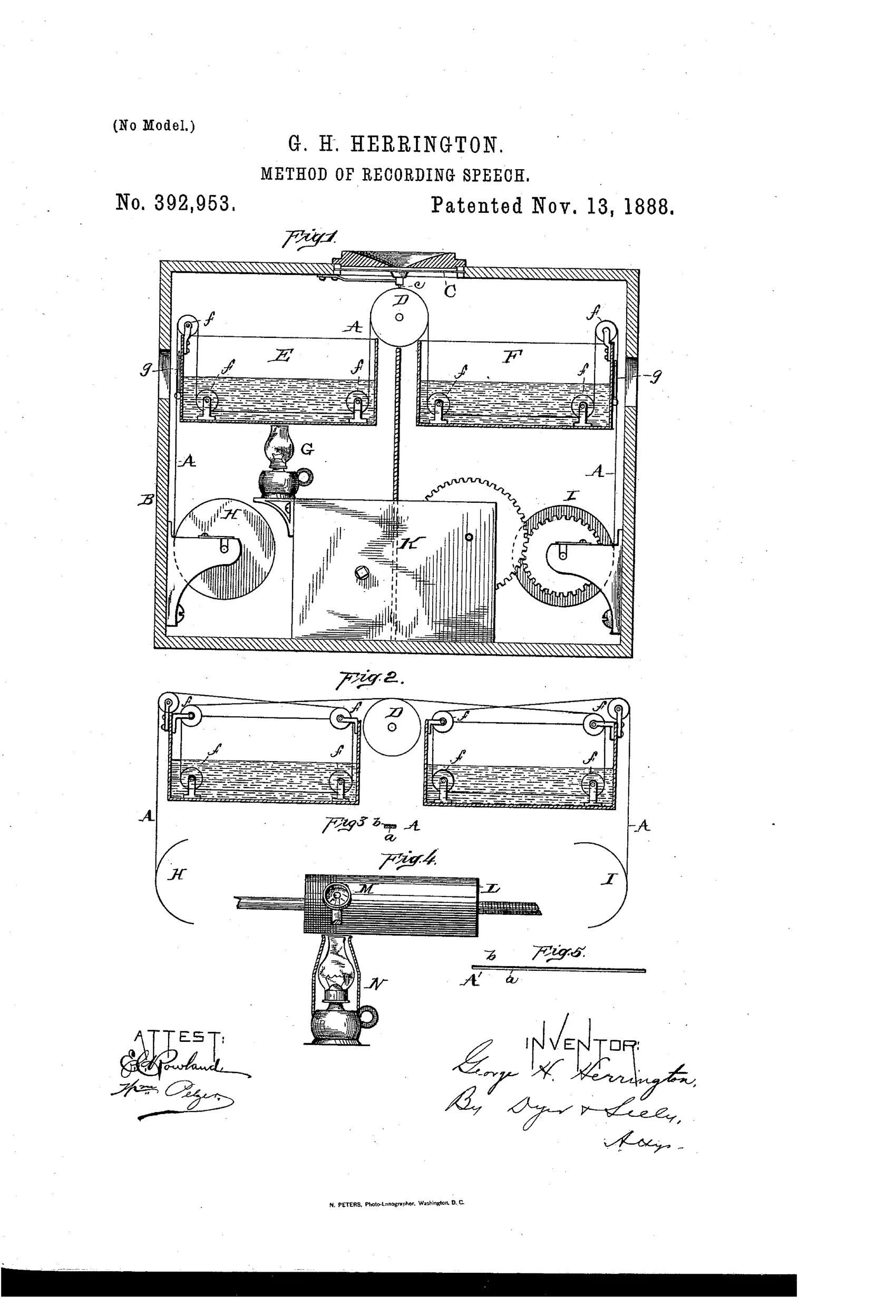
Method of making thermoplastic phonograph recording strips permanent
♫ How it works
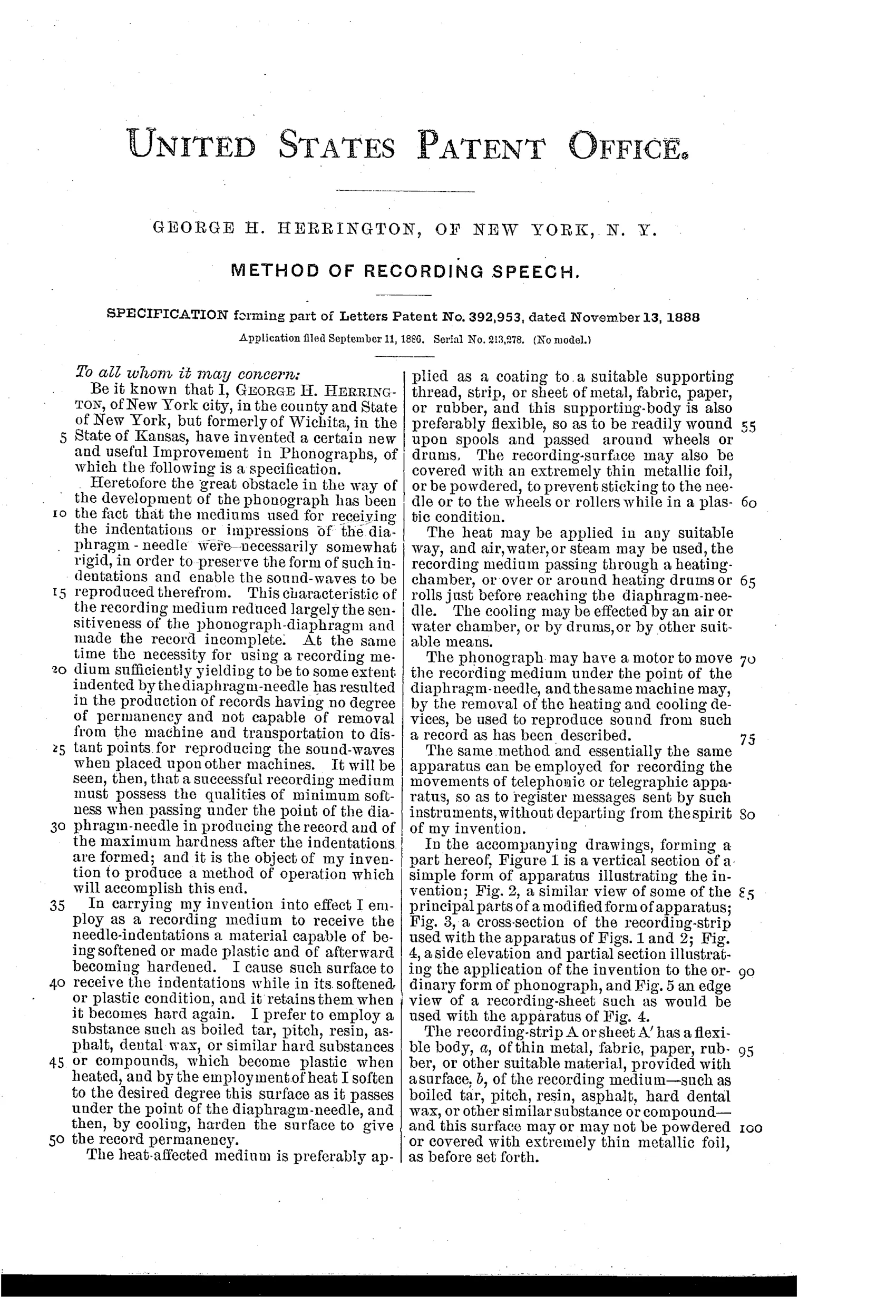
A recording strip or sheet, coated with a heat-softenable substance such as tar, pitch, resin, or wax, is passed through a heating chamber to become plastic just before reaching the diaphragm-needle. The needle indents the softened surface to record sound waves while it is in this yielding state. The strip then passes through a cooling chamber or is cooled by air, which hardens the coating and permanently fixes the impressions. The same apparatus, with heating and cooling elements removed, can run the hardened strip back under the needle to reproduce the recorded sounds.
♫ What was claimed
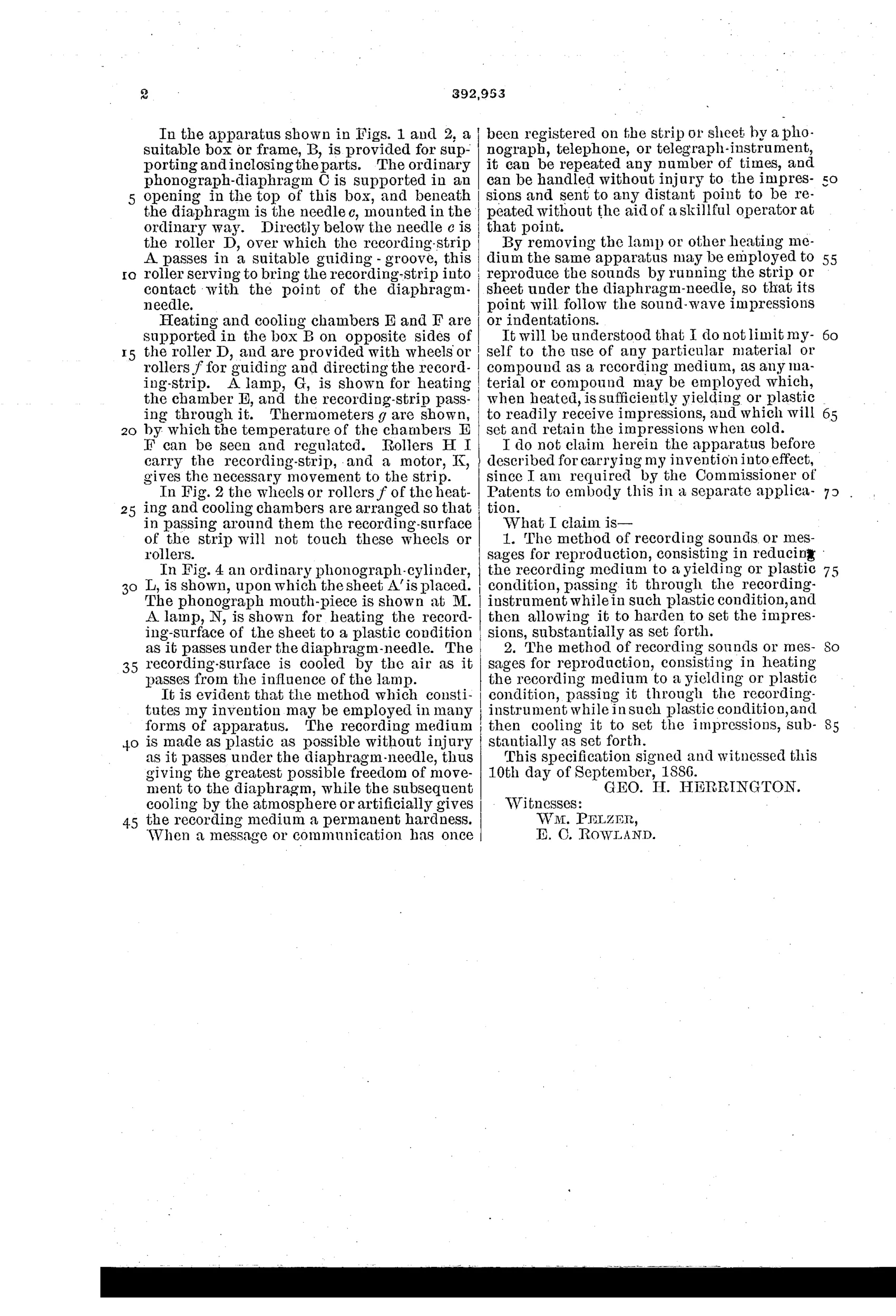
“The method of recording sounds or messages for reproduction, consisting in reducing the recording medium to a yielding or plastic condition, passing it through the recording-instrument while in such plastic condition, and then allowing it to harden to set the impressions, substantially as set forth.”
In plain English: The invention is a method of recording sound by softening a coated strip with heat, imprinting it with a needle while soft, and letting it harden to lock in the recording.
♫ In the inventor’s words
“It will be understood that I do not limit myself to the use of any particular material or compound as a recording medium, as any material or compound may be employed which, when heated, is sufficiently yielding or plastic to readily receive impressions, and which will set and retain the impressions when cold.”— George H. Herrington, from the specification
Paper patent — likely never produced
No example or commercial use is documented, and the open-flame heating chamber makes production implausible; this reads as a laboratory proposal that stayed on paper.
♫ More by George H. Herrington
- PHONOGRAPH. (1891)
♫ Commentary
Herrington's idea is simple to state and hair-raising to look at: run a strip coated with tar, pitch, or wax past a heating chamber so it turns plastic, let the diaphragm-needle indent it while soft, then cool it so the groove sets hard. Filed in September 1886, this lands in the brief, crowded window when everyone was hunting for something better than tinfoil — Bell and Tainter's wax-coated Graphophone was moving through the Patent Office at almost the same moment, and Berliner's gramophone was still a year off.
Look closely at Fig. 1 and you find the detail that dooms it: item G is an oil lamp, sitting inside a closed wooden cabinet, heating a strip coated in pitch and resin. The strip winds between two chambers (E and F) on guide rollers, driven by the gear-and-crank train at H, K, and I. As a laboratory sketch of a real principle it's sound — thermoplastic recording is exactly how later media worked, and softening the medium at the point of recording genuinely lowers the force the diaphragm must deliver. As a machine, it's a fire waiting for its cue.
The strip format is the other tell. Tape-form recording kept resurfacing in this era and kept losing to the cylinder and disc, which needed no heating, no cooling, and no lamp. Herrington saw the right physics and packaged it in the wrong decade.
Commentary by Claude, The Talking Machine Patent Archive’s resident enthusiast