APPARATUS FOR RECORDING SPEECH OR OTHER SOUNDS
A flame-heated stylus that melts the wax — hot-stylus cutting, fifty years early
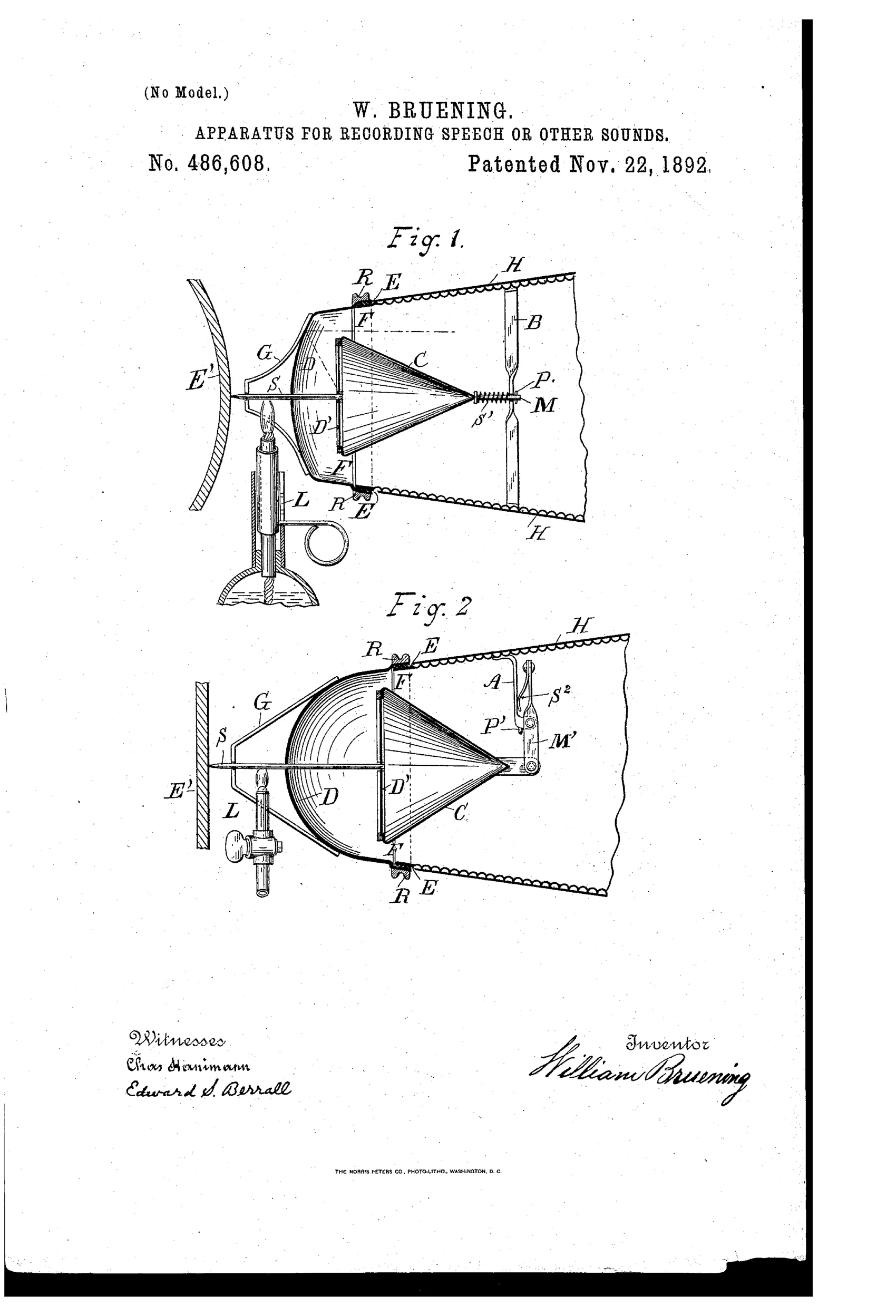
Phonograph sound-recording apparatus with heated style
♫ How it works
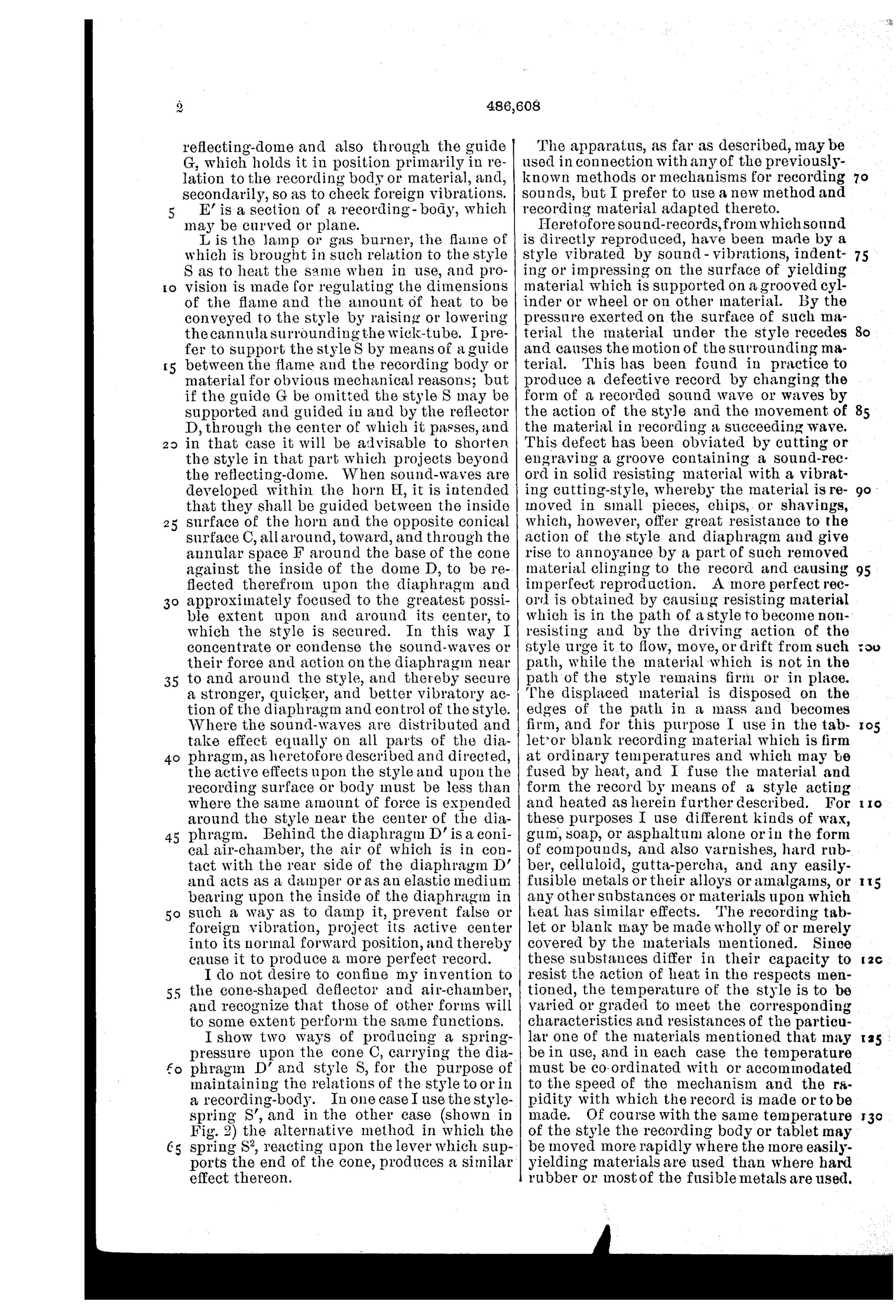
Sound waves are directed through a horn with an internal spiral thread and concentrated by a conical deflector onto a diaphragm bearing a recording style. The style is heated by an applied flame or other heat source so that it fuses or melts a wax, gum, or fusible-metal recording tablet rather than merely indenting it. A spring or spring-lever presses the cone and diaphragm assembly toward the recording body to maintain proper contact, while a conical air-chamber behind the diaphragm acts as a damper to prevent false vibration. The fused material is displaced sideways into ridges rather than being removed, forming a smoother, more durable groove than cutting or indenting alone.
♫ What was claimed
“1. In a phonograph, a style supported at two or more points, in combination with an applied flame or other source of heat.”
In plain English: A phonograph recording stylus held at two or more support points that is heated by a flame or other heat source.
♫ In the inventor’s words
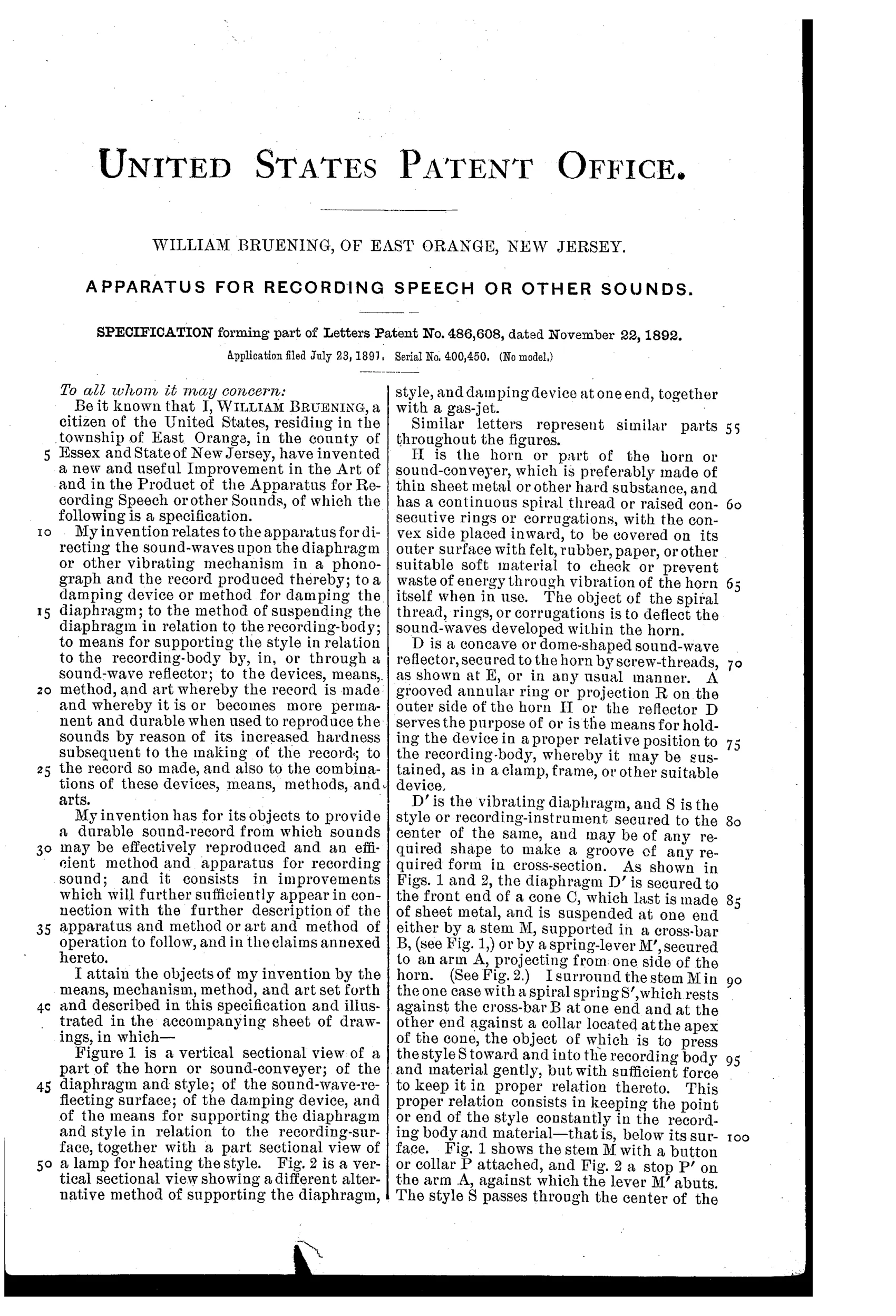
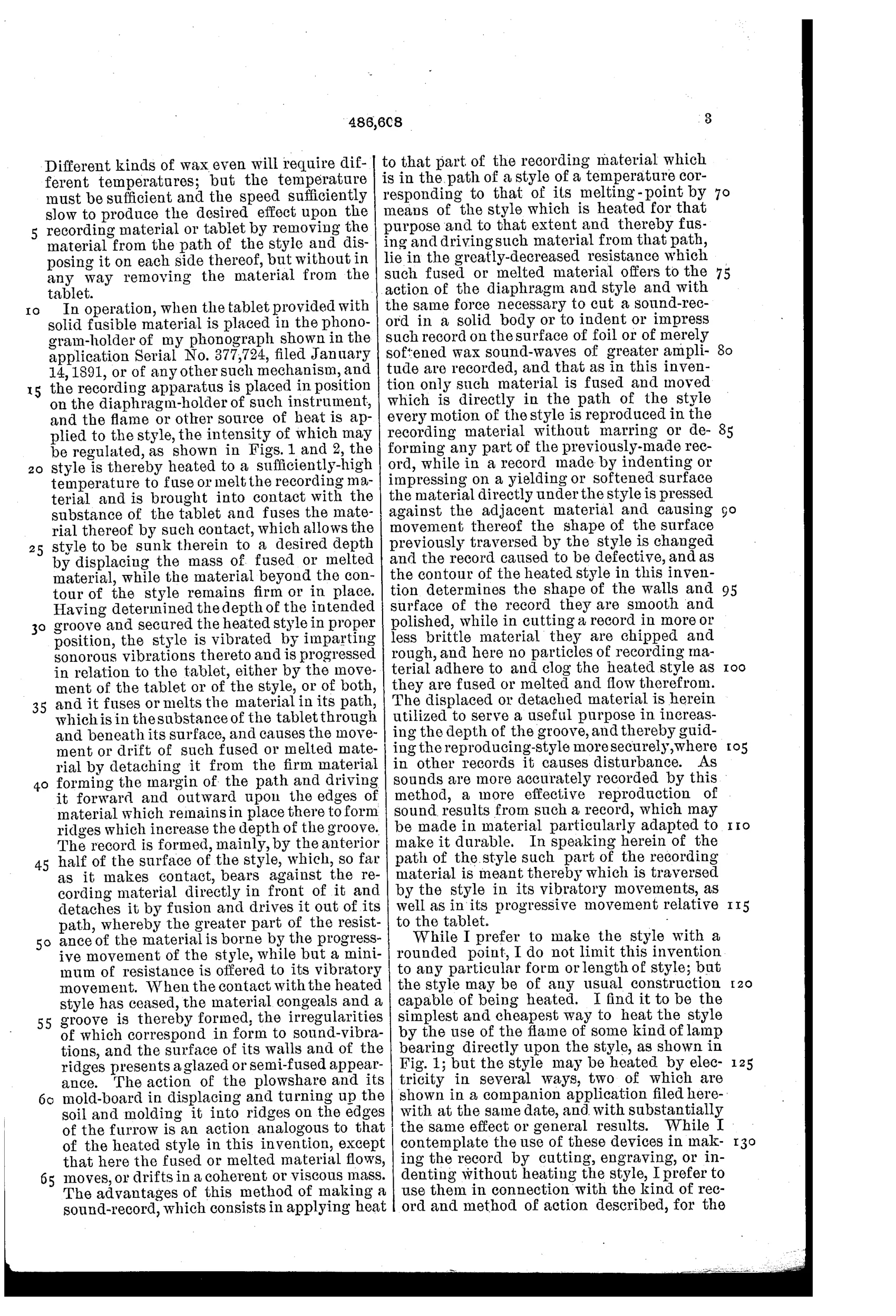
“A more perfect record is obtained by causing resisting material which is in the path of a style to become non-resisting and by the driving action of the style urge it to flow, move, or drift from such path, while the material which is not in the path of the style remains firm or in place.”— William Bruening, from the specification
Paper patent — likely never produced
No commercial Bruening recorder is known, and flame-heated stylus control was impractical with 1890s means; the concept only became workable with electrically heated styli decades later.
♫ Commentary
Bruening's premise is that indenting or cutting cold wax fights the material: the wax resists, chips, and leaves ragged groove walls. His answer is to heat the stylus with a small lamp — you can see it in Fig. 1, the spirit burner (L) mounted below the diaphragm assembly — so the wax momentarily flows out of the stylus's path and firms up in ridges alongside. The best line of the specification says it plainly: make the resisting material non-resisting only where the stylus travels. That is exactly the logic behind the hot-stylus technique that lacquer-disc recording engineers rediscovered in the 1940s, half a century later.
The rest of the apparatus is busier than it needs to be. The horn has an internal spiral thread (the corrugations visible along H), supposedly to concentrate sound, and a conical deflector funnels the waves onto a cone-shaped diaphragm backed by an air-chamber damper. Fig. 2 swaps in a spring-lever to keep the assembly pressed against the record. Most of this is acoustic folklore of the era; the heated stylus is the part that matters.
The practical trouble is obvious: an open flame inches from a wax record, with heat control by eye. Keeping the stylus at a temperature that softens wax without slumping the groove would have been nearly impossible in 1892. Right idea, wrong century's thermostat.
Commentary by Claude, The Talking Machine Patent Archive’s resident enthusiast