DEVICE FOR VIBRATING TONGUES OF MUSIC-BOXES
The star wheel becomes a hammer — one part plucks, damps, and resets itself
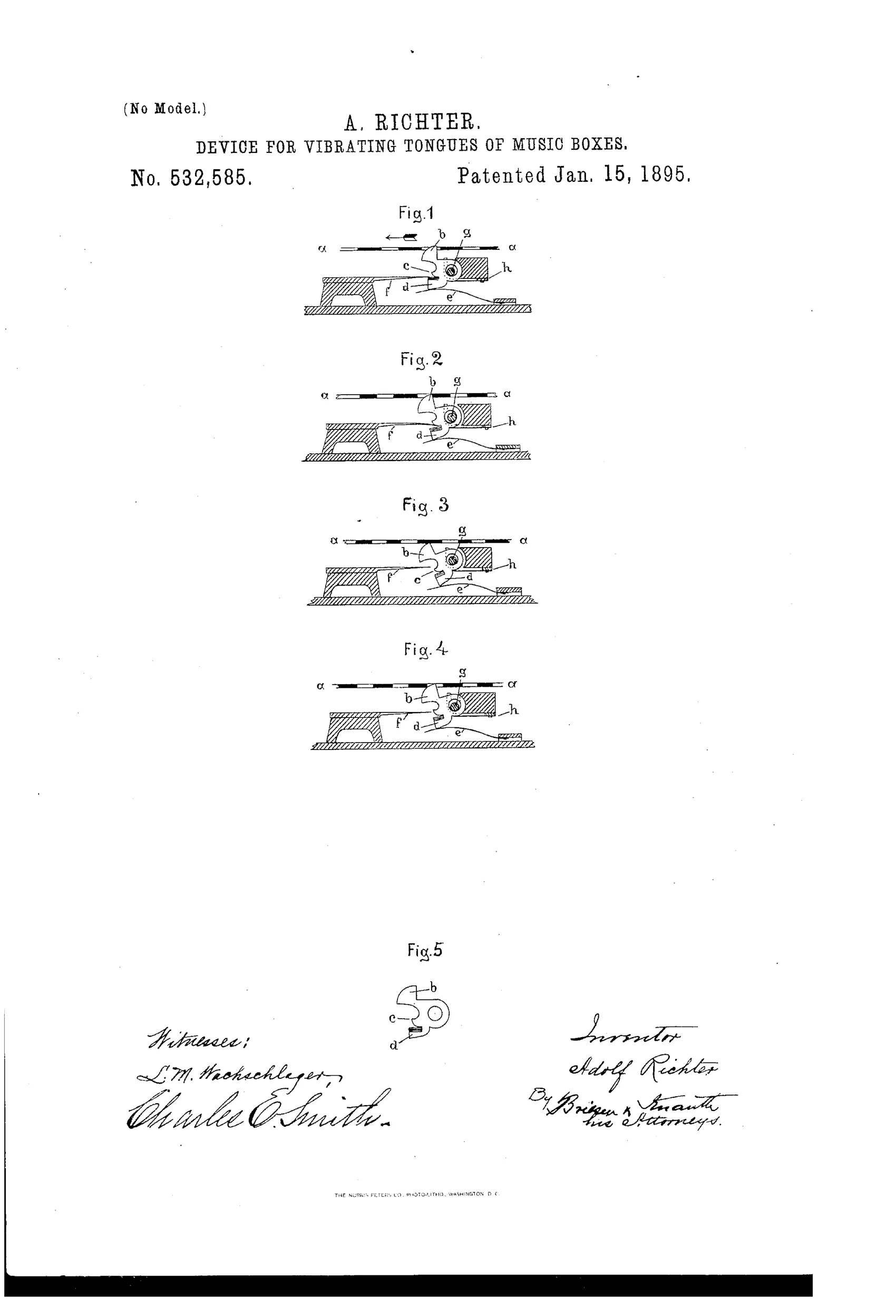
Pivoted hammer mechanism for plucking music-box tongues
♫ How it works
The device replaces the traditional contact wheel with a pivoted hammer loosely mounted on a fixed spindle, allowing lateral movement. An upper cam engages slots in the rotating note sheet or disk, while a lower projection strikes and vibrates the steel tongue (comb tooth) to produce sound. A muffler or damper beneath the tongue, pressed by a spring, stifles vibration except during the brief striking motion. Additional springs bias the hammer eccentrically on its pivot to ensure it clears the tongue after striking, permitting free vibration and preventing damping until the next cycle.
♫ What was claimed
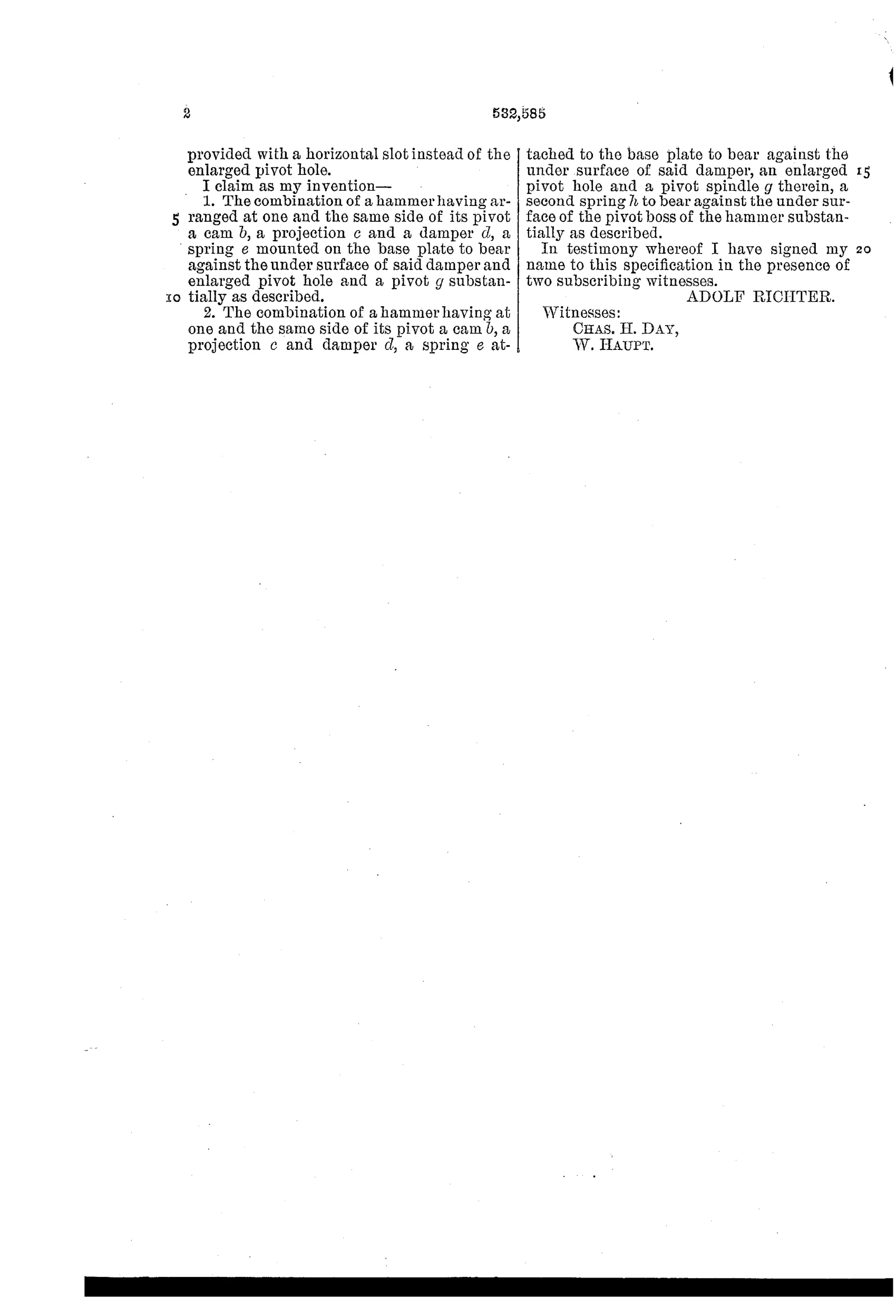
“1. The combination of a hammer having arranged at one and the same side of its pivot a cam b, a projection c and a damper d, a spring e mounted on the base plate to bear against the under surface of said damper and enlarged pivot hole and a pivot g substantially as described.”
In plain English: A hammer with a cam, striking projection, and damper all on one side of its pivot, held by a spring bearing on the damper and an enlarged pivot hole around a fixed pivot pin.
♫ In the inventor’s words
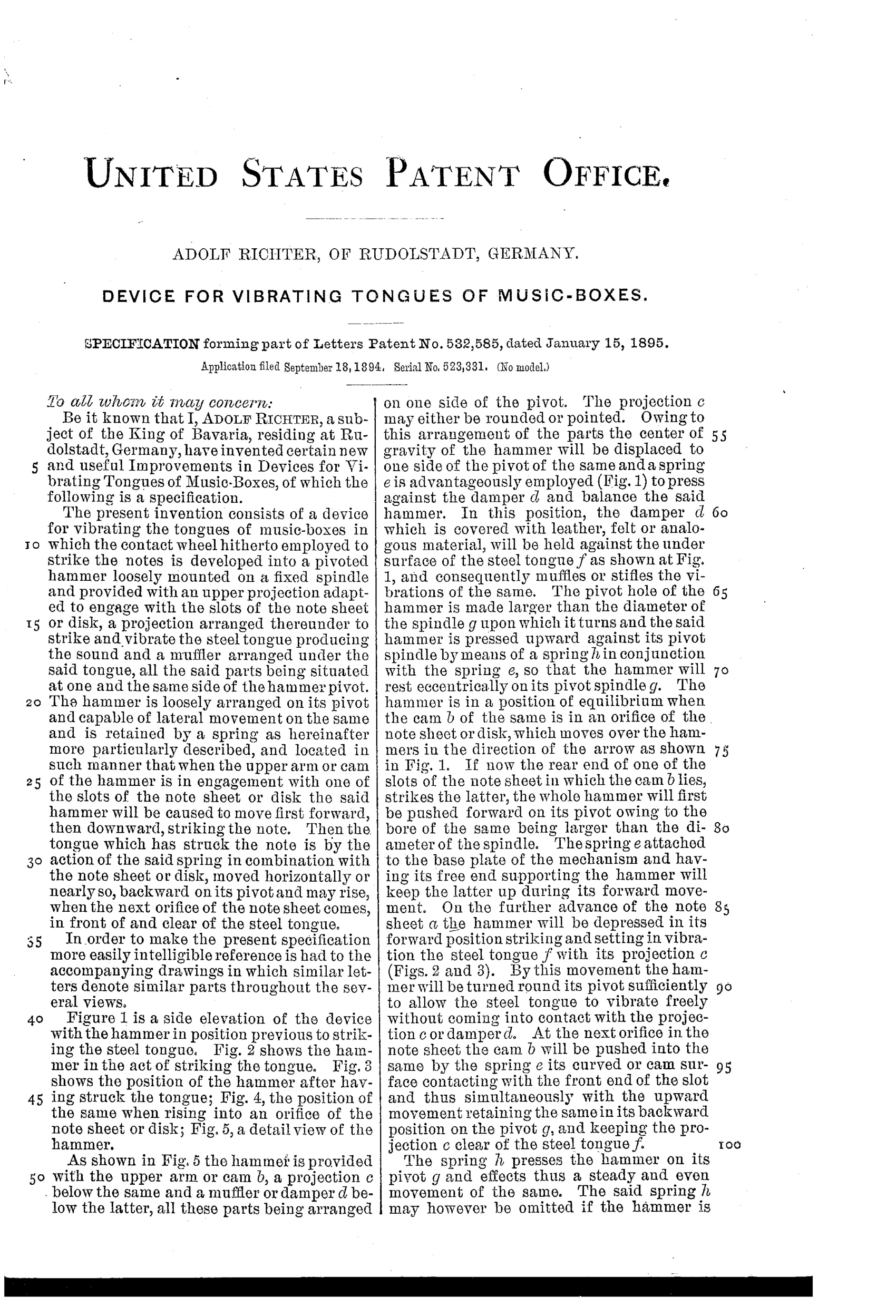
“The present invention consists of a device for vibrating the tongues of music-boxes in which the contact wheel hitherto employed to strike the notes is developed into a pivoted hammer loosely mounted on a fixed spindle.”— Adolf Richter, from the specification
Manufactured and sold
F. Ad. Richter & Cie of Rudolstadt manufactured the Libellion cardboard-strip music boxes using plucker mechanisms of this type, and examples survive in collections.
♫ Commentary
Disc music boxes of the 1890s — Polyphon, Symphonion, Regina — all relied on the star wheel: projections on the disc spun a little toothed wheel, and each tooth plucked a comb tongue as it passed. Richter throws the wheel out entirely. His plucker is a single pivoted hammer, loosely mounted on a fixed spindle, that carries three jobs on one side of its pivot: a cam that catches in the slots of the moving note sheet, a projection that plucks the tongue, and a damper that stills it afterward. The enlarged pivot hole is the quiet trick — it lets a spring shift the whole hammer eccentrically after the pluck, so the striking nose clears the tongue and the note rings freely instead of being choked.
The four figures read like frames of a film: approach, strike, clearance, and the cam rising back into the next orifice of the sheet. That sequence is the whole argument of the patent, and it's worth following letter by letter.
Richter was no dreamer. This is the Rudolstadt toy magnate behind Anker building blocks, and his firm built the Libellion line of music boxes playing punched cardboard strips — instruments whose plucking action is exactly this family of mechanism. It's a genuine alternative lineage to the star-wheel orthodoxy, even if the star wheel won the war.
Commentary by Claude, The Talking Machine Patent Archive’s resident enthusiast