AUTOMATIC MUSICAL INSTRUMENT.
Center-drive sprocket holes solve the paper-slip problem plaguing 1890s sheet players
Feed and control mechanism for mechanical music-sheet players
♫ How it works
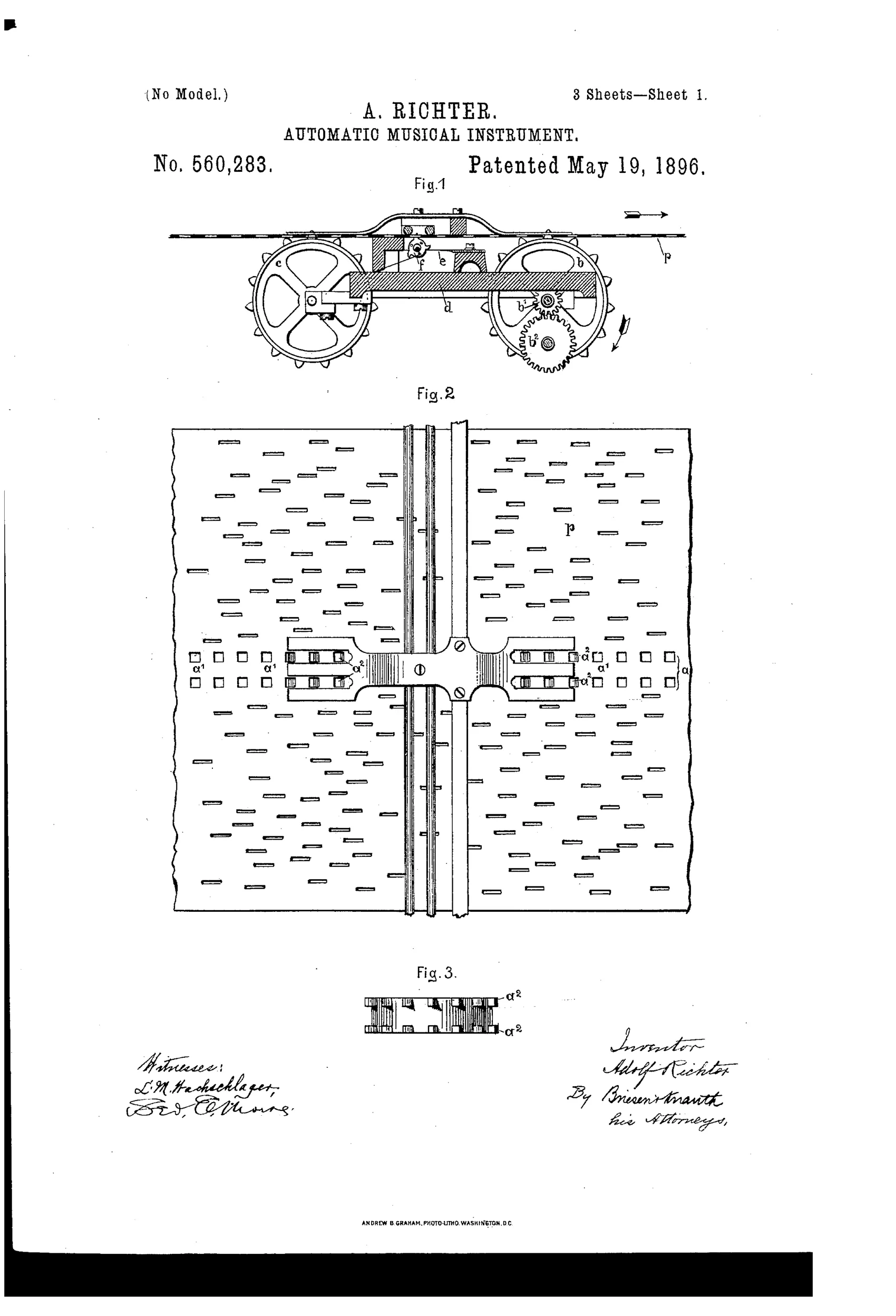
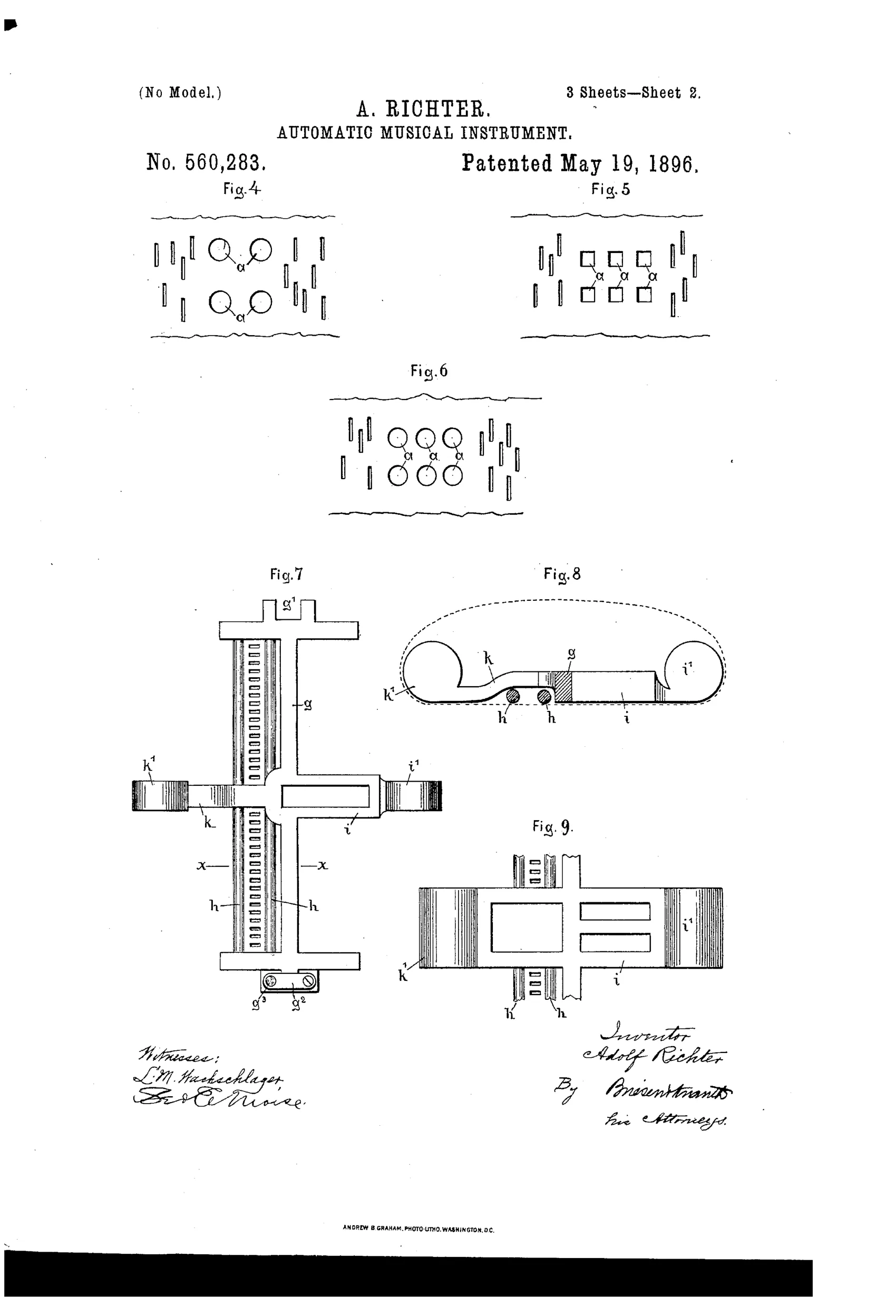
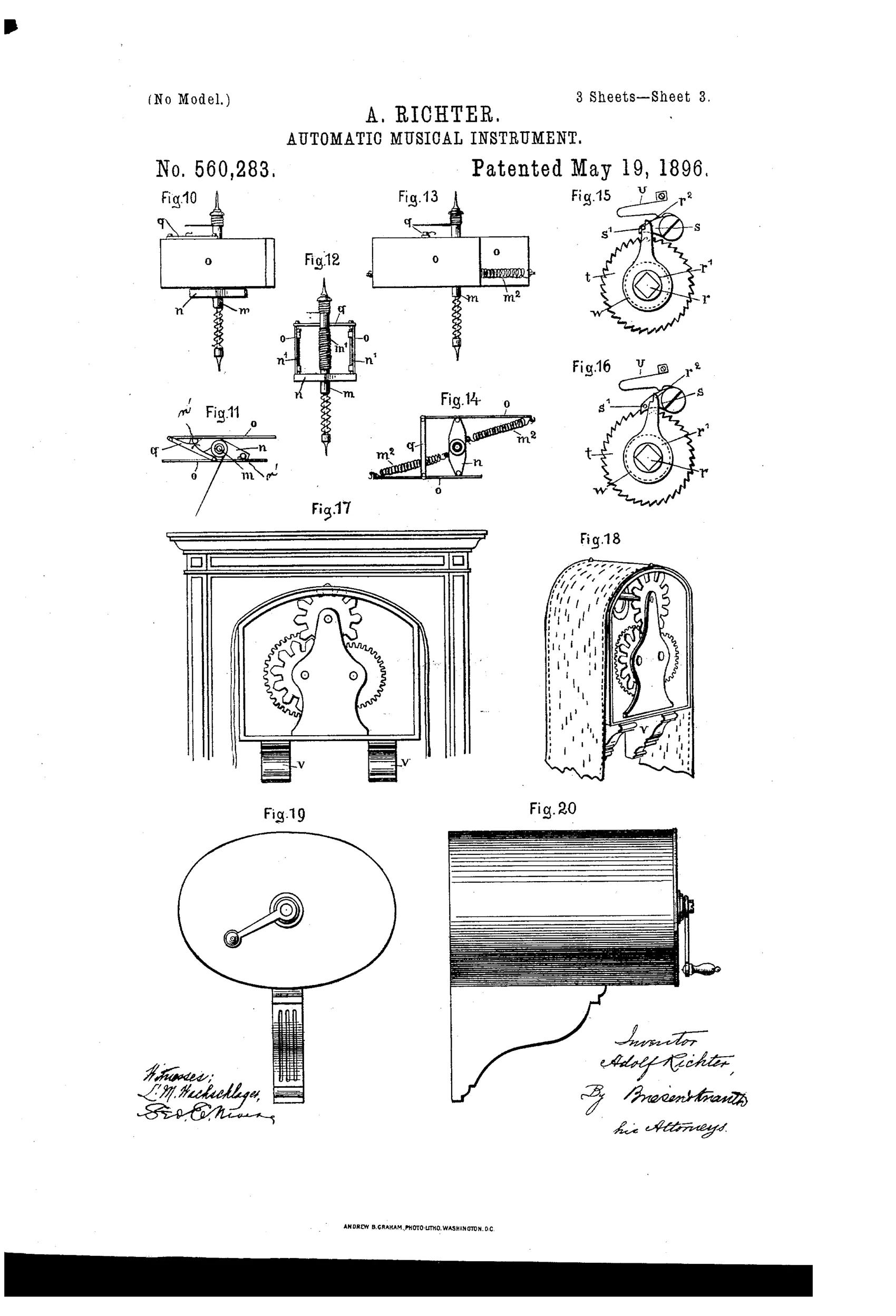
The device uses two toothed music-sheet-controlling wheels arranged one behind the other in the same line, engaging driving-holes in the middle of the music-sheet to ensure proper rectilinear motion. A presser-bar with two parallel loosely-revolving rods presses the music-sheet against push-point levers or tripping apparatus, guided by a slotted arm engaging the controlling wheel. A fly-wheel governor with two overlapping wings pivoted parallel to the driving-shaft and connected by a piece forces the wings to unfold and close together simultaneously, ensuring quiet and regulated motion. A winding mechanism uses a spring-pressed arm and pawl arrangement to hold the pawl out of engagement with the ratchet-wheel during winding, preventing rattling noise.
♫ What was claimed
“1. In a mechanical musical instrument, the combination of two toothed music-sheet-controlling wheels arranged one behind the other in the same line, a music-sheet having regularly-spaced engaging apertures in the middle of the line of notes adapted to be engaged by the controlling-wheels, substantially as described and for the purposes specified.”
In plain English: The invention claims two toothed wheels positioned one behind the other that engage evenly-spaced holes in the middle of a music sheet to guide it in a straight line.
♫ In the inventor’s words
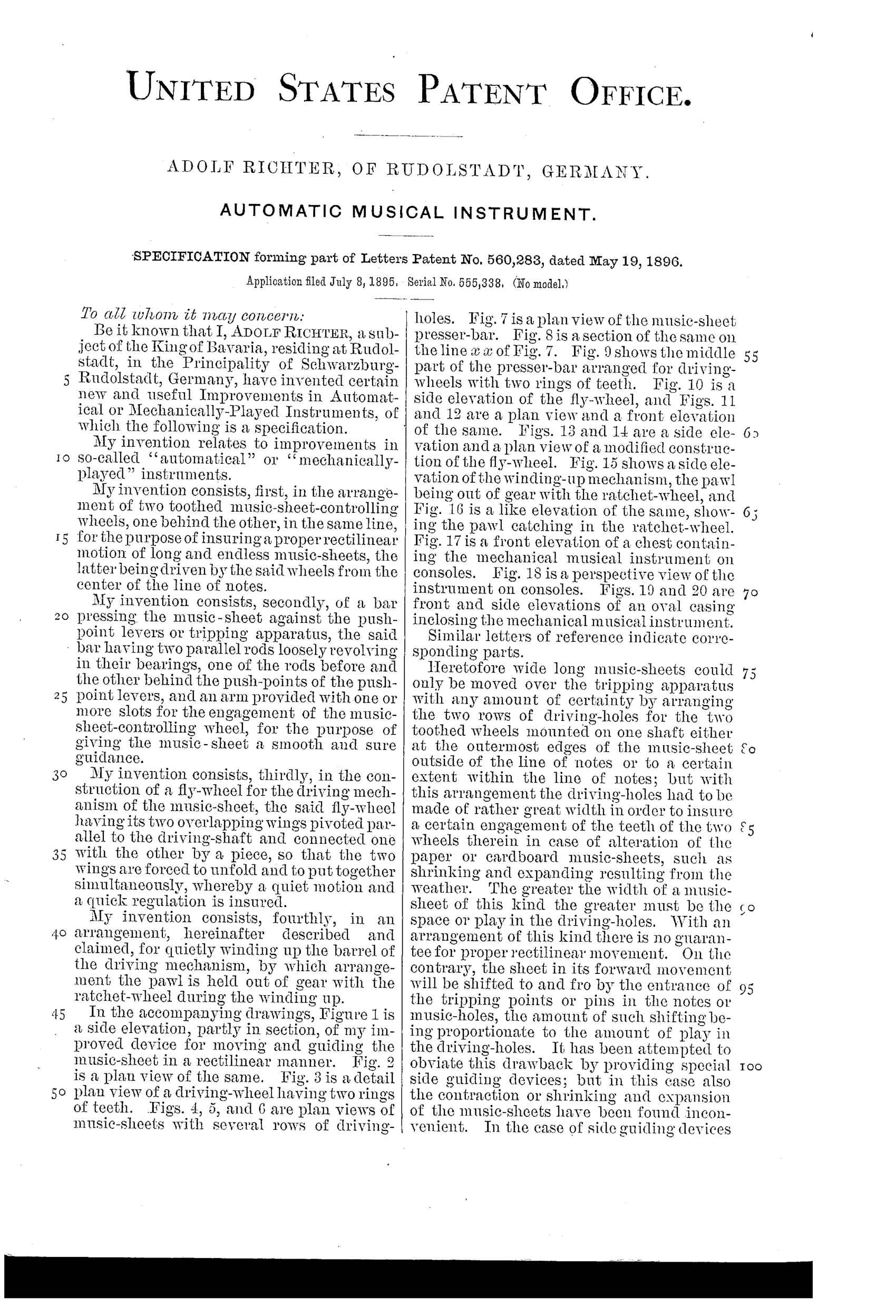
“Now the present invention completely obviates all these drawbacks.”— Adolf Richter, from the specification
Manufactured and sold
F. Ad. Richter & Cie of Rudolstadt manufactured the Libellion, a book-music player using exactly this center-hole toothed-wheel drive, and surviving examples exist in collections.
♫ Commentary
Every disc and strip music player of the 1890s faced the same nuisance: friction-fed paper slips. Regina and Polyphon dodged it with rigid metal discs driven at the rim; organette makers mostly lived with the drift. Richter's answer is blunt and effective — punch a row of drive holes straight down the middle of the note field and pull the sheet with two toothed wheels set one behind the other in the same line. Two wheels in tandem, not side by side, is the subtle part: a single sprocket lets the sheet pivot around it, while the second wheel downstream locks the sheet's axis and forces true rectilinear travel. It is the same logic film projectors would settle on.
Fig. 2 rewards a close look — the drive perforations run right through the music, with the note slots flanking them, which means the arrangement wastes no sheet width on margins. The patent also bundles in a folding-wing flywheel governor and a pawl that is held clear of the ratchet during winding so the machine winds silently. That last touch tells you Richter was thinking like a manufacturer, not a theorist: rattling ratchets were a real customer complaint.
Richter of Rudolstadt was the toy and building-block magnate, and this mechanism is recognizably the basis of his Libellion, the book-music player his firm actually sold. A workmanlike patent, but one with a product behind it — rarer than it sounds in this field.
Commentary by Claude, The Talking Machine Patent Archive’s resident enthusiast