EXPRESSION-INDICATOR FOR SELF-PLAYING INSTRUMENTS
An electric pointer coaches the pedalist, twenty years before printed expression lines
Pointer device signaling pedal timing on player pianos
♫ How it works
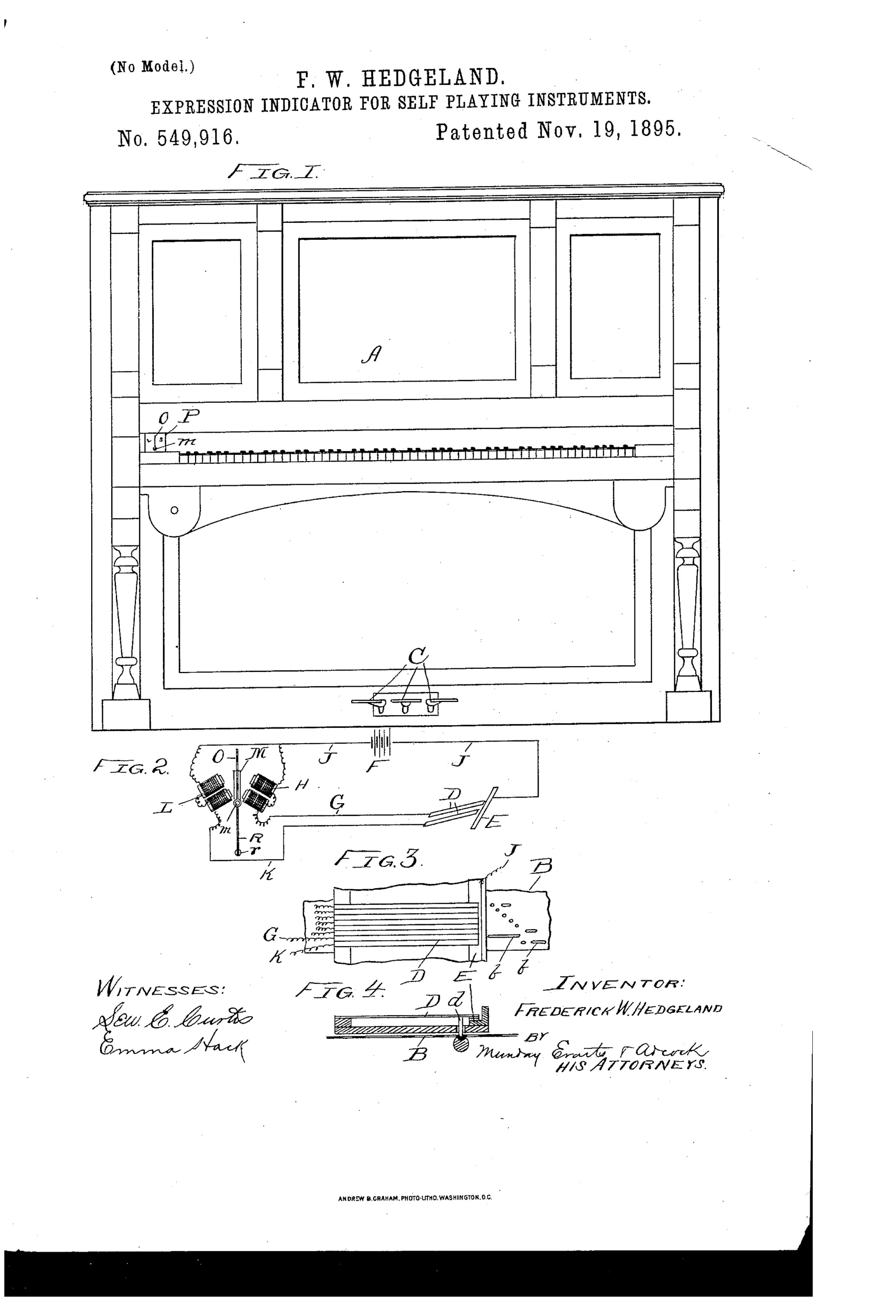
A perforated paper strip driving the self-playing mechanism also carries extra rows of perforations that operate independent circuit-closers. When a spring-mounted stud drops into a perforation, it completes a circuit energizing electromagnets that attract an armature mounted on a rocking axis. This axis carries a pointer visible near the keyboard that swings toward a dial marked with letters such as L (loud) and S (soft) to signal the pedalist. A return spring restores the pointer to its neutral center position the instant the armature is released.
♫ What was claimed
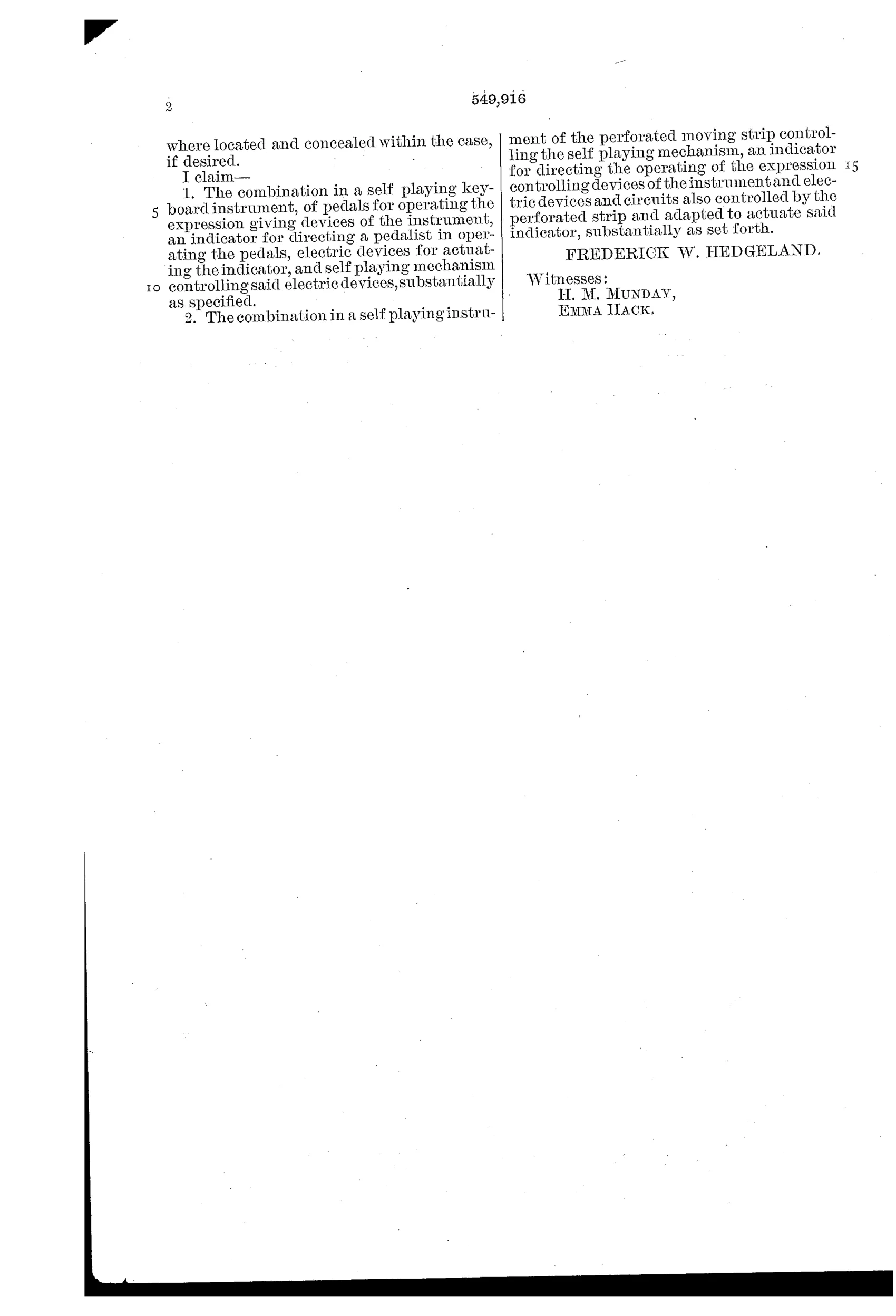
“The combination in a self playing keyboard instrument, of pedals for operating the expression giving devices of the instrument, an indicator for directing a pedalist in operating the pedals, electric devices for actuating the indicator, and self playing mechanism controlling said electric devices, substantially as specified.”
In plain English: The invention combines pedals, a pointer-style indicator that tells the operator when to use them, and electric parts controlled by the player mechanism's perforated strip that move the indicator.
♫ In the inventor’s words
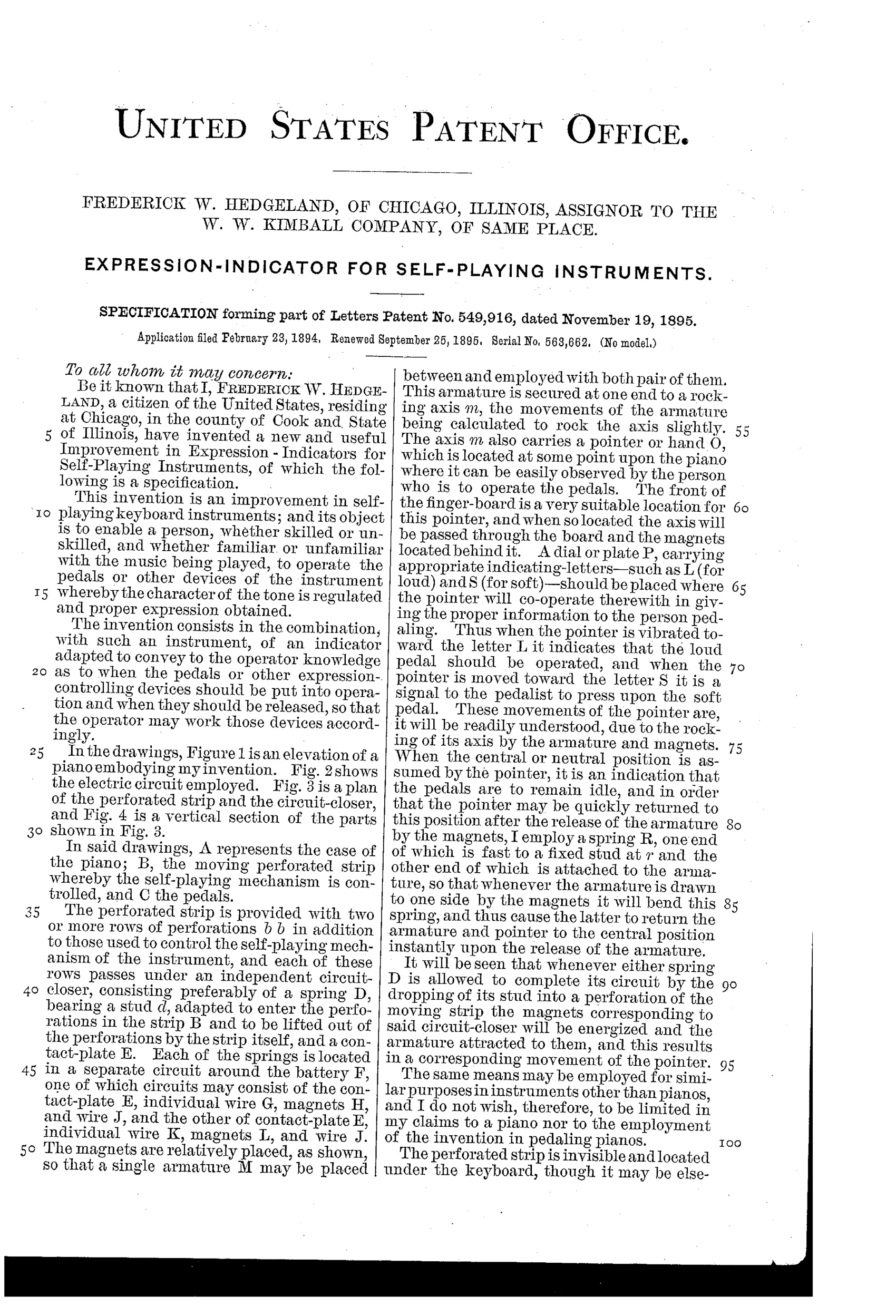
“This invention is an improvement in self-playing keyboard instruments; and its object is to enable a person, whether skilled or unskilled, and whether familiar or unfamiliar with the music being played, to operate the pedals or other devices of the instrument whereby the character of the tone is regulated and proper expression obtained.”— Frederick W. Hedgeland, from the specification
Fate unknown
Kimball built Hedgeland's self-playing instruments, but no surviving machine documented with this electric indicator is known to me; a marked Kimball specimen with the dial would settle it.
♫ Commentary
By 1894 the player-piano problem had split in two: the pneumatics could strike the right notes, but expression — loud, soft, swell — still depended on a human working the pedals. Hedgeland's answer is charmingly literal. Extra rows of perforations in the music roll close electric contacts; electromagnets swing a pointer on a little dial near the treble end of the keyboard, flicking toward L or S to tell the operator what to do next. The machine plays the notes and conducts the human at the same time.
The drawing rewards a close look. Fig. 3 shows the roll running over a bank of spring studs — a contact-brush tracker bar, essentially, sensing the extra perforations electrically rather than pneumatically. Fig. 2 shows the paired magnets and rocking armature that throw the pointer either direction, with a centering spring snapping it back to neutral the instant the circuit opens. That return spring matters: without it, a momentary cue would become a standing instruction.
Hedgeland is worth knowing — he was Kimball's self-playing-instrument man in Chicago, and this patent was assigned to the firm, so it was no garret dream. But history took a cheaper path: within a few years roll makers simply printed a wavy expression line on the paper itself, no magnets required. This is an honest solution rendered obsolete by ink.
Commentary by Claude, The Talking Machine Patent Archive’s resident enthusiast