AUTOMATIC PIANO-PLAYER
Wilcox & White's fix for the push-up player's oldest headache: keyboard height
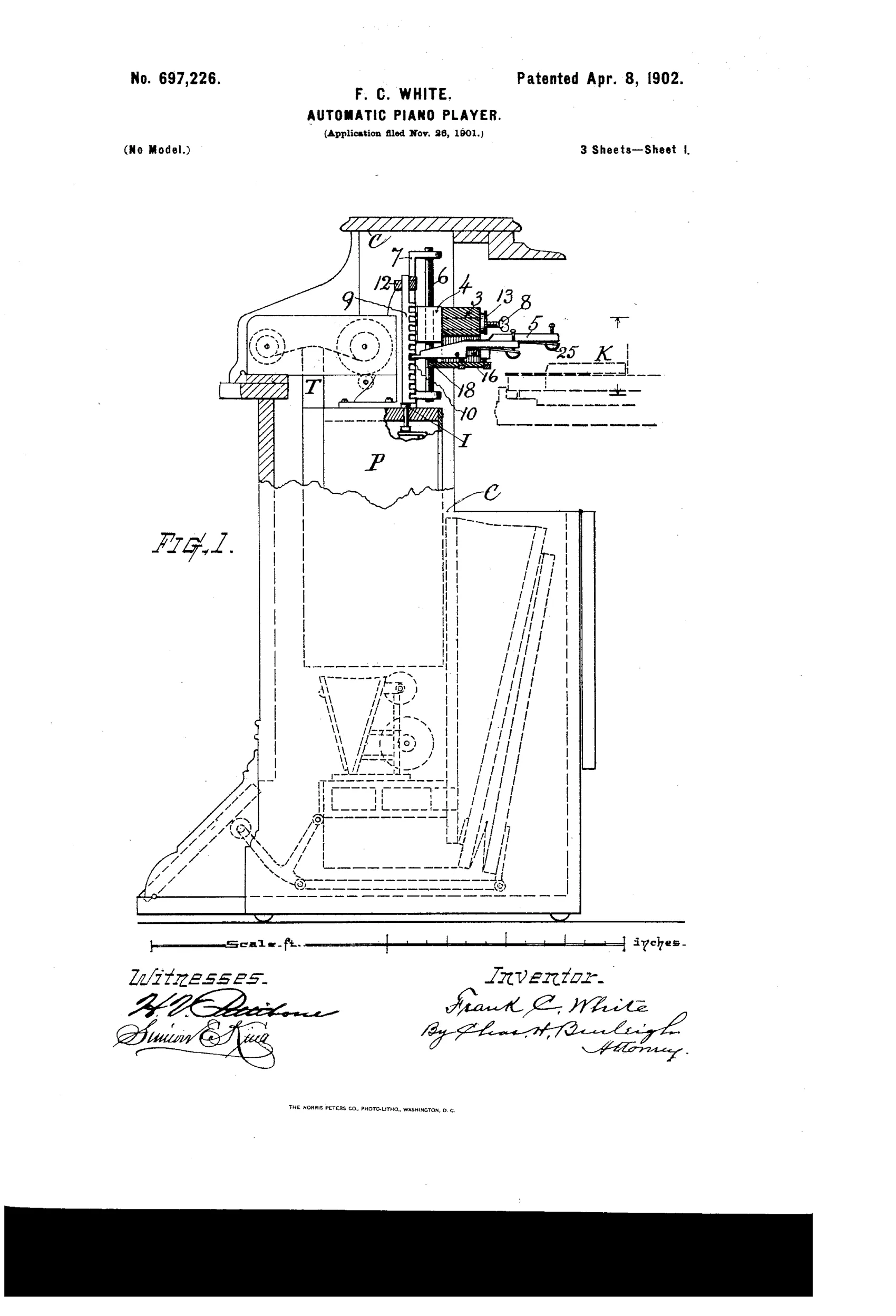
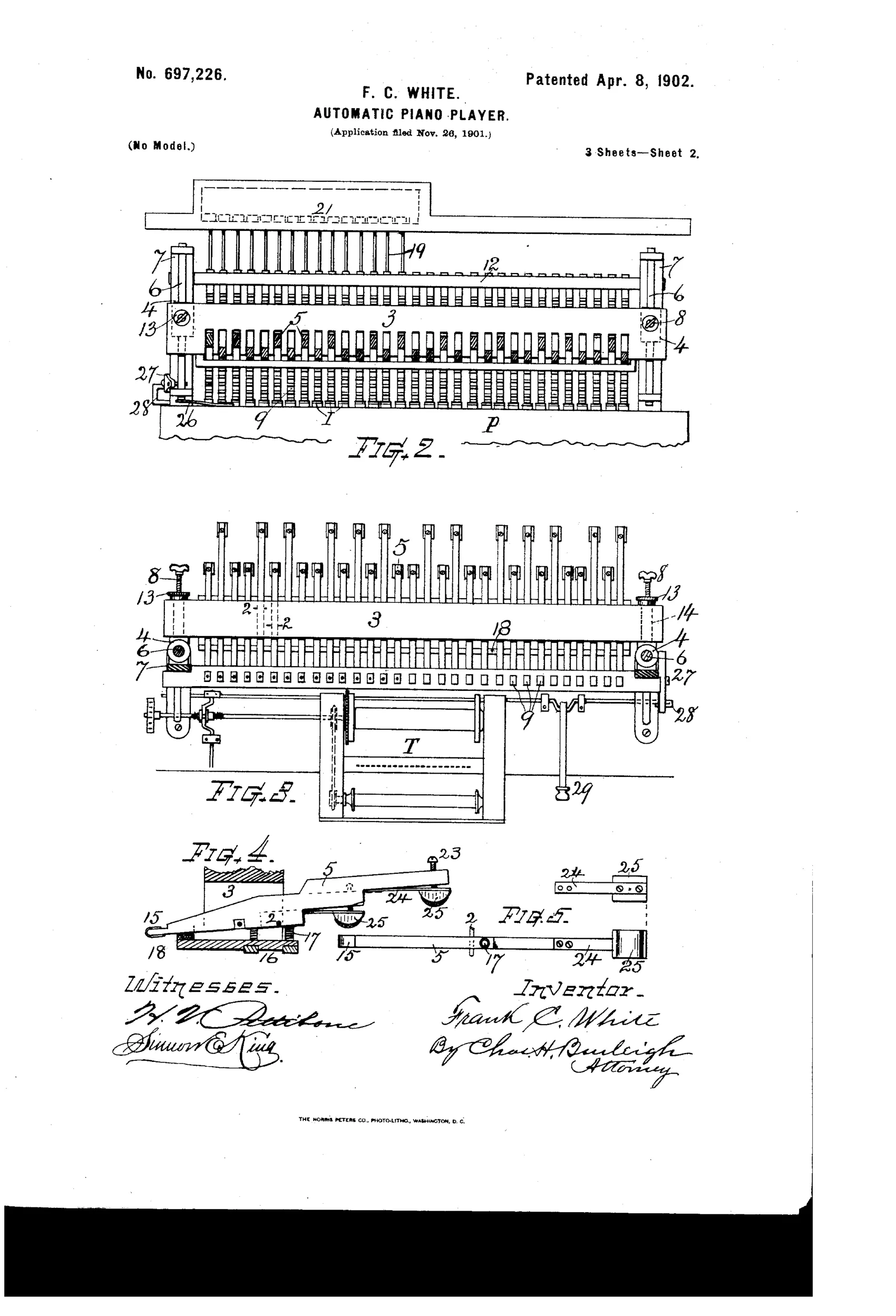
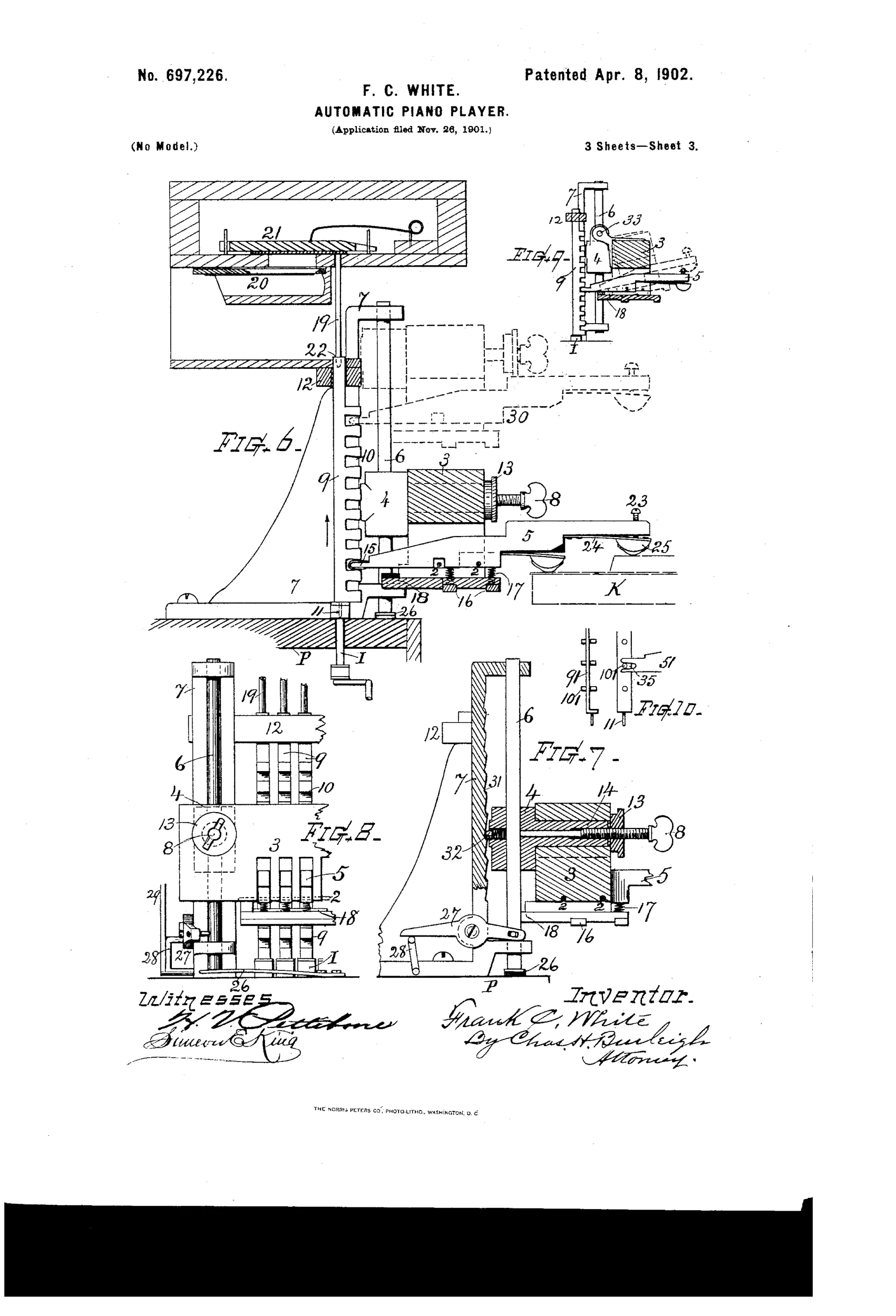
Height-adjustable finger mechanism for automatic piano players
♫ How it works
A fulcrum-bar carrying a series of pivoted playing-fingers is mounted on hangers or bearing-pieces that slide up and down on guide-rods, so the entire finger-bed can be raised or lowered to match different keyboard heights without moving the pneumatic action or case. The lifter-pitmen, driven by the puppets and tracker-controlled pneumatics, each have a series of notches or detents so the fingers can be reengaged at different heights after adjustment. An evener-bar with recoil springs holds the disengaged finger ends in alignment for re-engagement, while each finger's striking end carries a spring-attached, felt-faced presser-head adjustable by a screw to meet the key surface accurately. A spring and depressing lever also allow the guide-rods to be raised or lowered to throw the fingers into or out of contact with the keys as a stop mechanism.
♫ What was claimed
“1. In an automatic piano-player, the combination with the body-casing, and pneumatically-controlled action devices or puppets; of finger-actuating members respectively provided with means for engagement of the playing-finger at various positions thereon, a series of detachably-engaged playing-fingers actuated thereby, and means for the support of said fingers adjustable for elevation and depression within the casing, for changing the operating relation and height of the series of fingers with respect to the positions of engagement with the finger-actuating members, and to the pneumatically-controlled action devices.”
In plain English: The player-piano combines pneumatically driven puppets with playing-fingers that can be detached and reattached at different points, and the whole finger assembly can be raised or lowered inside the case to match the height of any piano keyboard.
♫ In the inventor’s words
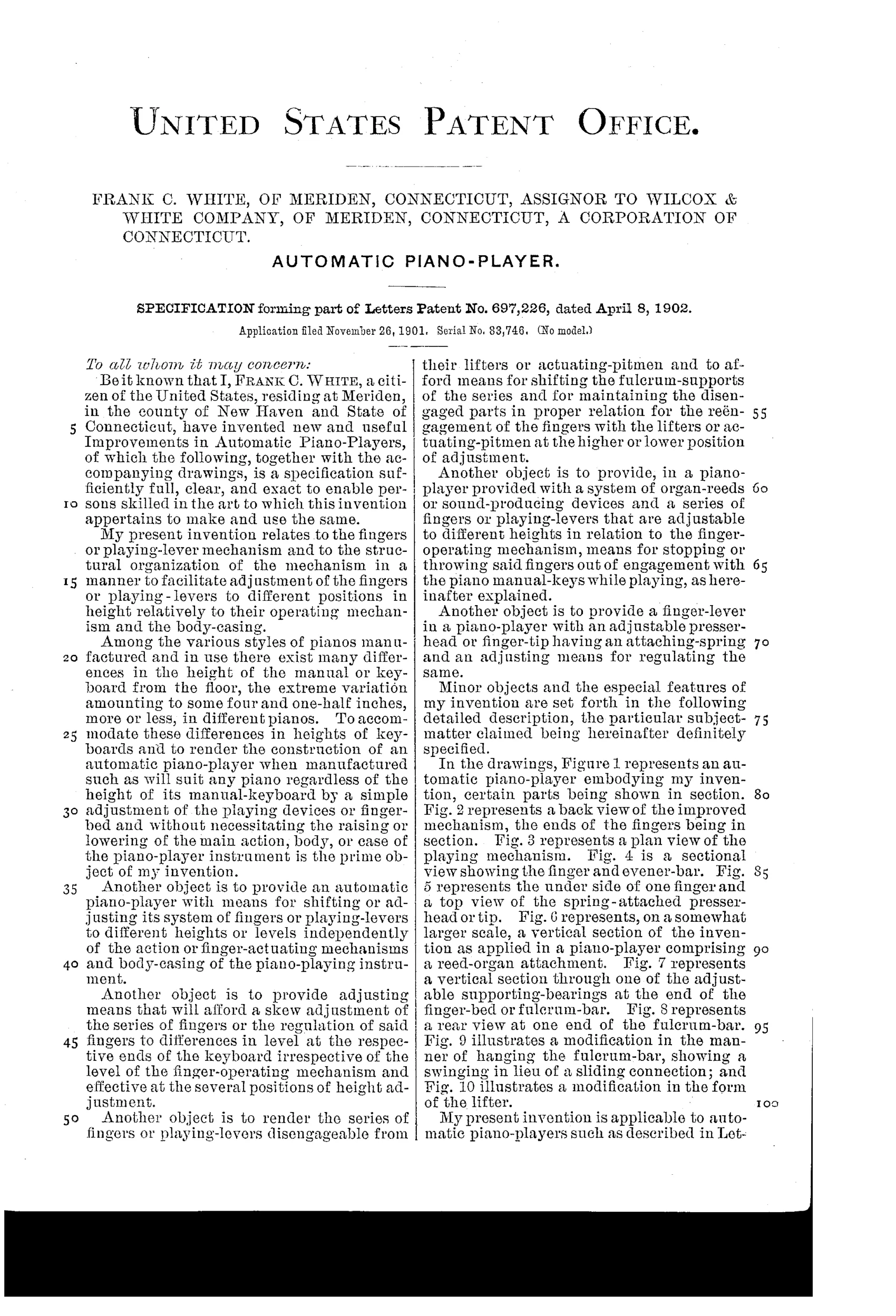
“To accommodate these differences in heights of keyboards and to render the construction of an automatic piano-player when manufactured such as will suit any piano regardless of the height of its manual-keyboard by a simple adjustment of the playing devices or finger-bed and without necessitating the raising or lowering of the main action, body, or case of the piano-player instrument is the prime object of my invention.”— Frank C. White, from the specification
Manufactured and sold
Wilcox & White manufactured the Angelus push-up players in volume, and keyboard-height adjustment of this kind was a standard selling feature of the line.
♫ Commentary
The push-up piano player — the cabinet you wheeled against a piano so felt-tipped mechanical fingers could pound the keys — had one stubborn problem baked into its very premise: no two pianos put their keyboards at quite the same height. A finger-bed set for one instrument would jam down on the keys of another or miss them entirely. Frank C. White's answer here is to hang the whole fulcrum-bar carrying the fingers on hangers that slide along guide-rods, so the finger-bed rises and falls as a unit while the pneumatic action stays put.
The clever part is how he keeps the drive connected through that adjustment. Each lifter-pitman carries a series of notches, so a finger can be detached and re-engaged a step higher or lower, and an evener-bar with recoil springs holds the freed finger ends in a neat row for reattachment — a small courtesy to whoever had to make the adjustment in a customer's parlor. Each finger tip also gets its own screw-adjustable, felt-faced presser-head for fine trim against the key surface.
This is refinement, not invention: the crowd was chasing exactly this kind of installability in 1901, because a push-up player sold only if it fit the piano the family already owned. White, of Wilcox & White in Meriden, was writing patents for a going concern — the Angelus line — and this reads like production engineering committed to paper. Within a decade the whole species died, absorbed into the piano case itself, which made the adjustment problem vanish along with the cabinet.
Commentary by Claude, The Talking Machine Patent Archive’s resident enthusiast