SELF-PLAYING MUSICAL INSTRUMENT.
Electromagnets, not bellows: a 1902 bet against the pneumatic player piano
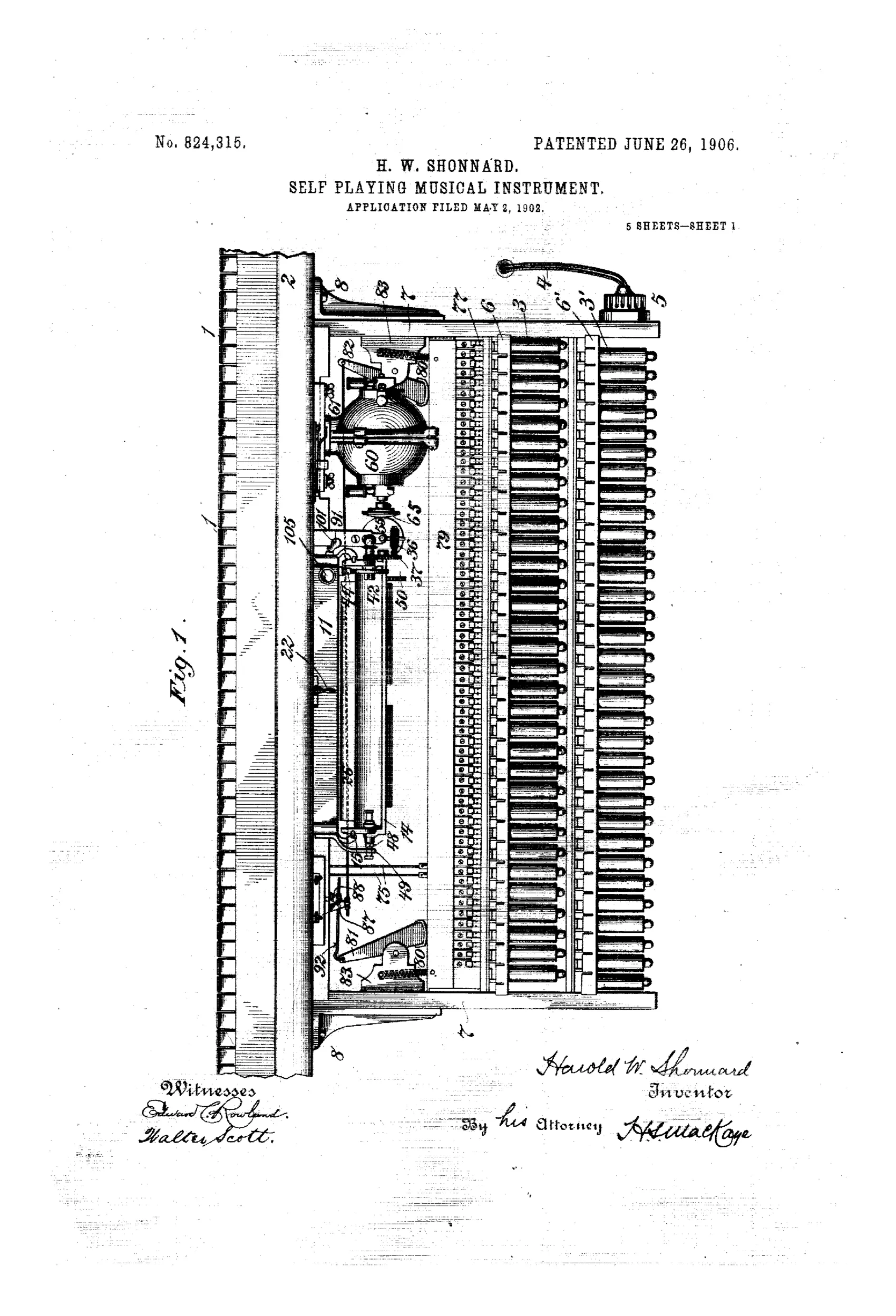
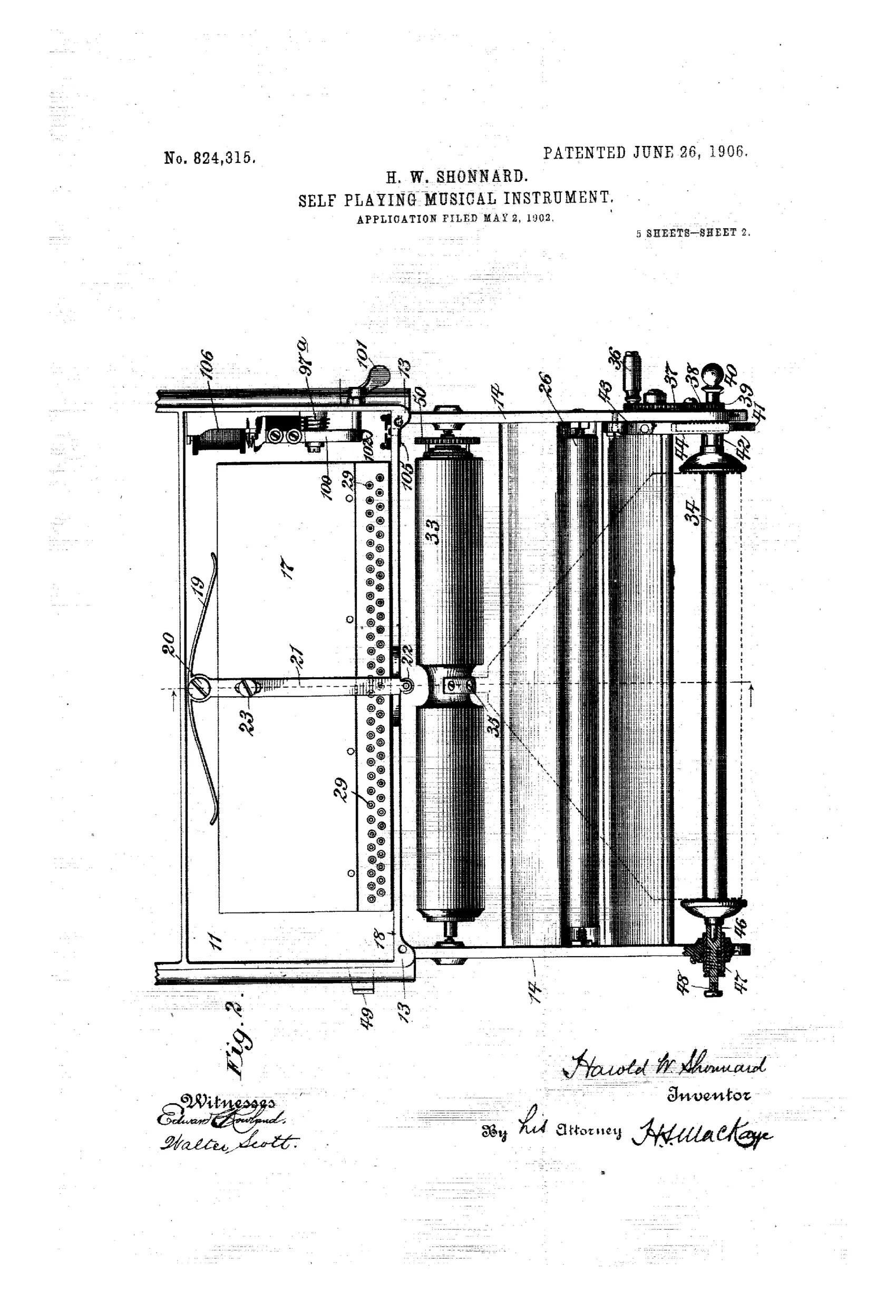
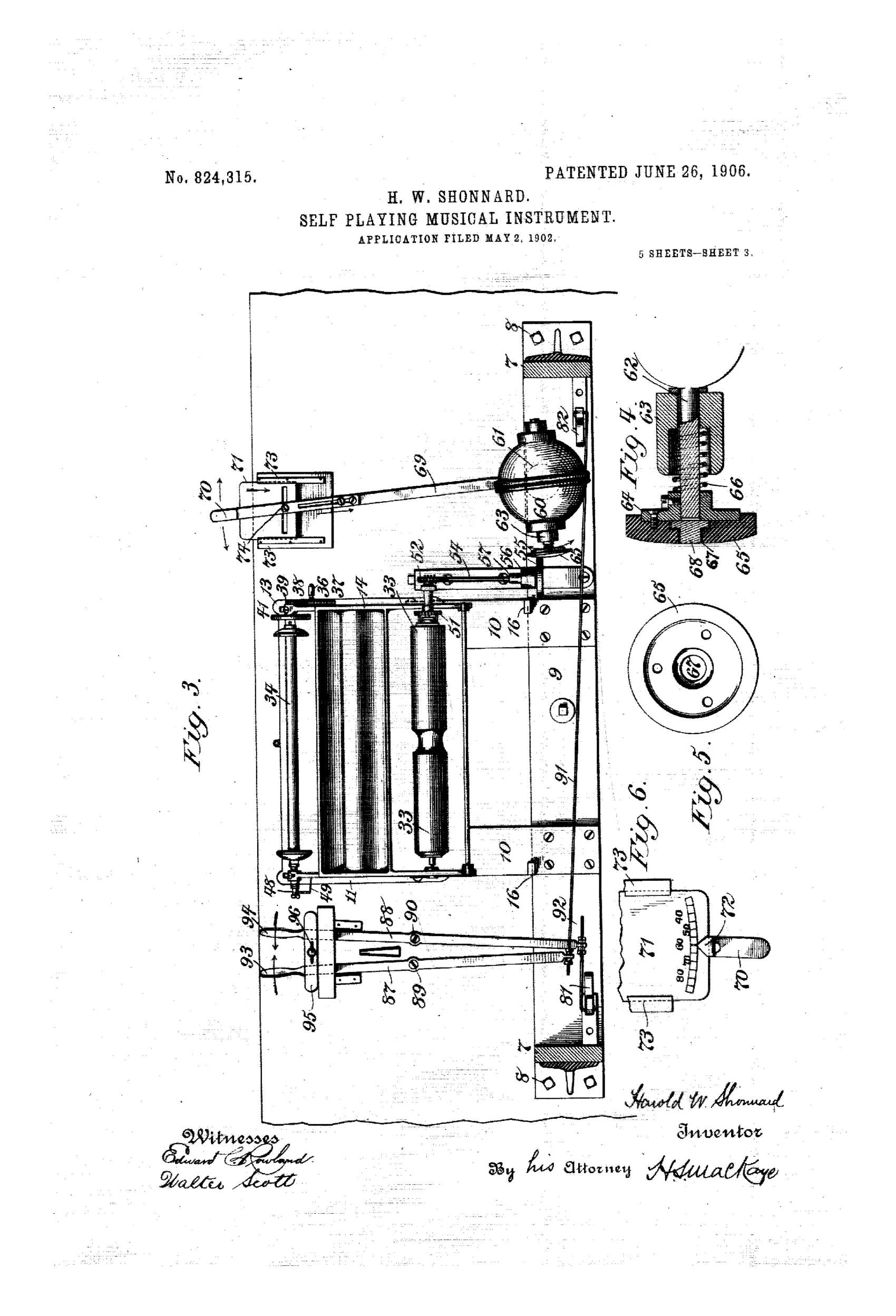
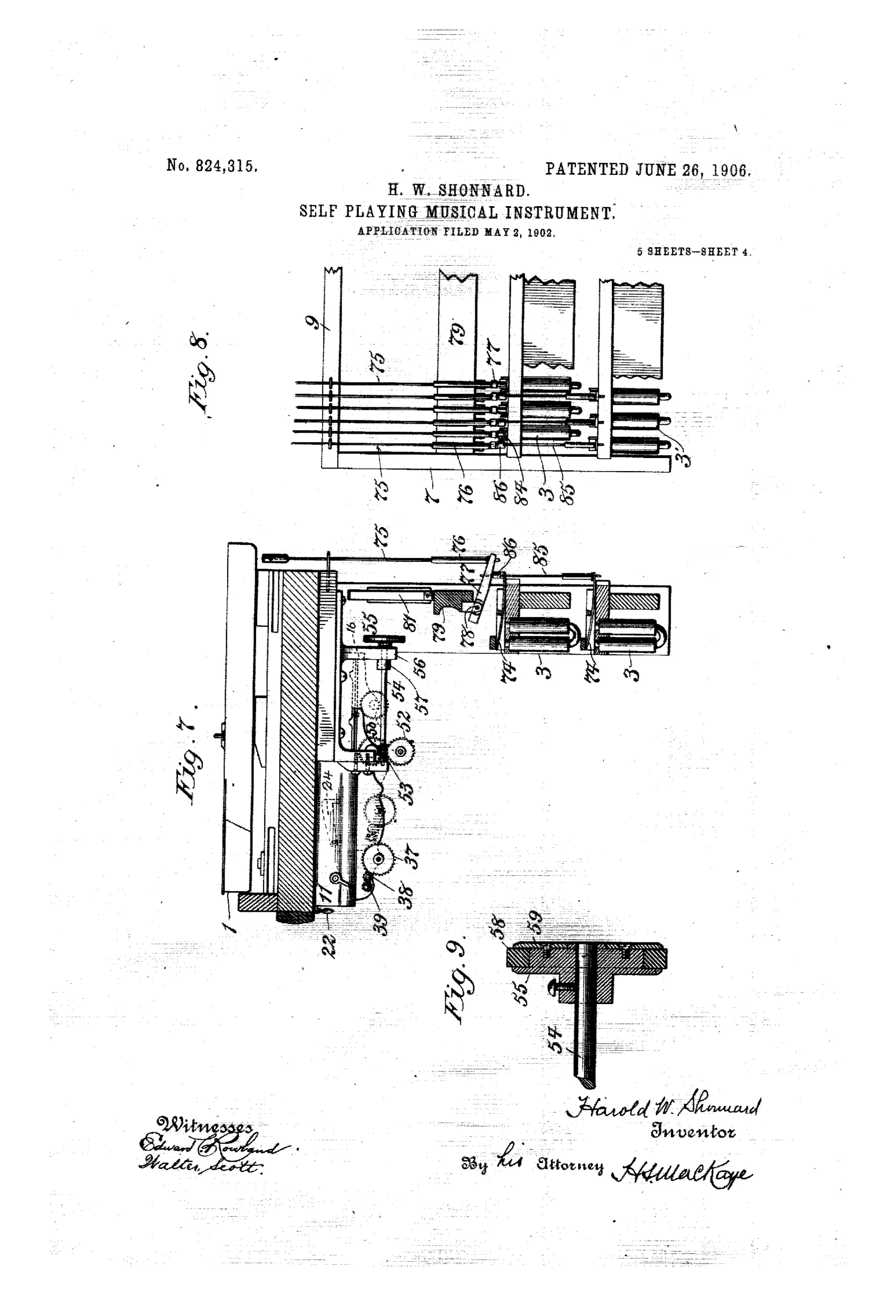
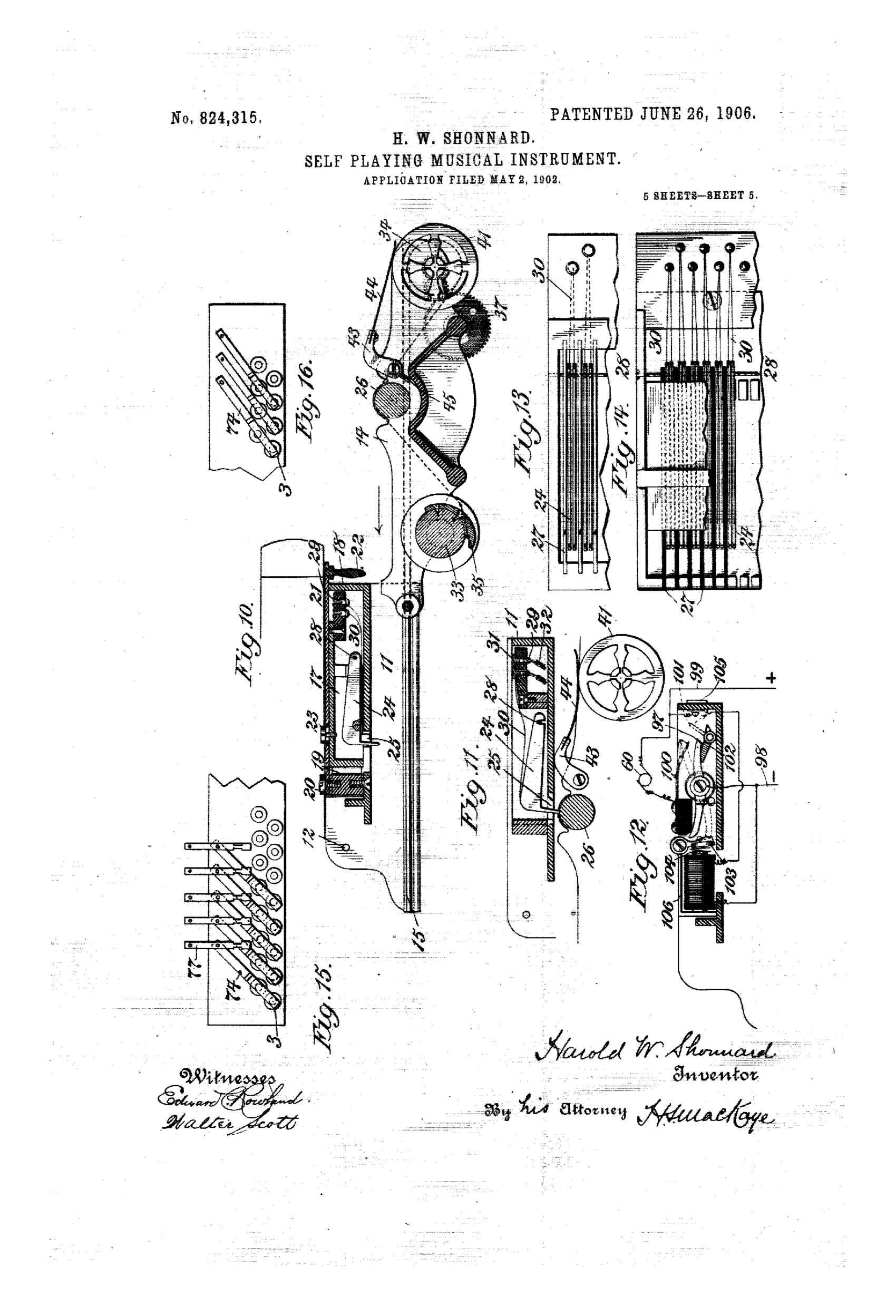
Electrically-operated self-playing piano attachment
♫ How it works
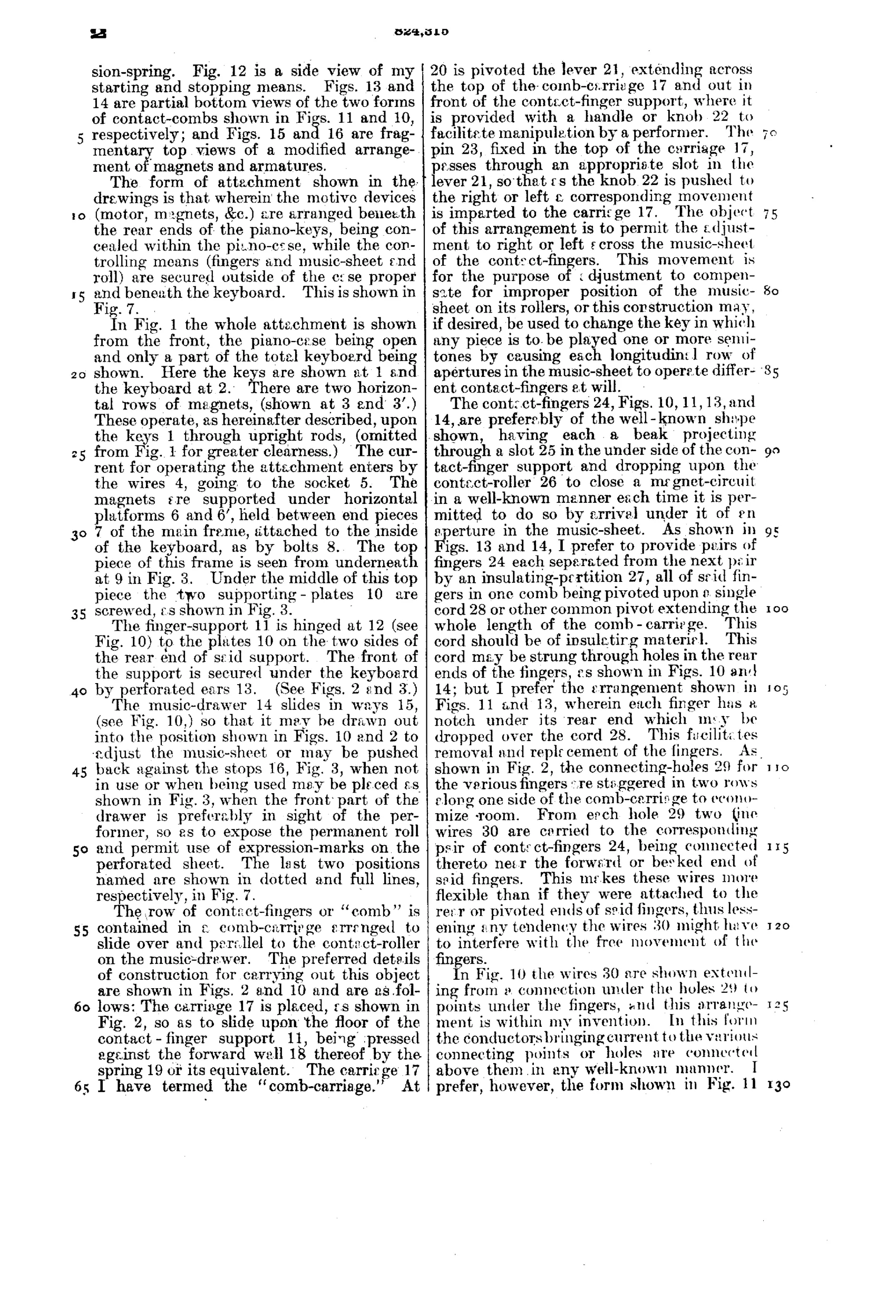
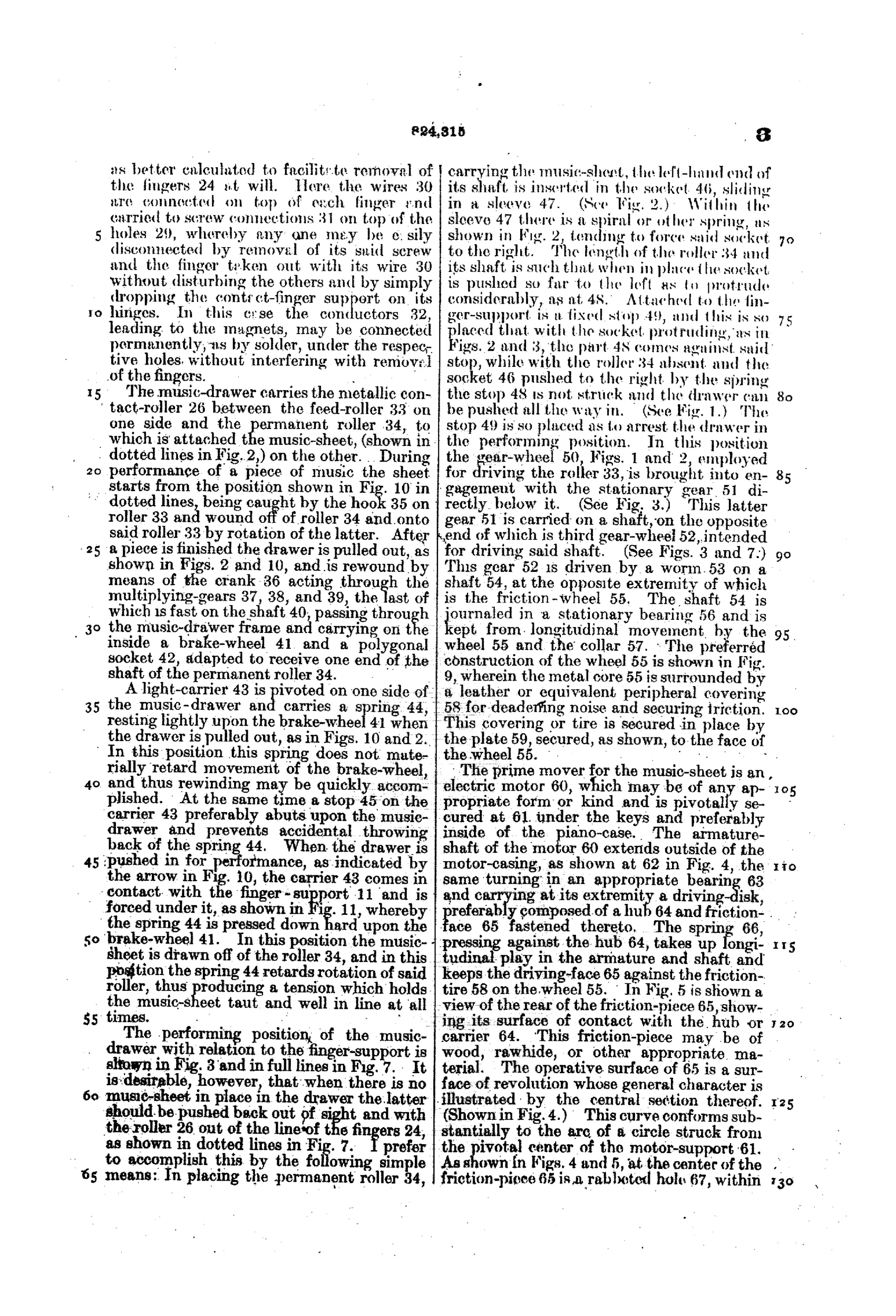
A perforated paper music-sheet is drawn from a feed-roller across a metallic contact-roller, driven by an electric motor through a friction-faced driving-disk, worm gearing, and a friction wheel whose position sets the tempo. As perforations in the sheet pass over spring-loaded contact-fingers arranged in an insulated comb-carriage, they momentarily close individual magnet circuits. Each energized magnet pulls an armature that operates a transmission rod connected to a corresponding piano key, striking it as an unseen performer would. A sliding comb-carriage lets the fingers be shifted sideways to correct sheet misalignment or transpose the key, and a hinged music-drawer can retract the whole mechanism out of sight when not in use.
♫ What was claimed
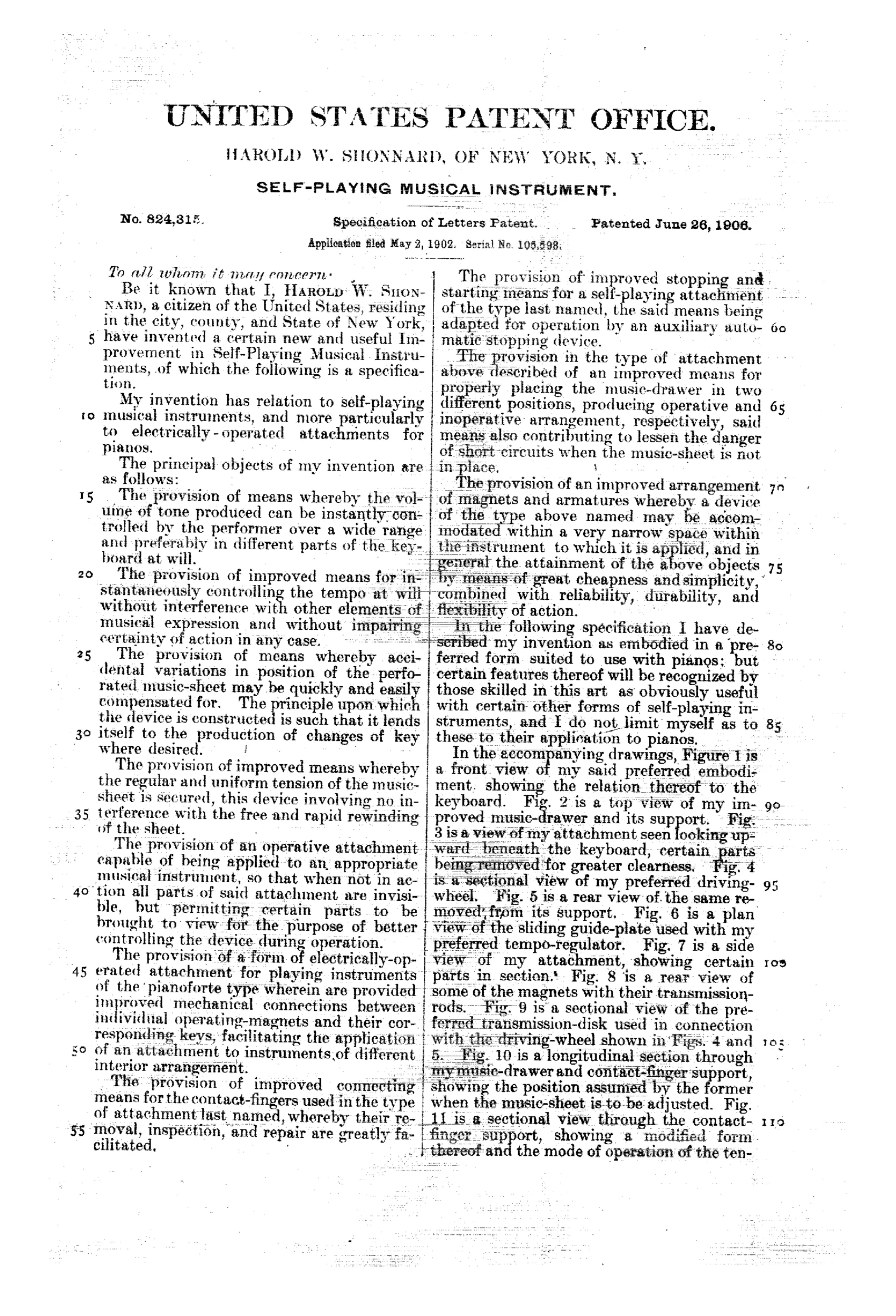
“The provision of means whereby the volume of tone produced can be instantly controlled by the performer over a wide range and preferably in different parts of the keyboard at will... The provision of improved means for instantaneously controlling the tempo at will without interference with other elements of musical expression and without impairing certainty of action in any case.”
In plain English: The invention lets a performer instantly adjust both loudness (in different parts of the keyboard) and tempo while the piano plays itself, without losing reliability.
♫ In the inventor’s words
“The provision of an operative attachment capable of being applied to an appropriate musical instrument, so that when not in action all parts of said attachment are invisible, but permitting certain parts to be brought to view for the purpose of better controlling the device during operation.”— Harold W. Shonnard, from the specification
Fate unknown
No Shonnard-branded player is documented; a surviving instrument or trade advertising bearing this patent date would settle it.
♫ Commentary
In 1902 the player piano question was still open. The Aeolian Pianola had shown the public wanted self-playing pianos, and nearly everyone answered with pneumatics — bellows, tracker bars, and suction. Shonnard answered with electricity: a perforated paper sheet drawn over a metal contact roller, spring fingers dropping through the holes to close individual magnet circuits, and each magnet yanking a transmission rod that strikes its piano key. No wind at all. It is the same logic that later powered the Tel-Electric player, and it is genuinely the harder road — sixty-odd reliable low-voltage contacts through moving paper is a maintenance headache pneumatics never had.
What the drawing rewards is a close look at the periphery. The whole works lives in a hinged music-drawer that retracts out of sight — Shonnard is explicit that when idle the attachment must be invisible, which tells you exactly what the parlor market demanded. The sliding comb-carriage is the clever bit: shift the contact fingers sideways and you both correct a wandering paper roll and transpose the piece, a two-for-one no tracker bar offered. Tempo comes from a friction wheel riding a driving disk, adjustable on the fly.
Sixteen figures and elaborate expression controls suggest a serious, sustained effort. But the electric-contact players that did reach market came from better-capitalized firms a few years later, and Shonnard's name isn't among them. A thoughtful entry on the losing side of the pneumatic-versus-electric fork.
Commentary by Claude, The Talking Machine Patent Archive’s resident enthusiast