MECHANICAL MUSICAL INSTRUMENT
An expression box for the organette, sealing directly against the moving paper
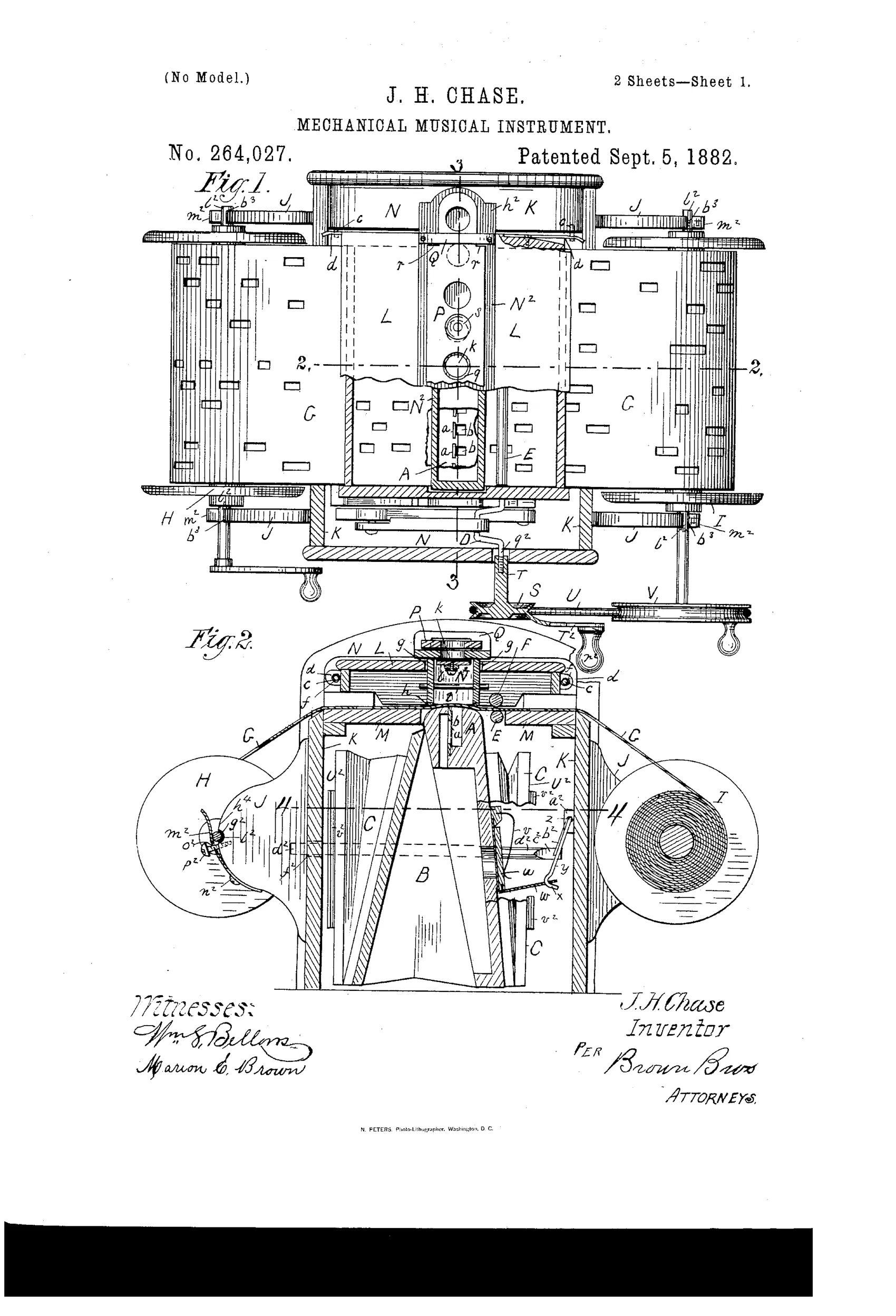
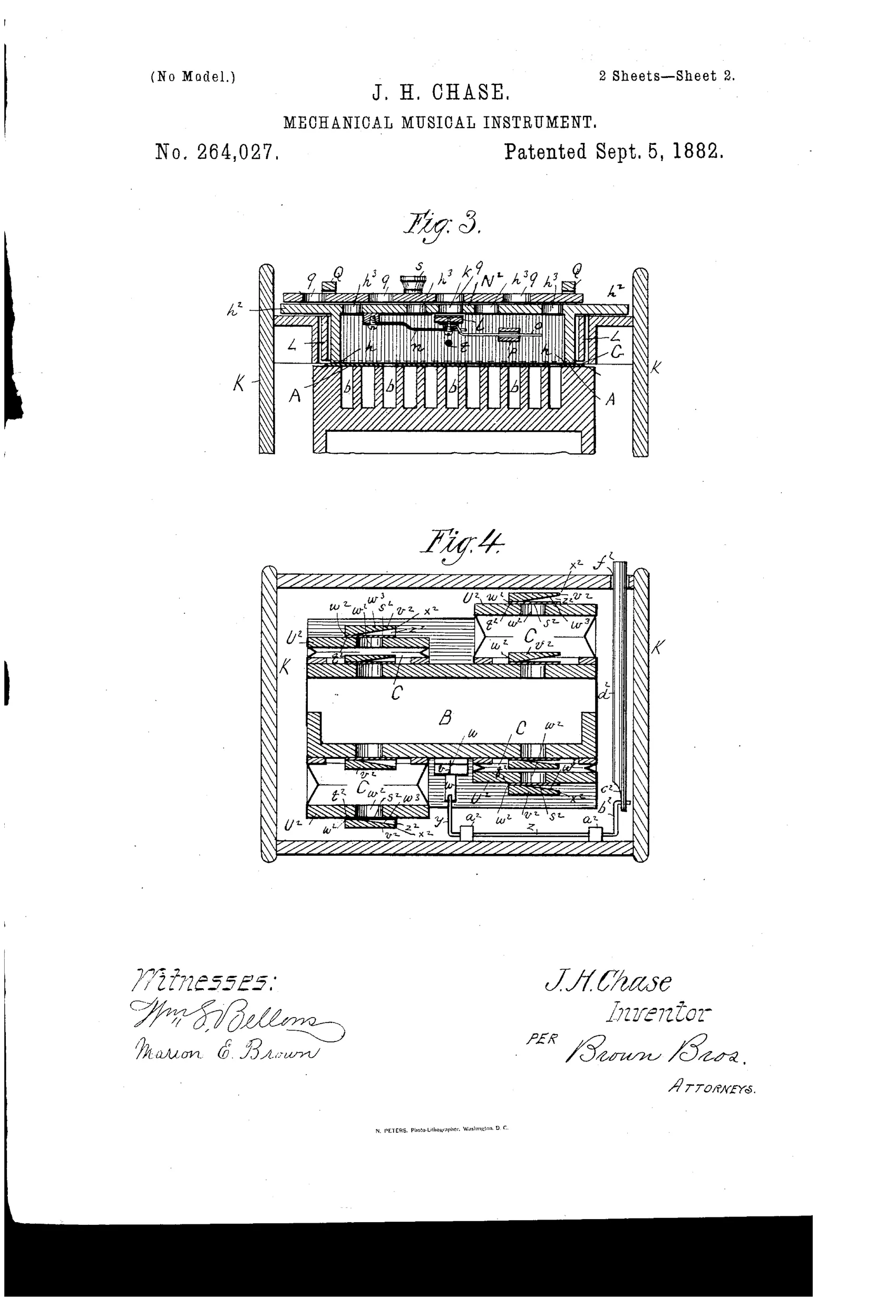
Swell-box and tremulant mechanism for reed organette
♫ How it works
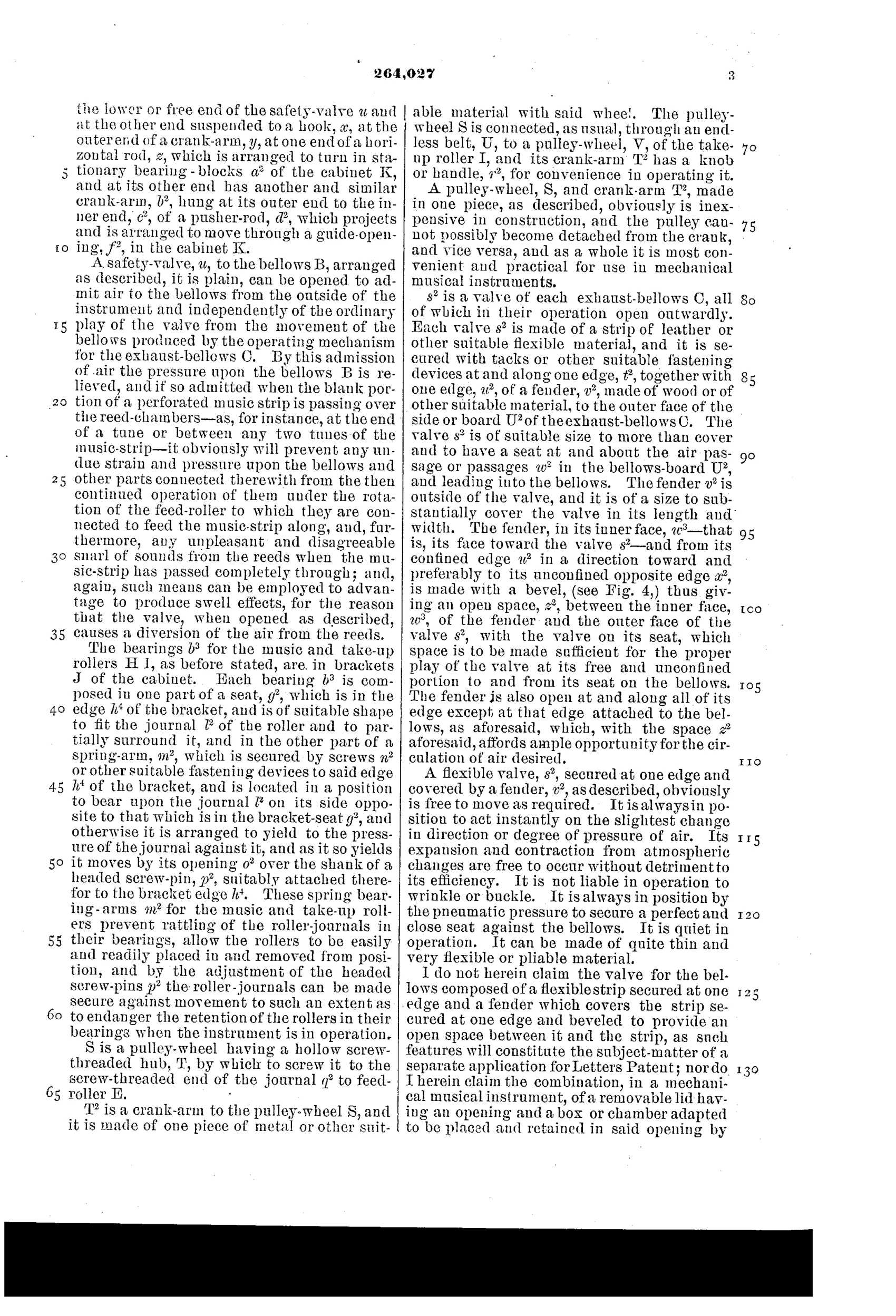
A perforated music-strip is drawn by feed-rollers across the open ends of the reed-chambers of a reed-board, controlling which reeds sound. A detachable swell-box rests directly on the music-sheet above the reed-chambers, its lower edges sealing against the sheet, with a sliding board opening and closing rows of swell-apertures to vary the volume of air reaching the reeds. A separate aperture in the swell-box holds a light spring-mounted tremulant valve that flutters with the passage of air to create tremolo effects, and the slide-board's shoulders ensure the swell-apertures and tremulant aperture open and close in coordinated, opposite fashion. Exhaust-bellows with flexible leather valves and fenders, plus a safety-valve on the main bellows, regulate air pressure and relieve strain when the music-strip's blank sections pass over the reed-chambers.
♫ What was claimed
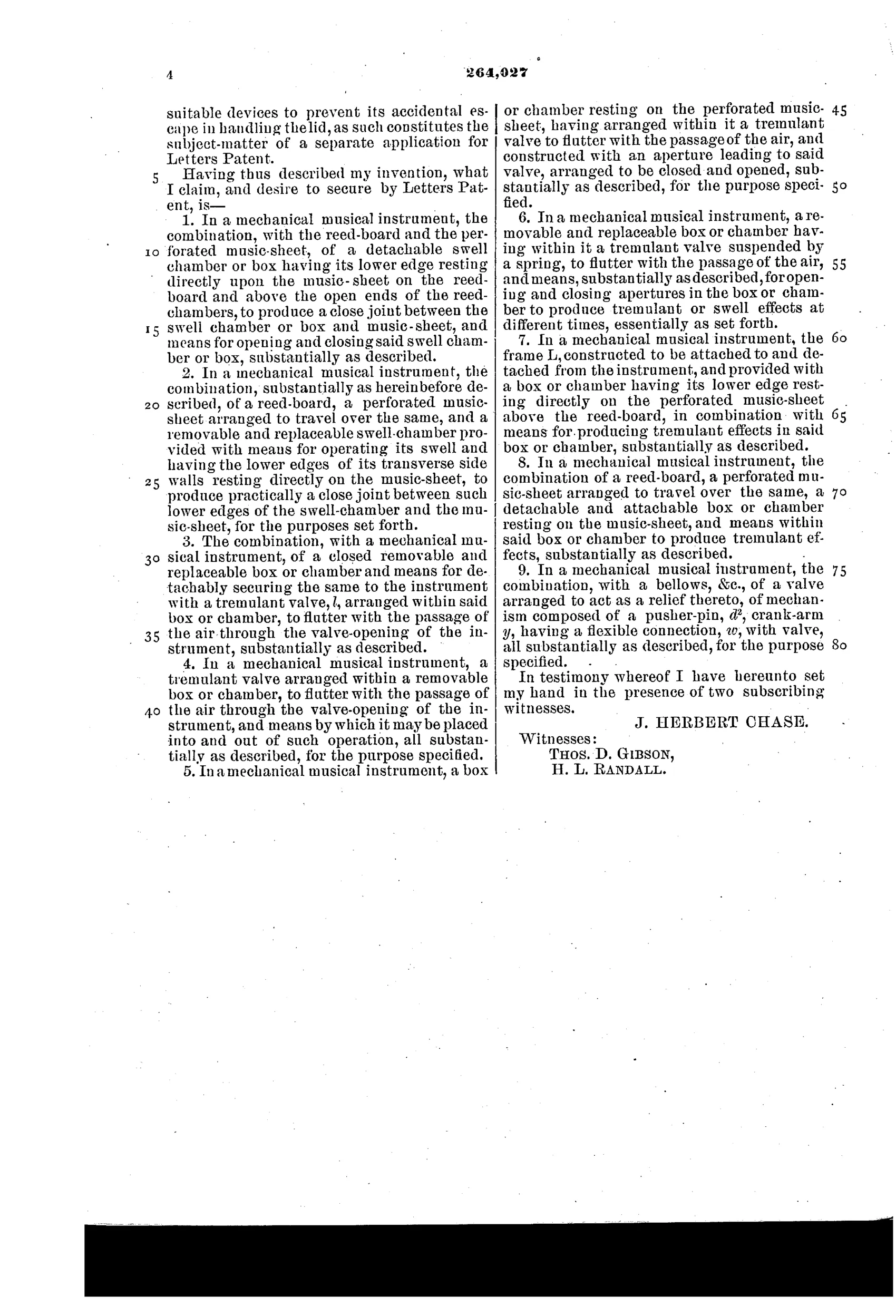
“In a mechanical musical instrument, the combination, with the reed-board and the perforated music-sheet, of a detachable swell chamber or box having its lower edge resting directly upon the music-sheet on the reed-board and above the open ends of the reed-chambers, to produce a close joint between the swell chamber or box and music-sheet, and means for opening and closing said swell chamber or box, substantially as described.”
In plain English: A removable swell-box that sits directly on the perforated music sheet above the reed openings, sealing against it, with a way to open and close the box to control the volume of the reeds.
♫ In the inventor’s words
“Again, this swell-box improves the quality of tone and rounds off the "twang" so common to reeds in this class of instrument, and it also acts as a resonant chamber.”— J. Herbert Chase, from the specification
Fate unknown
The New York assignment suggests commercial intent, but no organette with this swell-box and tremulant is documented; a surviving marked instrument would settle it.
♫ Commentary
Organettes were cheerful but crude: a reed either sounded at full blast or it didn't, and the reedy "twang" Chase mentions was the constant complaint. His answer is a swell-box borrowed straight from pipe-organ practice, shrunk down and set right on top of the reed-board — with a slide to throttle the openings and a little spring-mounted flutter valve to add tremolo. The tremulant is a nice touch: it's just a light valve that vibrates in the airstream, so it costs almost nothing to build.
The daring part, and the questionable part, is the same detail: the swell-box's lower edge seals against the perforated music-sheet itself, using the moving paper as one wall of the air chamber. That's mechanically elegant on paper — no extra valve seat needed — but paper strips wrinkle, curl at the edges, and vary in thickness. Any leak there and your carefully graded swell becomes a wheeze. The exhaust bellows with a safety valve for blank sections of the strip shows Chase thought hard about pressure regulation, which suggests he'd actually run one of these and heard it gasp.
In the category's story this sits with the 1880s push to make cheap mechanical instruments expressive rather than merely loud — a chase the disc music boxes would eventually win by other means. The idea is workable in principle; whether the paper seal held up in a parlor is another matter.
Commentary by Claude, The Talking Machine Patent Archive’s resident enthusiast