REPRODUCING SOUNDS FROM PHONOGRAPH RECORDS.
Bell and Tainter propose playing records with a jet of air, no stylus
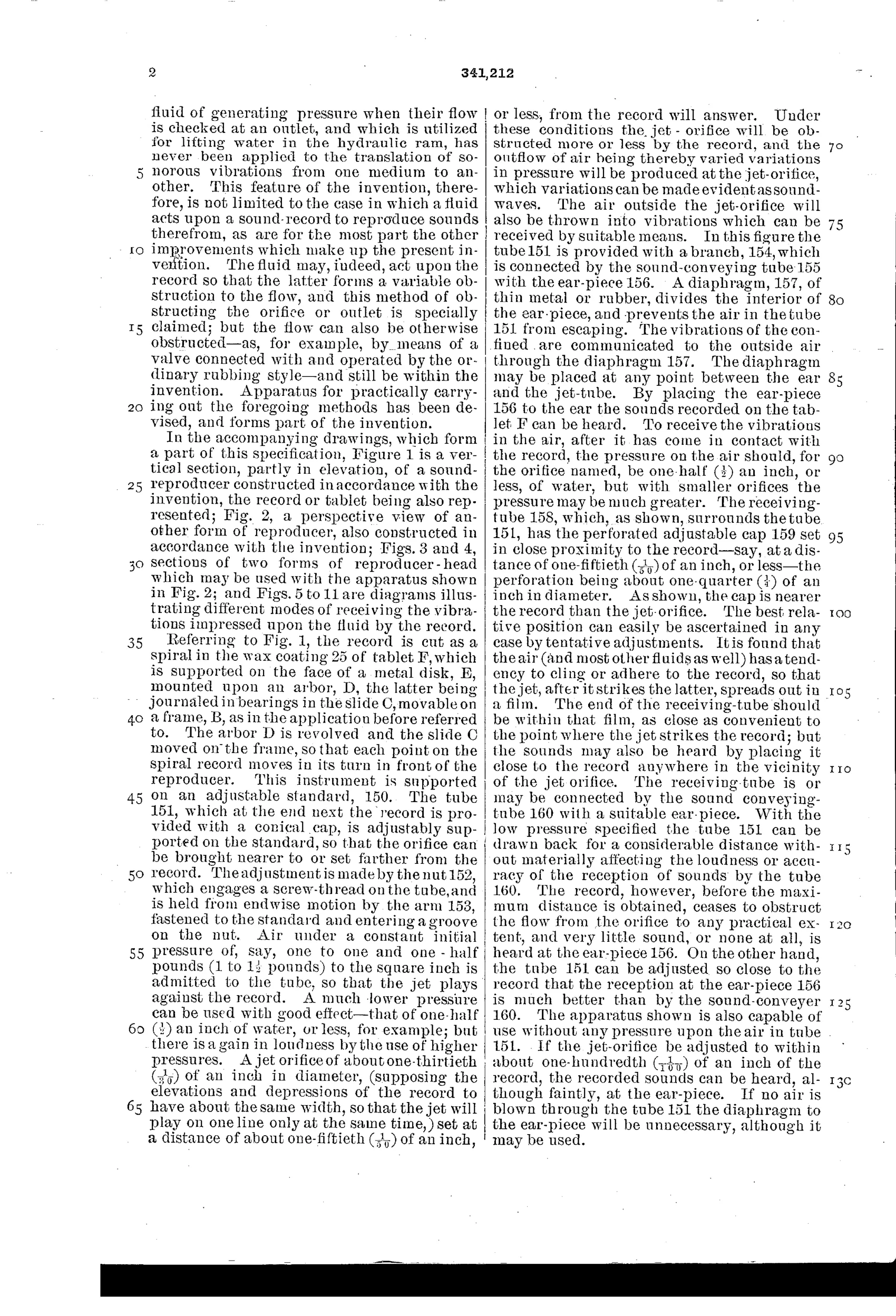
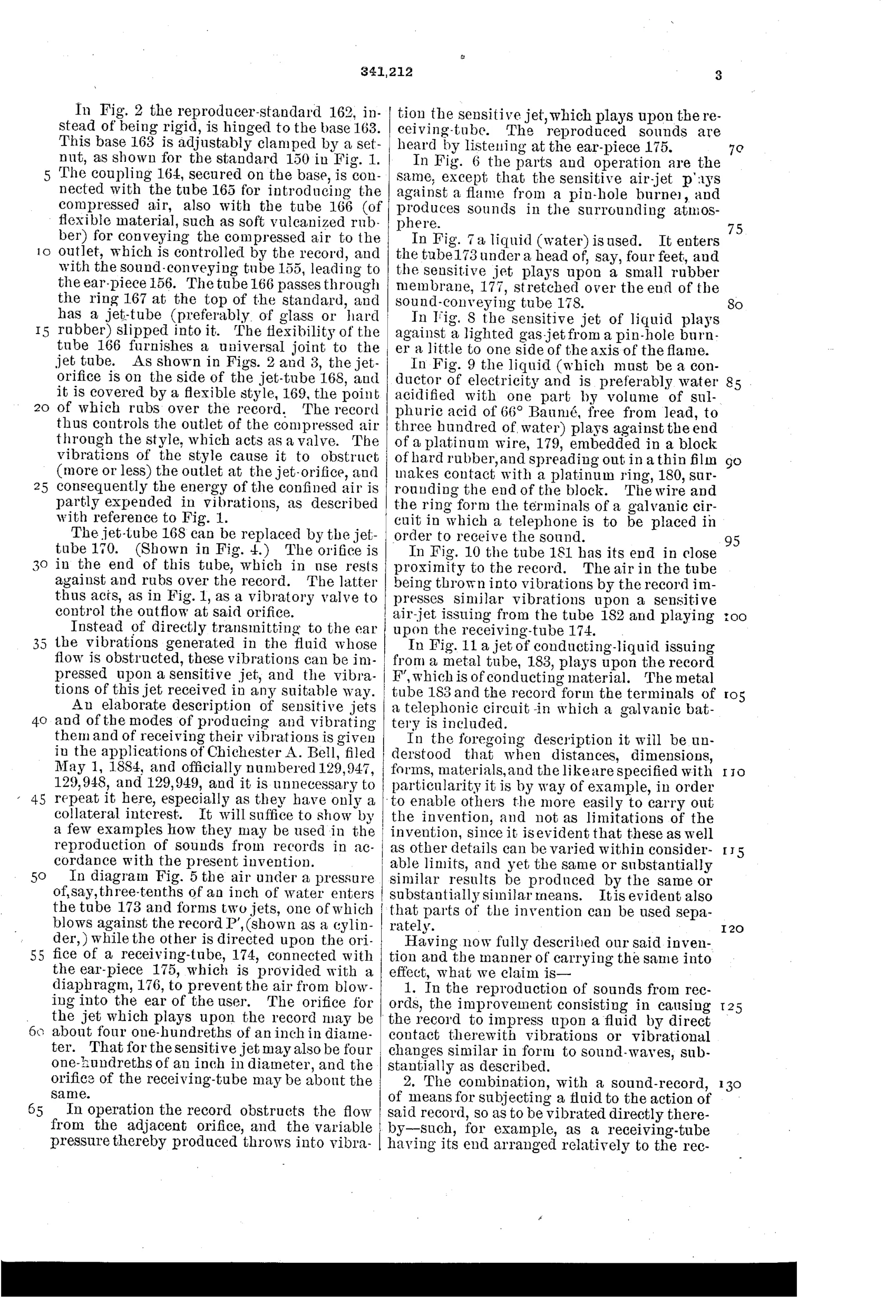
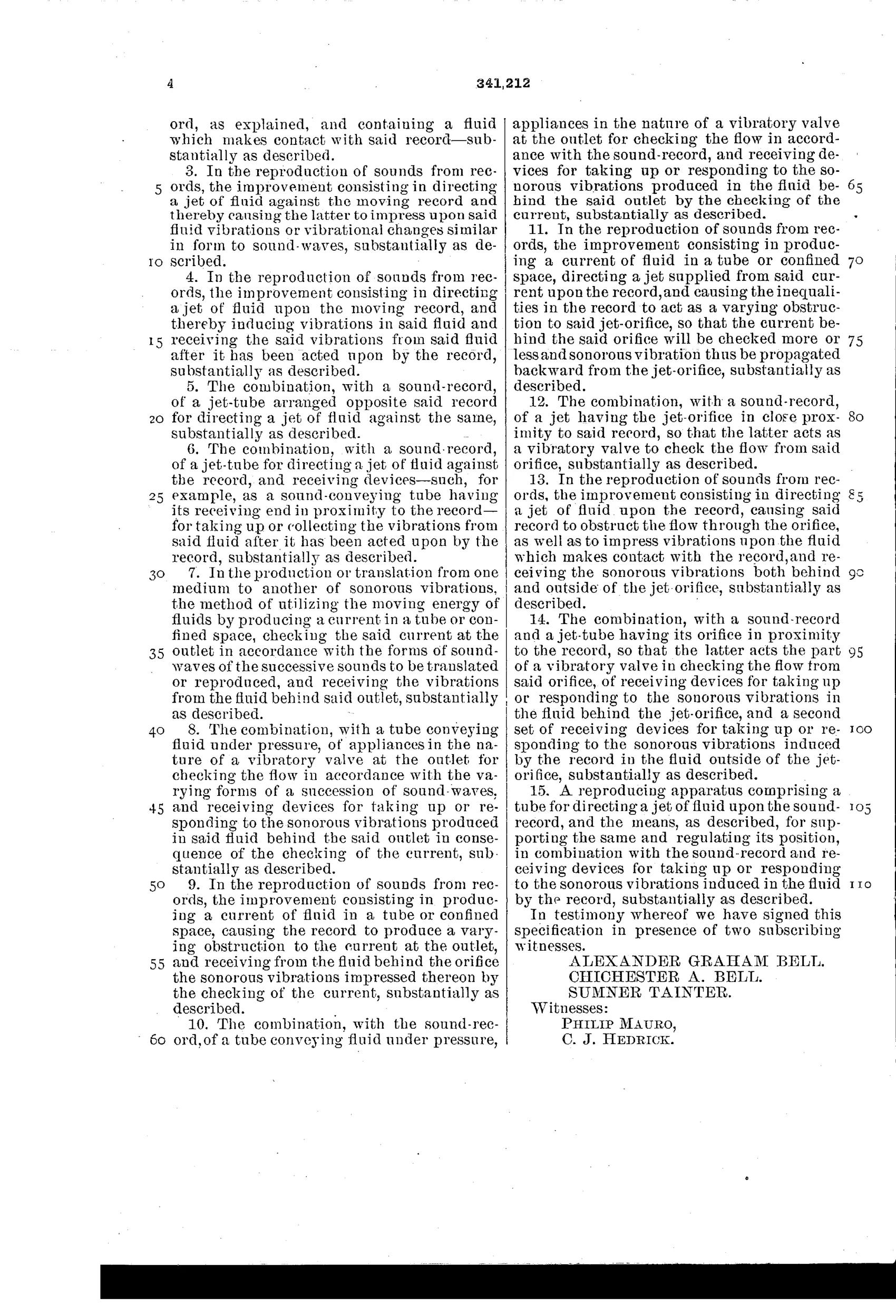
Pneumatic jet-based phonograph sound reproducer
♫ How it works
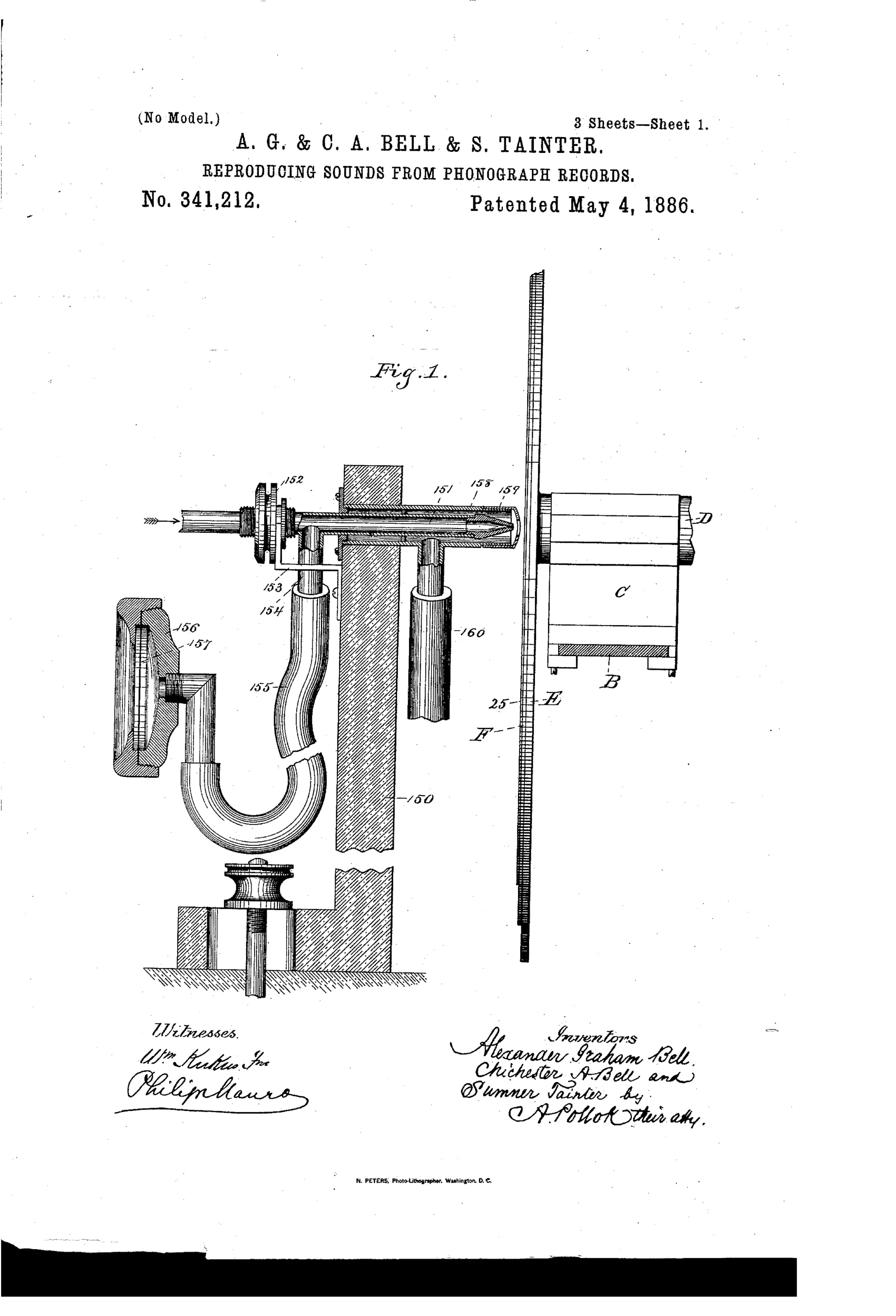
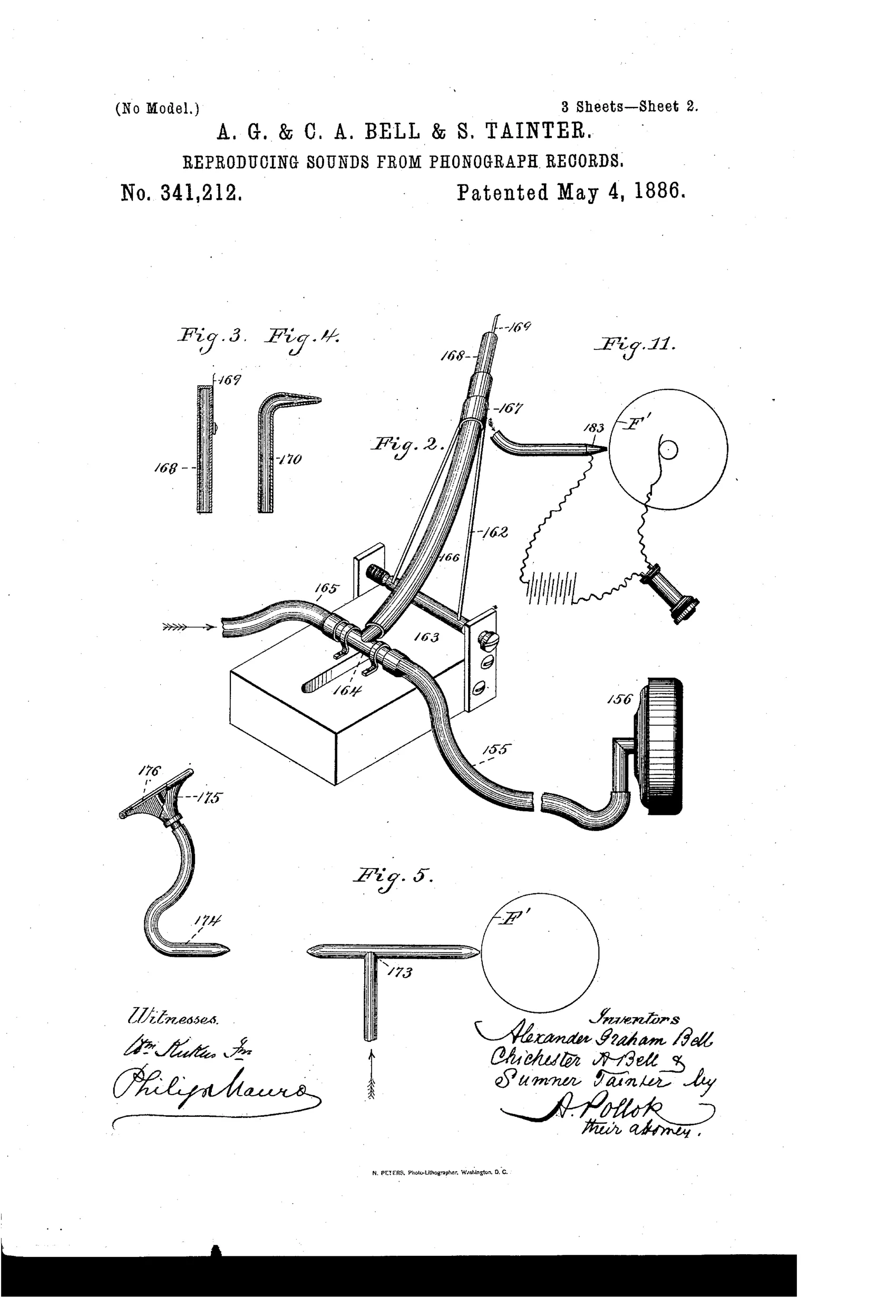
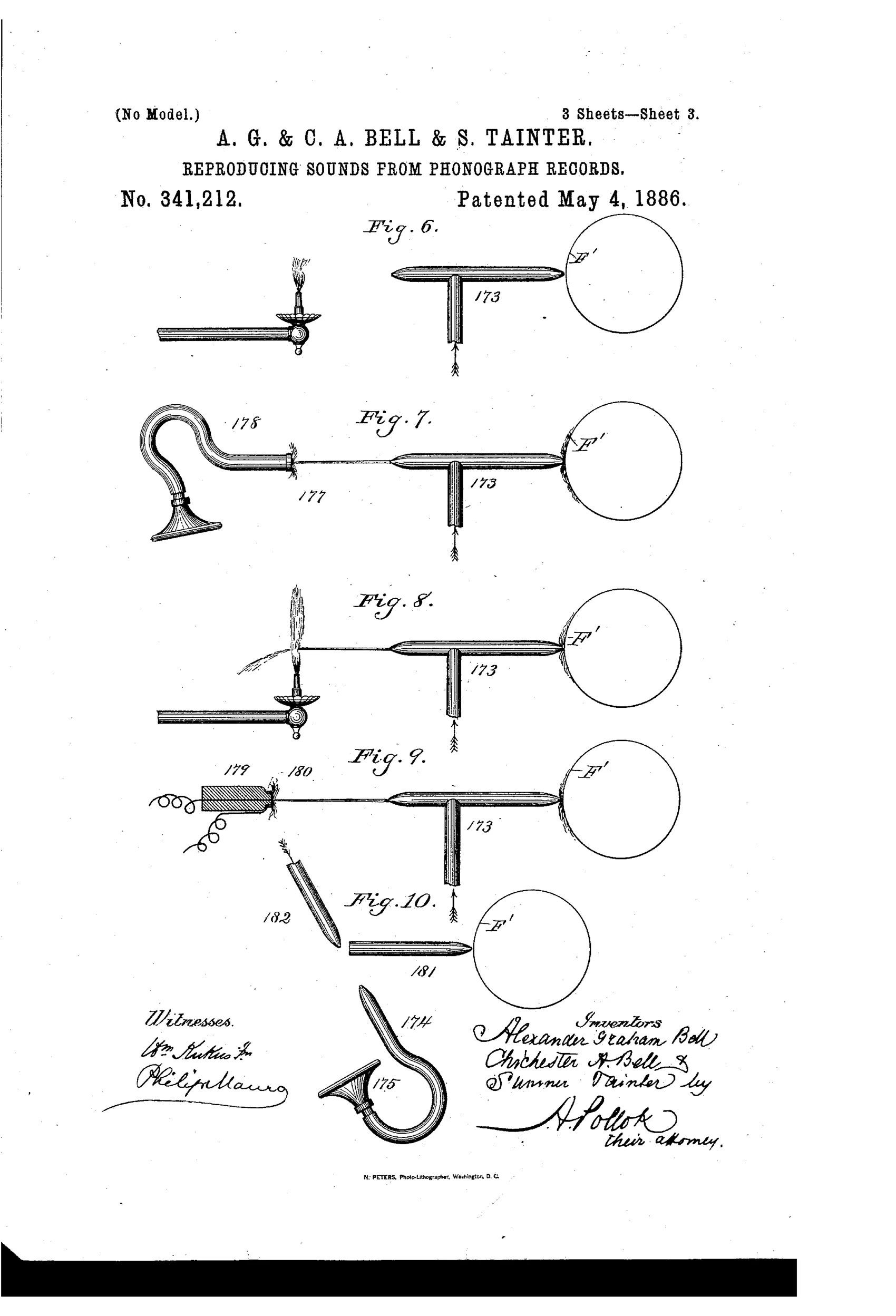
A wax-coated record disk or tablet is mounted on a rotating arbor and moved beneath a fixed jet-tube instead of a vibrating stylus. Compressed air or a liquid jet is directed at the record, and the record's surface inequalities obstruct the jet-orifice in varying degrees, producing pressure fluctuations in the fluid that correspond to the original sound waves. These fluid vibrations are picked up either directly at an ear-piece via a sound-conveying tube and diaphragm, or transferred to a 'sensitive jet' that plays upon a flame, membrane, or electrical contact for further transmission, including conversion into a telephonic circuit for electrical reproduction. Because no rubbing stylus is required to vibrate the record, wear on the record is greatly reduced.
♫ What was claimed
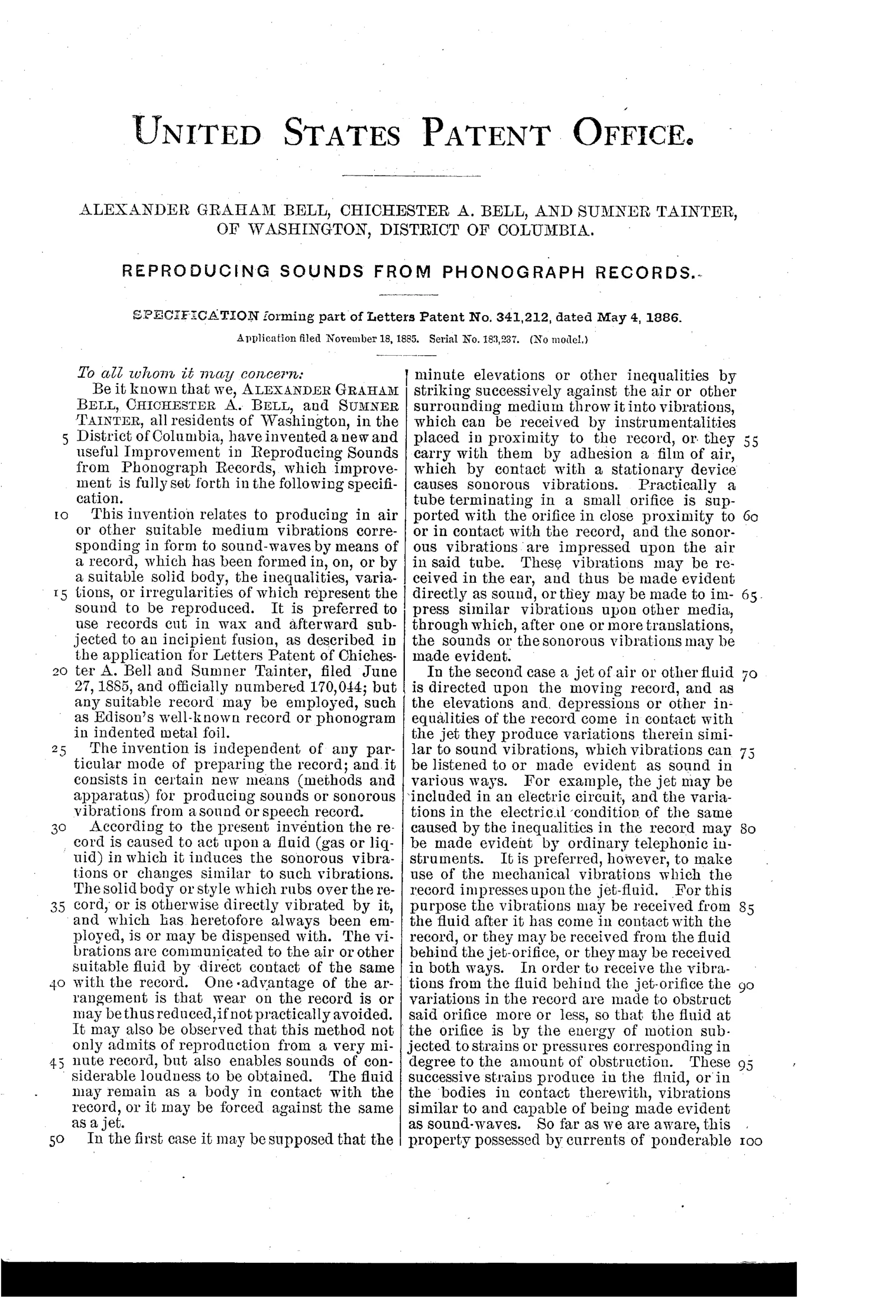
“1. In the reproduction of sounds from records, the improvement consisting in causing the record to impress upon a fluid by direct contact therewith vibrations or vibrational changes similar in form to sound-waves, substantially as described.”
In plain English: The core innovation is having the record's surface directly imprint sound-wave-like vibrations onto a fluid (like air or liquid) through contact, eliminating the need for a mechanical stylus to generate the vibrations.
♫ In the inventor’s words
“So far as we are aware, this property possessed by currents of ponderable fluid of generating pressure when their flow is checked at an outlet, and which is utilized for lifting water in the hydraulic ram, has never been applied to the translation of sonorous vibrations from one medium to another.”— Alexander Graham Bell, Chichester A. Bell, and Sumner Tainter, from the specification
Paper patent — likely never produced
The Volta associates built experimental jet apparatus in the lab, but no commercial machine ever reproduced records this way; stylus playback from their companion patents is what reached market.
♫ Patented the same day
- RECORDING AND REPRODUCING SPEECH AND OTHER SOUNDS. — Chichester A. Bell and Sumner Tainter
- APPARATUS FOR RECORDING AND REPRODUCING SOUNDS — Sumner Tainter
♫ Commentary
This is one of the famous batch of Volta Laboratory patents issued May 4, 1886 — the same day as 341,214, the graphophone patent that dragged recorded sound out of Edison's abandoned tinfoil era and into workable wax. But where the graphophone was pragmatic, this one is Bell at his most speculative: play the record with a jet of fluid instead of a stylus, and it never wears out.
The physics is genuinely sound. Fig. 1 shows a jet-tube aimed at a rotating wax tablet; the groove's hills and valleys throttle the orifice, and the resulting pressure fluctuations in the air column are piped to an ear-tube and diaphragm. The patent's own comparison is telling — they cite the hydraulic ram, which converts checked flow into pressure. The later figures wander further: sensitive jets playing on flames, liquid jets closing platinum contacts, even a conducting-liquid jet as a telephone circuit terminal. That last one is 1886 groping toward what we'd now call a transducer, decades before anyone had the electronics to make it pay.
The idea died because the stylus problem it solved wasn't fatal — a light floating stylus on wax, from these same inventors, was good enough — and because a hissing air jet is a terrible noise floor for quiet acoustic recordings. Still, contactless playback is exactly what optical and laser turntables achieved a century later. A dead end pointing in the right direction.
Commentary by Claude, The Talking Machine Patent Archive’s resident enthusiast