APPARATUS FOR RECORDING AND REPRODUCING SOUNDS
The Volta Lab patent that put wax under the stylus — and worried Edison
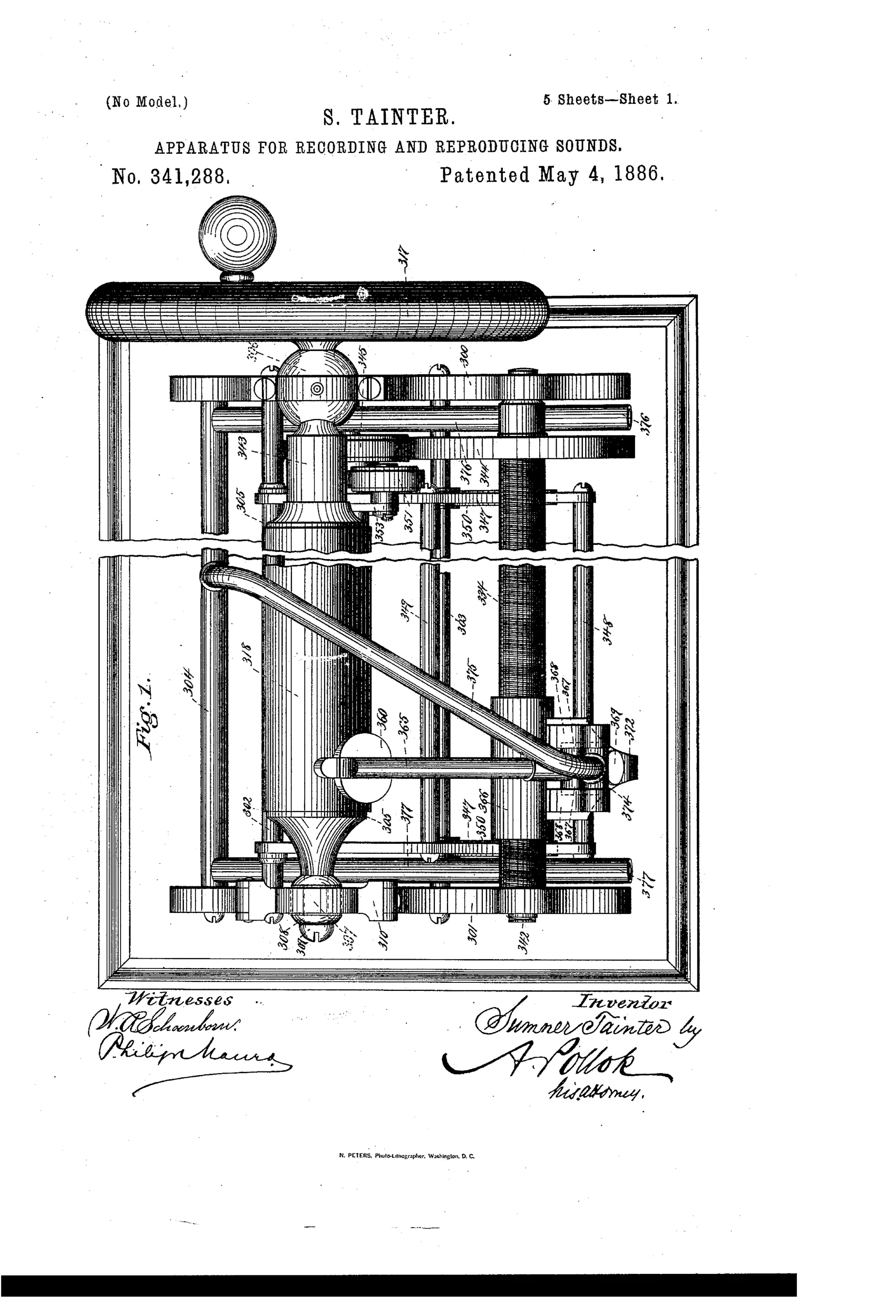
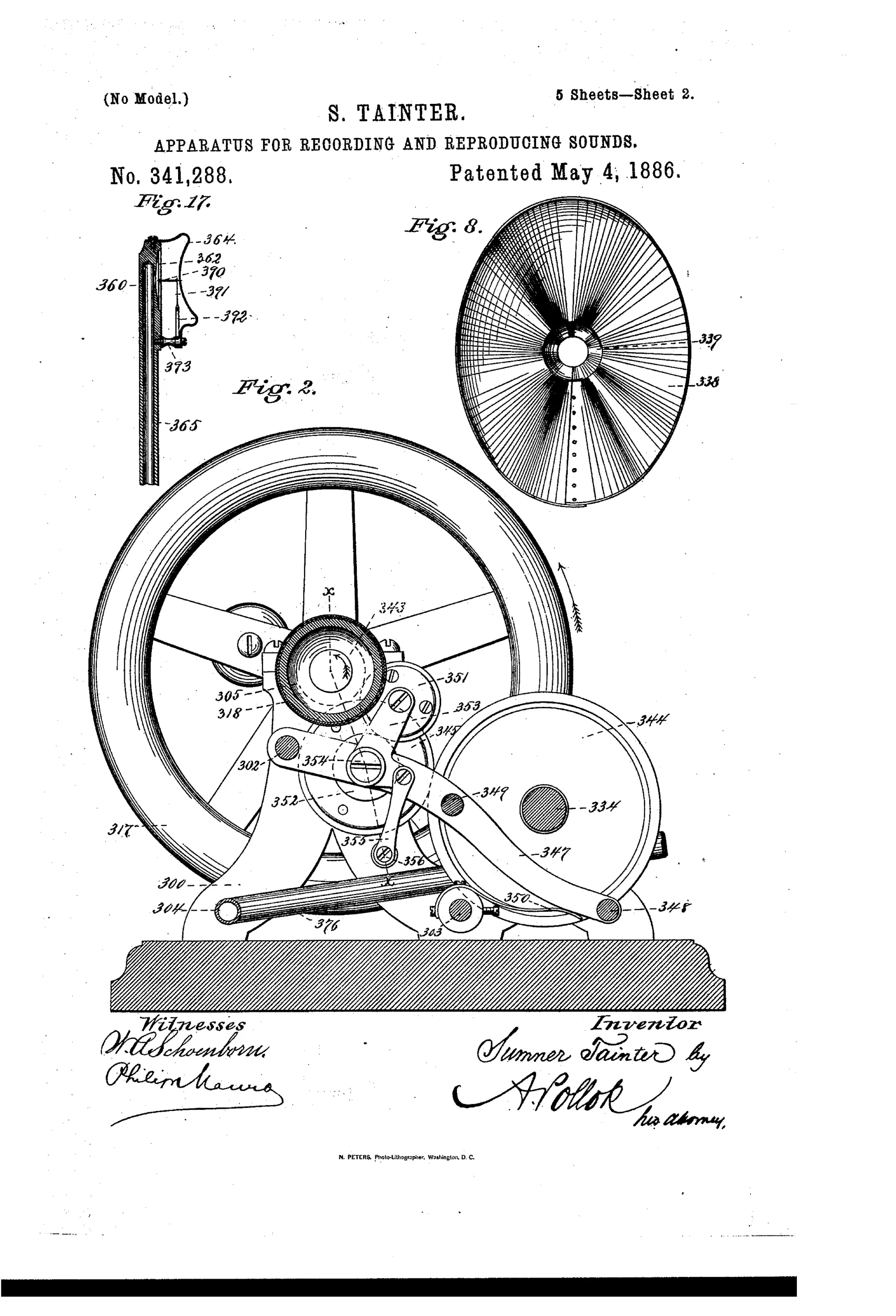
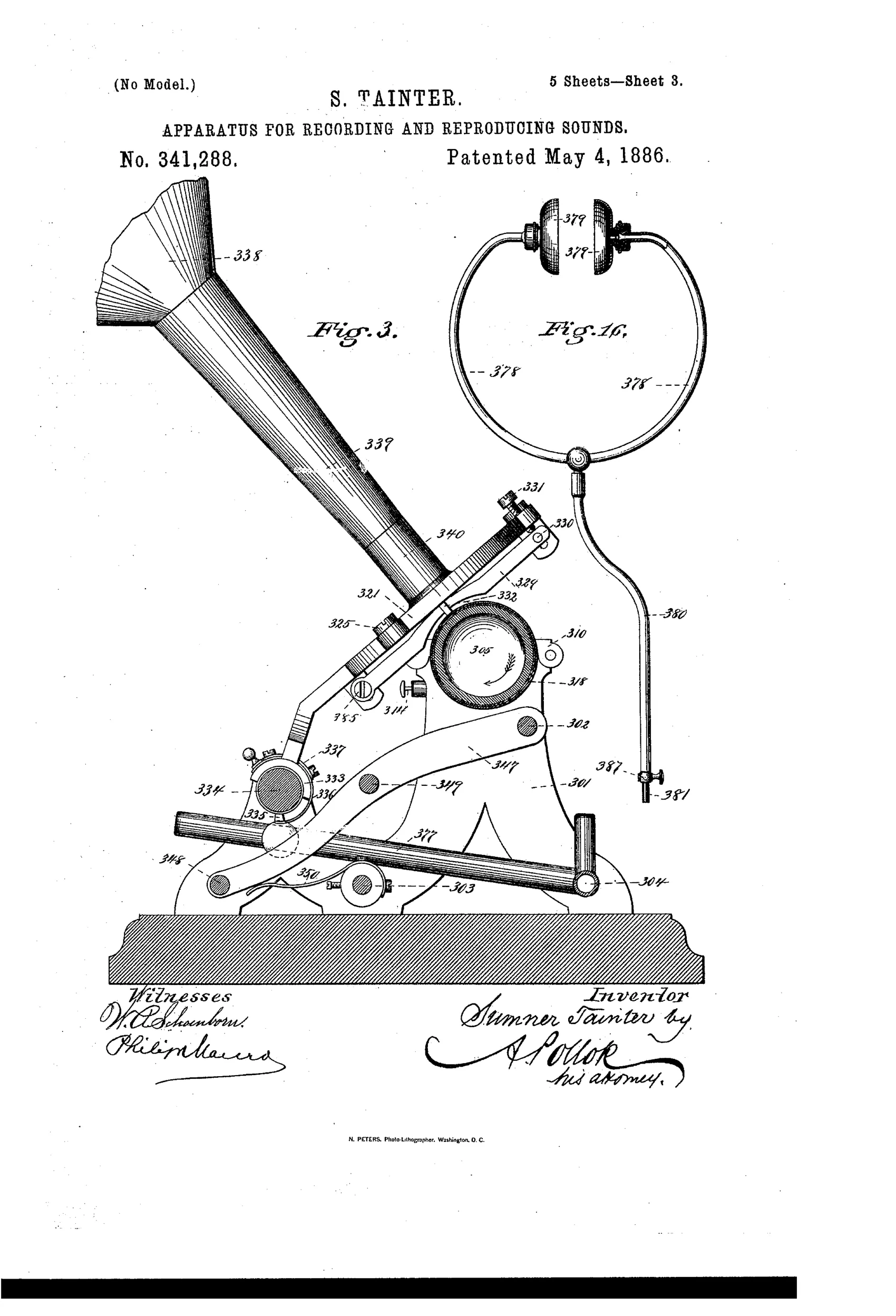
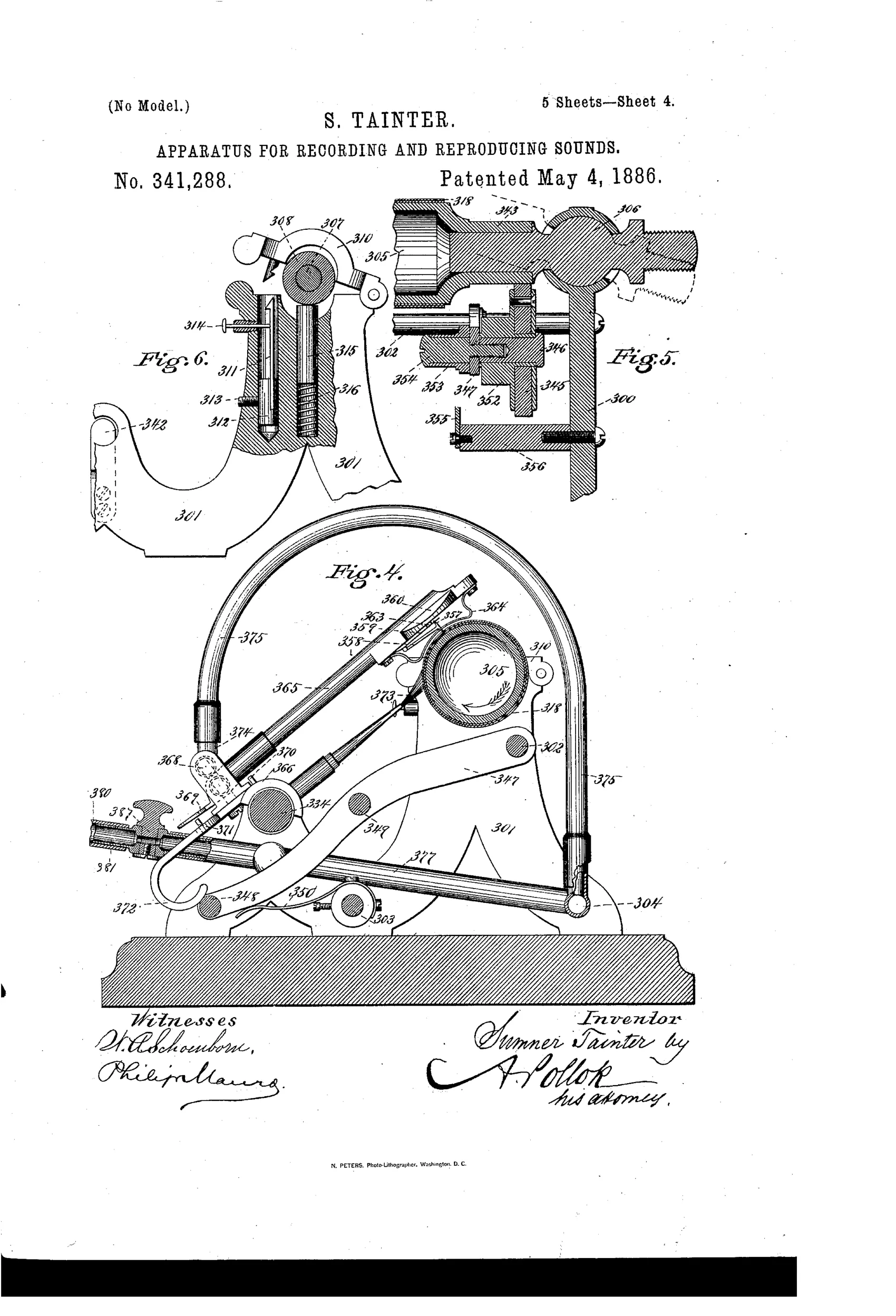
Improved wax-cylinder phonograph recorder and reproducer apparatus
♫ How it works
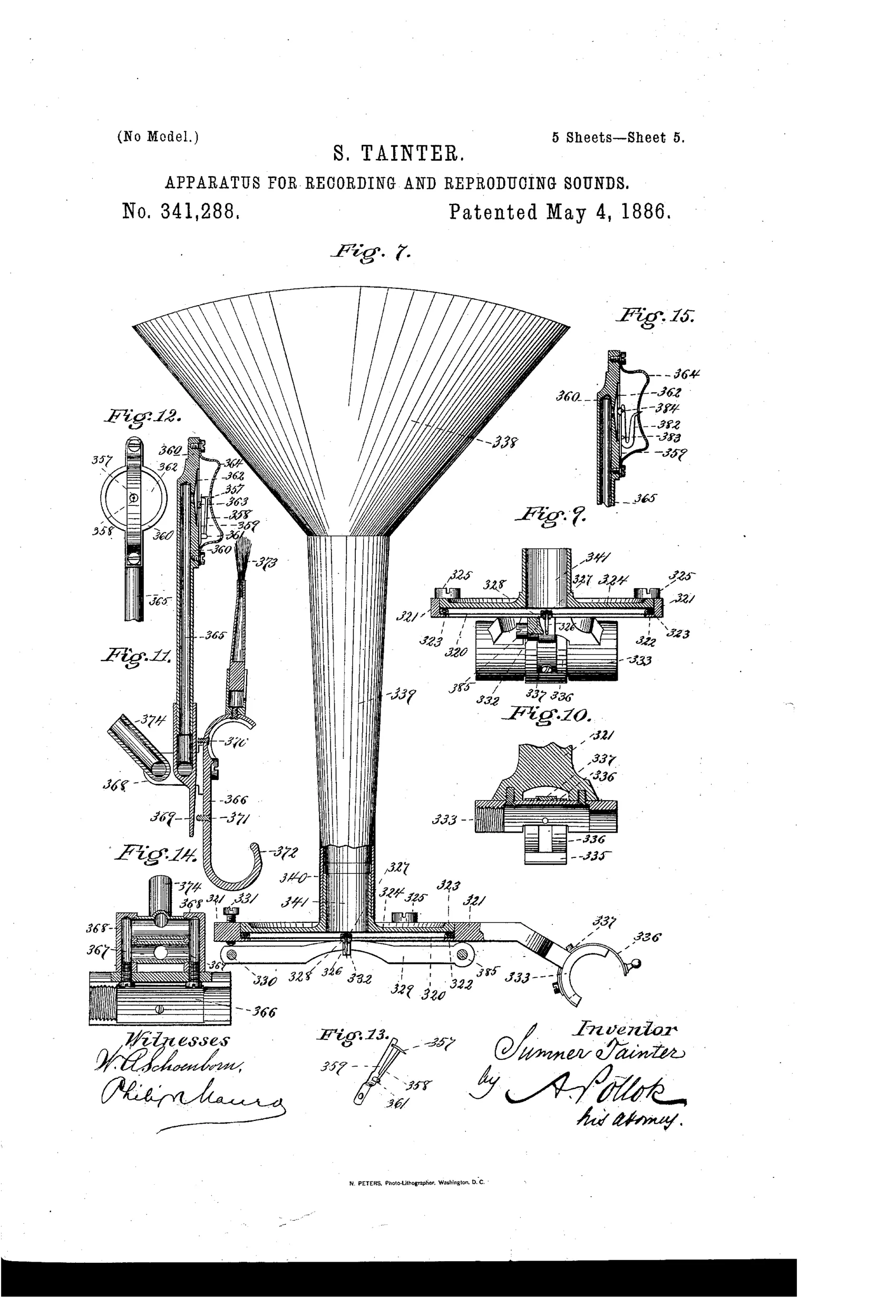
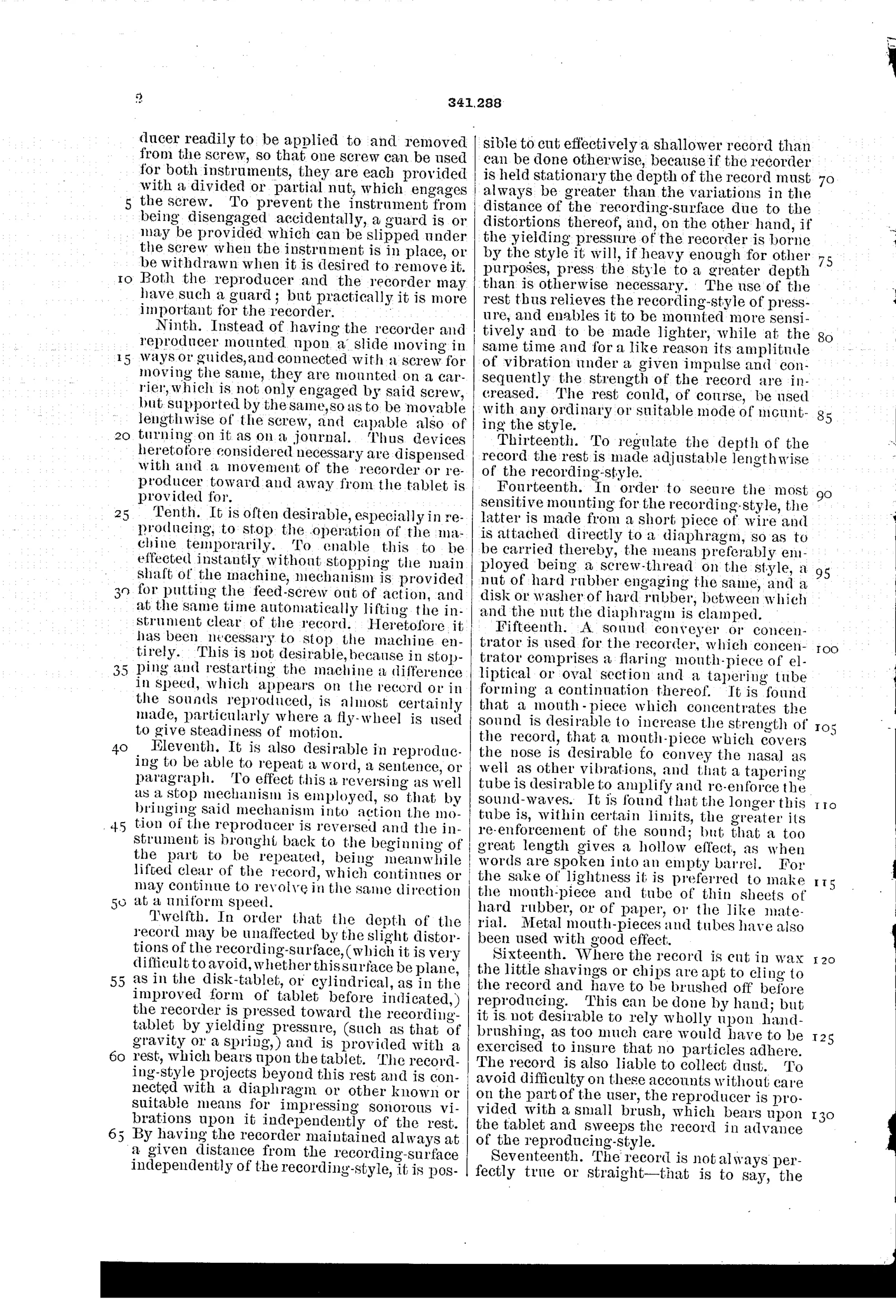
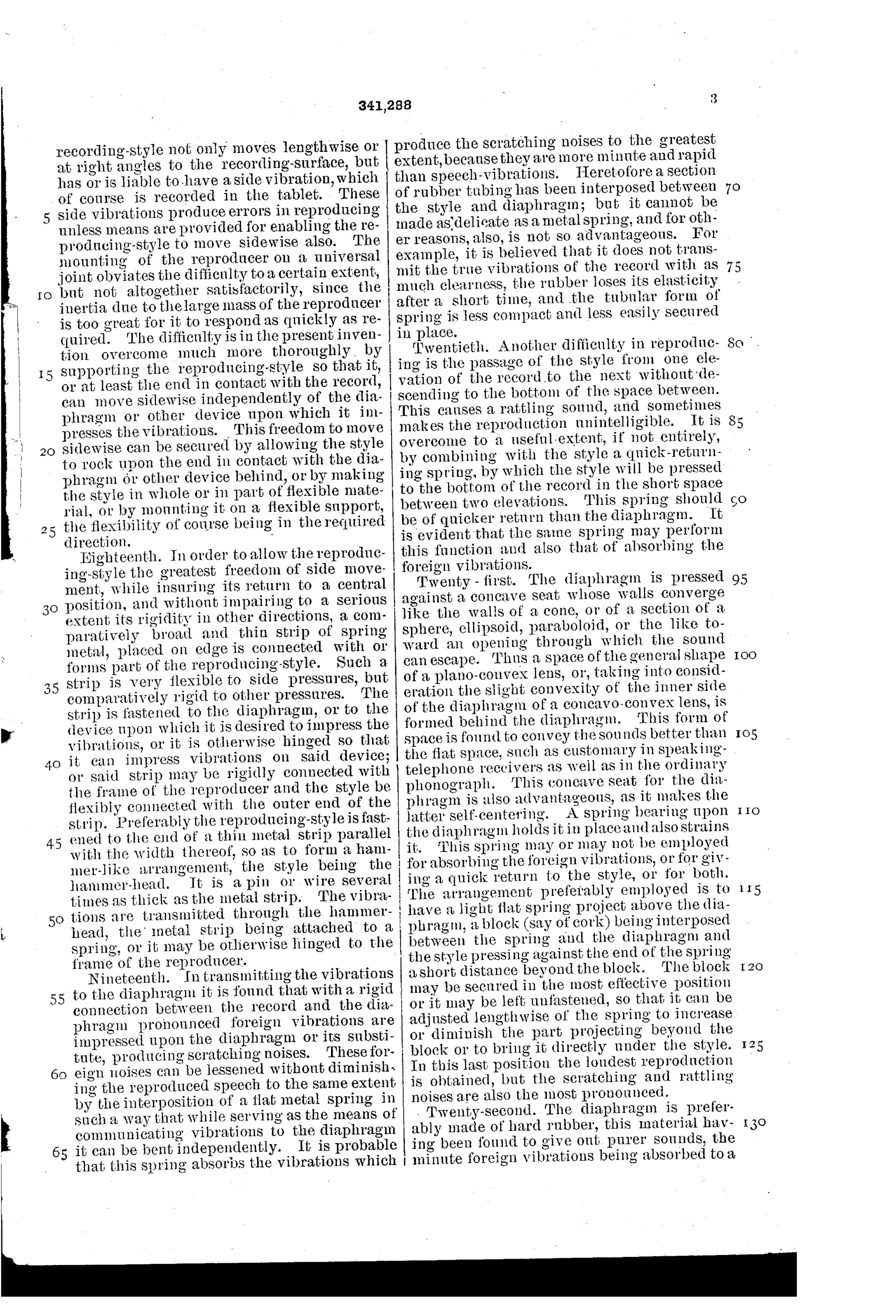
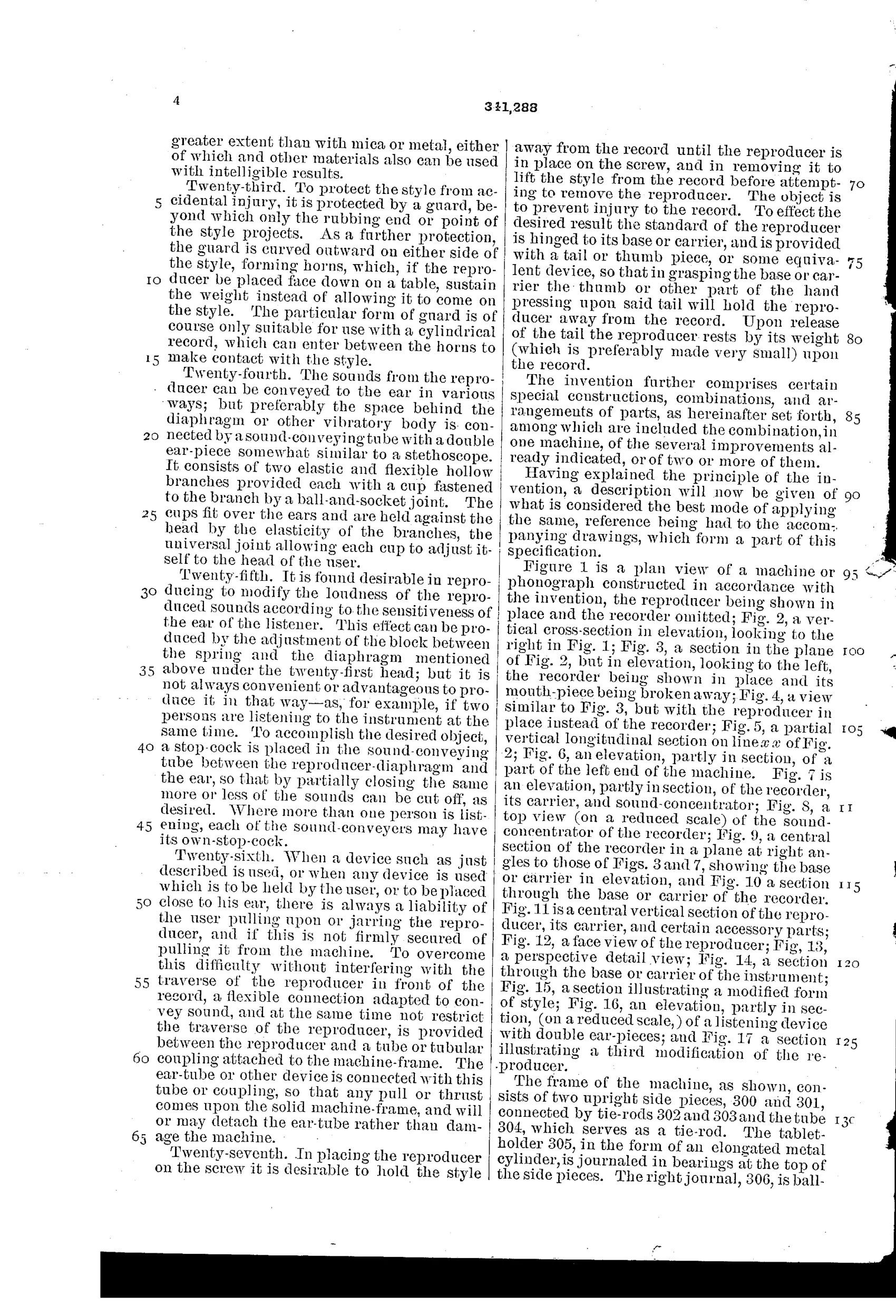
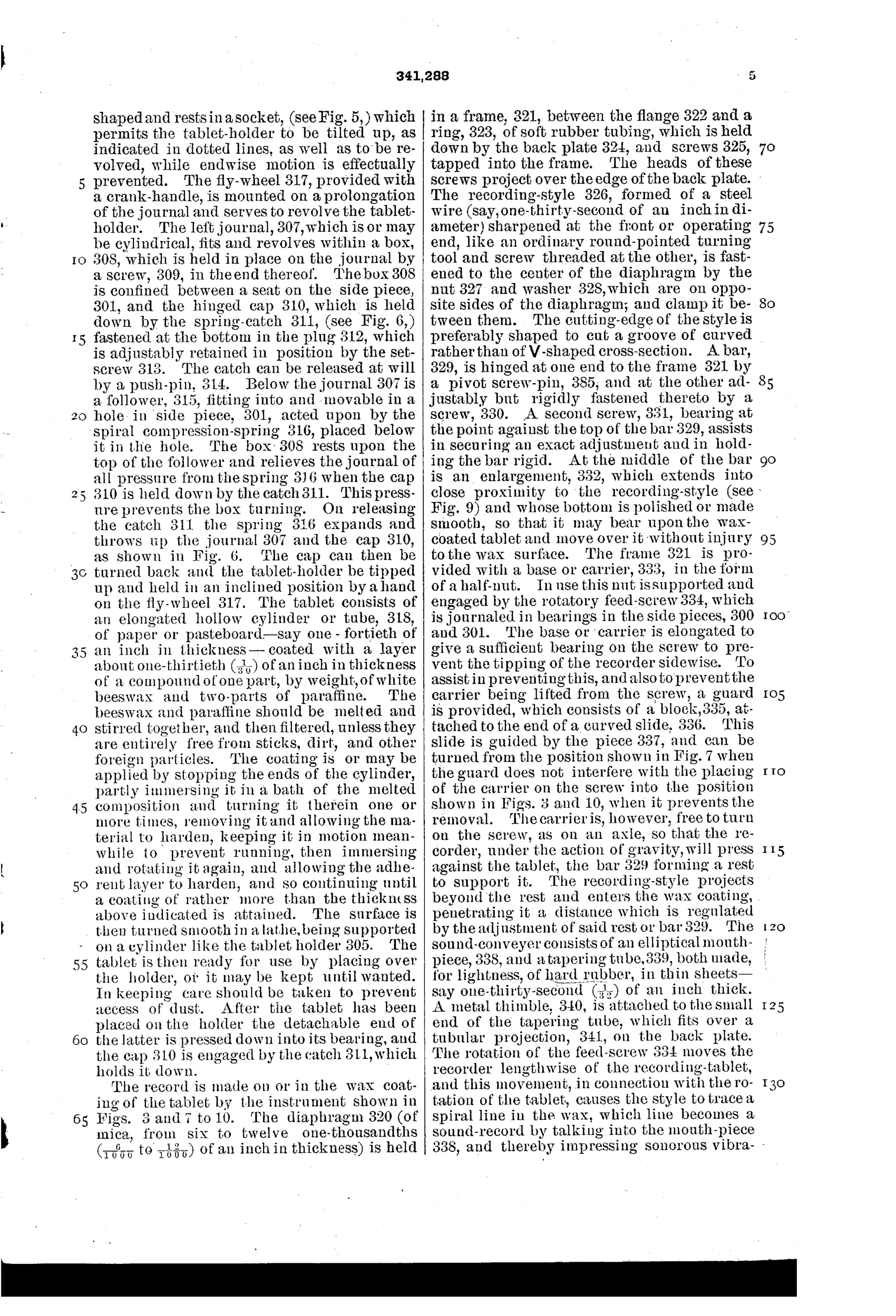
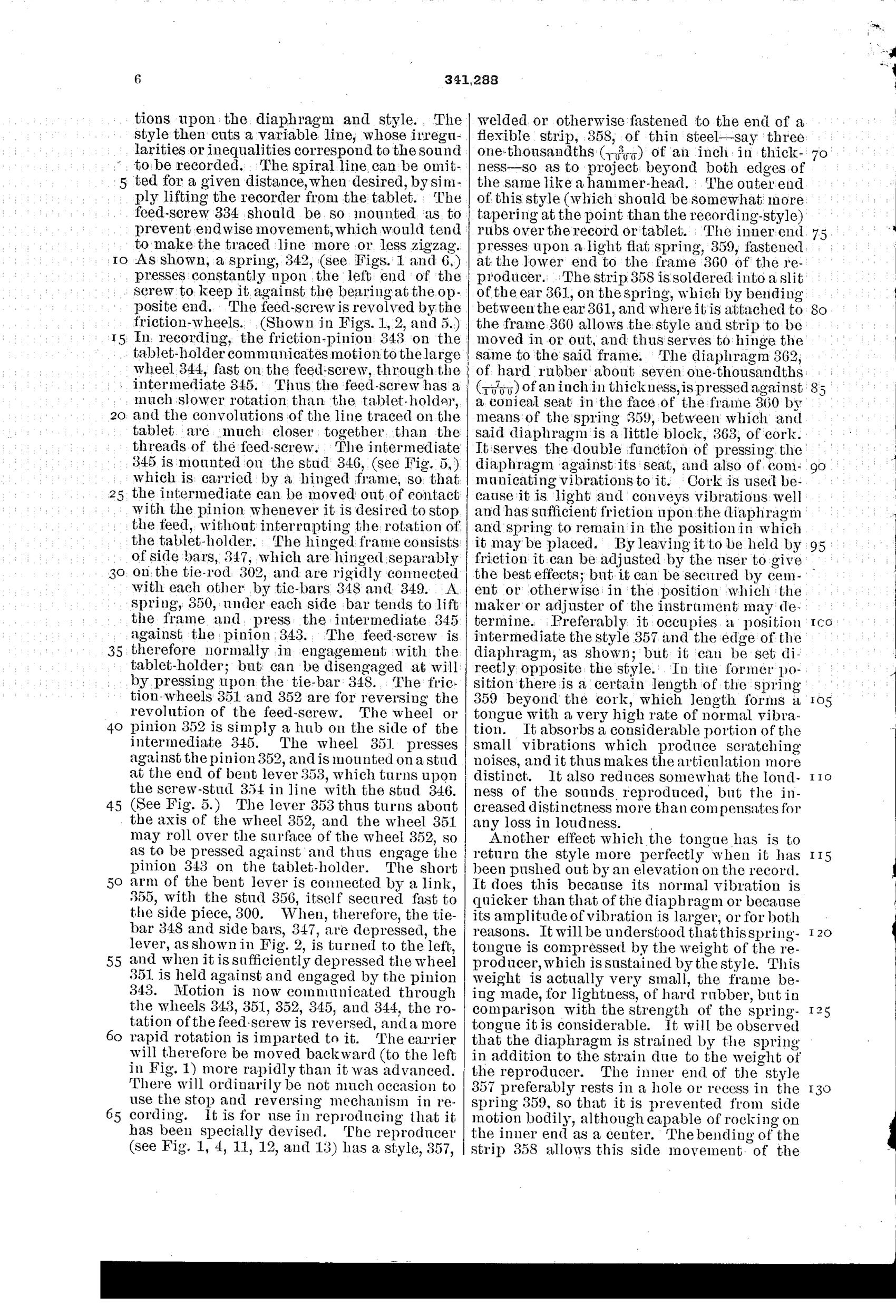
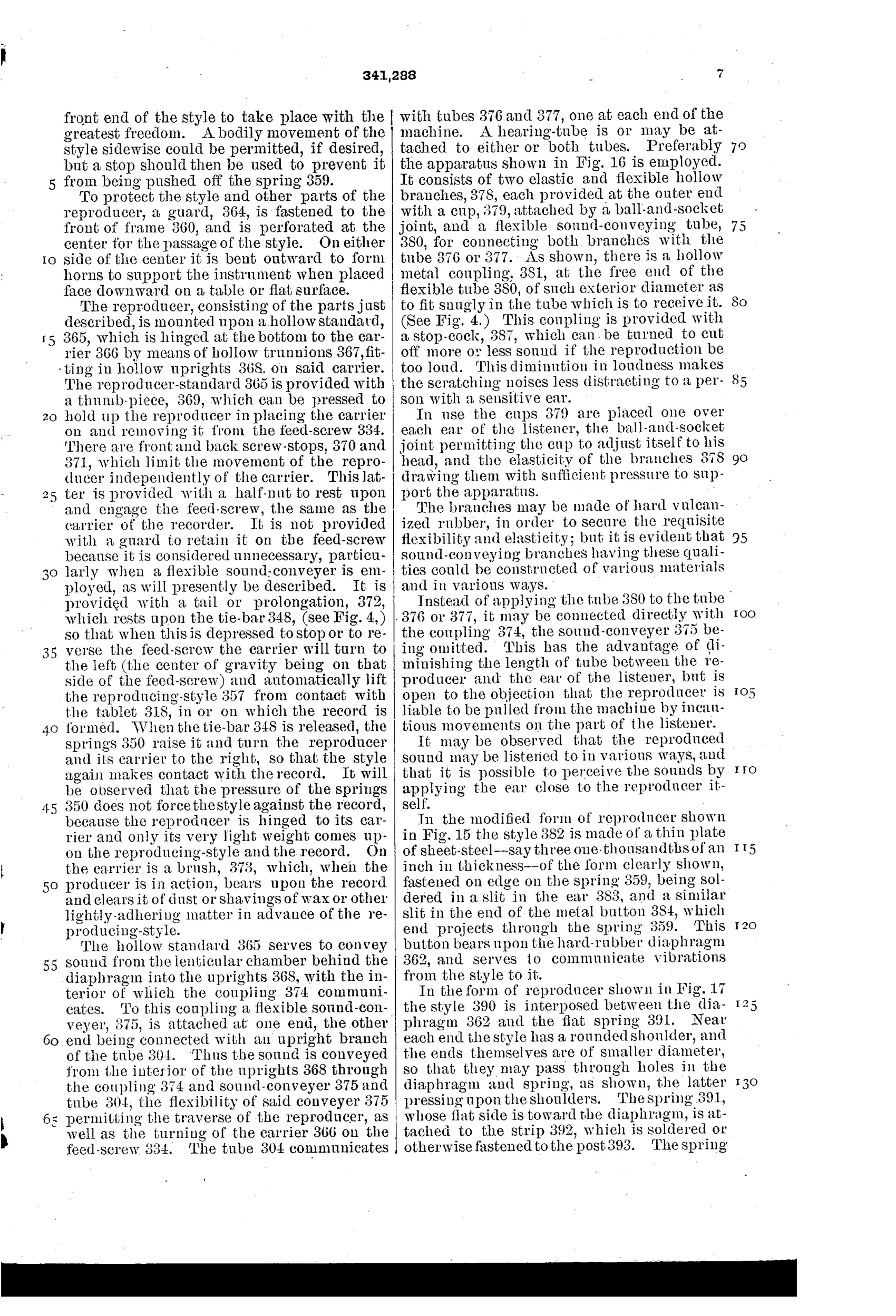
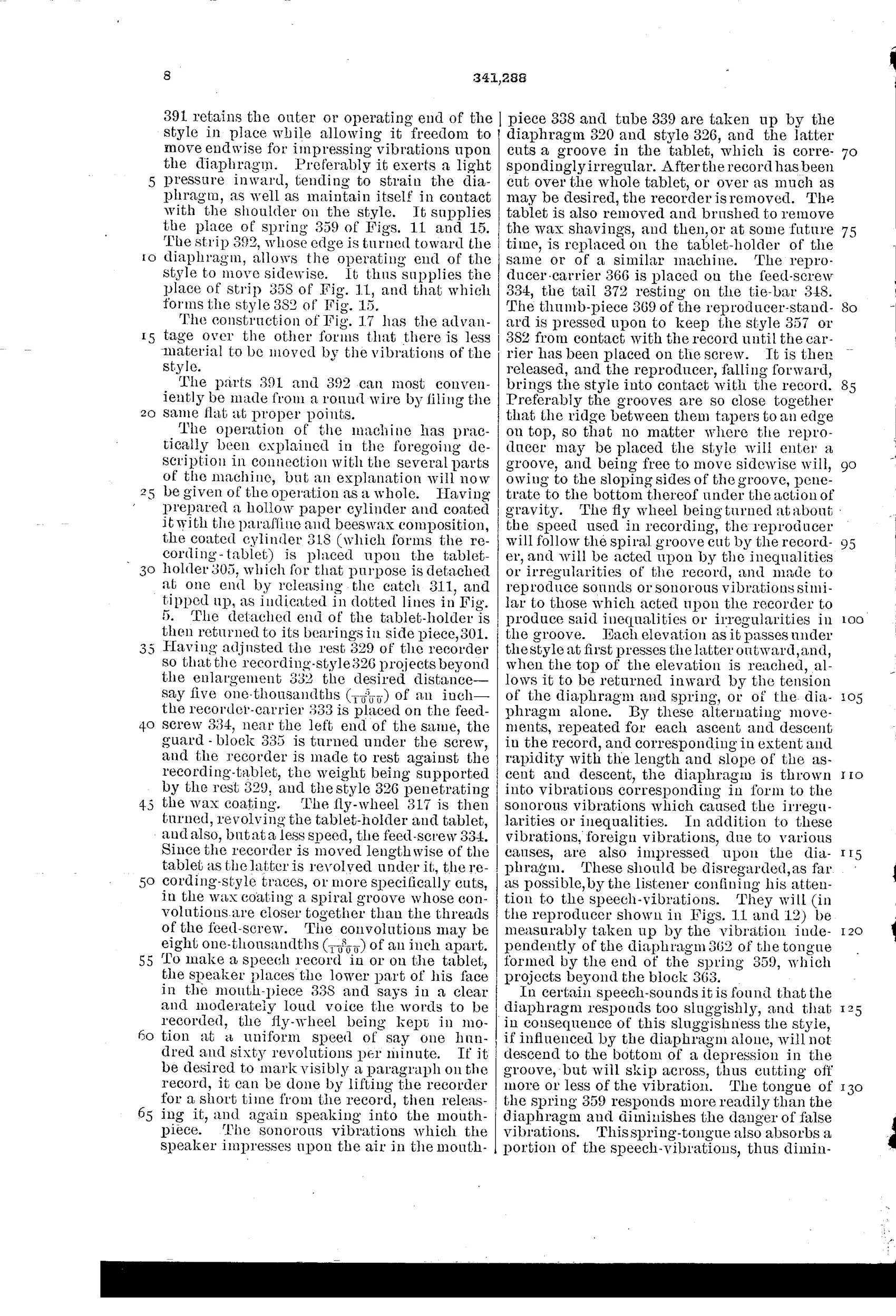
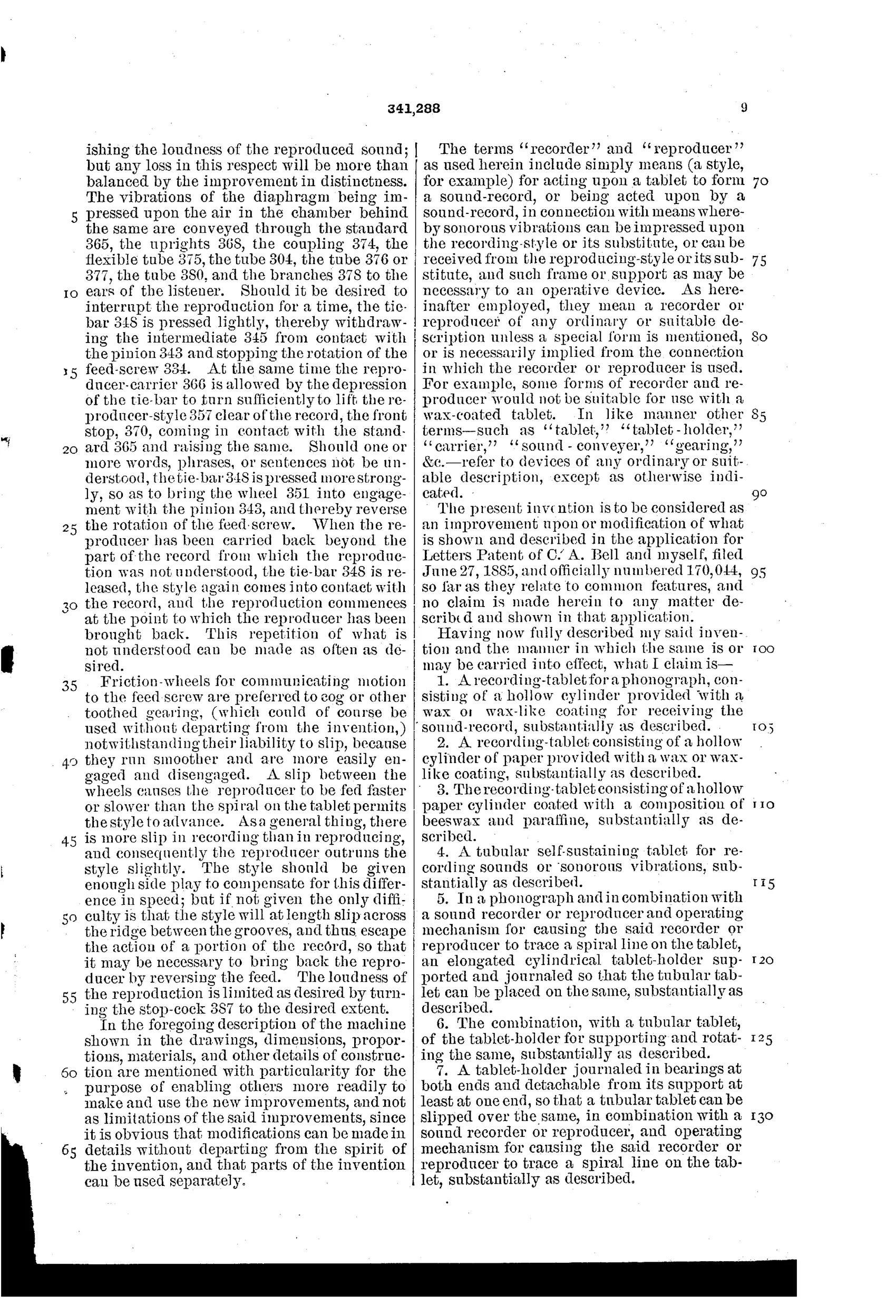
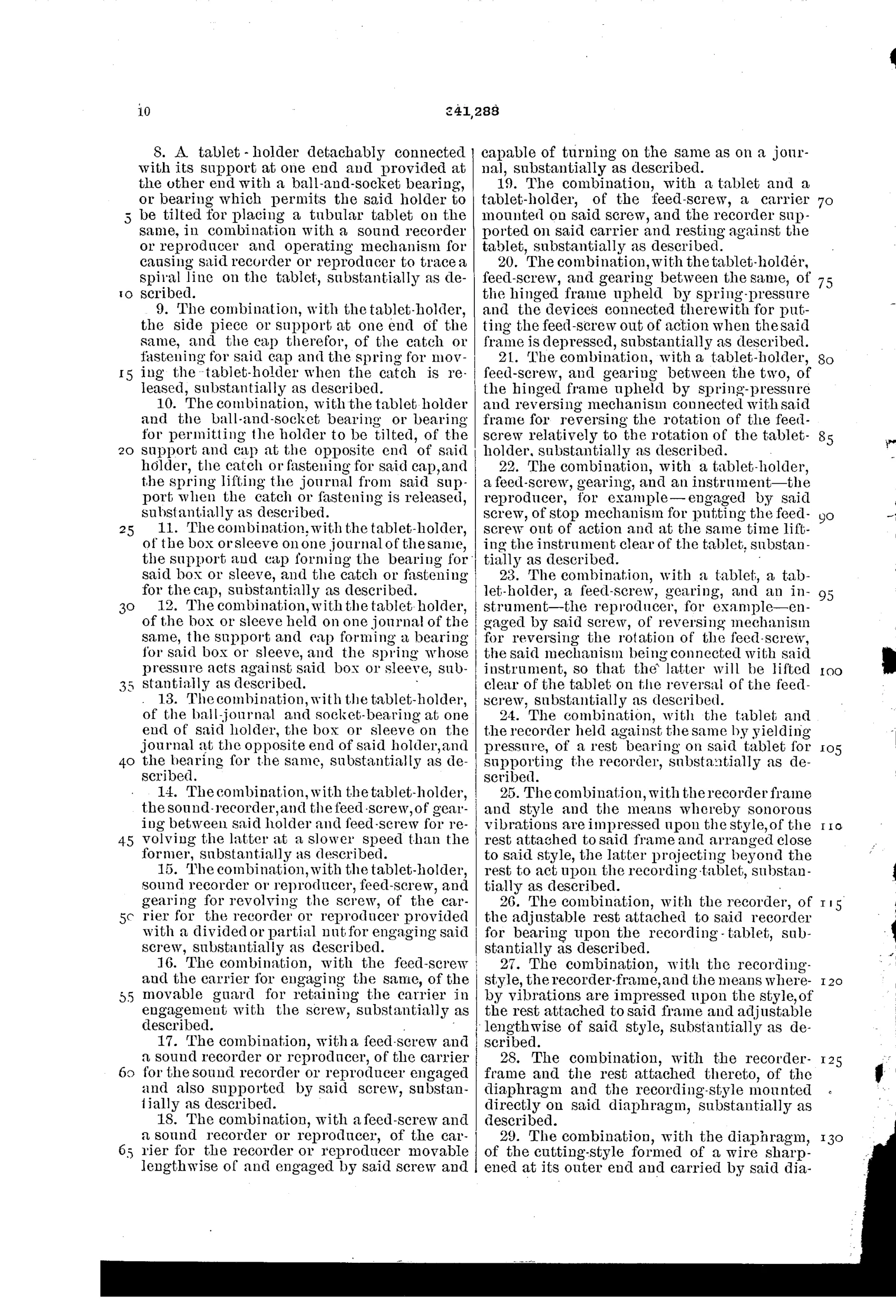
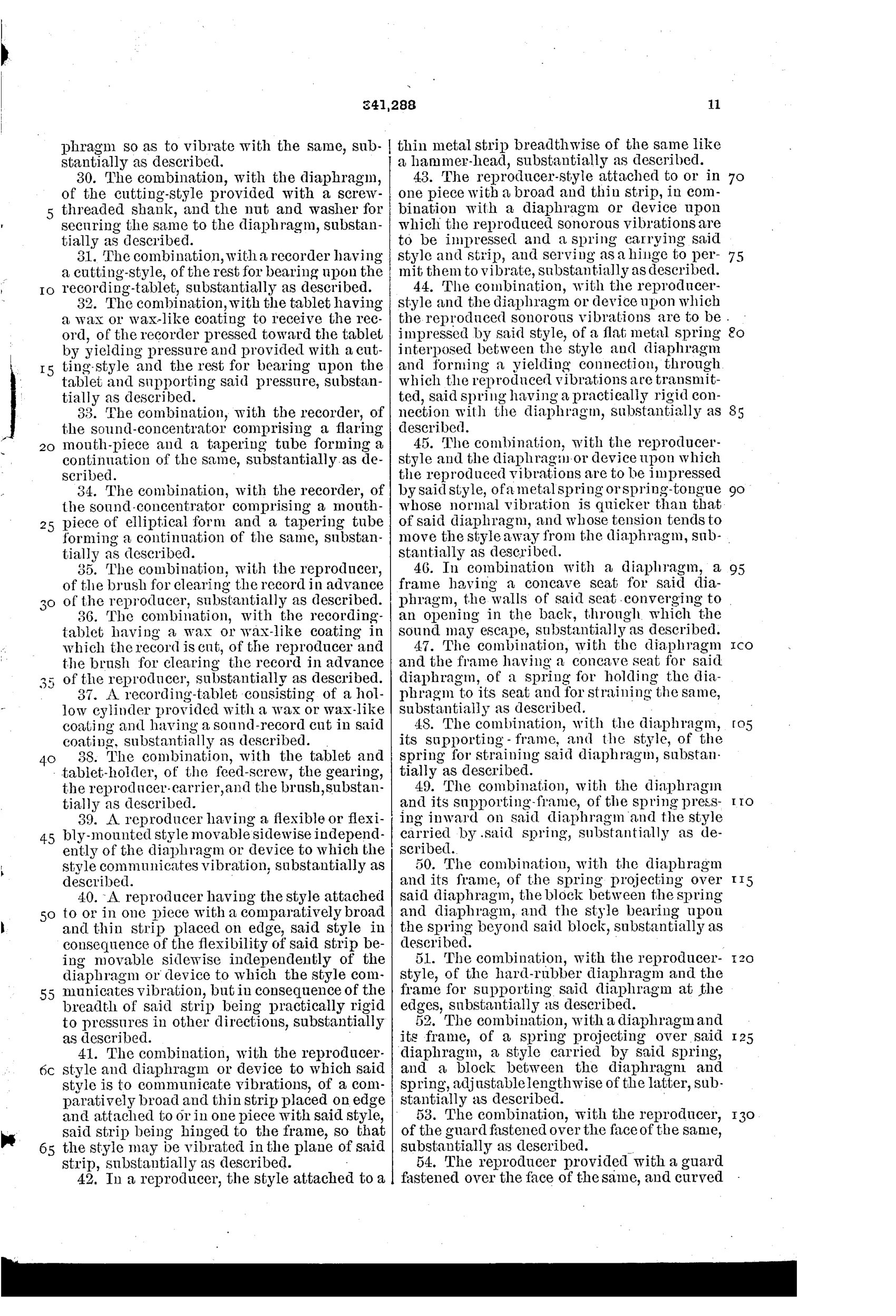
A hollow wax-coated paper cylinder tablet is slipped onto a rotating tablet-holder journaled in detachable bearings, one end using a ball-journal socket for easy tipping and removal. A feed-screw, geared to run slower than the cylinder, advances a carrier bearing the recorder and reproducer along the tablet so that closely spaced sound lines are cut into the wax. The recording-style is attached to a diaphragm mounted with a yielding rest that presses toward the tablet, keeping cutting depth uniform despite surface irregularities, while a quick-returning spring lets the style follow the record's contours without rattling. A flexible strip and a rocking mounting let the reproducing-style move sidewise independently of the diaphragm to reduce scratching noise, and a small brush on the reproducer sweeps loose wax shavings from the track ahead of the style. A flaring elliptical mouth-piece and tapering tube act as a sound concentrator/conveyer that reinforces and directs the voice's vibrations into the recorder.
♫ What was claimed
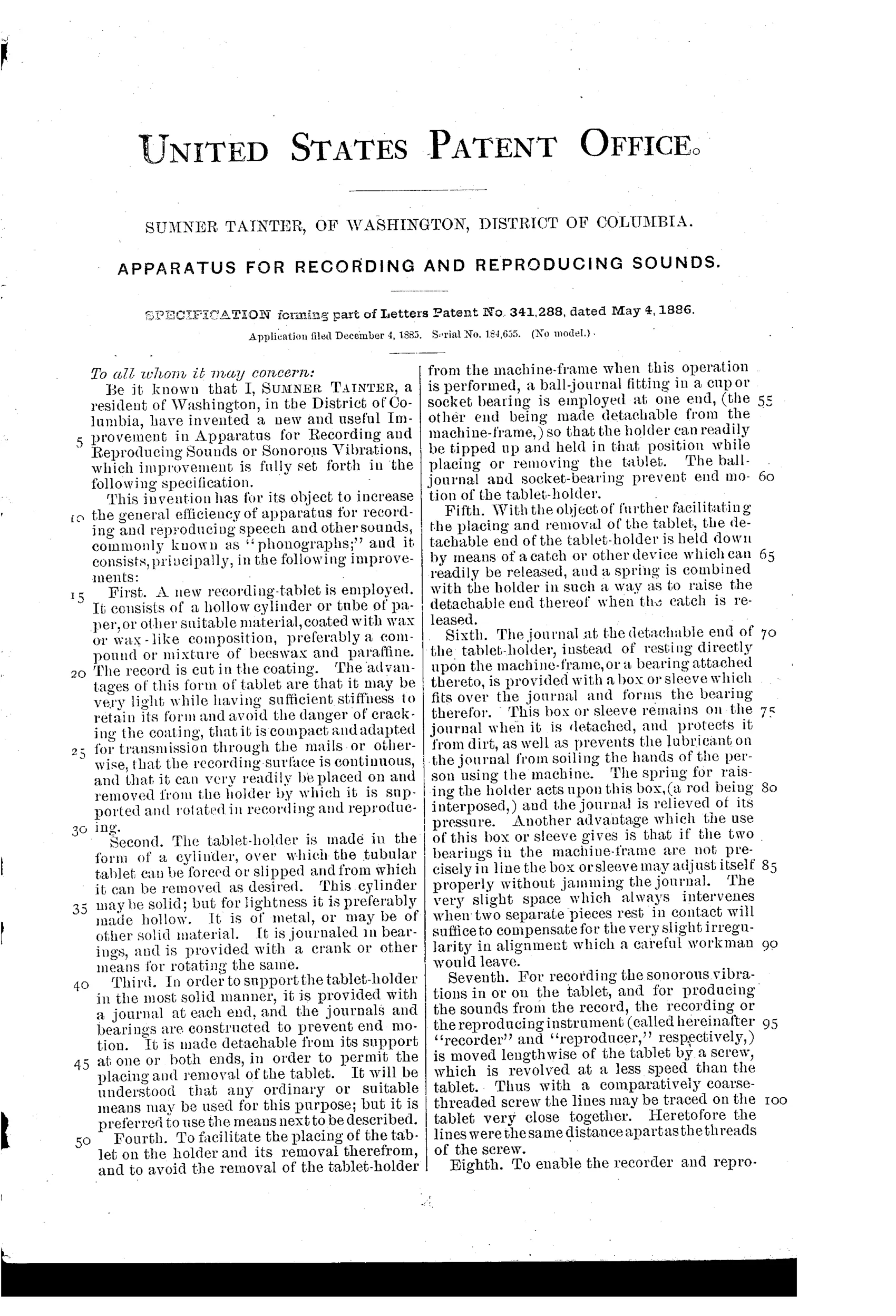
“First. A new recording-tablet is employed. It consists of a hollow cylinder or tube of paper, or other suitable material, coated with wax or wax-like composition, preferably a compound or mixture of beeswax and paraffine. The record is cut in the coating.”
In plain English: The invention uses a lightweight hollow paper tube coated in a beeswax-paraffin wax blend as the recording tablet, into which the sound record is cut.
♫ In the inventor’s words
“This invention has for its object to increase the general efficiency of apparatus for recording and reproducing speech and other sounds, commonly known as "phonographs;" and it consists, principally, in the following improvements:”— Sumner Tainter, from the specification
Manufactured and sold
This is a core Graphophone patent; American Graphophone Company machines built on the Bell-Tainter patents were manufactured from 1887 and underpin Columbia's cylinder business.
♫ Patented the same day
- REPRODUCING SOUNDS FROM PHONOGRAPH RECORDS. — Alexander Graham Bell, Chichester A. Bell, and Sumner Tainter
- RECORDING AND REPRODUCING SPEECH AND OTHER SOUNDS. — Chichester A. Bell and Sumner Tainter
♫ Commentary
This is one of the famous Bell-Tainter patents of May 4, 1886, the fruit of the Volta Laboratory that Alexander Graham Bell funded with his Volta Prize money. Its central move sounds modest and was anything but: replace Edison's tinfoil, which indented, with a wax-coated paper tube into which the record is *cut*. Incising wax gave a cleaner groove, a durable record, and — crucially — a removable, mailable cylinder. Every wax-cylinder machine that followed, Edison's included, stands on this idea.
The drawing rewards a slow look. The ball-journal at one end of the tablet-holder lets the whole shaft tip up so a cylinder can be slipped on and off in seconds — a small courtesy to the user that Edison's clamped tinfoil never offered. Note also the feed-screw geared down from the cylinder to pack the sound lines close, and the little brush riding ahead of the reproducing stylus to sweep away wax shavings: cutting, unlike indenting, produces chips, and Tainter thought that through.
The yielding stylus rest and the laterally flexible reproducer mounting are early wrestling matches with problems — tracking irregular surfaces, suppressing scratch — that soundbox designers would still be chasing thirty years later. This patent became the backbone of the Graphophone and, through licensing, of Columbia. Edison sued, negotiated, and ultimately adopted wax himself. Few patents on this site changed the story more.
Commentary by Claude, The Talking Machine Patent Archive’s resident enthusiast