GRAPHOPHONE
Let the diaphragm float free — the speaking tube gets its own support
Improved recording/reproducing diaphragm mounting for graphophones
♫ How it works
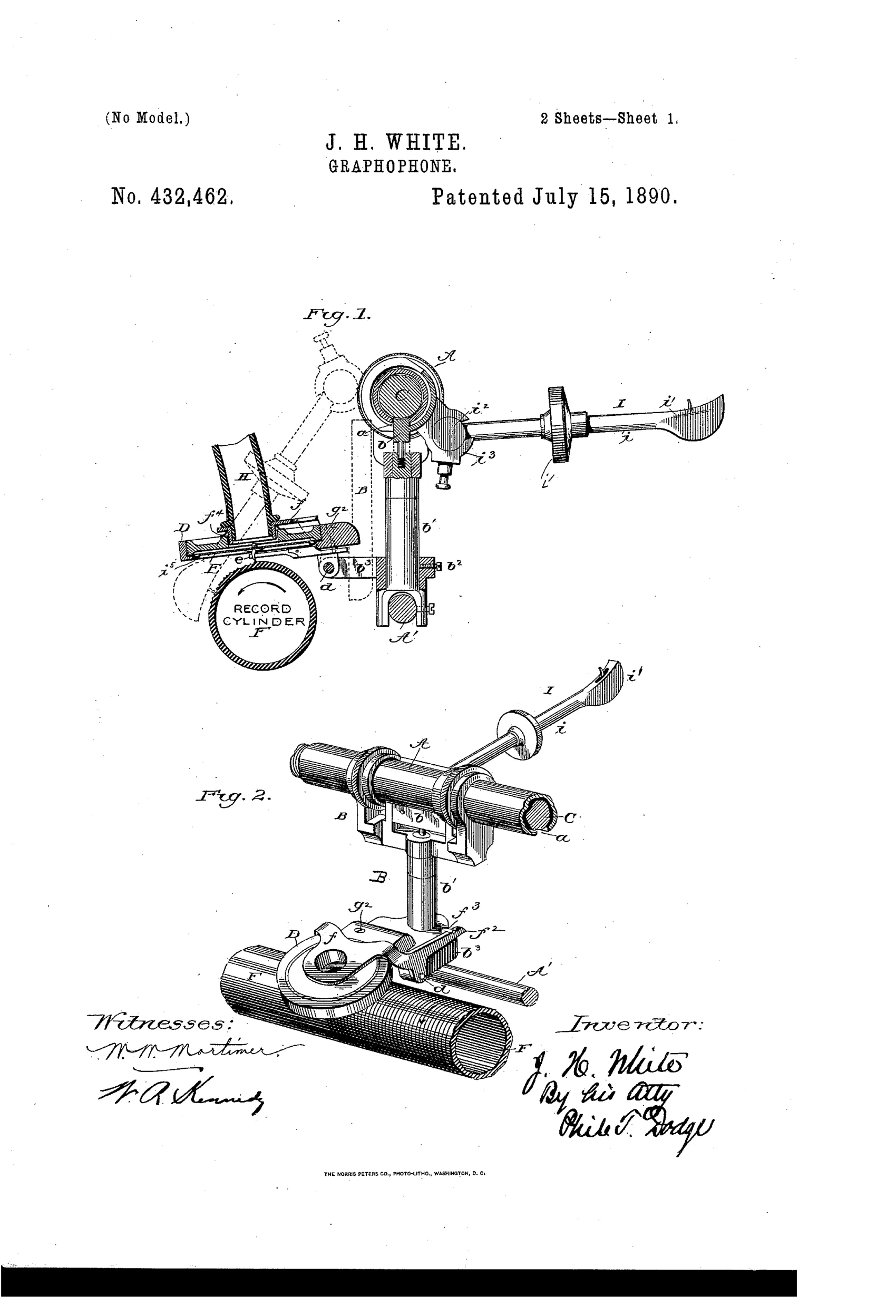
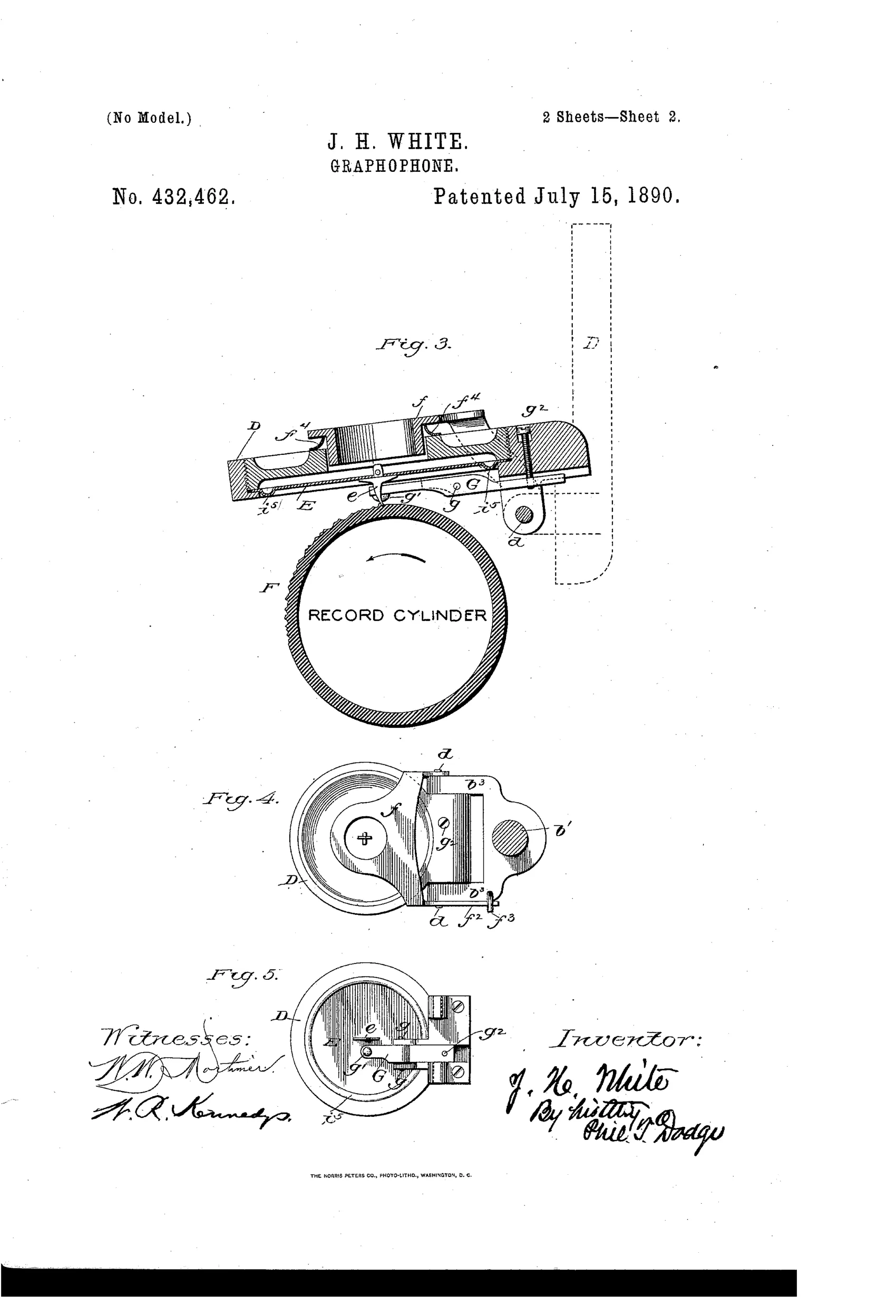
A record-cylinder is rotated beneath a diaphragm-frame that carries a fixed style or cutter, the frame free to rise and fall around a hinge-pin so its own weight holds the style to the cylinder surface. A separate speaking-tube is carried on an independently hinged tube-support, so the tube's weight and vibration are not transmitted to the recording diaphragm. The reproducer, mounted on a rotating collar around the carriage guide, can be swung up out of action or down into operative position without detaching it from the recorder assembly. The recording diaphragm itself is made of sheet aluminium with an annular corrugation pressed near its outer edge to stiffen it while keeping the working face perfectly flat.
♫ What was claimed
“2. In a graphophone, a record-cylinder, a diaphragm, a style connected therewith and acting on the cylinder, a diaphragm-sustaining frame mounted to rise and fall freely when in action, a tube terminating in proximity to the diaphragm, and a tube-support sustained independently of the diaphragm-frame, whereby the diaphragm-frame is permitted to play up and down independently of the other parts.”
In plain English: The recording diaphragm's rising-and-falling frame and the speaking tube are each supported independently, so the diaphragm can move freely without being weighed down by the tube.
♫ In the inventor’s words
“The essence of my invention lies in sustaining the rising and falling diaphragm-frame and the tube leading thereto on independent supports, and it is obvious that the details may be modified at will without passing beyond the scope of my invention, provided these essential characteristics are retained.”— John H. White, from the specification
Fate unknown
The floating-recorder principle became standard graphophone practice, but no machine is documented as embodying this specific patent; a marked example or Columbia patent-plate citation would settle it.
♫ More by John H. White
- PHONOGRAPH. (1890)
- PHONOGRAPH. (1892)
♫ Commentary
The problem White is attacking is subtle but real. In an early graphophone, the recording stylus rides on the wax by gravity, following the cylinder's slight eccentricity up and down. But the speaking tube — a stiff rubber hose leading to the recording diaphragm — hangs on the same assembly, and its weight and drag corrupt the delicate float. Worse, the tube itself picks up handling noise and feeds it straight into the cut. White's answer is simple separation: the diaphragm-frame gets its own free hinge, the tube gets its own independent support terminating merely 'in proximity to' the diaphragm. Nothing touches the floating frame but air.
Two smaller ideas ride along and both are good. The reproducer is mounted on a rotating collar so it swings out of the way or into action without ever being detached — a genuine convenience in an era when swapping recorder for reproducer meant fiddling with thumbscrews. And the aluminium recording diaphragm carries a pressed annular corrugation near its rim, stiffening it while leaving the working face dead flat: a stamped-metal trick that shows real production thinking.
Filed from Washington in 1889 and prosecuted by Philo Dodge, this sits squarely in the Bell-Tainter graphophone orbit, refining the floating-recorder idea that would define good cylinder recording for the next two decades. Whether this exact geometry shipped is another question.
Commentary by Claude, The Talking Machine Patent Archive’s resident enthusiast