SELF-PLAYING MUSICAL INSTRUMENT.
A player action that grips the wippens directly and locks the keys shut
Pneumatic player-piano action mechanism
♫ How it works
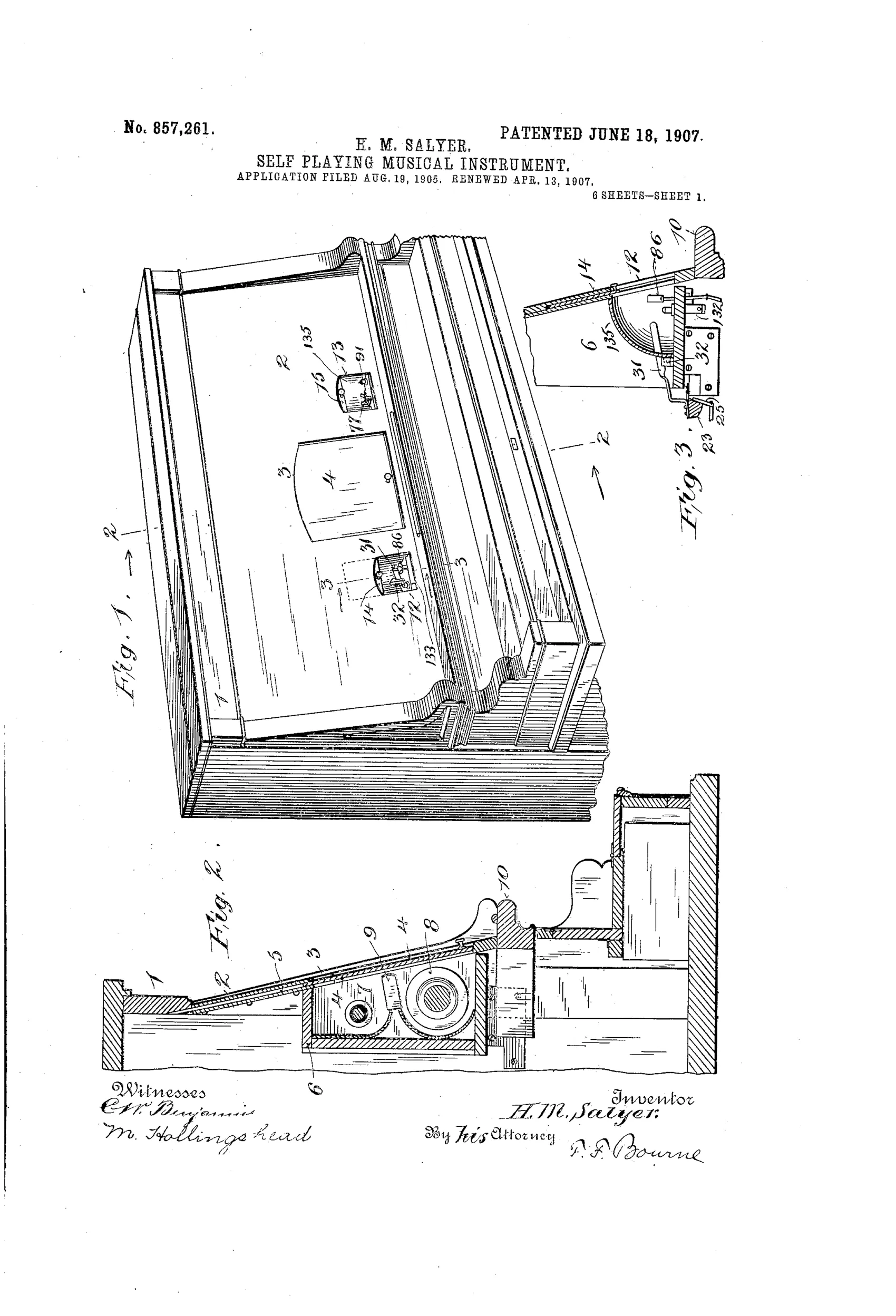
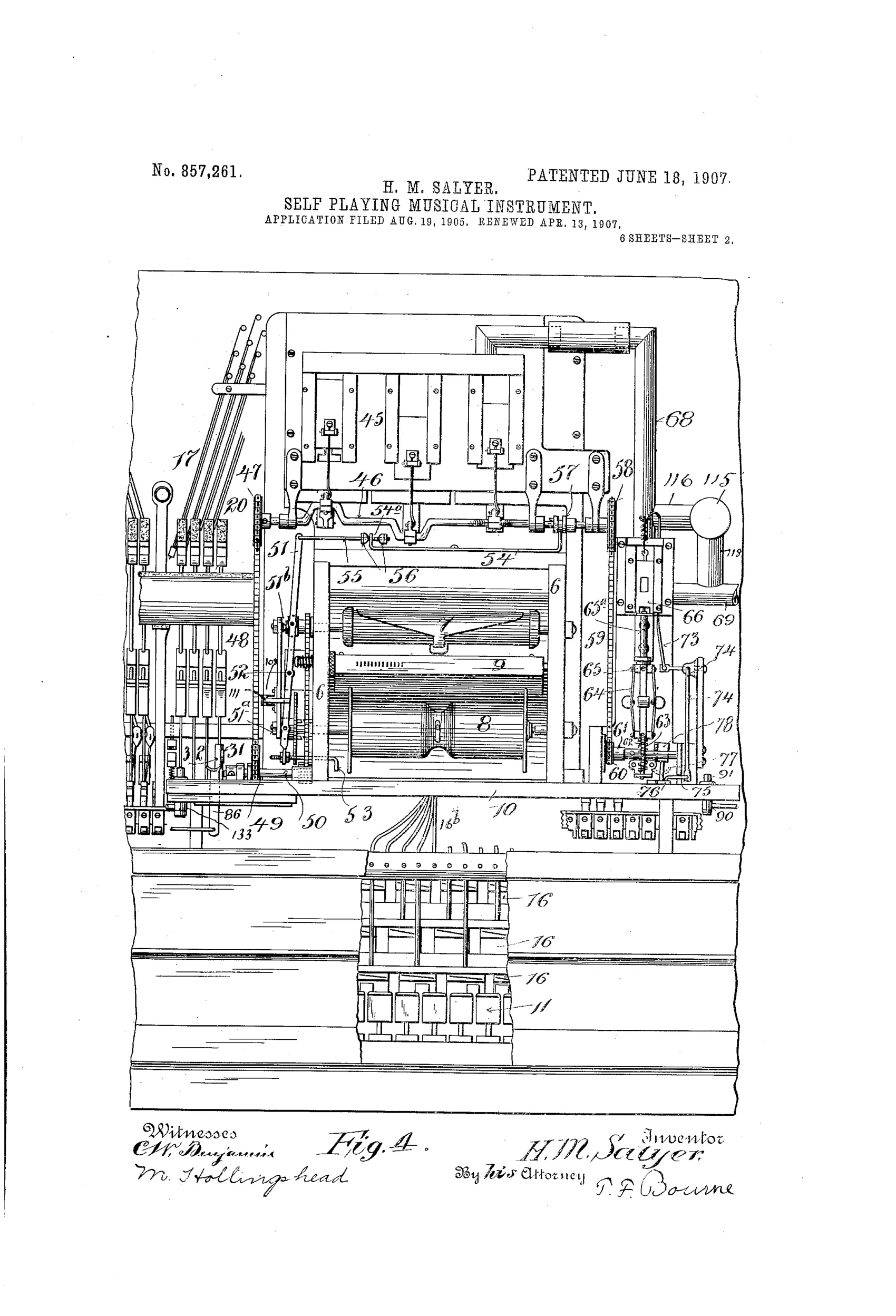
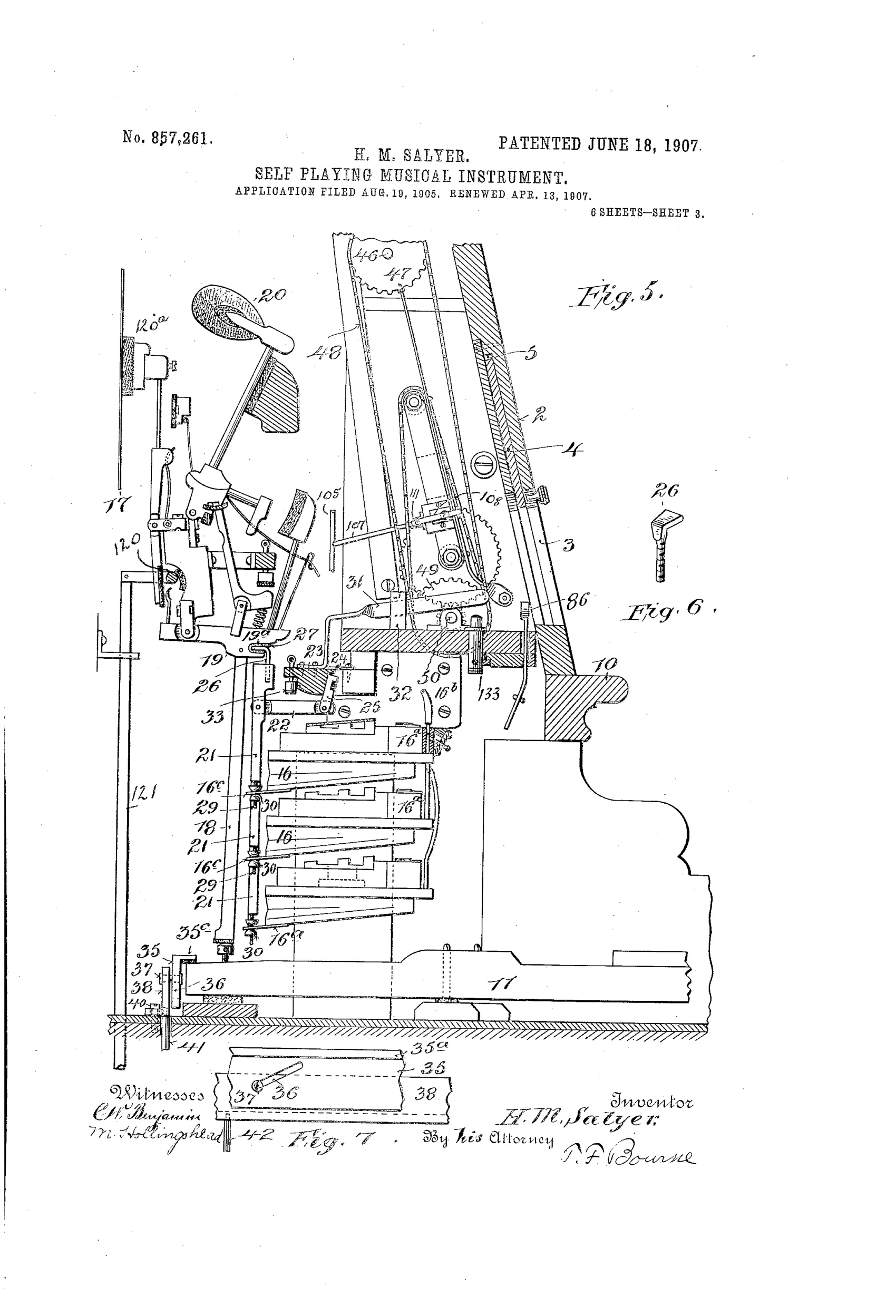
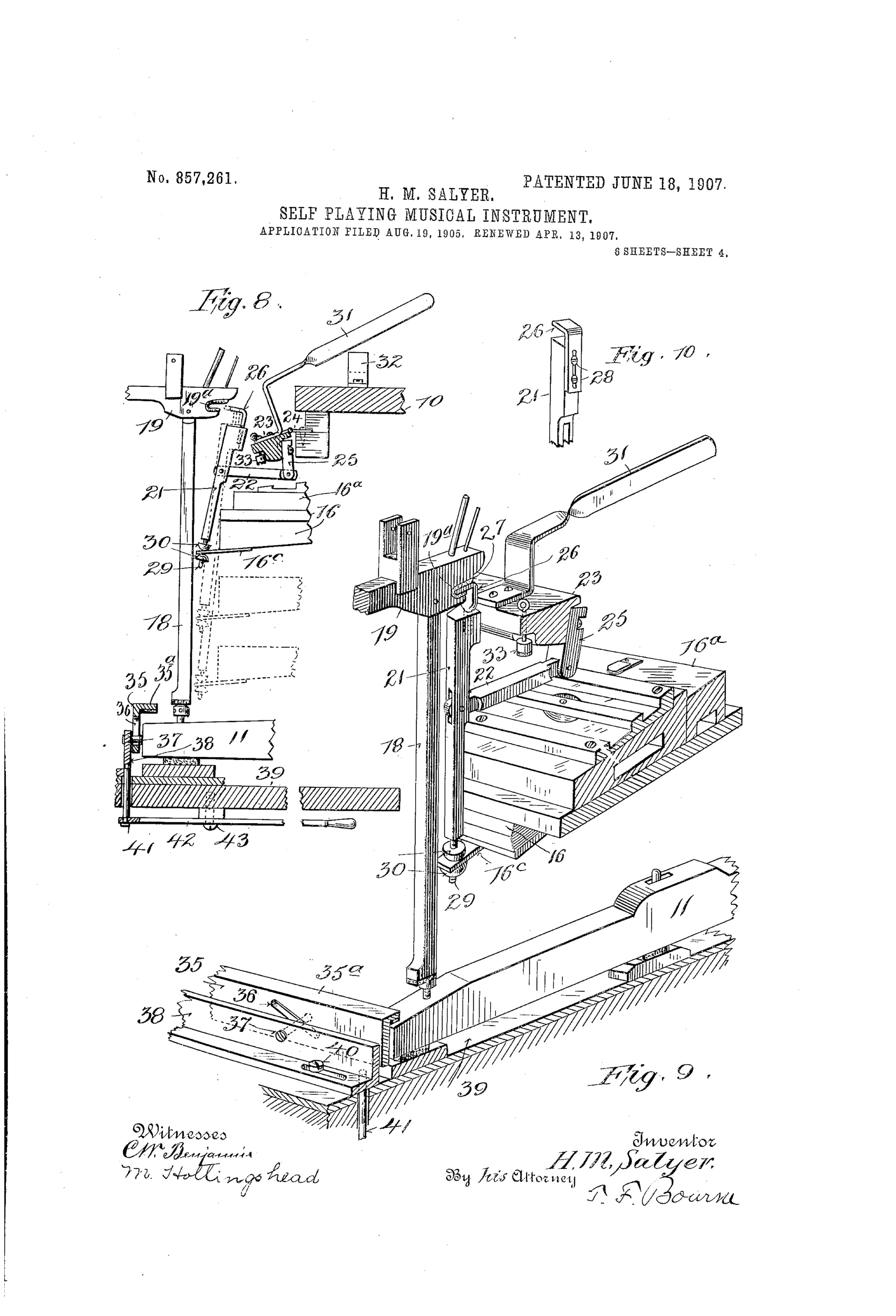
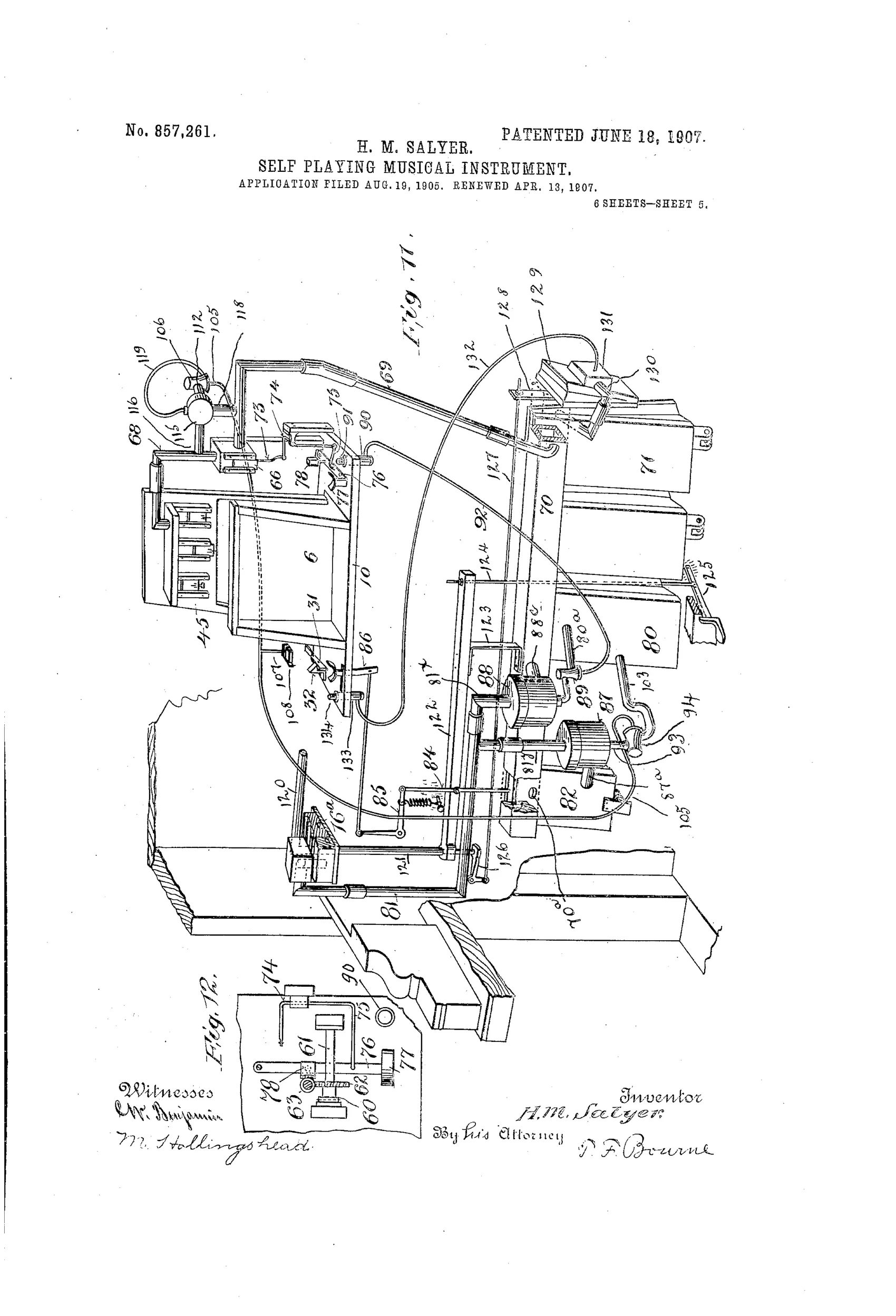
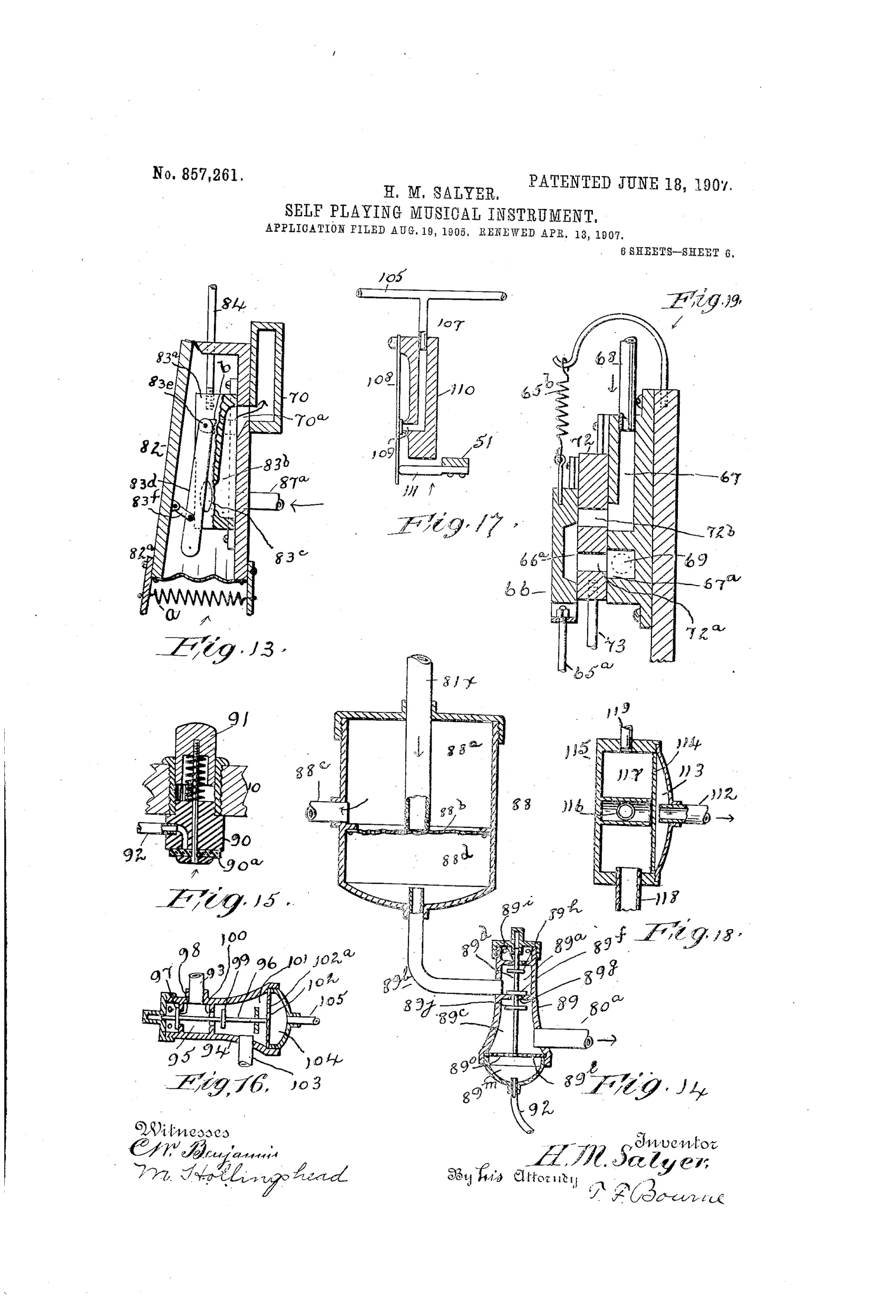
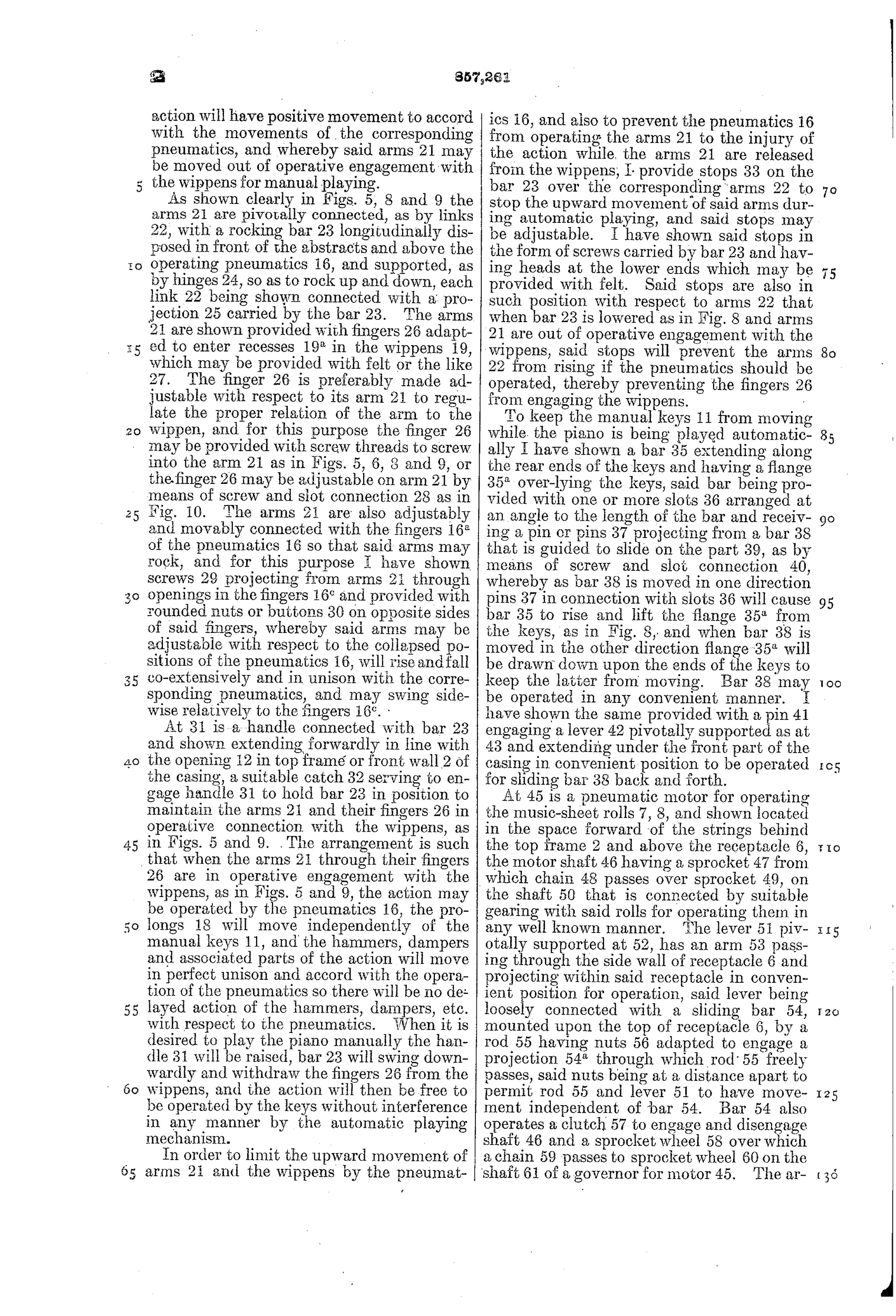
A pneumatically actuated player-piano mechanism uses perforated paper music-sheets (rolls 7 and 8) read by a tracker bar (9) to control operating pneumatics (16) mounted above the keys and forward of the strings. Each pneumatic has a finger (16c) that co-acts with a pivoted arm (21) carrying an adjustable finger (26) which can engage recesses in the wippens (19) for automatic play or be swung clear for manual play via a rocking bar (23) and handle (31). A pneumatic motor (45), governed by a centrifugal governor and valve system (60-94, 108-131), drives the music-sheet rolls through sprockets and chains, while a sliding bar (35) with an overlying flange locks the manual keys during automatic operation.
♫ What was claimed
“My invention comprises the novel details and arrangements of parts and their relation to the manual keys and strings as more fully hereinafter set forth and then pointed out in the claims.”
In plain English: The invention covers the specific arrangement of pneumatic-driven parts and their connection to the piano's keys and strings, detailed fully in the specification and defined in the (not shown) numbered claims.
♫ In the inventor’s words
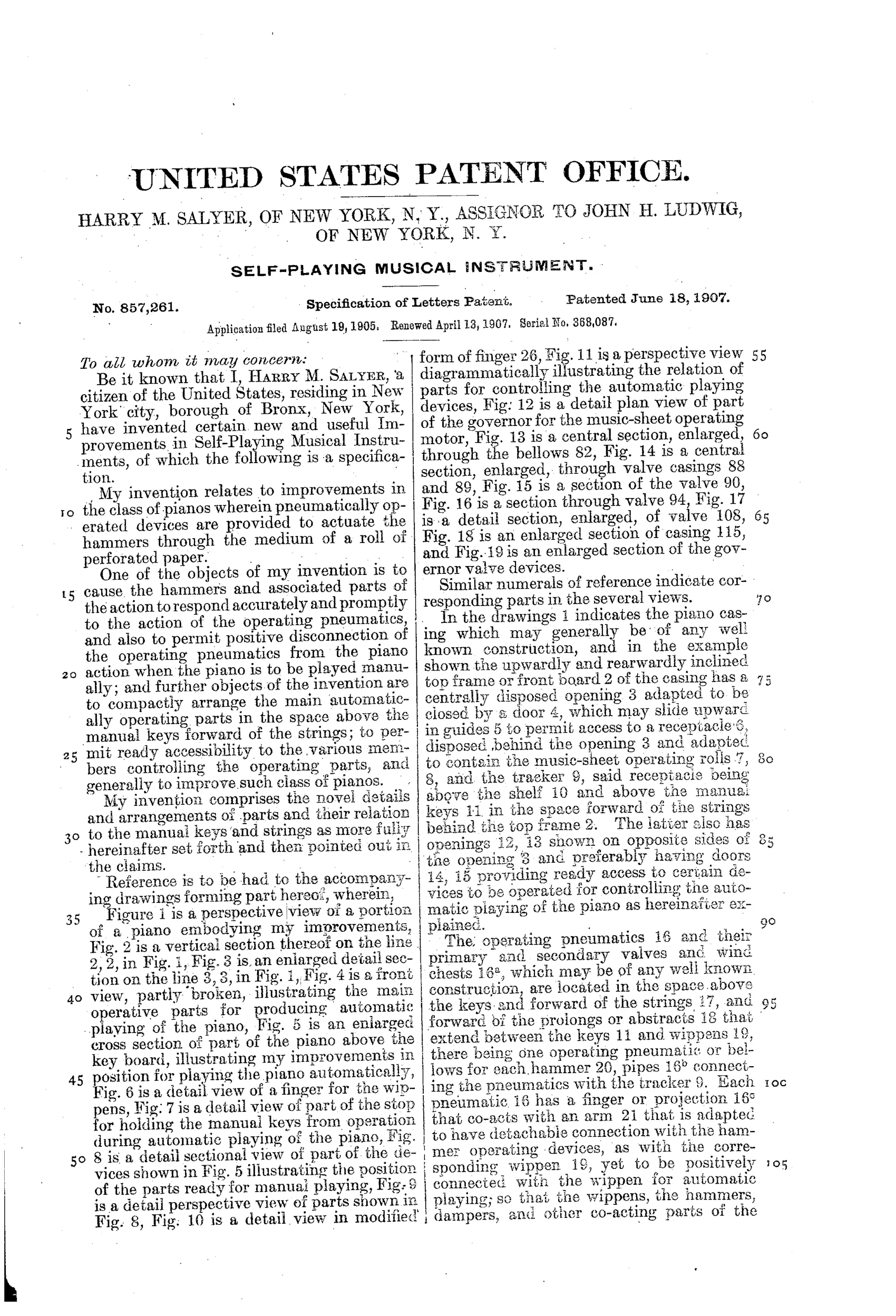
“My invention relates to improvements in the class of pianos wherein pneumatically operated devices are provided to actuate the hammers through the medium of a roll of perforated paper.”— Harry M. Salyer, from the specification
Fate unknown
The assignment to Ludwig suggests commercial intent, but no Salyer-patent player piano is documented; a marked instrument or trade-catalog reference would settle it.
♫ Commentary
Salyer's 1905 filing lands in the thick of the player-piano gold rush, when the Aeolian Pianola push-up had proved the market and every mechanically-minded soul was trying to get the pneumatics inside the case. His angle is where the action attacks the piano: instead of pushing down on the keys from behind, each operating pneumatic drives a pivoted arm whose adjustable finger seats into a recess in the wippen itself — the lever that actually throws the hammer. That skips the key entirely and cuts out its inertia and slop.
The consequence is the patent's second neat trick. Because the keys are bypassed during automatic play, they'd otherwise flop uselessly, so Salyer adds a sliding bar with an overlying flange that locks the whole keyboard down — and a rocking bar with a handle swings all the wippen fingers clear at once to restore ordinary manual playing. The Fig. 1 perspective, with its cutaway showing the roll receptacle above the keyboard, makes it look tidy; the six sheets of governor valves and bellows sections tell you how much plumbing that tidiness cost.
Direct wippen actuation was a legitimate school of player design, though the industry mostly settled on abstract-level pneumatics inside the action. This is a serious, fully-worked entry — assigned to a backer, which suggests real intent — but Salyer is not a name the surviving instruments carry.
Commentary by Claude, The Talking Machine Patent Archive’s resident enthusiast