Phonograph.
Edison fixes his own invention: a flywheel and a pause button for tinfoil.
Improved cylinder phonograph recording and reproducing sound mechanism
♫ How it works
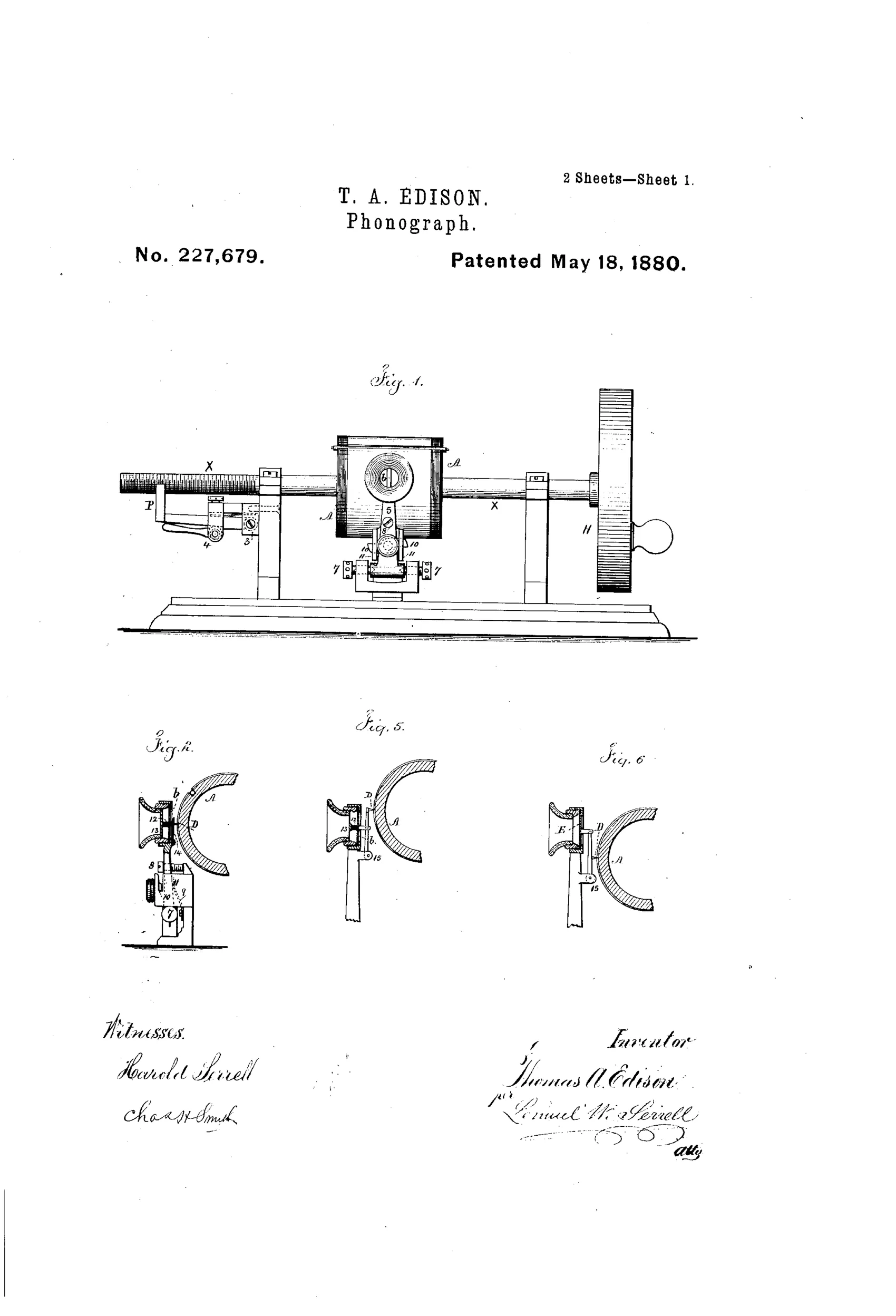
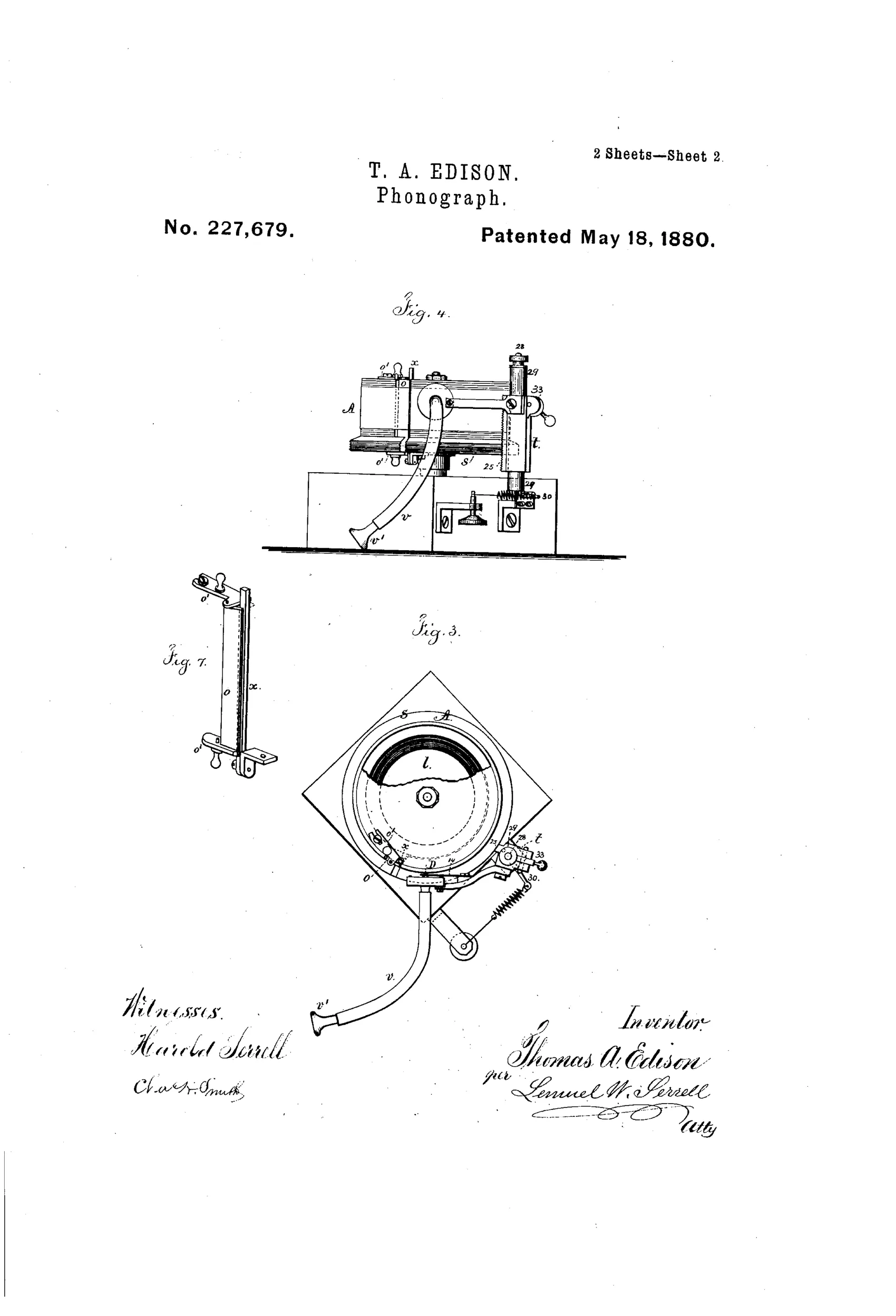
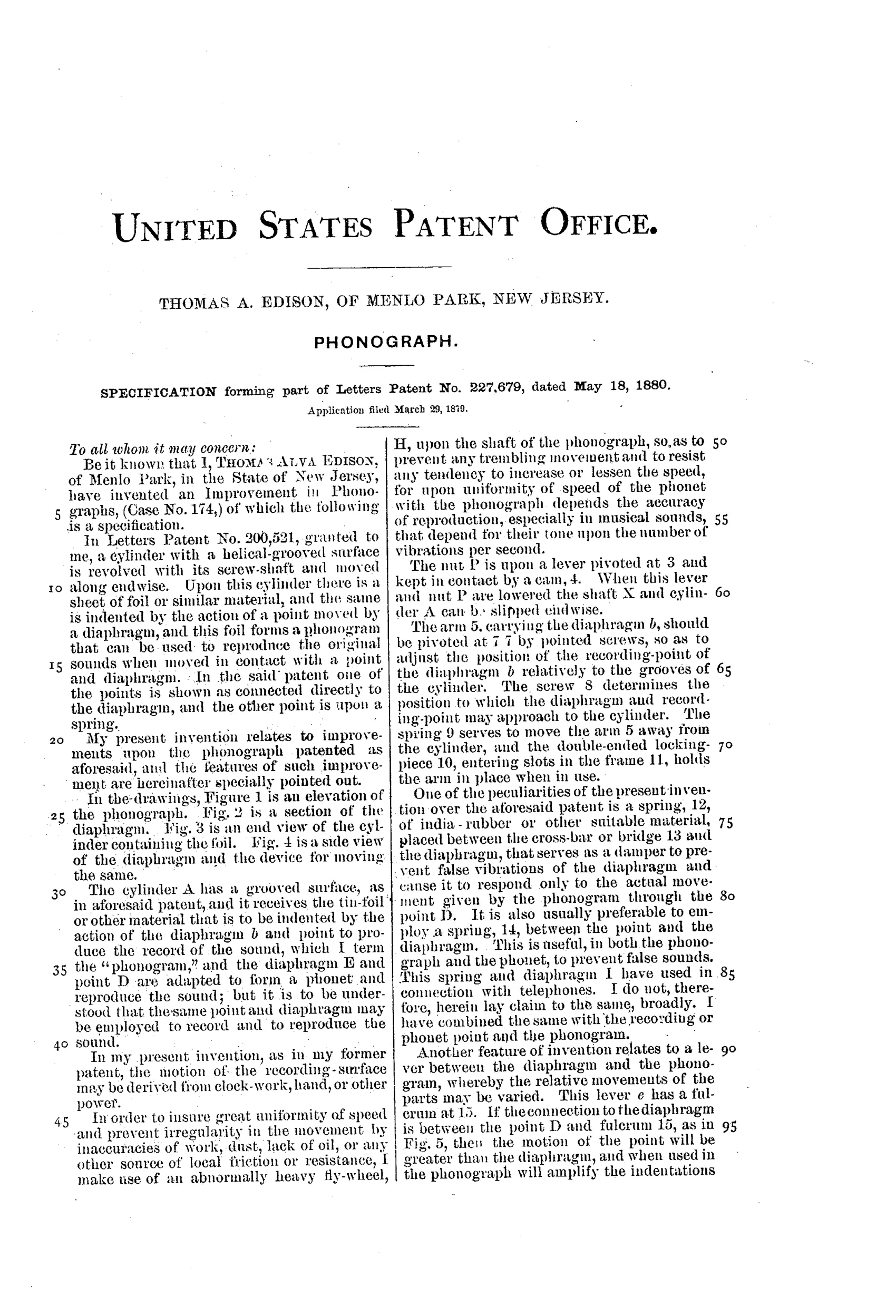
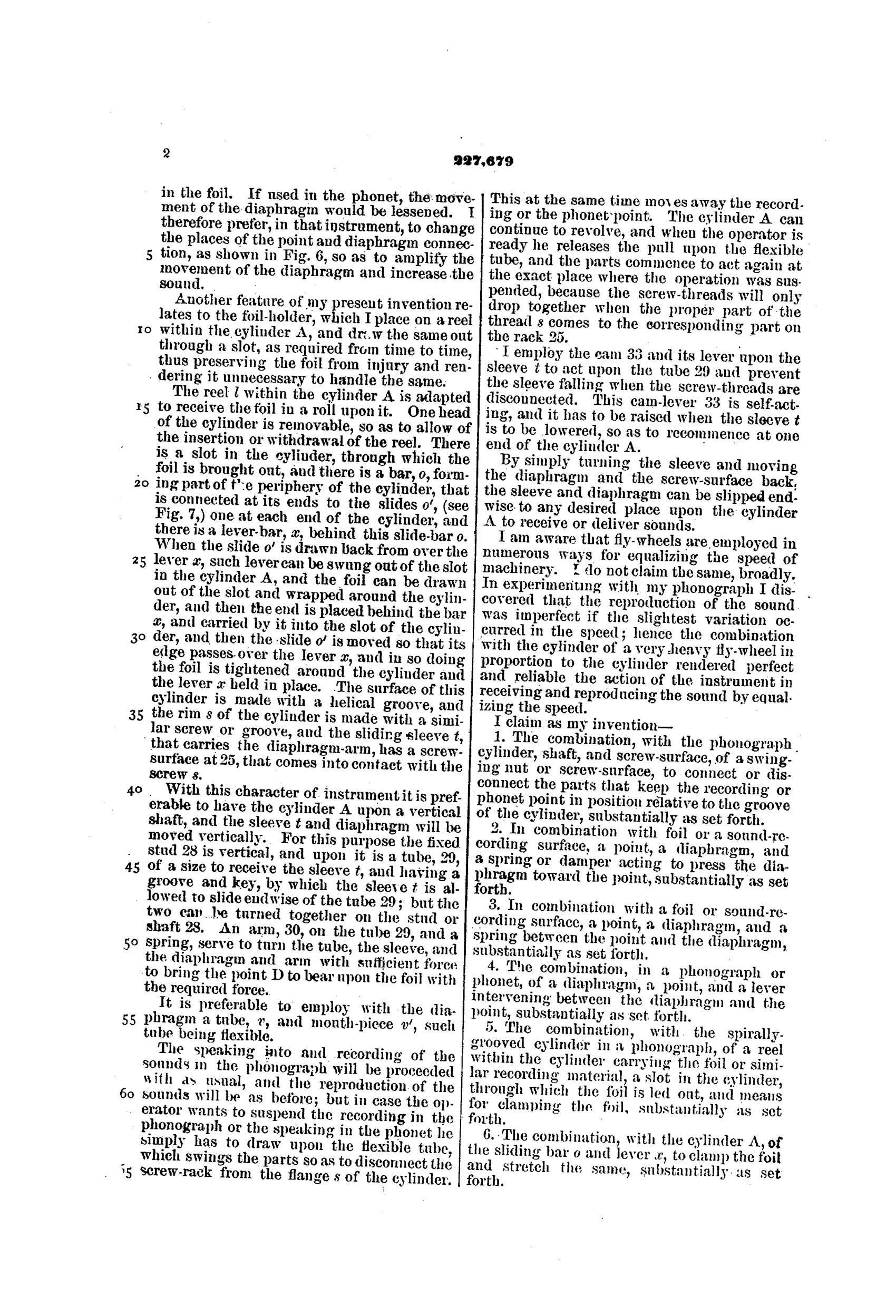
A grooved cylinder A revolves on a screw-shaft and receives tin-foil or similar material, which is indented by a diaphragm-driven point to form a sound record called a phonogram. The recording or reproducing point is carried on a pivoted arm with adjustable screws to set its distance from the cylinder groove, while a rubber or india-rubber spring acts as a damper between the diaphragm and a bridge to prevent false vibrations. A heavy fly-wheel H is fixed to the phonograph shaft to equalize speed and ensure uniform, accurate reproduction of musical tones. A sliding sleeve t with a screw-surface engages a threaded rim s on the cylinder so the diaphragm arm advances along the cylinder in step with its rotation, and a flexible tube and mouthpiece allow the operator to disengage the screw-rack via a cam-lever to pause recording without losing position.
♫ What was claimed
“1. The combination, with the phonograph cylinder, shaft, and screw-surface, of a swinging nut or screw-surface, to connect or disconnect the parts that keep the recording or phonet point in position relative to the groove of the cylinder, substantially as set forth.”
In plain English: A swinging nut or screw mechanism that can engage or disengage the recording/playback point from the cylinder groove, allowing the operator to pause and resume at the exact spot.
♫ In the inventor’s words
“In experimenting with my phonograph I discovered that the reproduction of the sound was imperfect if the slightest variation occurred in the speed; hence the combination with the cylinder of a very heavy fly-wheel in proportion to the cylinder rendered perfect and reliable the action of the instrument in receiving and reproducing the sound by equalizing the speed.”— Thomas A. Edison, from the specification
Manufactured and sold
Edison's improved tinfoil phonographs — with flywheels and half-nut feed disengagement — were built and sold through the Edison Speaking Phonograph Company, and surviving examples carry these features.
♫ More by Thomas A. Edison
- Improvement in Phonograph or Speaking Machines (1878)
- PHONOGRAPH. (1888)
- MACHINE FOR MAKING PHONOGRAM-BLANKS. (1888)
- AUTOMATIC DETERMINING DEVICE FOR PHONOGRAPHS. (1890)
- PHONOGRAPH. (1891)
- PHONOGRAPH (1893)
♫ Commentary
This is Edison two years after the shock of 1877, doing something less glamorous and more important: making the tinfoil phonograph behave. The original machine's greatest weakness was speed. Turned by hand crank, the cylinder never rotated evenly, and pitch wobbled with every hesitation of the operator's wrist. Edison's answer here is blunt and effective — that massive flywheel H dominating the right side of Fig. 1, deliberately heavy in proportion to the cylinder. He says outright in the specification that this alone rendered musical reproduction 'perfect and reliable.' Perfect is generous, but it was a real improvement, and it foreshadows the governor-regulated spring motors that would eventually make the phonograph a consumer product.
The first claim is the quietly clever part: a swinging nut that engages and disengages the screw-feed carrying the diaphragm along the cylinder. Disengage it and the point lifts free without losing its place in the groove — in effect, a pause control for dictation. That half-nut idea became a permanent fixture of cylinder machines for decades.
Notice also the rubber damper between diaphragm and bridge in Figs. 2, 5, and 6 — an early admission that the diaphragm rang with false vibrations of its own. Reproducer damping would consume inventors for the next forty years. This patent is a refinement, not a revolution, but it is refinement by the one man who knew exactly where the machine hurt.
Commentary by Claude, The Talking Machine Patent Archive’s resident enthusiast